A couple years back I published a book called How the Elites Ate the Social Justice Movement. (I really didn’t care for the title, but then I never do.) The book was represented by many as an attack on the 2020 protests, a rejection of the reaction to the George Floyd murder, and a dismissal of #BlackLivesMatter, but it was none of those things. Much as with my first book, this social media summary was a misrepresentation of the book’s central premise. The point of the book was that the rage and desire for change and calls for justice and protests were all righteous, which made it even more tragic that nothing really changed as a result. People try to lawyer this point, argue that a lot was actually accomplished, and I do think that there’s been at least a new level of self-defensive awareness about the use of force among police departments, and that’s good. But the protestors themselves were telling you that their goal was a total reimagining of how race functions in American society, and that did not occur. The positive permanent changes were few and feeble.
I wrote the book not to mock the effort but to call attention to how it had been betrayed by the leaders and institutions who should have done their part to achieve real and durable change, and to lay out the structural ways in which the American left-of-center has become unable or unwilling to turn street protest and public outrage into meaningful material outcomes. I could have been wrong in any number of parts of that effort. But I assumed that people would agree with the basic concept that any moral duty we have to political action is first and foremost a moral duty to perform that political action well. That doesn’t mean that the ballot box and partisan politics are the only valid approaches, not at all; it doesn’t even mean violent action could never be part of the answer. It does mean that there is no such thing as righteous but unfocused anger, no such thing as a moral movement for social justice that does not ruthlessly engage in self-criticism and strategic thinking. And I think that’s what was lost in the whole scrum of 2020. The movement was courageous but directionless, everyone got mad if you pointed this out at the time, and when the fire inevitably burned out, nothing had changed. Then everyone was too embarrassed to do much introspection about why.
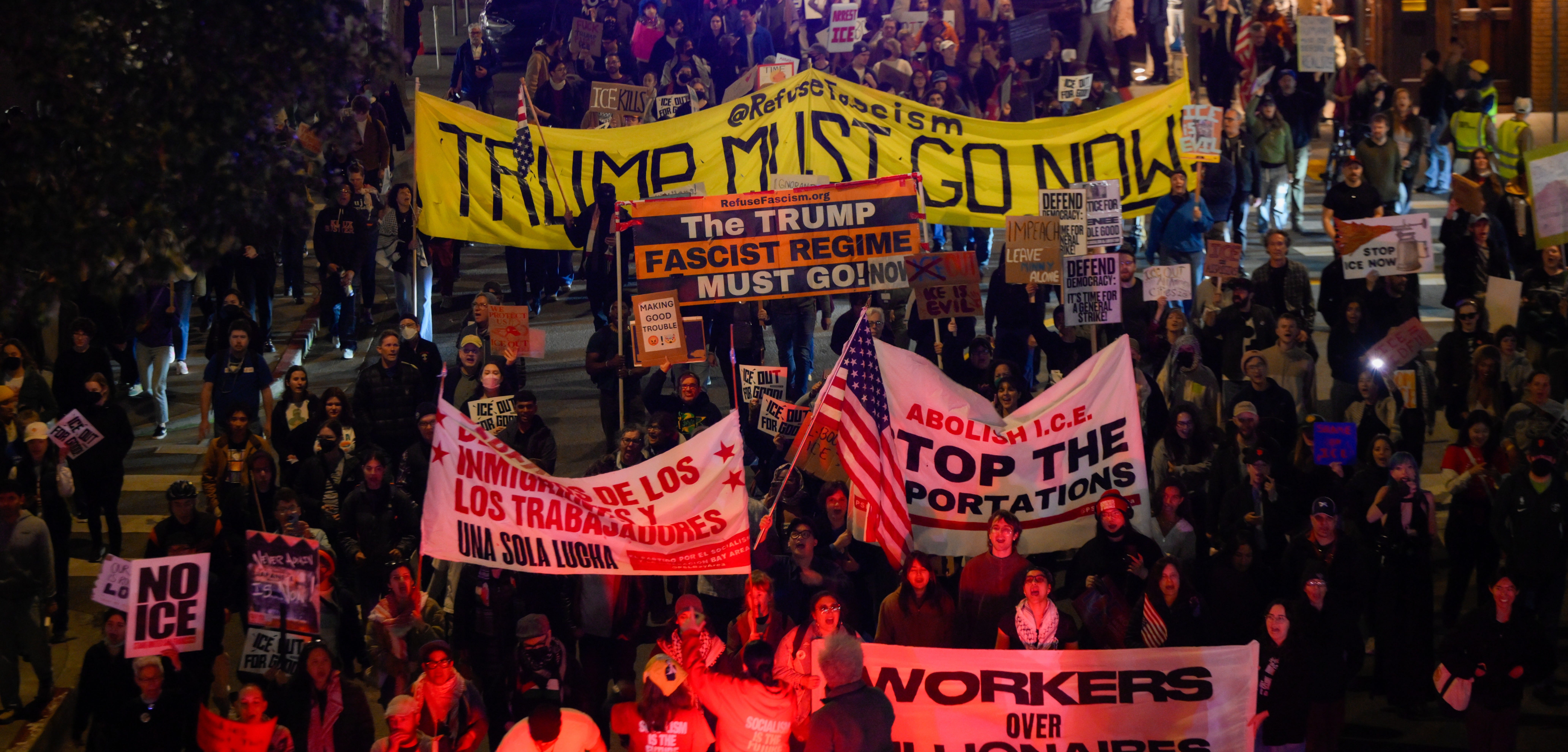
So now I watch all the rage and horror unfolding over another execution in the streets of Minnesota and I see so many of the same bad ideas and misguided attitudes, and I do feel a kind of despair. People call for violence against state forces, and I think that’s a terrible idea; you can’t beat them, and the more damage you do, the more the Trump administration will respond with military force that will effortlessly overwhelm you. People call for general strikes, and I think that’s naive; a general strike only works in an environment of class consciousness, healthy unions, and a populace that understands how to use its labor power; we have none of those things. But those are, at least, tactical approaches, ideas about how to create change. They’re thinking about the how. What I find truly destructive is those who say that it’s wrong for me to respond to righteous rage by calling for clear thinking, who get angry when some of us insist that protestors and activists and resisters must be strategic if they’re to be a force for good, those shouting that we shouldn’t “tone police” people reacting with horror towards a state execution of an innocent man in the streets, that to call for smart tactics and effective methods is to equivocate about the justice of that killing and the broader scenario. There is no equivocation - this was a brutal act of murder and ICE and Trump are agents of horrific injustices. That is precisely why I demand that you stop acting like anger is action and strategy a form of capitulation. We tried all of that last time. I can think of no better time to demand clear thinking, effective tactics, and informed strategy than right after the state has executed an innocent person in the street.
I spent thousands of hours of my life doing organizing work against the wars in Afghanistan and Iraq, for grad student labor interests, and for housing justice. A good deal of that work involved organizing and attending street protests. The insistence that I am a critic of all such protests is very strange; I have been the named permittee of large street protests, in my life. We protested to create change and right now, with this fight over the future of immigration and its enforcement in this country, that means changing policy.
“Policy” is not a word that feels satisfying right now, but that is the only way this ends in anything durable and good: better immigration policy. I find the fixation on abolishing ICE odd, for this reason. Yes, abolish ICE, sure. But if you abolish ICE and don’t fix the broader immigration policy then the FBI will enforce cruel immigration law, or the local cops will, or they’ll start some other brutal agency. ICE is only the fever that accompanies and announces the disease. We have to have a clear set of demands for immigration policy. The problems are twofold: one, the Democrats do not have anything like a coherent agenda for immigration, and two, while I’m convinced most Americans are disgusted by this cruel spectacle, every bit of political information available to me suggests that large majorities in this country support a restrictionist immigration policy, and Joe Biden’s addled and stumbling half-measures enflamed the country against migrants while failing to actually enshrine legally-enforceable rights for them. We are operating from a position of immense disadvantage on this issue. But we are always operating from a position of immense disadvantage, and I assure you, starting a half-assed guerilla war in the streets of the Twin Cities or loudly calling for a general strike that will not be joined by vast majorities of working people put as at an even greater disadvantage. Keep protesting, defend yourselves in the streets, and also do politics and do it well. Again, I laid out my vision of how to do such a thing in my second book. Maybe my prescriptions are also naive or misguided, but they represent an attempt to think clearly in the face of injustice.
There’s a kind of moral infantilism, in contemporary left-of-center culture, that pretends that feeling angry is the same thing as doing politics, that catharsis is indistinguishable from strategy, that letting people vent their righteous rage is itself a form of justice. But justice only lives in the material world, the world of things. If a political project is genuinely a moral imperative, if we claim that human suffering obligates us to act, then we are equally obligated to pursue that project intelligently, strategically, and with ruthless attention to what actually works. Passion that is not disciplined by goals is self-indulgence. The core of real political passion is obsession with outcomes: what must change, how power actually moves, what tradeoffs are unavoidable, and which tactics advance the cause rather than merely advertise our virtue. Those outcomes can be minor, the business of getting to them can be agonizingly slow, the wins achieved can look insubstantial in the moment, the remaining distance towards true victory can still be vast, all of that is fine. No one is saying that you have to move mountains overnight. But you do have to say “We are going to move this mountain, and we are dedicated to moving this mountain in the most effective and fastest way possible, and here is our plan for how we will move it.” You have to have a plan.
To insist otherwise is to treat politics as therapy and the oppressed as props in your emotional drama. If we truly respect the victims of the injustices we invoke, if we want to get justice for Alex Pretti and save future victims of ICE, if we want to build a humane immigration policy, then we owe them all our relentless self-criticism, constant recalibration, and a willingness to abandon tactics that feel good but fail. Anything less, anything that prioritizes our rage over results, is an abdication of everything we claim to stand for.