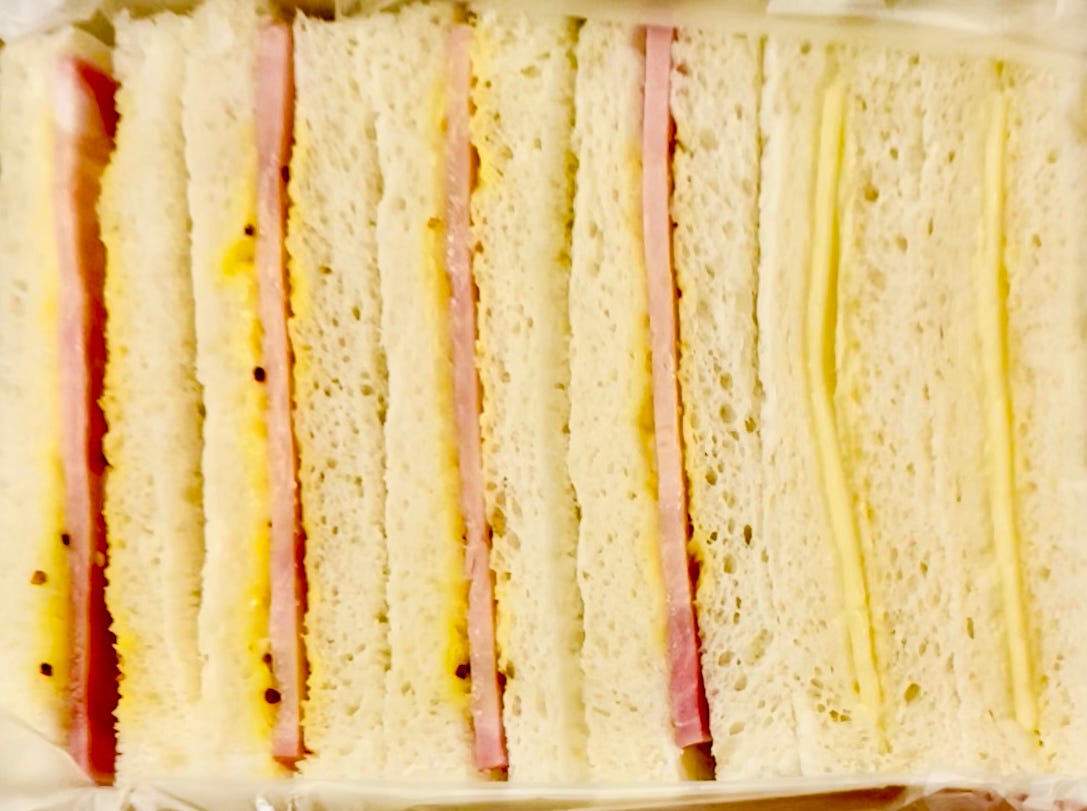
The Kamakura Ham Sandwich ekiben has been on sale at Japanese train stations for more than 127 years. It’s a single slice of ham between two pieces of shokupan with mustard, plus half of a cheese sandwich, sliced into fingers and laid flat in a box.
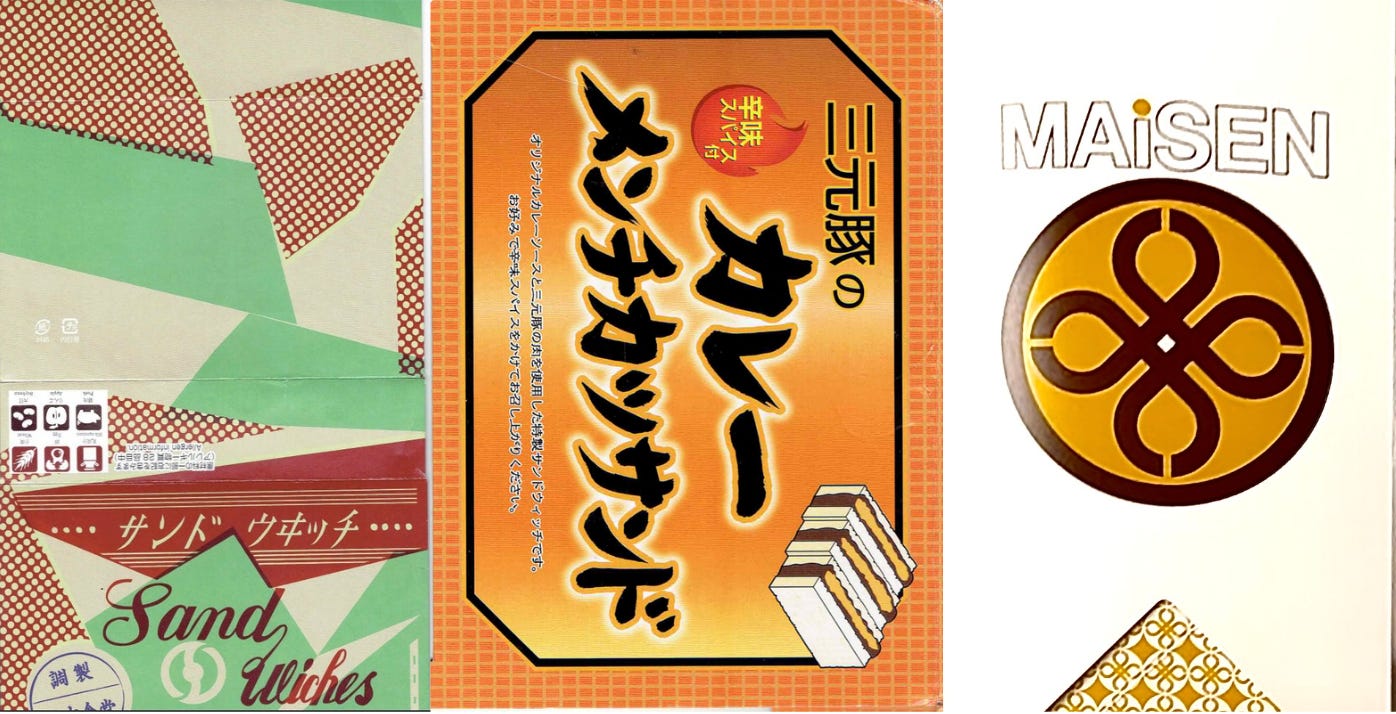
Inside, the colors of the ingredients on plush bread bleed into each other like a Rothko painting. The restraint plays against the exotic tapestry of specialties available in ekiben. I’ve noticed that, perhaps owing to their plainness, the dozen-odd sandwich ekiben I’ve had feature eye-catching and bold designs.
At 600 yen, or a little over $4, the Kamakura Ham Sandwich is a good snack as well as a welcome palate cleanser when you’re sampling a lot of different ekiben. It’s distributed all over Japan as one of the official Ekiben Company’s standard offerings.
I used to hate eating sandwiches in Asia because they lacked the heft and textural contrast of American and European versions. It took a while to code-switch my palate to accept Asian renditions of Western food in general. But I’ve come to find them delicious in their own way, and I don’t think it’s accurate to call them inferior.
Sandwiches are defined by bread, which doesn’t happen without flour, the arrival of which in many Asian societies was preceded by violence. Wars disabled rice production in places like Japan, Southeast Asia and Taiwan for years after conflicts ended. Western food aid came in the form of flour, but many were still craving the taste of rice. A lot of unusual uses of flour special to Asian communities came about because people wanted to recreate the familiar sweet and soft textures of rice and rice products.
Western baking techniques came to Asia via traders, missionaries and colonizers. In Hong Kong, the finger sandwiches served at high tea to British aristocrats became a more casual food that would eventually be found in refrigerator cases at every Asian 7-11 in Asia. It’s why I found them such a contrast from American sandwiches, typically the creations of working class Italian immigrant baking.
This ekiben was created by the Kamakura Tomioka Ham company in 1898.The box makes the bold historical claim that this specific ekiben popularized ham sandwiches throughout Japan.
Ekiben have played a role in popularizing a lot of food in Japan, but Dutch settlers in Nagasaki raised pigs and most likely created ham and bacon as a matter of course, though the recipe wasn’t yet public knowledge. And, western dishes like bread and ham were served as part of the school lunch program beginning in 1947.
But here’s what the Kamakura Ham Company says: an Englishman named William Curtis came to Yokohama in the late 1800’s and gave the recipe of ham to the Japanese people out of gratitude, after some locals helped save his factory from a fire.
But a scholar at Shigakukan University named Sumiyuki Sakasegawa found that Curtis didn’t exactly gift people the recipe, which is just a method of smoking with salt, sugar and saltpeter to give the meat color. Actually, his hotel, the White Horse Inn, only served non-Japanese guests.
Curtis had fallen in love with a beautiful tea house waitress named Kane Kato, and the two moved in against her parents’ wishes, according to Sasegawa’s research.
At some point, Kane allowed Saito Kakuji into Curtis’s ham factory to learn the recipe. Kakuji became one of the three founders of the Kamakura Ham Company, which still operates to this day. Another one of the founders was Saito Mampei, who happened be Kane’s former boss.
Curtis divorced his wife and had two children with Kane. The family later moved to Shanghai according to Sasegawa’s research.
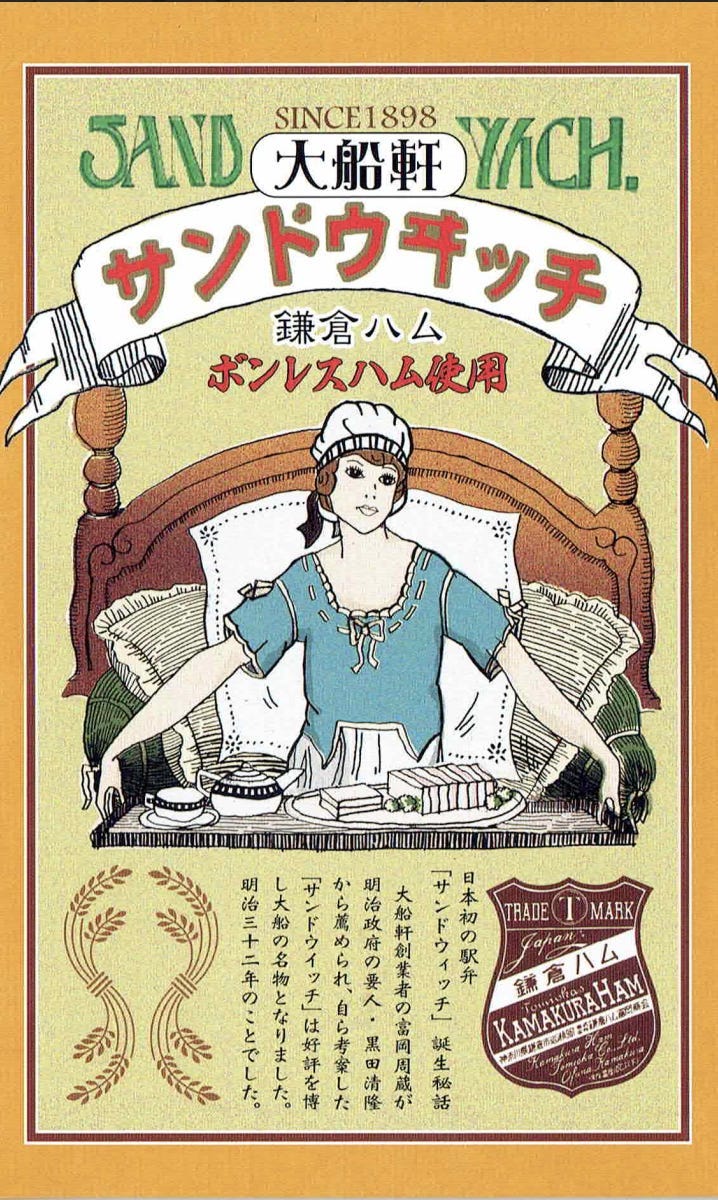
It begs the question - who is the woman depicted on the cover of the ekiben? It’s a woman serving sandwiches wearing a simplified mob cap and other formal service wear distinctive to the West. To me the race of the woman is unclear. Could it be a young Japanese woman, with a bit of a Mona Lisa smile?
It might just be a generic brand depiction of a woman with no identity beyond serving as an idealized vision of Western service and hospitality. But I like to imagine it’s Kane, without whom this ekiben wouldn’t exist.