Technology Connections (whom I love) just published a video claiming that “[he] was right about dishwasher pods [and pre-wash temperature] and now [he] can prove it.”
His claims—that powder is better than pods and that pre-wash needs to be hot—are, simply, not really true. He was not right and cannot prove that he is right. Instead, as in his last video, he spends on the order of an hour demonstrating facts insufficient for his claims and making claims that are still wholly unsupported.
First, bottom line up front: you do not need expensive dishwasher pacs. You don’t even need dishwasher pacs. If I had to recommend a detergent, it would be Cascade Complete Gel. This post exists to do one thing: to challenge some dishwashing claims.
Second: why should you trust me? Unfortunately, testing detergents is a strange obsession of mine, and fortunately, I’d be satisfied if, at the end of this, you come away thinking “yeah, one guy throwing together a formula really quickly with almost no R&D probably didn’t just beat Procter & Gamble and Reckitt Benckiser.”
Technology Connections’ claims across this video and others—which I do not agree with—can be summarized as follows:
In this video:
Pre-wash detergent is important and allows gel and powdered detergents to perform better than pacs.
It is bad to do pre-wash with cold water.
Independent ASTM-standardized tests prove that EcoGeek and Green Llama’s powdered detergent beats a big-name brand’s most premium pacs and powder, and that the big-name brand’s powder is a poor performer.
He also claims that it is the best detergent he has ever used.
Note: the weight of the pac mentioned in the video does not come close to matching that of my Finish Ultimate (which is very light), but exactly matches my Cascade Platinum Plus pac. So, I’ll assume he’s talking about Cascade.
Unique to his other videos:
The ingredients are mostly the same between powders and pacs, and they should accordingly clean mostly the same way.
For pre-wash detergent:
His dishwasher has a pre-wash detergent cup.
In his dishwasher, dishes were cleaner after the pre-wash cycle when detergent was used, compared to a pre-wash cycle without detergent.
For the virtues of hot pre-wash cycles:
Dishes come out of pre-wash less soiled when they’re washed with hot water.
For independent ASTM testing proving Green Llama’s powder’s superiority:
As claimed, an independent and blinded ASTM (American Society for Testing and Materials) standardized test showed comparable or better results for the Green Llama powder.
For ingredient similarity:
A direct comparison of ingredient lists.
Technology Connections’ main mistakes are:
Over-indexing on pre-wash results when final results matter more
Over-indexing on the value of detergent
Showing insufficient skepticism toward the results presented
If it is not obvious yet, I love detergents. So it is with a heavy heart that I say that dishwasher detergents are, in general, massively overrated. Other aspects of cleaning dominate the role of detergents, particularly in softer water or when using a rinse aid.
There are cases where detergent is extremely important: certain soils are extremely difficult to clear (consider burned milk on stainless steel) without particular mixes of chemicals. In most cases, however, detergent only plays a minor role, and that role—degreasing—is done remarkably well by a good-quality rinse aid’s surfactants at the end of a wash cycle.
This has major implications for the rest of the video and will be evidenced and referenced later in the document.
Here’s some inside baseball: dishwasher manufacturers don’t like tomatoes.
The primary role of pre-wash is to quickly and mechanically scrape off already-loose particles and to dilute pigments before a hot main wash cycle. Already-loose particles are a nuisance worth quickly clearing, and pigments can transfer to plastics at some typical wash temperatures, so pre-wash has some value. Tomato sauces (and turmeric) are insidious in this regard. Because I think this latter point might be novel, I’ll quote Whirlpool:
Pink/orange discoloration of plastics is usually caused by carotenoid, a class of typically red/orange pigments found in foods such as tomatoes and turmeric. When carotenoids are dissolved in oils, they become easily absorbed into many plastics, mainly when heat is also applied. Because the resulting stain is absorbed into the plastic, water-based bleaches are ineffective.
[...]
Pre-rinsing or using a Rinse Hold cycle will reduce the chance of staining. Regular use of a rinse cycle and an air-dry or energy-saving dry option will reduce the likelihood of staining.
Of all attempts to solve staining from carotenoids (and beta carotene specifically), a quick pre-wash or pre-rinse is the most effective that I know about. Neither heat nor detergent are needed for this, though, because the staining comes from easily rinsable soils, and because heat is actively problematic for this particular type of soil. And for loose soils, temperature and detergent are simply irrelevant.
Accordingly, for pre-wash, temperature and detergent are unimportant.
We need to distinguish pre-wash from pre-rinse: a pre-wash stage—with elevated temperatures, water pressure, and longer durations—is actually not inherently important in the first place, so improvements to pre-wash, no matter how significant, aren’t worth worrying about. Don’t believe me? Let’s consider the two best dishwasher manufacturers: Bosch and Miele. (Note: Thermador is Bosch.)
Bosch and Miele have dominated independent dishwasher tests for many years.
Miele dishwashers are programmed, in most cases, to not do anything particularly reminiscent of American pre-wash cycles at all. Miele’s best dishwashers no longer feature a pre-wash detergent drawer.
Bosch dishwashers are more like a pre-rinse: they very quickly spray some water, check the water’s turbidity, drain a bit of water and add some more, and then repeat until pigments and large particles are likely to be gone. Because of how quickly the water is diluted, such pre-rinses are not conducive to detergent.
This is also why newer Bosch machines tend to lack a pre-wash detergent drawer.
These sorts of un-American machine behaviors are common with European dishwashers. See, also from “Liquid Detergents,” this comparison. Note that pre-2013-efficiency-standards dishwashers in the United States wash more like the first picture than today’s American machines, and that all machines (US or otherwise) are more Bosch-like, especially Frigidaire’s and Whirlpool’s.

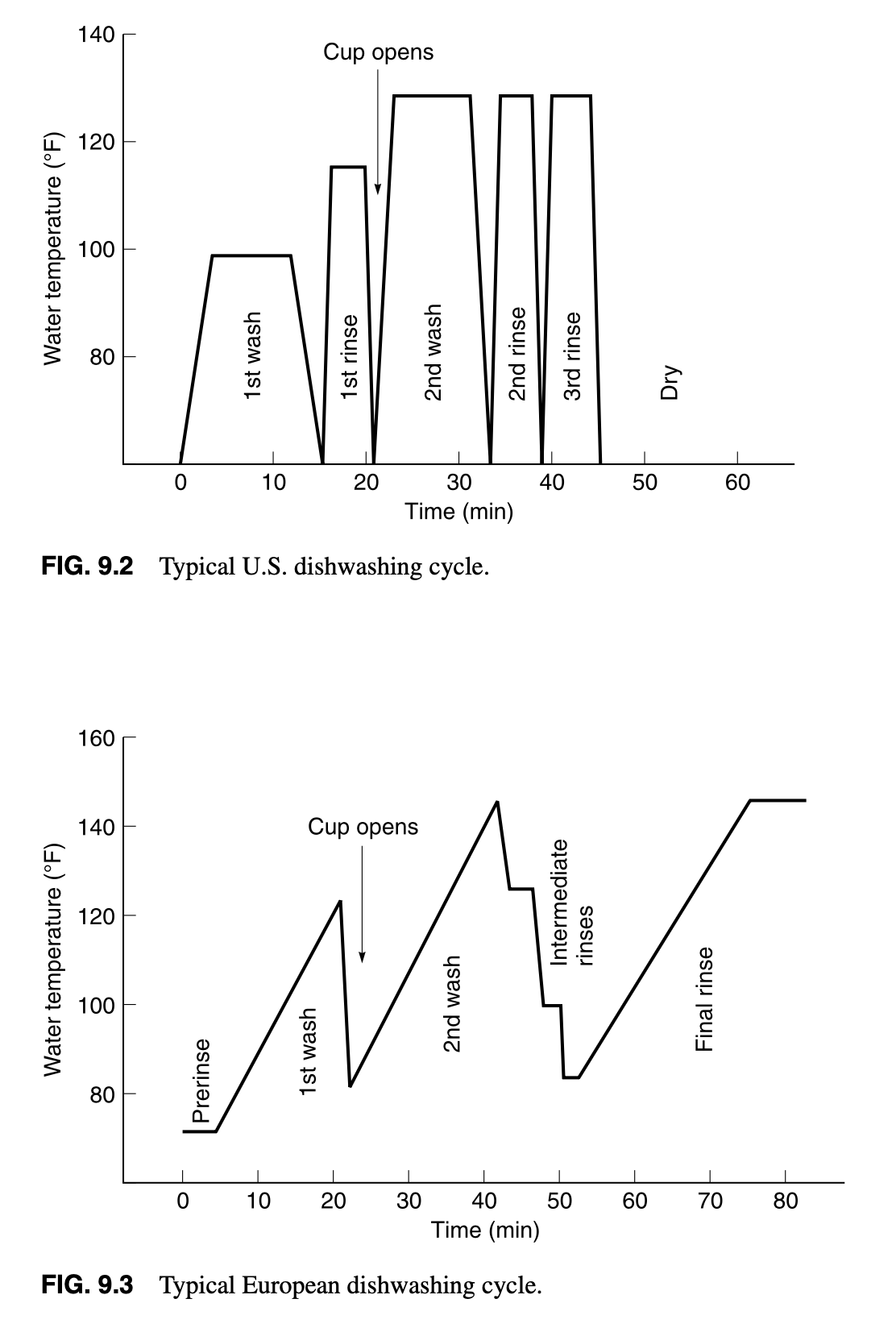
Pre-wash performance should be considered in the broader context of overall machine performance. The question Technology Connections claims to care about is “How clean are the dishes, actually, when the dishwasher finishes a complete program?” And on that, Bosch and Miele show us that the best results are achieved without worrying about pre-wash detergent.
(Caveats: lower washing temperatures have greatly reduced the risks of staining from carotenoids and other pigments. But this makes pre-wash less important, not more.)
Technology Connections showed that using hot water and pre-wash detergent improved cleaning during the pre-wash cycle. However, this doesn’t mean much.
It would matter if and only if the total dose of surfactants (what I’d consider to be the first bottleneck) and other cleaning ingredients were insufficiently dosed for the soil level in the dishwasher, and even then, only if the resulting deficit were so severe as to prevent adequate cleaning. In all other respects, high-end detergent pacs should be dosed, for all practical purposes, better than a powder.
This risk of “saturation” is almost non-existent. First, you only need a few grams of a good surfactant to strip a lot of oil. Second, the pre-rinse and/or pre-wash cycles, even without detergents, will still remove a lot of soil. Your dishwasher’s wash water will be hot enough to loosen oils, further diluting soils during regular cycles. And then your rinse aid will act as a fairly potent degreaser, finishing the (in all likelihood, already finished) job.
For all practical purposes, to premium dishwasher detergents, a really dirty set of dishes and a moderately dirty set of dishes aren’t all that different, and so it doesn’t make a difference whether only 30% of the soil or a full 90% of the soil was removed during the pre-wash stage. The main wash stage will do just as good a job regardless.
This may seem counter-intuitive, because cleaning results do seem to track with how heavily a dishwasher is loaded and soled. But the reason for that is unrelated to detergents. Indeed:
Mechanical energy of the machine itself is responsible for 85% of the soil removal during the cleaning cycle; the detergent contributes the other 15%. Thermal energy is in a sense a secondary effect, contributing to the effectiveness of both the mechanical and chemical components of cleaning.
(From “Liquid Detergents, 2nd Edition”.)
It’s heat and mechanical energy, exerted over long, higher-pressure wash cycles, that remove the bulk of the soils in a dishwasher. In a machine with a lot of very dirty dishes, the sheer number of soils to remove, combined with the heightened difficulty for the sprayer arms to actually reach those soils because of occlusion from other dishes, makes it much more likely that the dishwasher will fail to catch everything. This may give the impression that a detergent was inadequate, but that’s not the case. It’s just that detergents do not make that much of a difference. Sure, 15% is substantial, but it is extremely important to keep in mind that nothing detergent-related matters that much.
From this, you should intuit that if detergent matters very little, then detergent during a very brief, colder, low-pressure start-up phase will matter even less.
Earlier, I mentioned that detergents contribute to, maybe, ~15% of soil removal in dishwashing. That 15% is composed of everything that you can’t easily remove with water and some force. While most such things can easily be cleaned using surfactants, an oxidizer, and enzymes, it’s very long-tailed.
The ASTM-standardized test results featured in the video raise several red flags. First, allow me to reproduce them:
Formula #01 is Cascade Complete Powder, Formula #02 is EcoGeek / Green Llama’s powder, and Formula #04 is Cascade Platinum Plus.
Now, allow me to elaborate:
Even though there are a huge number of available dish monitors, they chose six very specific examples that all favor their formula. These are all soils you would choose if you wanted to exaggerate the difference between Cascade Powder and a different powder, while minimizing the difference between Cascade Platinum Plus and a simpler product.
It is very easy to make a detergent look good on exactly six soils when you get to choose what those six soils are.
It is very easy to make Cascade Platinum Plus look poor on exactly six soils when, again, you can choose those soils.
Remember the earlier comment about how you should expect great results even without detergent because of the mechanical action of the dishwasher’s spray? Notice how one detergent performs really badly? That’s a huge red flag!
This is easily explained: the tests were cherry-picked based on ingredients.
Relatedly, it is a bit slimy to insinuate that this is ASTM-standardized testing when the only ASTM-standardized test (which didn’t even adhere to the standard) was the spotting and filming test.
The video notes that two EcoGeek and Green Llama formulas were tested, and that only the best-performing result was shown. They hid the inferior product. This is textbook p-hacking and there is zero reason to believe these results generalize.
They chose 20 g of Cascade Complete Powder and 20 g of EcoGeek / Green Llama’s detergent. While I do not own the standard, I found some documentation to suggest that this is non-compliant with the relevant ASTM testing standards. The document specifically reads, “use the quantity of detergent specified by the manufacturer.” Here’s how much the manufacturers recommend:
Green Llama / EcoGeek: Green Llama / EcoGeek sell, for $26, 40 loads for 600 grams, so 15 grams / load and $0.65 / load.
Cascade Complete Powder: Cascade Complete Powder has a substantial amount of filler in it for ease of dosing. The box says to completely fill the pre-wash and regular wash compartments. On my Whirlpool dishwasher, that works out to 71 grams / load. I would be surprised to see any dishwasher with a compartment that only fits 20 grams. In any case, this works out to $0.23 / load.
This is a nearly 5x dose advantage for the EcoGeek detergent that was generated almost entirely out of thin air. They deviated from the standard to such an extent that—adjusted for the discrepancy—EcoGeek and Green Llama’s per-wash price would be (20/15 * 0.65) / (0.23 * 20 / 71) = 13.37x (nice) more per load. I have only included this in this write-up because of the 1337, but I do think it’s relevant if we’re going to be talking about product affordability. Heck, the allegedly more economical product is the most expensive one here.
There’s only one single level of water hardness. This is technically fine, but—again—it is easy to optimize for one level of hardness, even to the detriment of other levels, and so it’s not obvious that this is fair.
I made a matrix comparing the two products to try to make sense of the unusually good results for such a simple detergent and unusually bad results for Cascade Complete Powder.
You will immediately notice that there are substantial differences across all of these products, contrary to Technology Connections’ claim.
For example, Cascade Platinum Plus should exhibit:
Better performance on soils that benefit from oxidation because of the transitional metal bleach catalyst.
Less filming and better performance across harder and softer water because of Trilon M / trisodium dicarboxymethyl alalinate.
More consistent non-filming as well.
Not stated there, but mentioned repeatedly in P&G press releases: better and much greater volumes of the amylases and proteases, and, in turn, much better starch and protein soil removal, particularly on longer washes.
But we’re not told how long the washes are. 🤷
Corrosion inhibition / much longer-lasting dishes and cutlery.
Outstanding and highly consistent grease/fat/oil performance, even in hard water.
Consistently effective cleans at all wash temperatures, but better scaling into longer washes than most (all?) existing products. (Finish Ultimate may be better.)
Better ability to reach soils that are otherwise difficult to latch onto, and better rinsing in some dishwashers, thanks to the isotridecanol.
Better rinsing is not likely to be observed if you use a rinse aid, as you should.
Cascade Complete Powder should exhibit:
Results only in cases where you’d expect a water sprayer to do decently well, given that very little powder was used.
That said, you’d expect some decent results on greasier stains.
EcoGeek / Green Llama powder should exhibit:
Good oil removal.
Good oxidizable soil removal.
Good protein and starch removal.
Fantastic performance on baked-on fats thanks to the extreme alkalinity, but much more damage and etching to dishes, especially glassware.
Results would be particularly exaggerated on burned-on milk or cheese.
This (but only with milk) is the detergent test I’ve done the most!
For the same reasons, much shorter-lasting dishes.
Likely also an issue for Cascade Complete Powder, but I can’t compare alkalinity in a 1% solution w/o having measurements. P&G provides this, EcoGeek and Green Llama do not.
Relatively worse filming over multiple cycles because of the inferior antiredeposition agent, but this matters little if you’re only doing one cycle.
Conveniently, they only ran one cycle.
It’s also bad for VERY heavily soiled dishwasher runs, but things were convenient, and, frankly, I don’t think it’s that big of a deal.
Great grease/fat/oil removal performance.
Exceptional performance on shorter wash cycles, hotter water temperatures, and higher-water-use cycles; performance degradation at lower temperatures; similar diminishing returns on wash cycle length to Cascade Complete Powder, but more rapidly diminishing than with Cascade Platinum Plus pacs.
Unfortunately, we do not know anything about the testing procedures, so it is hard to know the ramifications of this, other than that they exist.
Now, look at the test:
It uses a single dishwasher program and water hardness.
And the program used was not disclosed despite the powders’ formulations being optimized for hotter water and Cascade’s being more optimized for longer washes. We cannot read into the results.
It does not use many greasy stains.
It uses light dishwasher loads (again, not a huge deal, but it does favor using little anti-redeposition agent for soils that take a long time to come off).
It features two tests of burned-on milk and protein, favoring highly caustic detergent formulations. (Hmmmm.)
The only super waxy food comes from the spaghetti sauce test which—as a sauce—easily rinses off. This makes it one of the easiest tests of a waxy food, when tests of e.g. burnt-on Beyond Meat options were right there.
No testing of glassware etching, metal tarnishing, or filming after repeated cycles, let alone at different wash temperatures and water hardness levels.
This really matters when a formula might be highly caustic.
I have followed Technology Connections since his “What is Dolby Noise Reduction?” video. I have been a Patreon subscriber for years. I genuinely love his work. He’s also one of the most positive presences on social media and, in my opinion, one of the best YouTubers, period. Genuinely a beacon of the platform. I find his work tasteful, well-informed, and extraordinarily well communicated. I really hope this doesn’t come off as confrontational, especially since my last piece was (intentionally) confrontational.
Having said that, the insinuation that there’s a conspiracy is uncalled for. The “it has Dawn” marketing thing is pretty much true: Cascade pacs use Dawn-like aqueous surfactants to clean much better than they otherwise could. You cannot put them in a powder. And they’re able to use the nature of the pac to get away with more potent and otherwise-incompatible mixes of ingredients. (My reading of patents suggests that it’s extremely constraining, in general, to have oxidizing ingredients next to other ingredients—but that could be wrong! I know there are plenty of encapsulated bleaching products.) But yes, Cascade ActionPacs were a genuine innovation when they launched because the mix of powder and liquid was an actual improvement, and for reasons that are not particularly achievable with powders, because the funny look of pacs really does have a functional purpose. See e.g. EP4448712A1 and US20090233830A1 if your employer allows you to look at patents.
Finally, I want to say that despite my disagreements with the testing methodology used, I don’t think the methodology was chosen in bad faith, and I’m sure I could be misunderstanding things, too. These things happen and I love the idea of someone passionate trying to improve dishwashing.
I thought I would add one point that I’d forgotten and then also include a summary. I got carried away, though, and added a lot of other points. Woops.
In I messed up. You’re using too much detergent., Alec points out that the ingredients list for Cascade Powder and Cascade Platinum ActionPacs are nearly identical, claiming “every other chemical is also found here in this box, which you can also use in different doses better suited to your dishwasher and situation.” There are several problems with this:
It is true that you have more latitude to choose your dose with detergent powders, but this doesn’t confer an advantage in terms of picking a “better suited” dose for your situation or dishwasher.
In fact, Trilon M—an additive unique to the detergent pac—allows detergent pacs to be almost strictly better suited to users’ situations. This is because it makes the detergent work well and without filming in across wash temperatures, volumes of water used, wash temperatures, and water hardnesses.
“Isotridecanol ethoxylated” (and other alcohol ethoxylates) are great, and I feel he is being overly dismissive about their absence from the powder.
Having the same ingredients does not mean sharing the same volumes of each ingredient. There is no free lunch here: one reason Cascade ActionPacs might cost more than Cascade Complete Powder is that Procter & Gamble allocates a much greater share of each ActionPac to enzymes as compared to powders. (Do not click that link if you’re forbidden from reading patents and are on a corporate device.)
Having the same family of ingredients (amylase, subtilisin/proteases) does not mean having the same ingredients: not only do Cascade ActionPacs have more amylases and proteases, they have different amylases and proteases. The patents for Cascade Platinum (Plus) make repeated mention of novel pac-exclusive proteases to boost cleaning of e.g. eggs and creme brulee. The pacs just have better enzymes.
You may argue that because these aren’t in Cascade Complete Powder that this is evidence for Alec’s theory that Procter & Gamble sabotages their powders; however, I’m not sure that that’s a fair assumption without knowing how much Procter & Gamble pays for their enzymes.
On the topic of the “P&G sabotages their powder” conspiracy theory: The amount of thought that went into Cascade Complete Powder is demonstrably extraordinary. Just look at the patent from earlier. Accordingly, it’s hard to buy his claim that Procter & Gamble intentionally made a bad product.
The strongest evidence for a conspiracy involving Cascade Complete Powder is, in my opinion, the nightmarish, chalky residue it leaves when you use a lot of it. It might be useful to explain why that occurs:
Without a good sequestrant like Trilon M, in hard water, the water softening component (sodium carbonate) of Cascade Complete Powder will—especially in harder water—react with calcium in the water to precipitate as calcium carbonate.
In modern, very water-efficient machines, these precipitates may not be particularly diluted and can quickly form thick films. (And though he suggests otherwise, this can be blamed on the removal of phosphates from detergents; though, in my experience, Cascade’s phosphate-based formula would leave a different kind of film at lower wash temperatures anyway.)
Here’s what the films look like:
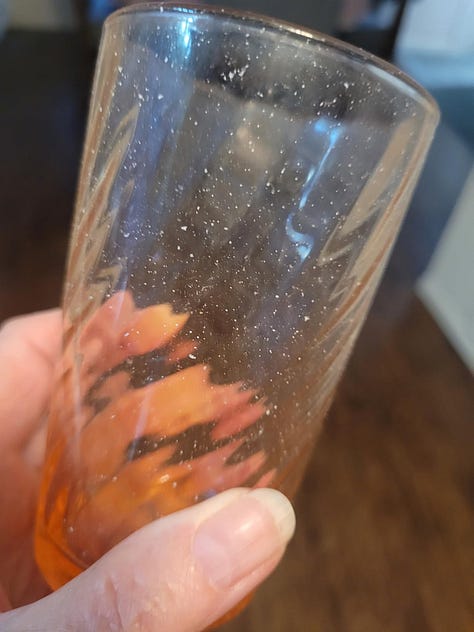
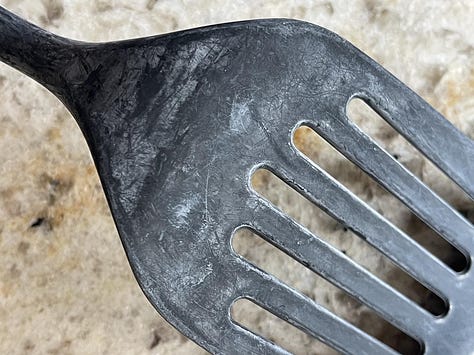
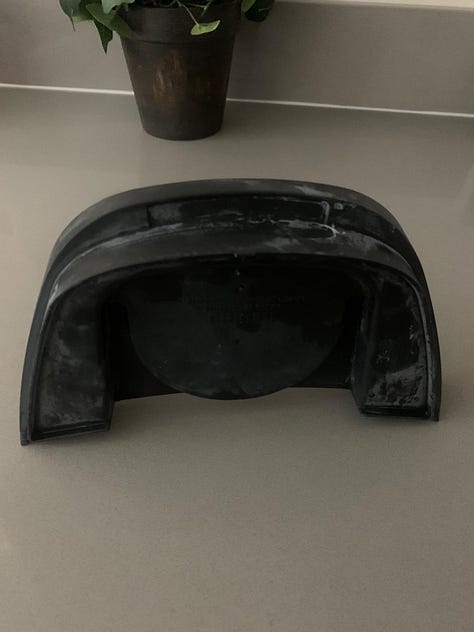
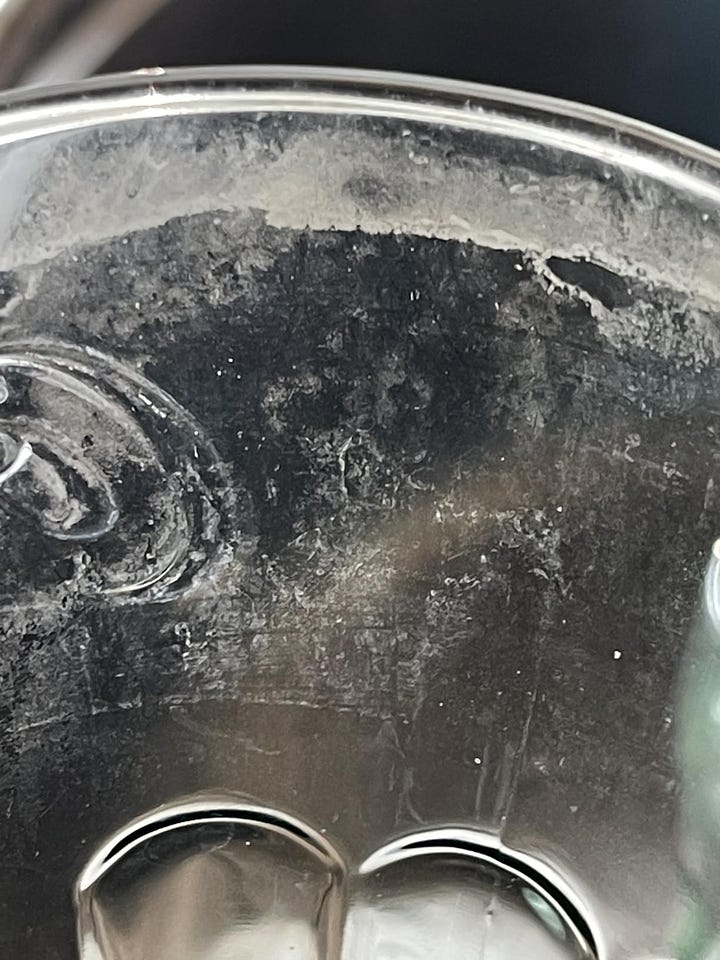
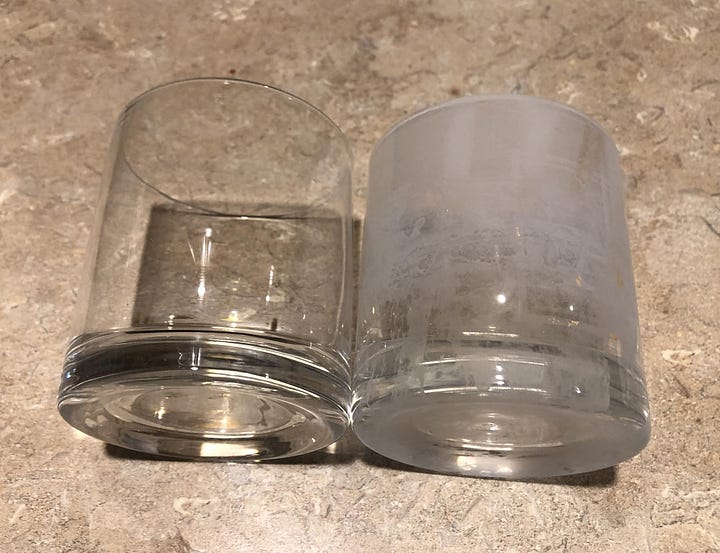
Examples of filming from Amazon reviews Anyone who has lived somewhere with very hard water knows exactly what this film is: it’s literally just heavy limescale buildup. If you look at the picture at the bottom left, you can see how the ring of the glass (where rinse cycle water accumulated) has the bulk of the limescale. If you look at the part of your shower head where water tends to pool up, you’ll see the same pattern and same residue. Hard water is not a conspiracy. The sequestrants in Cascade Complete Gel and Complete ActionPacs prevent this, but Cascade Complete Powder has to sell for a few pennies per load and those sequestrants would add cost.
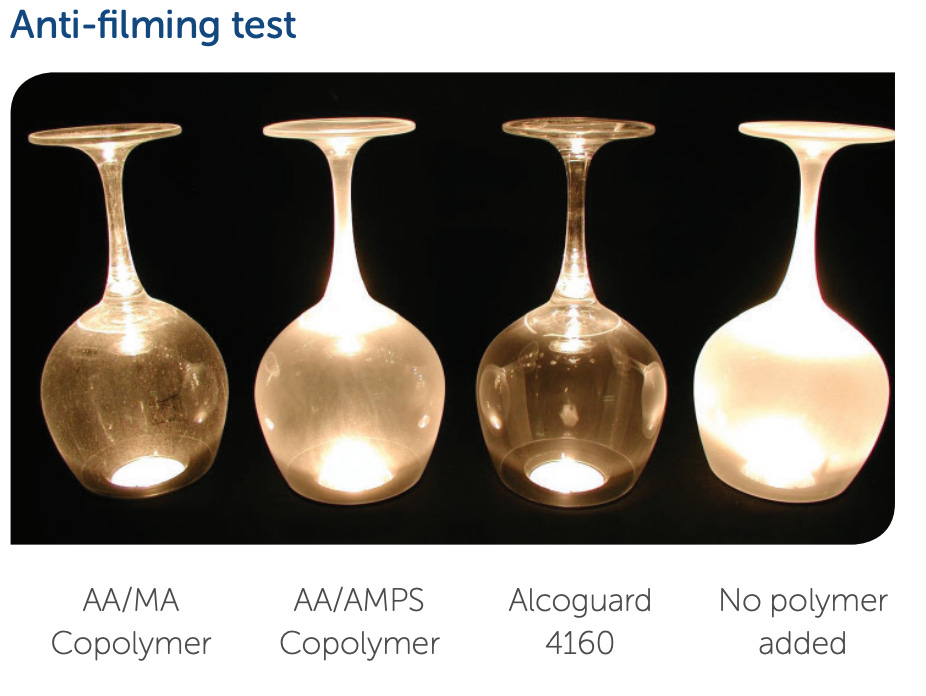
If you’re fine paying extra money, consider adding Finish Jet Dry Dishwasher Rinse Aid Hardwater Protection (yes, it should be that specific version of Jet Dry) at the maximum dosing level* supported by your dishwasher. (Nitpick: Alec’s claim that rinse aids are all similar is also wrong.) This specific Jet Dry will help in three ways. In order of importance: first, and most importantly, it helps by making water “sheet off,” so that very little of the lime-rich water remains on your glasses. It directly addresses the issue of tons of water pooling on the rims of your glasses and creating those super thick limescale films seen earlier, though some water (patent: potentially <1%) will still remain. That’s where the second-most important feature comes in: a state-of-the-art calcium dispersant and antiredeposition polymer. I believe it’s either Alcoguard 4160 or, based on this patent, one of three other things. Out of respect for those whose employers prohibit them from reading patent details, I’ll omit the specific ingredient names, though you can find them in the above patents by ctrl-f-ing for “may be substituted.”
These polymers are the real deal: they disperse the precipitates, preventing them from crystallizing on glass. They also inhibit new precipitates, though by the rinse cycle, it may be too late. The third most important feature is the inclusion of a great sequestrant, EDTA, though I doubt it does much at the concentrations and timescales at play in a dishwasher.
*: A common misconception is that you shouldn’t use too much rinse aid and that it’ll somehow actually worsen rinsing. But the maximum dosage of rinse aid on typical dishwashers—5 mL—is, based on Reckitt Benckiser / Finish’s testing—the highest performing. See this patent.
On the topic of nitpicking his videos:
You really do not need a dishwasher cleaner. Detergent pacs provide all the same benefits.
Isotridecanol ethoxylated is such a good surfactant even in low doses that, depending on your dishwasher and wash program, pacs really can function as a (suboptimal) rinse aid. You can try this for yourself and see if they provide decent sheeting during the rinse cycle; for my new-ish Whirlpool dishwasher, they do, though it’s relatively underwhelming.
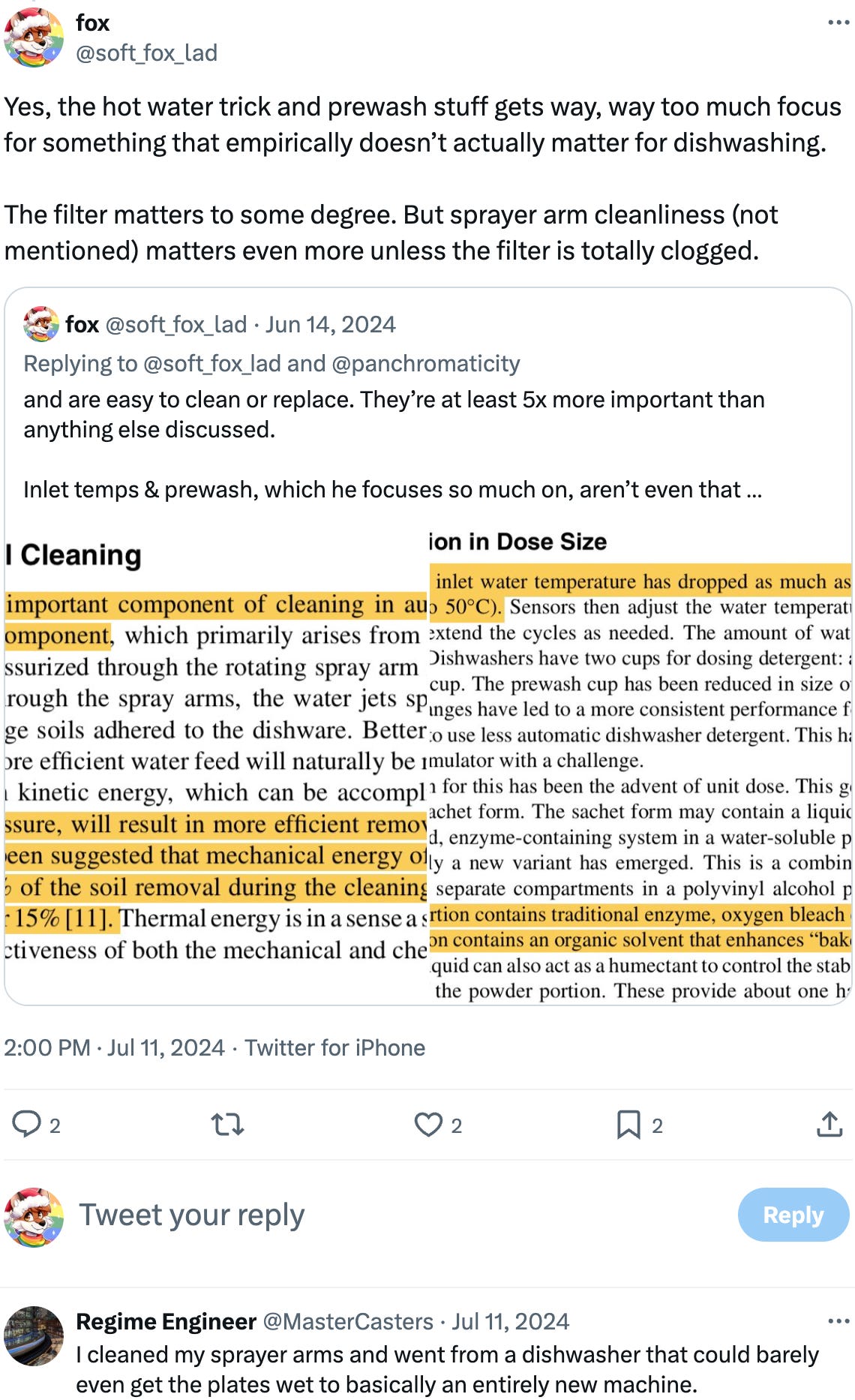
In his video about how to make dishwashers clean better, he focuses a lot on things that don’t matter, like inlet temperature. But if your filter is even a little bit clean, you only need to be concerned about three things: is your detergent any good, are you loading the dishwasher correctly, and—something he completely omits—are the sprayer arms clear? The latter really matters. Don’t just take my word for it. Others agree:


There’s no way anyone is going to read the whole post, so here’s a summary.
CLAIM: The video shows that powder detergents are better than pacs.
REBUTTAL: He demonstrated that if you violate the standardized testing methodology to give a 13x advantage to one powder product over another; and if you are testing almost exclusively on soils that favor your product and disfavor the competition; the advantaged product might overperform the disadvantaged product. But this is not informative.
CLAIM: Pre-wash detergent is important. It lets gel and/or powder beat pacs.
REBUTTAL: This is not evidenced and demonstrates a complete misunderstanding of the purpose of prewash. In fact, pre-wash is extremely unimportant, as evidenced by the fact that the best-performing dishwashers do more of a “pre-rinse” than a “pre-wash,” and with no pre-wash detergent cups.
CLAIM: Cold pre-wash bad, hot pre-wash good
REBUTTAL: This is near antithetical to one of the main purposes of pre-wash.
CLAIM: Pre-wash detergent is important because main-wash detergent can be overwhelmed; plus, you can just see how important it is by looking at pre-wash water dirtiness when you do(n’t) use pre-wash detergent.
REBUTTAL: Detergent “saturation” is extremely improbable for a number of reasons and not a particularly meaningful concept. Simply taking pre-wash detergent and moving it into the main-wash chamber would address that problem, all while give your would-be pre-wash detergent more time and temperature with which to work. Furthermore, while important, the value of detergent is overstated, and removing more soil during pre-wash won’t necessarily mean removing more soil by the end of all washes.
CLAIM: The independent ASTM-standard testing proves EcoGeek / Green Llama powder is the GOAT.
REBUTTAL: Their testing methodology was so incredibly bad that portraying it as independent and adherent to the ASTM standard feels like fraud. Also, some of the results weren’t even related to any ASTM tests. Also, worryingly, many important details of the testing procedures were kept hidden.
CLAIM: (Well, implication?) The tests would prove Alec right if they were real.
REBUTTAL: Definitely not, no. Green Llama/ EcoGeek are shipping a super caustic formulation. Long-term damage to glassware, compatibility with China, etc., never got assessed but would certainly matter when evaluating a detergent.
CLAIM: Powder and pac ingredient lists look similar, so they should clean similarly.
REBUTTAL: Sort of, inasmuch as detergents don’t matter that much. But the differences (both clear, like the presence/absence of Trilon M, isotridecanol ethoxylate, etc; and more subtle, like an increased amount of enzymes and more advanced proteases and amylases) are substantial.
CLAIM: Powder is still more flexible than pacs.
REBUTTAL: Flexible dosing doesn’t translate to increased product flexibility overall. Because of pacs’ better sequestrants, more stable enzymes, etc., they flex to more conditions even though you can’t alter the dose, when compared to powders.
CLAIM: There is a P&G conspiracy to make Cascade Complete Powder suck.
REBUTTAL: Plenty of evidence suggests that P&G tried very hard on Cascade Complete Powder. It is cost-optimized. Use Cascade Complete Gel if you want something a step up. But neither hard water, nor the desire to better serve the most frugal P&G customers are conspiracies.
CLAIM: Rinse aids are all pretty similar.
REBUTTAL: Kind of, but sometimes, not really.
CLAIM: You should use a dishwasher cleaner.
REBUTTAL: A dishwasher is a box that sprays itself with hot, caustic liquid for several hours. If you need a dishwasher cleaner, you’re not getting your liquid caustic enough. Use better detergent.
CLAIM: Pacs are mostly marketing.
REBUTTAL: No. The mixing of liquids and solids actually serves a real functional purpose.
CLAIM: Inlet water temperature and such matter.
REBUTTAL: What matters is proper dishwasher loading, clear spray arms, detergent, and that the filter isn’t totally clogged. Nearly everything else is relatively inconsequential if your dishwasher can heat its own water and has a turbidity sensor.