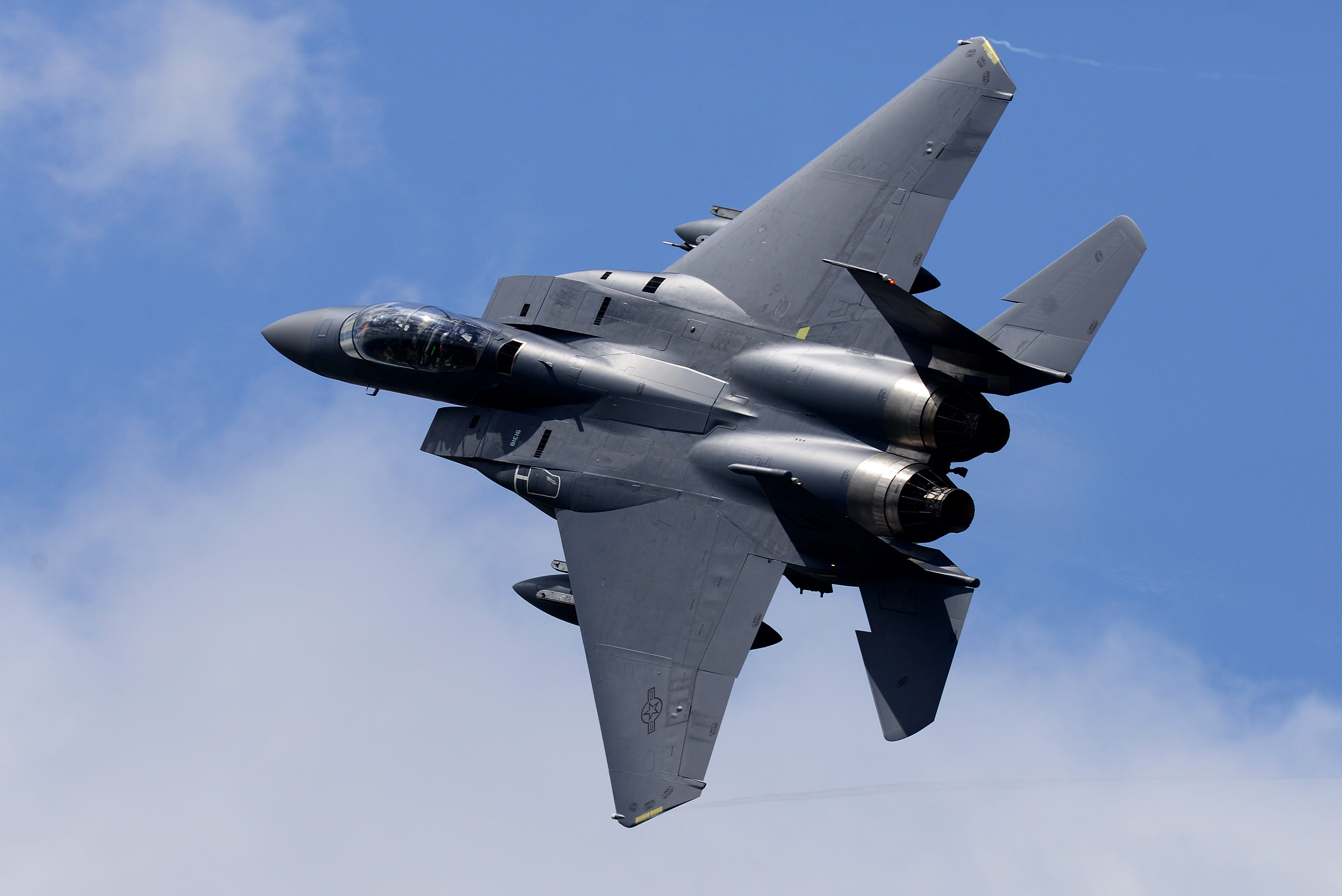
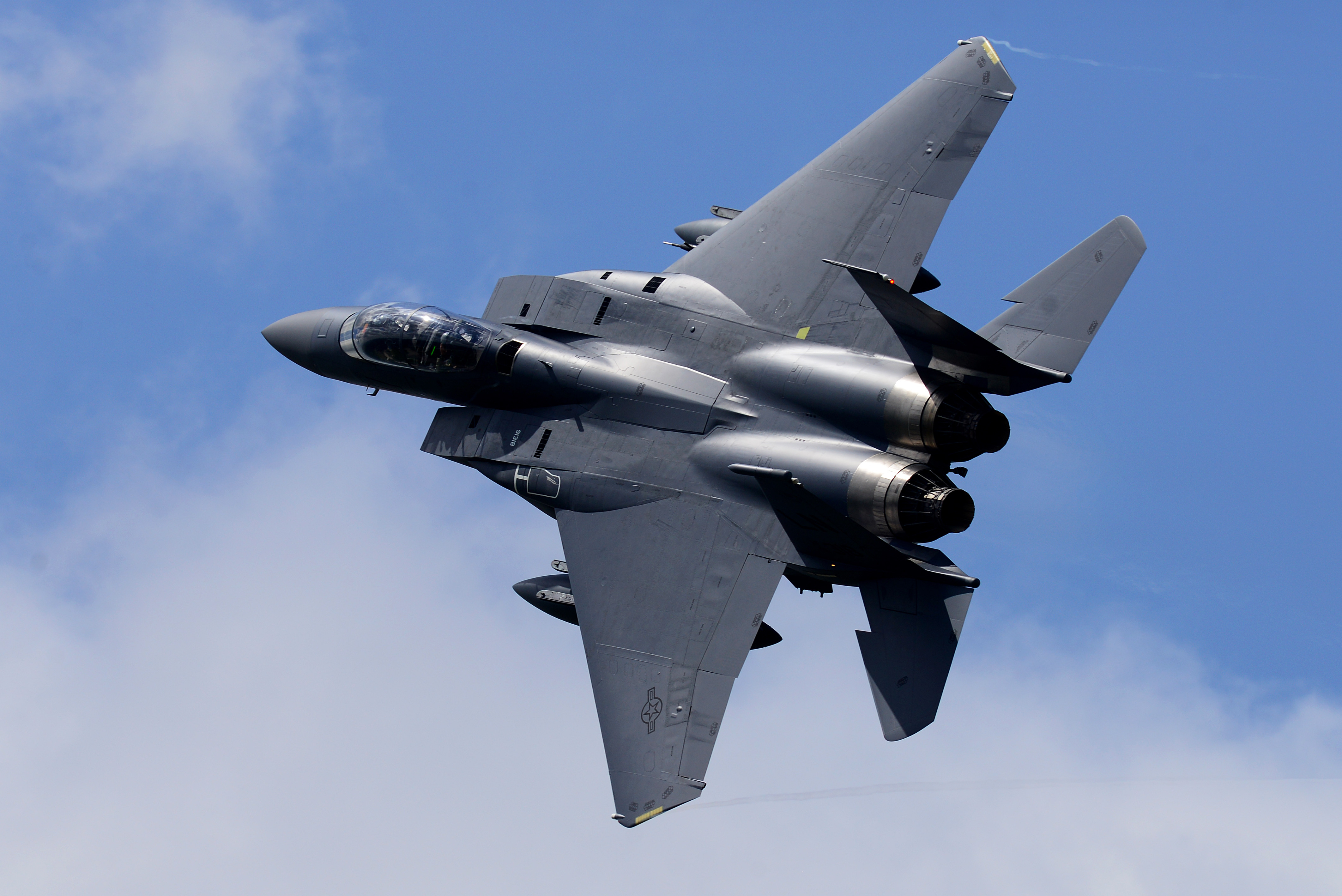
Official Pentagon photo of an F-15E “Strike Eagle,” like the one that was shot down over Iran yesterday. The F-15 was designed in the 1960s and went into service in the 1970s. (Air Force photo.)
So much is going wrong, so catastrophically, on so many fronts, that it’s hard to find a point of traction.
So for the moment, this post is a quick guide to the US warplanes most frequently mentioned in news involving Iran. I’m skipping many workhorse models and concentrating on those whose problems you’re most likely to have heard about, including the two shot down in the past two days.
History: The F-15 was designed in the 1960s, during the Vietnam war, and went into service in the mid-1970s, replacing the F-4 as the US Air Force’s lead air-to-air combat plane.
As with any aircraft, but especially those intended for the high-G-force, second-by-second maneuvering of aerial combat, the F-15’s design involved tradeoffs among weight, complexity, cost, and other factors. The story of those tradeoffs was a central theme in my early-1980s book National Defense.
Critics of the plane, including members of the then-famed “Fighter Mafia,” argued for “quantity over quality.” They argued that it would make more sense to invest in a larger number of smaller, lighter, cheaper, and more maneuverable airplanes—rather than concentrating on a smaller force of individually more capable aircraft.
The debates over the F-15’s design occurred long before the age of drones. But they presaged circa-2026 arguments about the tradeoffs between numerous, cheap weapons, like Iranian Shahed drones, and more sophisticated but expensive interceptors, like US-made Patriot missiles. Cost estimates for today’s weapons vary. But as a ballpark figure, Iran could build well over 100 Shahed attack drones for the cost of each Patriot used to shoot them down. (Roughly $20,000-$50,000 per Shahed, versus $3 million-$5 million per Patriot.) Also as a ballpark figure, the per-airplane cost for F-15Es is around $90 million.
Function: The original F-15 was designed for a single pilot, and for air-to-air combat only. (One design mantra was “not a pound for air-to-ground.”) The current “Strike Eagle” model, like the one just shot down over Iran, has a flight crew of two: Pilot and weapons officer. It carries weapons for both air-to-air combat and to destroy targets on the ground. As a practical matter, USAF planes have not engaged in aerial dogfights in more than a quarter-century. Adversaries concede US supremacy in aerial combat, and attack in other ways. As we are seeing now in Iran.
Losses: So far the US has lost four F-15Es during the Trump war on Iran. In the first days of the war, three F-15E’s were shot down by a Kuwaiti F/A-18, in a “friendly fire” incident. All six US crew members ejected safely. Yesterday another F-15E appears to have been intentionally shot down by Iran.
Pentagon photo.
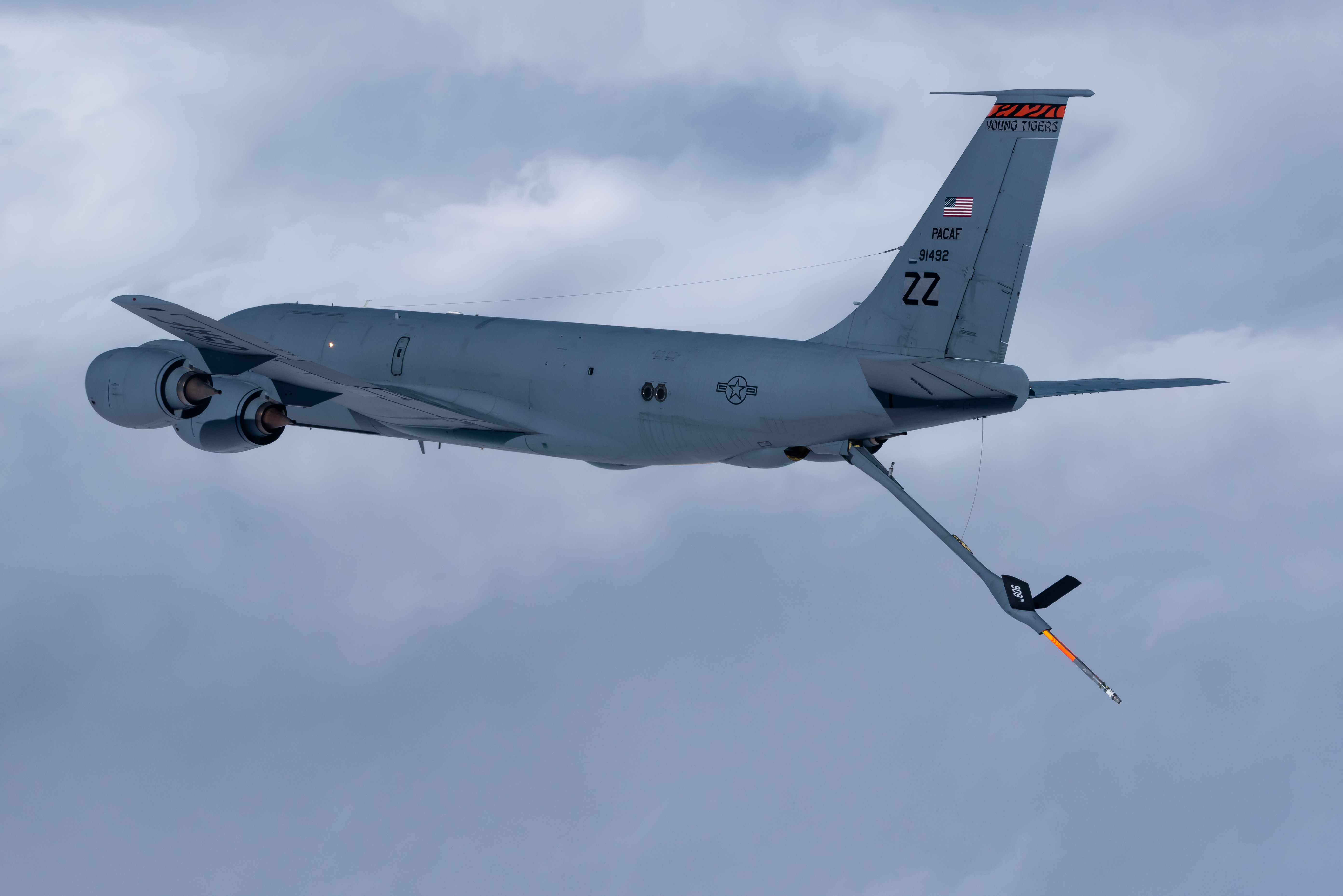
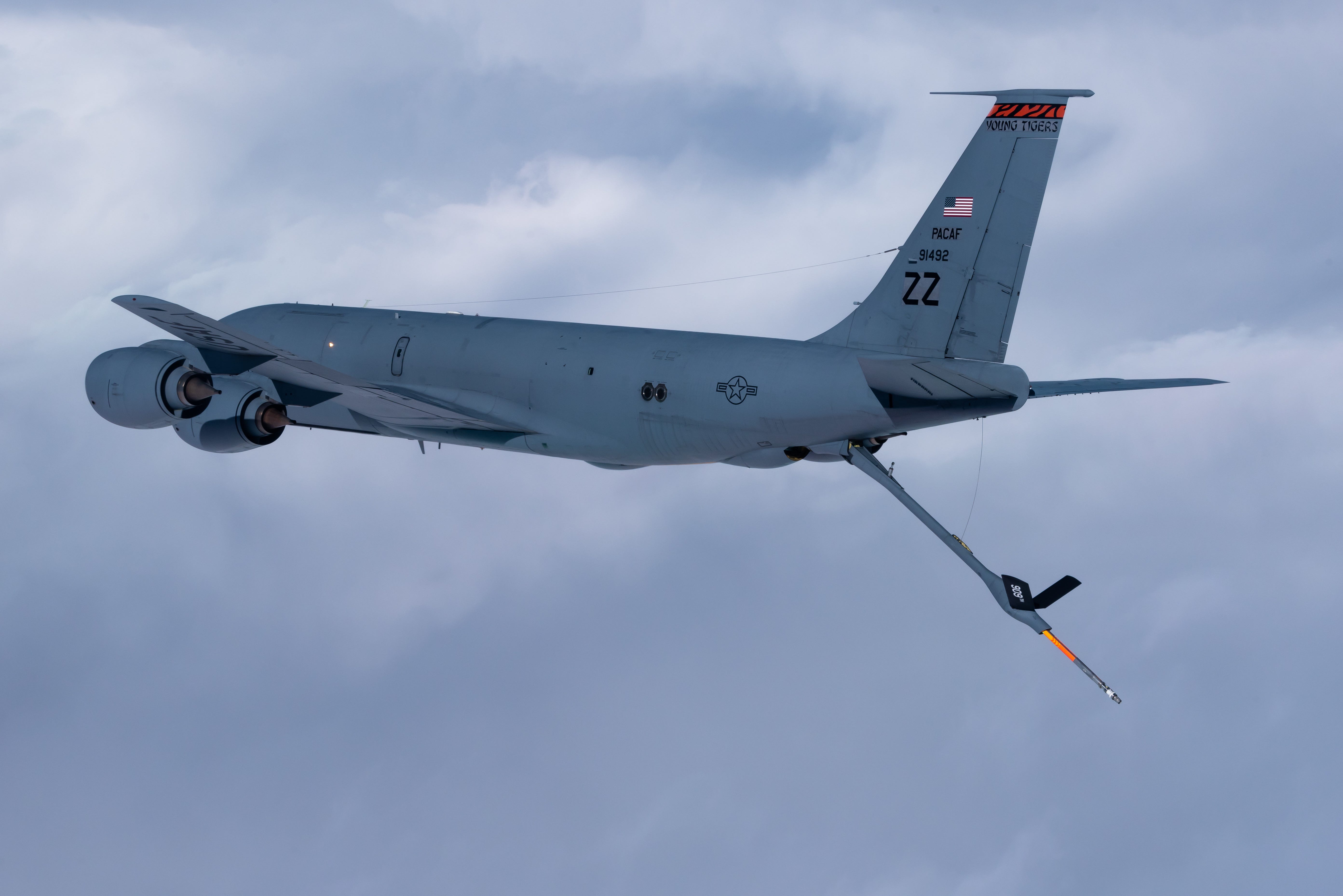
Function: As the name would suggest, these KC-135s are essentially huge flying gas tanks, meant to refuel bombers and other planes that have flown long distances toward their targets in the Middle East. Although tankers are obviously much bigger than fighter planes like the F-15 or F-35, their simpler avionics, lack of weaponry, and lower-G-force structural demands make them relatively less expensive. But they’re still enormously costly. As a ballpark, replacement cost for a current model KC-135 is around $80 million.
Losses: So far the US has lost at least four Stratotankers, with damage to several more. On March 12, two of the planes collided in flight, apparently as they were in formation to refuel others. One plane landed safely; the other crashed, killing all six crew members aboard. The next day, March 13, an Iranian missile attack damaged five other KC-135s at a base in Saudi Arabia. (I don’t know whether any have returned to service.) On March 27, an Iranian drone and missile attack destroyed at least one other KC-135, at Prince Sultan air base in Saudi Arabia.
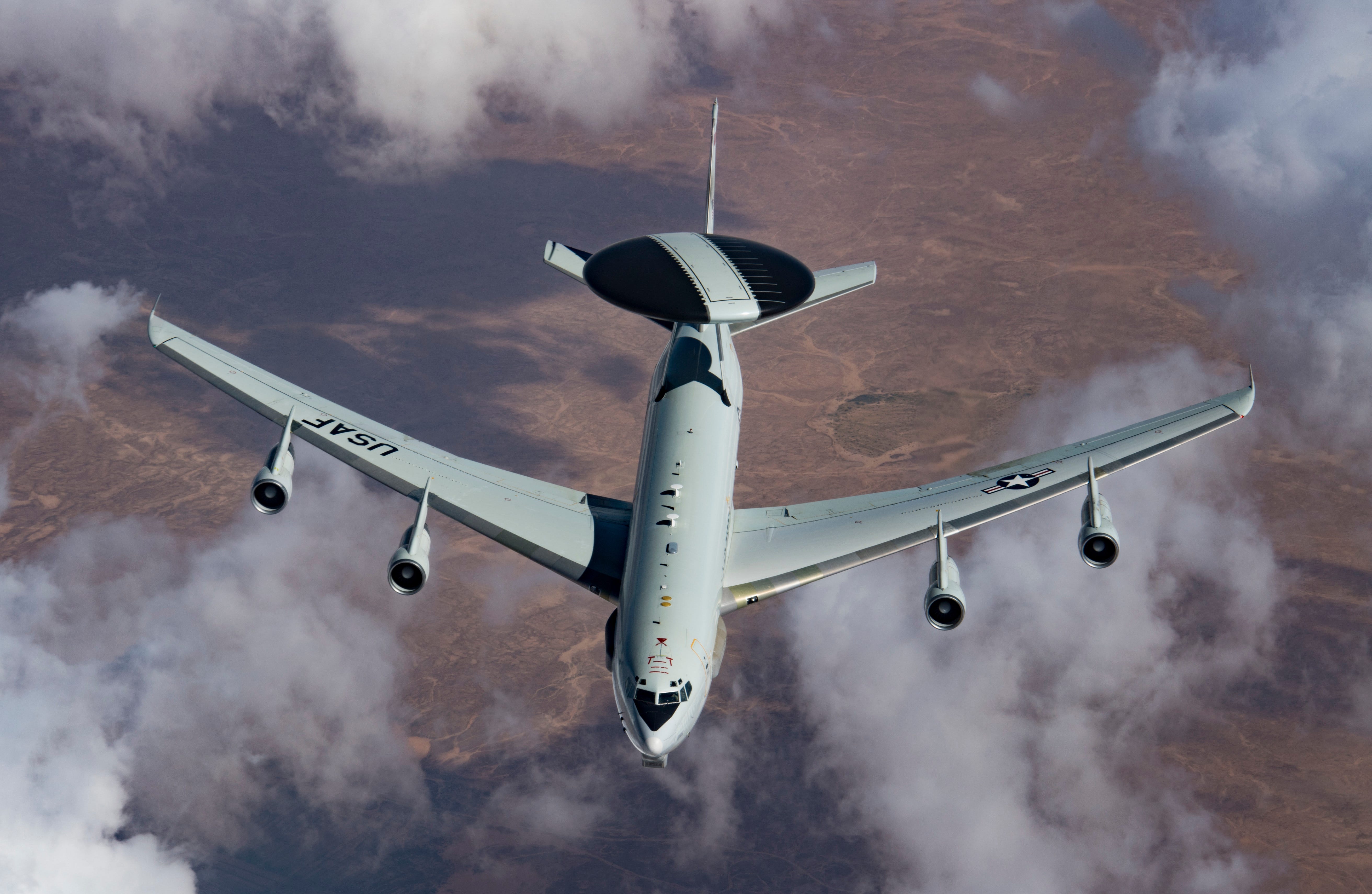
Air Force photo.
History: AWACS stands for Airborne Warning and Control System. The AWACS are essentially flying weather, radar, and air-traffic-control stations. They’re based on the Boeing 707 air frame; they’re topped with a large radar antenna; they first went into service around the same time as the F-15, in the mid-1970s; and they are extremely complex, strategically important, and valuable pieces of machinery. As a guide: The E-3 Sentry will soon be phased out, possibly to be replaced by the E-7 Wedgetail. (The decision is complicated and controversial.) This new model will be based on a Boeing 727 737 airframe and would cost around $1 billion per aircraft.
Losses: In that same March 27 Iranian attack on Prince Sultan air base, one E-3 Sentry was destroyed. This has not gotten as much press attention as the other incidents, but it is an enormous loss, in both financial and operational terms. Again, replacing the plane could cost around $1 billion. For perspective, that’s about the cost of each day’s US combat in Iran.
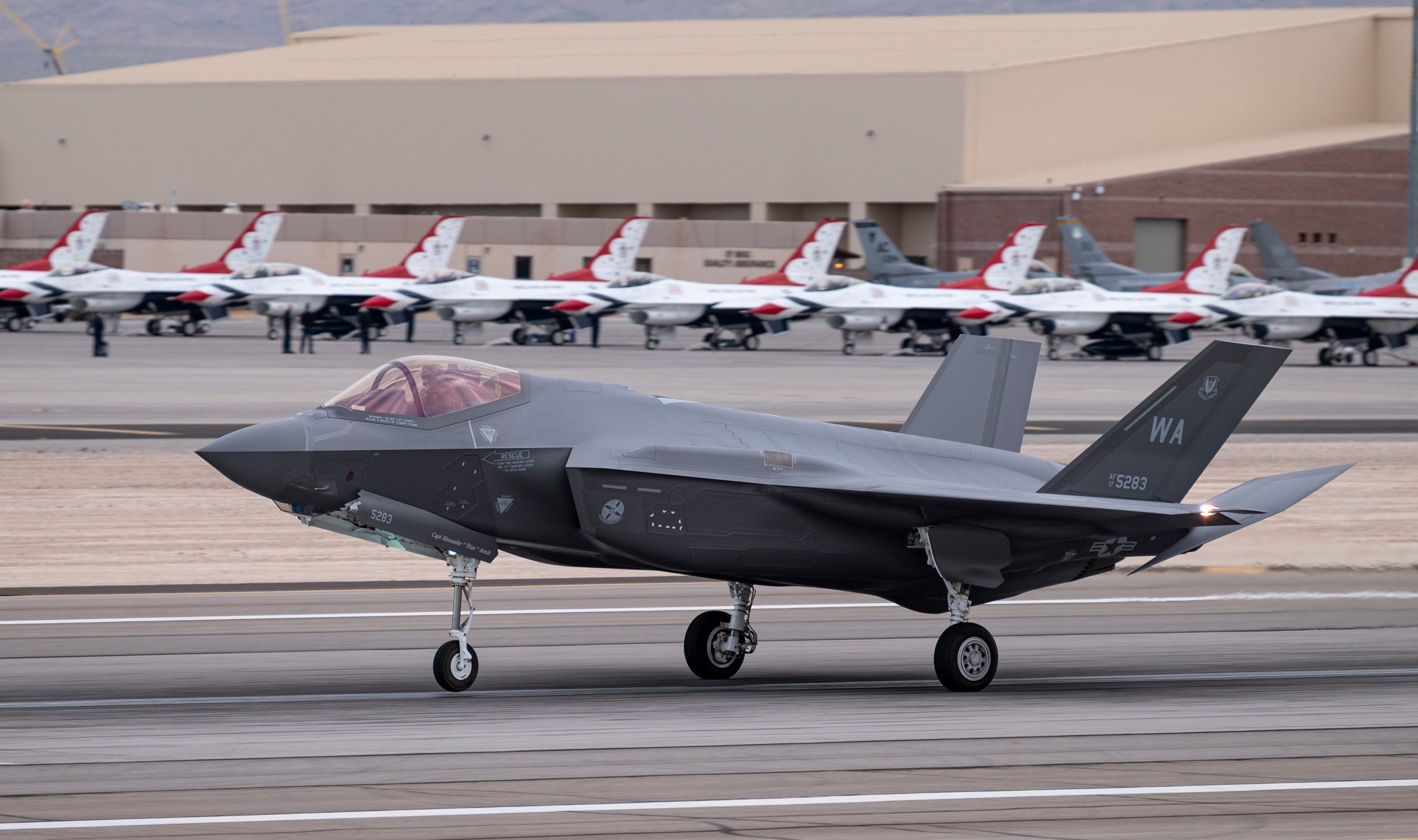
Air Force photo.
History: The bureaucratic, technological, strategic, international, and commercial struggles that gave rise to this aircraft are the most intense, and highest-stakes, in the history of military contracting.
The plane grew out of a vision called the “Joint Strike Fighter,” with the idea of simplifying operations (ha!) and saving money (ha! ha!) by building an aerial Swiss Army Knife that could do three different things at once. The Navy would have a version that could take off and land in the tight conditions of an aircraft carrier. For the Air Force, there would be one for normal runway operations. And for the Marines, there would be a version equipped for straight-up vertical takeoff and landing, to get in and out of tough combat zones. Meanwhile the whole plane would be super-“stealthy,” to escape notice by any opposing force.
It went about as well as you would imagine.
Nearly 25 years ago, I did a big Atlantic story on the hopes and promises behind the program. (“Uncle Sam Builds an Airplane.”) Eleven years ago, I did another big Atlantic story about the over-budget, under-performing reality. (“The Tragedy of the American Military.”) Today we have an airplane that goes for around $100 million per copy. The total program costs for the US will be around $2 trillion.
Losses: On March 19, for all its stealth, an F-35 was struck by ground fire over Iran. The pilot was wounded by shrapnel but landed the plane safely. At last report, the plane was still out of service.
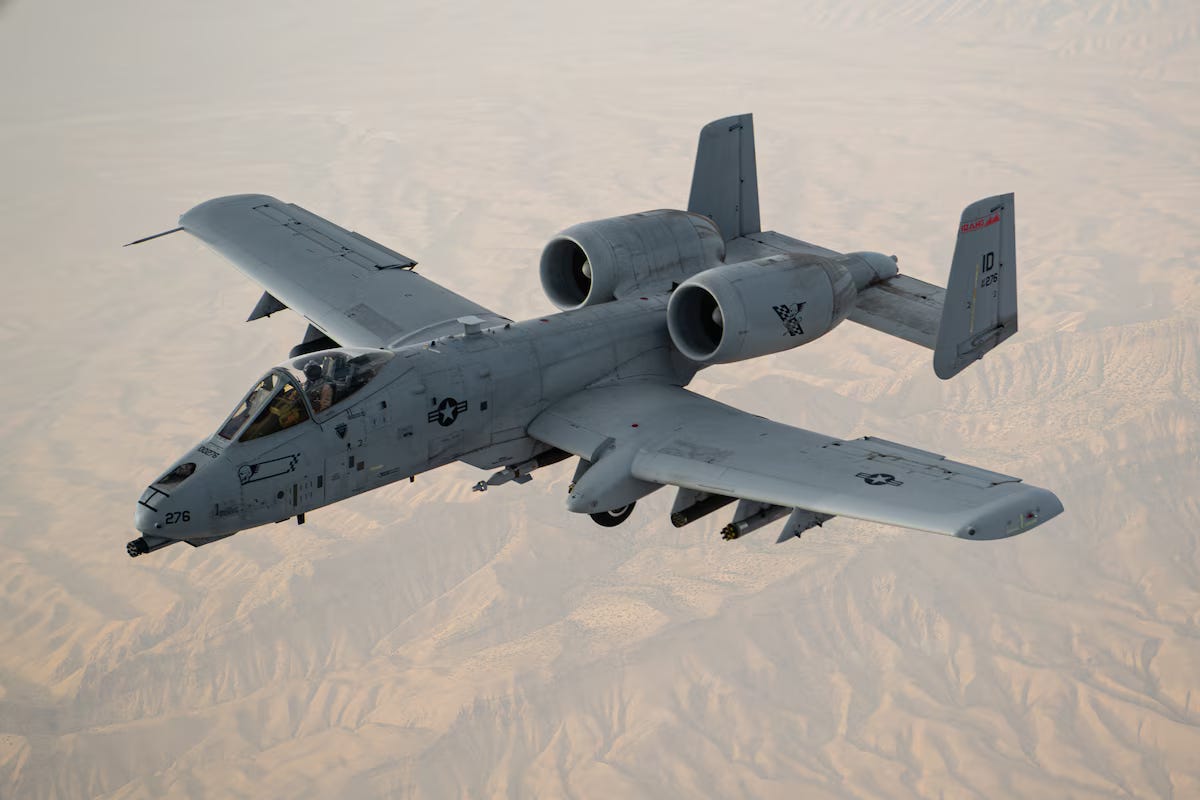
Air Force photo.
History: Here’s a great dividing line in discussing weapons design and military porkbarrel in the modern era:
Either you think the A-10 is a crucial, instructive example of function over finance, of payoff over payola, of “warfighting” over contract padding (etc etc). And you’re likely to call the plane the ‘Warthog,’ rather than its prettied-up official name.
orYou think the A-10 is outmoded, outdated, as behind the times as the Blockbuster store vs. streaming video, a Blackberry vs. an iPhone, etc.
As you will have guessed, I’m in the first camp. And have been since I wrote about the same dividing line back in National Defense.
But here are two up-to-the-minute refreshers of why this still matters.
The first comes from my friend Mike Lofgren, in a new article in The Washington Monthly. As he says in the headline and sub-head:
The Air Force Tried, But The A-10 Is Too Good to Kill
America’s unsightly but effective Warthog jet is being heavily deployed in the Persian Gulf, decades after the service wanted to retire it.
As Lofgren explains in his piece:
The A-10 is back from the dead once again. Officially designated the A-10 Thunderbolt II, but universally dubbed the Warthog because of its ungainly looks, it is a close air support (CAS) aircraft that has been in the U.S. Air Force inventory since the 1970s. It has proved its mettle in numerous conflicts, and after each one, the Air Force has tried to retire it. Yet now it is back in the fight in Iran, targeting fast-attack boats and mine-laying vessels. As of April 1, another 12 A-10s have been reported en route to the Gulf to join the dozen already there, and they could be supplemented by six more.
The second is a quote from the current chairman of the Joint Chiefs, General Dan Caine, that leads Lofgren’s article:
The A-10 Warthog is now in the fight across the southern flank and is hunting and killing fast-attack watercraft in the Straits of Hormuz.
There’s a lot more in Lofgren’s piece. The point for now is: This is among the least expensive parts of the US arsenal. The current per-airplane cost is around $20 million. And even as it ramps up spending on everything else, the Trump-Hegseth team is again trying to zero out the A-10 and move money to new pet projects.
Losses: None. Just now as I am typing, I see news that an A-10 has been shot down by Iran. For context: Only one A-10 was shot down during the US war in Iraq, and none over Afghanistan. Depending on details, this may be the first A-10 combat loss in more than 20 years. More to come on this as the news clarifies.
There are lots of other American aircraft in the skies over the Middle East. B-52s, F-16 and F-18s and F-22s, Blackhawks, many more. But those on today’s list are there because the “devastated” and “nonexistent” Iranian air-defense system managed to take them out.
A final word about the F-15. Because National Defense had publicized the “Fighter Mafia” figures who considered the plane too complex, costly, and cumbersome, back in 1981 the Air Force gave me a demo ride for a “mock-combat” drill in the rear seat of a F-15.
Everyone involved understood that the whole point of the ride was to put me in my place. “You call this plane ‘cumbersome’? We’ll show you, tough guy!” The commanding general at the Air Force base, no fan of mine but a huge proponent of the F-15, made sure an Air Force photographer was on hand to take a picture of me at the end of the flight—vomit on my flight suit and all. Again, I knew what the deal was, and willingly accepted. And I have stayed in touch with some people I met then—other than the general himself.
I wrote about the experience in “I Fly With the Eagles,” published in The Atlantic in 1981. Copyright to the article is mine. Tomorrow I’ll send its text to paid subscribers of this site.