Where and when soap was first invented and by whom is a mystery; we just don’t know.
That’s because it happened before people were writing things down, or at least before someone felt the need to specifically write about soap.
We also don’t know how it was invented but it was probably by accident.
Important: this article is a work in progress, it’s a complicated subject and I will return to it to make changes and additions where need be.
First things first: Soap is what happens when fats, alkali & water are mixed and cause a chemical effect called saponification:
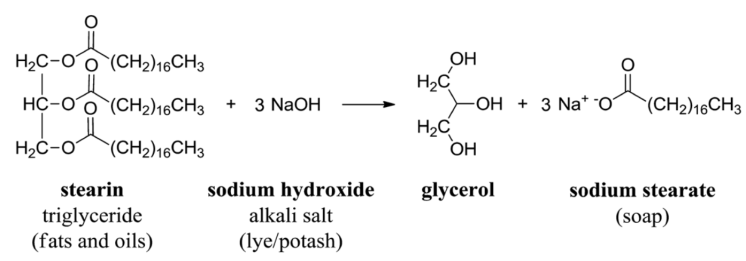
The fat can be animal or vegetable, the alkali is obtained from minerals or by burning wood.
So you can easily imagine someone in prehistoric times cooking some meat over a fire and spilling some fat and water into the ash.
Or maybe it happened when they were washing tools or bowls after eating.
Or perhaps even likelier; they used ash to rub dirt from their skin because it was abrasive and when they then used water to flush the ash away they noticed an interesting effect.
When they then started mixing ashes with water and fat they got a very basic gooey almost liquid sort of paste that when used produces a little bit of foam and is really good at cleaning stuff.
Either way, it is very likely that people in different places at different times were inventing this early type of soap independently many 1000s of years ago.
And as they realised that this strange mix could help them clean their tools, clothing and in a mild, watered down state, even their bodies, they would have started experimenting with it, improving & sharing recipes and eventually developing something more reliable and functional.
A process that could have taken centuries.
This is of course all just a theory, there’s no real evidence for any of that.
The prehistoric way of making soap involved only natural ingredients and processes so it didn’t leave much archaeological evidence either.
BUT anyone who claims that they know when & where soap was invented is LYING, because the truth is that we do NOT know.
People have been washing & cleaning themselves long before soap existed of course, they likely used just ash or sand to help scrub skin clean and they possibly discovered that animal bile and the sap of several plants can also be used as they have a soap-like quality.
There are several soap plants that, when rubbed or soaked in water create a froth that can clean, plants like these are native to every continent.
These plants are called Saponin, especially the Soapworts are well known.
We know that native Americans were using them when Europeans first visited the Americas but it is impossible to say if and how they were used elsewhere in prehistoric times.
Remember though that even for ‘cavemen’ having grease from food, blood and guts from hunting or skinning and so on, would be unpleasant.
It would make tools and clothes dirty at a time when cleaning anything would take so much more effort than it does today and replacing anything would involve a lot of work.
The soap our ancestors made could be produced with very different ingredients, the animal fat could be produced from suet or tallow, the vegetable fat could be olive, rapeseed but even fish oil.
It is a common misconception that soap made from animal fats has an unpleasant smell, but if this type of soap stinks depends on how well the ingredients have been rendered and purified.
If the soap is made properly it will have a neutral smell.
You’ll hear people often claim that this soap had a bad smell, it could have but only when the ingredients weren’t properly cleaned or if the soap had gone off.
The idea that this soap stank may have also something to do with people objecting to the use of animal fats and considering it impure or filthy.
The recorded history of soap begins with the first written record of it.
Of course someone deciding to write something down is not evidence of it having been invented there and then at that moment.
We know people had fire before someone wrote about it, we know they had tools, we know humans lived in Australia before some European mentioned it in a book, humans have been doing stuff and making things for many thousands of years before someone decided to learn how to write.
So once more for the kids in the back: The first written source that mentions something existing is not evidence of that something being invented there and then.
Having said that, let’s now look at that first evidence of soap existing and when I say soap, I mean proto-soaps, soaps that were sort of soaps, but not quite yet.
For this we have to go to to ancient Babylon and Sumer, roughly where Iraq is today.
This is of course in the fertile crescent, the cradle of civilisation.
It’s where we transitioned from being hunter-gatherers to becoming farmers, were some of the first communities, villages and towns appeared.
And of course this gave the people there quite a head-start, it’s no wonder that many of the big inventions and changes happened in this region first.
One of the oldest kinds of writing originated here; cuneiform.
And that’s why this is also the place where we get our first possible evidence from, someone decided to write down a recipe around 2800 BC, although it’s a bit unclear, from ‘Poucher’s Perfumes, Cosmetics and Soaps‘ by H. Butler (10th edition, 2000):
The earliest recorded evidence of the production of soap-like materials dates
back to around 2800 BC in Ancient Babylon. Inscriptions have been discovered
that indicate that the inhabitants boiled fat with ashes. It is unclear precisely what these products were used for, although it is probable that their use was restricted to garment washing until Roman times.
Note the mention of “soap-like”.
Remember that we’re talking about a chemical process, it has to done a certain way and properly completed for soap to be the end-result.
If you don’t do it right, you end up with a sort of soap.
For us to agree that soap has been invented we need to know that someone was mixing the right ingredients, following a specific procedure, realising the effect the end result had and then being able to repeat it.
So although someone likely invented it by accident many 1000s of years ago, in many cases we’d still consider it proto-soap, not proper soap.
From ‘An Ancient Cleanser: Soap production and use in Antiquity’ by K.L. Konkol & S.C. Rasmussen (2015):
Sumerian tablet found in the Hittite capital of Boghazkoi discusses the use of soda for cleansing the body (22, 36):
With water I bathed myself. With soda I cleansed myself. With soda from a shiny basin I purified myself. With pure oil from the basin I beautified myself. With the dress of heavenly kingship I clothed myself.
The oldest man-made surfactant utilized as a “Consumer Product” is soap. In 1957, Professor Martin Levey of Temple University, Philadelphia, USA, uncovered a historical tablet in Tello, the Sumerian Lagas.
From this, we know that the Sumerians, who inhabited the region between the Tigris and Euphradis rivers and possessed a highly developed culture with their own language and writing, had already produced soap in 2500 B. C. They used this soap for the washing of woolen clothing.
The Sumerian tablet is especially noteworthy for two reasons. First, their procedure for soap preparation gives detailed instructions on the quantity in which the two starting materials, oil and wood ash, have to be mixed prior to heating.
This presents the oldest known record of a chemical reaction. Second, the script contains the only record from the pre-Christian era on the use of soap for washing textiles.
The Sumerians also used their soap for medicinal purposes. An apothecary tablet from the year 2200 B. C., describes soap formulations with special additives and their medicinal application. Soap as a medicine was also known to other ancient cultures. The famous Egyptian Papyrus Ebers dating to around 600 B. C., documents much of that knowledge. The Egyptians utilized animal fats or vegetable oils and a soda ash type substance called Trona, a naturally occurring mineral in the Nile valley, for the preparation of their soaps.
Note that the formula mentions soap made with oil but also that it was mostly used for clothing.
It is of course very tempting to just say that soap was invented there & then, but it is debatable if we can call the product they used real soap and, again, it is extremely unlikely that it didn’t exist before someone decided to write about it.
Here we have some more progress from ‘An Ancient Cleanser: Soap production and use in Antiquity’ by K.L. Konkol & S.C. Rasmussen (2015):
It has been stated that the oldest literary reference to soap dates to clay tablets from ~2500 BCE concerning the washing of wool (27), but details concerning the identity and contents of these tablets have not been reported. In contrast, a text from the 3rd Dynasty of Ur (2200 BCE), discovered at Tello, gives a detailed economic account of cloth manufacture. Included in this account is the preparation
of a substance made up of 1 qa (approximately 1 liter) of oil and 5 qa 1/2 (ca. 5½ liters) of potash is used to degrease and clean the cloth (40). This combination of potash and oil would make an impure liquid soap. The potash described would not have been pure, but rather the ash of a plant rich in potassium carbonate, which explains the large excess of alkali required in the recipe (27). A second account
from the same text gives a slightly different recipe, containing 1 qa oil and 5 qa 1/6 potash (40). Another recipe that alludes to soapmaking can be found in the text of the cylinder B of Gudea (~2120 BCE) (27, 40–42):
So that he makes pure with water, so that he cleanses with potash, (?) and
so he intermixes the pure oil with potash.
In a text from a later period, during the reign of Nabonidus of Babylon
(556 – 539 BCE), a recipe for soap is given which specifies the oil source (14):
12 qa uhulu [in ash form], 6 qa of cypress [oil], 6 qa of sesame [probably
weighed out in seed form before pressing] for washing the stones for the
servant girls.
Although making proper soap is quite tricky and a long process, once someone figured it out, it would have been relatively easy.
Especially for women who would be used to managing all sorts of impressive feats with just open fires and, from our perspective, primitive tools, in difficult situations.
Of course if one person in the town, city or village was really good at making soap, it’s likely that they would do this more than the others and people would pay or trade for their soap in stead of everyone making it at home.
But technically, like beer/ale & bread, making soap was often made at home, of varying levels of quality.
So, people figured out soap and were experimenting and improving it for centuries, possibly even 1000s of years but we still don’t have real evidence of something existing that we’d consider soap.
They also used all kinds of ingredients, usually whatever they had near, for those around the Mediterranean it could have been olive oil pretty early on, but in the rest of the world the oil would usually be from seeds or animals.
There are a few mentions of words and products that hint towards soap, but nothing conclusive till we reach ancient Egypt in c. 1550 BC.
The Ebers Papyrus is often mentioned as evidence of soap in Ancient Egypt but in ‘An Ancient Cleanser: Soap production and use in Antiquity’ by K.L. Konkol & S.C. Rasmussen (2015) we read:
The Eber’s papyrus (1550 BCE) contains a number of recipes in which alkaline substances are boiled together with oils and fats. While it is probable that soaps and plasters were obtained from these processes, they were never specifically mentioned. In a similar manner, the Berlin medical papyrus (Brugsch Papyrus) (1350 – 1200 BCE) contains a prescription which includes natron and tallow, which could indicate a soap being made in situ. While previous evidence of soap had been thought to be found on some Egyptian mummies, further analysis has led to the modern belief that this was instead formed by natron reacting with the fat from the body over time Recently, lead soaps, including lead palmitate, have been found in Egyptian cosmetic containers from the 18th dynasty (1549 – 1292 BCE) through the use of modern analytical techniques. However, it is difficult to determine whether the lead soaps found in archeological cosmetics were prepared willingly by the Egyptians, or if instead they were the result of slow degradation of the original material and the long-term interaction of oil with lead salts. Overall, there is no definitive evidence that soap was recognized as such by the Egyptians.
So although they had products very similar and close to soap, we have no evidence they were using it in a way we’d recognise as soap, at least not on their bodies.
In Ancient Greece there’s also mention of using soda-lye for washing, some alkali, etc, but in most cases these are also not quite soap or it’s unclear what kind of product it was and how it was used.
A common claim is that both soap & shampoo were invented in India.
Sources like the Sushruta Samhita provide evidence for people using mixtures of plants (like Sapindus, Senegalia rugata, Reetha, Acacia concinna, Cicer arietinum) for laundry personal hygiene for many centuries but I couldn’t find evidence for soap that was made from an alkali and fat/oil that caused saponification, being used for personal hygiene, till the 16th century when it was likely imported via the middle east (more here).
People in India have been using natural products to wash their hair since ancient times, but so have people everywhere else and just like with soap, it’s impossible to say who was first.
The fact that a man called Dean Mahomed introduced (or claimed to) shampoo to Britain is the reason why some think it was invented in India and brought to the West.
But what he introduced was champi, the head massage, not the hair washing product, which he claimed came from the Chinese, as per his own book ‘The travels of Dean Mahomet : a native of Patna in Bengal, through several parts of India, while in the service of the honourable the East India Company’ (1794):
Among the articles of luxury, which they have in common with other parts of the East, there are public hummums for bathing, cupping, rubbing and sweating, but the practice of champing, which is derived from the Chinese, appears to have been known to the ancients.
Back to the history of soap.
We’ve reached the Roman chapter and now we’re taking a few big steps.
In AD 77 Pliny the Elder wrote in Naturalis Historia:
Prodest et sapo, Galliarum hoc inventum rutilandis capillis. Fit ex sebo
et cinere, optimus fagino et caprino, duobus modis, spissus ac liquidus,
uterque apud Germanos maiore in usu viris quam feminis.
(Soap, too, is very useful for this purpose, an invention of the Gauls for
giving a reddish tint to the hair. This substance is prepared from tallow
and ashes, the best ashes for the purpose being those of the beech and
yoke-elm: there are two kinds of it, the hard soap and the liquid, both of
them much used by the people of Germany, the men, in particular, more
than the women.)
Although he thought that the Gauls (In this case a Celtic tribe living in what today is France, Belgium and Switzerland) used this product to colour their hair, the ingredients he describes would create what we call soap.
Perhaps he misunderstood it’s use or maybe the Gauls did, but what they were using was very close to soap and it seems to have been popular among the Romans, although they, for a while, seemed to mostly use it for hair as well.
From ‘An Ancient Cleanser: Soap production and use in Antiquity’ by K.L. Konkol & S.C. Rasmussen (2015):
This soap, which was probably tinged with plants used to dye hair, was imported to Rome for use by fashionable Roman ladies and their gallants in order to dye their hair a coveted red-gold color. It was, in many respects, a hair pomade (18, 54). It is possible that the soap may have been causticized, although Pliny does not speak of quicklime in his description, he mentions a mixture of goats’ tallow and quicklime a little before, so it is probable that the use of the latter was known in Rome at that time
From ‘On Frankincense-scented Soaps, Peelings and Cleansers or on Cosmetics and Commotics in Antiquity and Early Byzantium’ by Zofia Rzeźnicka & Maciej Kokoszko1 (2021):
We shall commence our analysis from the third of the aforementioned formulas. What distinguishes it from all other analysed σμήγματα is the added substance called “σάπων” (“γαλλικός”), which was also used in the two preceding recipes, i.e., in “σάπων ᾧ ἐχρήσατο Πελαγία πατρικία πρὸς τὸ λαμπρύναι τὸ πρόσωπον”, and “σάπων· ἄλλο ἐν λουτρῷ” (soap used in the bath). As for the word “σάπων”, its affinity with the group of cleansing agents is confirmed by an excerpt from Collectiones medicae by Oribasius (4th c. AD), where the author quotes the extracts from writings by Philumenus (2nd c. AD), who classifies σάπων as one of the cleansing preparations termed generally “σμήγματα”.The term “σάπων” is translated into English as “soap”, and the accompanying epithet implies that the substance came from Gaul, which is confirmed in Naturalis historia by Pliny, who refers to it in Latin as “sapo” and explains the Gauls used it to dye their hair a reddish colour, i.e., to brighten it.
According to Pliny’s narrative, this was a compound preparation made from tallow and ashes – ideally goat tallow and beech ashes. The author states that the finished product could be of a hard or fluid consistency, and that soap was also known among the Germanic peoples, whose men would use it more often than women.
Note those ingredients, ash & tallow, so close to soap.
Of course when you use lye soap at a certain strength it will change the colour of your hair, we will never know if the Celts used it to dye their hair or that they used it just as soap and the hair changing was just a side-effect that the Romans misunderstood.
Or maybe everyone was just using it for their hair and only later realised it had more uses, we just don’t know.
There’s also text about soap attributed to Galen, but this was perhaps not written by him and there’s no evidence for it existing before the middle ages so I won’t mention it here.
There’s archaeological evidence for Romans using soap in the making of wall paintings, but that only shows they had soap, but it doesn’t prove them using it the way we’re looking for.
But then we get to Aretaeus of Cappadocia (AD 2nd century, Greece), from ‘On Frankincense-scented Soaps, Peelings and Cleansers or on Cosmetics and Commotics in Antiquity and Early Byzantium’ by Zofia Rzeźnicka & Maciej Kokoszko1 (2021):
The substance is also mentioned by Aretaeus of Cappadocia (2nd c. AD) in his work on chronic diseases. He defines Gallic soap as pills which work like natron does, and that is why they cleanse both linen as well as the body.
What he literally wrote was:
“φάρμακα δὲ ἄλλα μυρία … τῶν Κελτέων, οἳ νῦν καλέονται Γάλλοι, τὰς λιτρώδεις τὰς ποιητὰς σφαίρας, ᾗσι ῥύπτουσι τὰς ὀθόνας, σάπων ἐπίκλην, τῇσι ῥύπτειν τὸ σκῆνος ἐν λουτρῷ ἄριστον·”
Which in English says;
“And countless other remedies … of the Celts, who are now called Gauls: the alkaline artificial spheres, with which they wash linens, called ‘soap’; with these it is best to wash the body in the bath.”
An other translation says:
“the Celts, which are men called Gauls, those alkaline substances made into balls, with which they cleanse their clothes, called soap, with which it is a very excellent thing to cleanse the body in the bath. (source)
This, to me, is the first evidence of soap existing and being used for personal hygiene.
Although soap was often mentioned in earlier sources, it’s often unclear what kind of product was meant or how it was used, or it was just used for laundry.
But here we have someone talking about the Gauls (in this case the Celtic tribe that had migrated eastward into central Anatolia) using what we’d call soap, not just for laundry but also the body.
As far as I know this is the oldest evidence anywhere for people using actual soap for personal hygiene.
But what is also interesting to note here is that both Pliny and Aretaeus of Cappadocia mention a hard soap, a soap that can be moulded into balls, with other words, that’s not soft, not liquid or a paste, like most other soaps at the time.
How hard this soap was and how they managed to achieve this is unknown.
Mind you, simply adding salt could have achieved this result and if you live near the sea or another body of salt water, salt was relatively easy to obtain.
From ‘On Frankincense-scented Soaps, Peelings and Cleansers or on Cosmetics and Commotics in Antiquity and Early Byzantium’ by Zofia Rzeźnicka & Maciej Kokoszko1 (2021):
the recipe for “σάπων πρὸς μελανίας προσώπου”.
The soap combined the functions of a cleansing and therapeutic agent, as, on the one hand, it was meant to loosen particles of dirt accumulated on the surface of the skin, and on the other hand, it removed hyperpigmentation.
Both functions are perfectly reflected in its components, which include such chemical depurative ingredients as σάπων γαλλικός,, saltpetre (ἀφρόνιτρον), and litharge (λιθάργυρος), as well as mechanical cleansers (cuttlefish shells), and substances able to cover discolorations (slivers of white marble and starch [the latter additionally smoothens the skin by reducing its roughness]. Furthermore, litharge as well as mastic and frankincense, due to their astringent properties, minimised skin pores, and thus prevented the penetration of dirt particles into the skin. Moreover, mastic softened the skin and saltpetre as well as white lead (ψιμύθιον) soothed irritations caused by chemical substances and mechanical cleansers. Additionally, white lead, owing to its antiperspirant properties helped to remove the foul smell, and the body was provided with a distinctive scent by mastic and frankincense.
Above we see another very interesting recipe, not only was this a soap made for cleaning but even lightening the skin, but it also contained frankincense, giving it a nice smell and may have been used as a sort of antiperspirant.
So here we have a soap that’s also a skin product and possible deodorant.
In these old recipes we often see materials mentioned that gave the products (soap but also scrubs, peels, etc) a nice fragrance (such as frankincense but also Spikenard & Celtic Spikenard) but also several kinds of different oils.
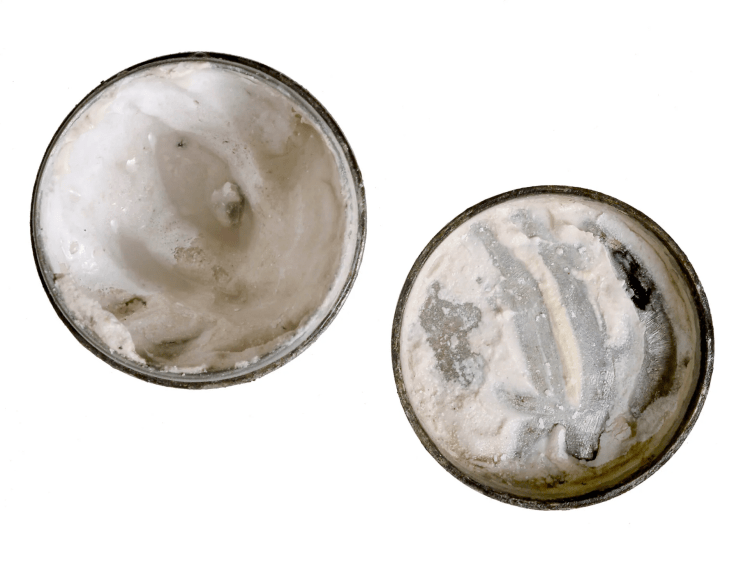
The image above shows some actual Roman face cream or make-up, you can still see where the previous owner used it 2000 years ago.
More about it here: https://www.pre-construct.com/roman-cosmetics/
From ‘On Frankincense-scented Soaps, Peelings and Cleansers or on Cosmetics and Commotics in Antiquity and Early Byzantium’ by Zofia Rzeźnicka & Maciej Kokoszko1 (2021):
Logic dictates that the skin would be rinsed after the treatment, as indicated by a remark found in
the formula for “σμῆγμα ἐνεργὲς εὐῶδες” (effective scented cleanser), which we can come across in the same chapter. The prescription reads that once mixed with water, the preparation was left on the skin for an hour, and then washed off with cool water
The presented passages unambiguously indicate that the inhabitants of the Mediterranean world attached great importance to personal hygiene in the era of antiquity and the early Middle Ages. In order to effectively cleanse the skin, they applied various cleaning agents, the majority of which worked as modern peelings, removing dirt by means of abrasive ingredients. Some worked in a way
similar to the one modern soaps do. Application of the preparations most frequently took place in a bath-house, as indicated by source texts.
Interestingly the Romans didn’t mention anything like this being used or made anywhere else.
As I showed earlier Pliny even (incorrectly) thought soap was invented by the Celts.
The Roman empire ruled much of the old world, including parts of the middle east & Africa and traded with the rest.
But nowhere did they mention anyone using soap this way, it’s almost as if soap was only used for laundry, as make-up ingredient or for medical reasons outside of Europe.
I’m sure that wasn’t the case, but it is still odd that Romans & Greeks didn’t write about it.
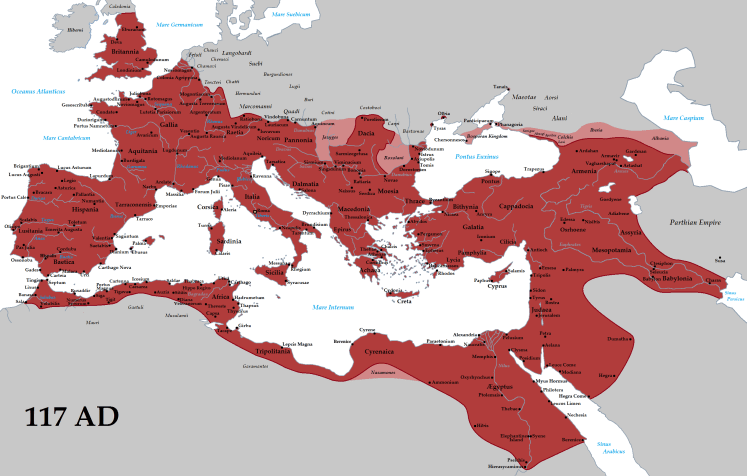
So although I am pretty sure that people have been using soap for both laundry and body since prehistoric times, when we purely look at what we can prove (as we should) we end up in 2nd Century Europe for the first clear evidence of a soap that was used for personal hygiene.
Aretaeus was talking about an alkaline substance, but we don’t know if it contained animal or vegetable oil.
Based on other Roman sources they likely used tallow.
What is also interesting to note is that the word soap we use today also originated in Germany.
According to https://www.etymonline.com/word/soap:
Soap(n.)
Middle English sope, from Old English sape “soap, salve,” anciently a reddish hair dye used by Germanic warriors to give a frightening appearance, from Proto-Germanic *saipon “dripping thing, resin” (source also of Middle Low German sepe, West Frisian sjippe, Dutch zeep, Old High German seiffa, German seife “soap,” Old High German seifar “foam,” Old English sipian “to drip”), from PIE *soi-bon-, from root *seib- “to pour out, drip, trickle” (perhaps also the source also of Latin sebum “tallow, suet, grease”).
Romans and Greeks used oil to cleanse the skin; the Romance words for “soap” (Italian sapone, French savon, Spanish jabon) are from Late Latin sapo “pomade for coloring the hair” (first mentioned in Pliny), which is a Germanic loan-word, as is Finnish saippua.
Once the Romans learned about it from the Celts their Latin version of the word travelled the world:

In the 6th century AD Aetius Amidenus (AKA Aëtius of Amida) wrote a book called ‘Libri medicinales’, a comprehensive 16-book medical encyclopedia full of interesting recipes.
Several of the recipes use “Gallic soap” as an ingredient, this tells us that the soap the Celts “invented” (or so the Romans thought) was relatively well known and used, at least in the Greek-Byzantine/Eastern Roman empire where Aetius lived, which at this time was still a big chunk of the former Roman empire.
It is again interesting to note that they still called it Gallic soap, centuries after they discovered the soap the Celts made, they still credited them with it’s invention.
Did they still not find any soap made by others?
Some of the recipes suggest soap from elsewhere, but if we look at the ingredients we can see that although they sound good and expensive, they’re not quite soap:.
From: ‘Some cosmetic recipes in medical texts of late antiquity:
Treatments for the face in the Libri Medicinales of Aetius Amidenus’ by Irene Cala (2019):
- Other remedy to make bright the face and entire body, it makes polished and clean the skin.
Scraping the bark of the root of bryony, dry the rest of the root under the summer sun, then grinding, sifting, take from this ½ of an Italian choenix, the same quantity of grinded iris, the same quantity of dried peeled perfumed frankincense, 1 choenix of flour of fava beans, mixing it with white, old and fragrant wine, shape some fine trochisks and dry in the shade. For use, grind, sift and use with water.- Another valuable and fragrant soap of queen Cleopatra.
Costus, myrrh of troglis, iris, spikenard, amomum, mercurialis, cassia, flower of reed, of each 1 ounce, 4 pounds of perfumed frankincense; use after grinding and sifting; it is useful for entire body.- Another soap effective and fragrant.
Flower of reed, iris, of each 2 drachms, 1 drachm of mastich, smoothing take up thick juice of barley and make some artisks and dry in the shade; for use, dissolve with the water, and anoint at regular intervals, and wash with cold water.- To make bright and polished the face and the entire body.
1 Italian modius of flour of fava beans, 4 Italian sextarii of the finest wheaten flour, 4 sextarii of triturated clover, the same quantity of perfumed frankincense, the same quantity of triturated iris, ammoniac gum, costus, of each 1 pound, 1 sextarius of whites of raw fresh eggs, 2 sextarii of seed of melon with its moist part, 2 sextarii of juice of unripe grapes, mixing all the ingredients, shape some trochisks and dry in the shade. For use, dissolve with just enough water, anoint after the bath. It is useful for the dark spots that are on the neck and on other parts of the body.
But some of them mention Gallic soap and although it’s mixed with other ingredients, in many ways it’s still soap and it’s used for bathing, like this one:
9. Soap; another in the bath.
5 pounds of Gallic soap of the first quality, 5 pounds of nitron, 1 pound of tick ammonite fumigation, 1 pound of white lead, 1 pound of burned oysters, 1 pound of burned wax, 6 ounces if mastich, 6 ounces of starch.
As Cala reminds us:
3.1. About the Ingredients
Only one compound ingredient is used in this section: the Gallic soap. It is mentioned three times; in the recipe of Pelagia, that is the number 8, and in the two subsequent recipes; a soap to use during the bath (recipe number 9) and another soap very useful for black spots (recipe number 10). Pliny the Elder gives is our earliest source for information about this soap, its ingredients and its uses
«Soap is also good, an invention of the Gallic provinces for making the hair red. It is made from suet and ash, the best from beech ash and goat suet, in two kinds, thick and liquid, both being used among the Germans, more by men than by women».
Also Aretaeus of Cappadocia gives details about Gallic soap in his work devoted to chronic diseases
«There are many other remedies of Celts, who are now called Gauls, some pills with properties of nitron, that cleanse fine linen cloth, called «soap»; these are very good for cleaning the body in the bath». The Gallic soap is not the only soap known to doctors, but it is very famous in Late Antiquity and the Middle Ages, like the soap of Constantine.
Especially interesting here is that she tells us that both Gallic soap & the soap of Constantine (sapōn Kōnstantinou) were very famous at this time, the latter being quite prestigious but all it really was was again the Gallic soap but with lots of luxurious fragrances added.
So we’re now in the 6th century, the Roman empire has “fallen”, the middle ages just begun and in much of the massive Byzantine (Eastern Roman) empire that included big parts of Europe, Africa and the Middle East, everyone was talking about that old soap made by the Gauls, be it as the simple original product or as an ingredient in fancy soaps, cosmetics & medication.
This is confirmed in ‘À nouveau le savon de Constantin’ by Jean-Pierre Callu (1995) and ‘Il sapone di Costantino’ by Innocenzo Mazzini (1992).
Again: in the 5th & 6th century the Celtic soap was well known throughout the Byzantine or Eastern Roman empire.
And again it is clear that many of the recipes include all sorts of fragrant ingredients.
Yet somehow people keep talking about the old Celtic soap as having a bad smell and that perfumed soaps weren’t a thing in Europe till introduced by Muslims during the middle ages, more about that later.
It’s likely that basic soap was made at home, it would be of varying qualities and the ingredients would be free waste products left over from cooking.
Although it would be tricky to master good soap making, if you didn’t care much about the quality or smell and just needed something simple to clean yourself, your dishes or your clothing with, it wouldn’t be that hard to put something together.
And as good soap would cost money, it would be tempting for, one assumes, housewives to make their own batch now for free now and then.
Over time, like with other chores like baking bread, making butter, doing laundry, someone in the community who was better at doing these things than others would start doing it for others in exchange for payment or trade.
And if you were for instance a butcher or managed a bathhouse, you’d have easy access to lots of the ingredients.
So although there may have not been a need for a massive industry, its still very likely that soap was relatively easily obtained and could be found in many households, laundresses, etc.
Yet slowly an industry did indeed start to appear, or better said, it started to appear in the records.
In the AD 599 a group of soap makers in Naples send a representative to Rome to ask the pope to help with a complaint.
This is important because this is an early guild, it shows that the professional soap industry (as opposed to people making soap at home or in small quantities) was big enough in that city to become organised:
Augustinus praesentium portitor, qui reliquorum ae sapunariorum ‘ civitatis vestrae vice dixit esse transmissum, queatuB nobis est, quod lohannes vir clarissimua palatinus ‘ multia eos frustra affiigat incommodia atque nova plurima eorum corpori” praeiudicialiter nitatur impender
Paul of Aegina (ca 625-690 AD), was an expert surgeon, great scholar and prolific writer who lived in Alexandria in Egypt when that region was part of the Byzantine/Eastern Roman Empire.
In his writings he mentioned Gallic soap in several of his recipes and was practicing medicine when the region was invaded and taken over by Arab forces.
He didn’t flee but stayed behind and continued working.
This shows that Gallic soap, or at least knowledge of it and how to make it, had reached Egypt and was known there when the region became Arab ruled.
I can’t find any evidence for (solid) toilet soap existing in the middle east, the Levant or Africa before those regions became part of the Roman or Byzantine/Eastern Roman empire which makes it tempting to assume that it was the introduction of Gallic soap that inspired the next phase of soap history.
There could be a connection here to large scale public bathhouses & bathhouse culture that were, in a way, also introduced to these regions by the Greeks & Romans.
This example shows us that in the 8th century soap was so common in Italy that the rich made donations of soap for the poorest of the poor to help them bathe.
From: ‘Wage labor & guilds in medieval Europe’ by Steven Epstein (1991):
In 744, King Ildebrand of the Lombards promised the bishop and cathedral of Piacenza, in a general confirmation of the Church’s rights and privileges, thirty pounds of soap per year to be used to bathe paupers. The soap was to come from the royal palace, and the soap-makers must have been providing the king with a certain amount of their product every year
In the late 8th century the Capitulare de villis was written, a sort of instruction manual issued by Charlemagne for his hundreds of estates, it contained the following:
45. That every steward shall have in his district good workmen — that is, blacksmiths, gold- and silver-smiths, shoemakers, turners, carpenters, shield-makers, fishermen, falconers, soap-makers, brewers (that is, people who know how to make beer, cider, perry or any other suitable beverage), bakers to make bread for our use, net-makers who can make good nets for hunting or fishing or fowling, and all the other workmen too numerous to mention.
Another clue showing us how common soap was in Europe at the time.
What’s also interesting is that when the king was visiting the steward he expected soap to be provided.
From The Capitulare de Villis, Smithsonian Associates:
59. Every steward shall, when he is on service, give three pounds of wax and eight sextaria of soap each day; in addition, he shall be sure to give six pounds of wax on St Andrew’s Day, wherever we may be with our people, and a similar amount in mid-Lent.
If I understand correctly (I’m terrible at maths) that’s more than 4 liters of soap being used every single day.
Of course not just by the king but also by his family and probably entire household.
It is still a lot.
As soap takes some time to prepare, the steward’s soap maker would need to have quite a supply on standby and/or be able to manufacture large quantities of soap at once, which suggests that each of these hundreds of soap makers across Europe would run a large workshop, a sort of factory, it’s mass production.
The next chapter of the history of soap began with replacing some of the original ingredients.
We don’t know who did it first, or where, but somewhere along the line someone decided to replace animal fat with vegetable oil, likely olive oil.
There were several places with a large olive oil industry across the Lavant but also in Spain, the Romans had been upscaling this to a massive scale.
As we have seen earlier there were several recipes that already used vegetable oil to make or improve Gallic soap, so although it too took some experimenting to get right, the step from using olive oil in stead of tallow would not have been a big one.
There were several reasons for soap makers to switch from tallow to olive oil:
- Pigs are forest animals, which means they were very common and easy to keep in much of Europe, but not in regions with fewer woods.
- Olives don’t grow very well in much of Europe outside of the Mediterranean regions but in Northern Africa and the middle east they grow everywhere.
- In the Levant Jews and later Muslims had religious problems with pigs and using them as an ingredient for soap.
- Tallow soap has a neutral smell but can go rancid and start stinking in warm weather, which isn’t much of an issue in Northern Europe but a problem in places with a warmer climate.
Mind you, it could also simply have happened because someone was experimenting and discovered that olive oil soap is preferable to tallow soap in several ways, but it’s very likely that one or all of the above reasons played a role in the market for tallow soap severely declining in those regions during the early middle ages and that this is what first brought a new product on the market; Olive oil soap.
Discovering this new kind of soap resulted in a quickly growing and soon world famous soap industry in places like Aleppo (Syria), Nablus (Palestine) and Castille (Spain), resulting in soap named after those regions soon becoming popular soap types.
Several of these soaps are often described as having a history going back thousands of years but I’m yet to find evidence for that.
Laundry soap has been made in many places for millennia, but finding soap used for the body remains difficult.
Although these soaps were soon much desired everywhere, we have to keep in mind that because their ingredients weren’t available in much of the world, they would have to be transported over long distances and were thus expensive.
Making good olive oil soap was also more complicated than making basic tallow soap.
Olive oil based soap remained a luxury for most people for centuries to come, even for those who lived in the Mediterranean, it would often just be too expensive.
In most of Europe tallow soap remained to be the soap common folk would keep using for centuries to come.
It wouldn’t be till the 19th century that better quality soap would become available to all, more about that later.
It’s interesting that toilet soap, from its likely birthplace in Western Europe, took this long trip to the Levant, got an upgrade and then came back home.
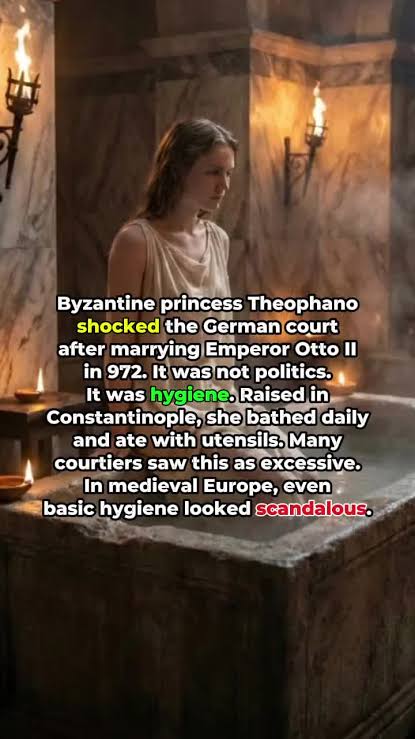
Before you ask, there are no contemporary sources that prove the strange stories about princess Theophanu shocking people by using foreign soap or her being shocked by being given tallow soap, or people disapproving of her bathing or washing every day.
Thietmar of Merseburg mentioned ‘Greek customs’ (Theophanu imperatrix, morum Graecorum consuetudine usa…) and some have later just assumed that this was about her bathing & hygiene habits, but there’s no actual mention of that subject in the original records, not in Vita Odilonis, even Liutprand of Cremona didn’t bring this up.
It’s all a later invention.
Yet someone made a meme of it and it’s used to once more convince the world that Europeans (except Greeks apparently) were mucky barbarians:
Interesting evidence of the olive oil toilet soap industry blossoming was discovered in 2020 when archaeologists found the remains of an 9th century soap factory/workshop in Rahat, Israel (source), which at the time was part of the Abbasid Caliphate.
On a side-note: other claims of discovered soap factories turned out to be incorrect, like the famous one at Pompeii which turned out to be a fullery, place for doing laundry.
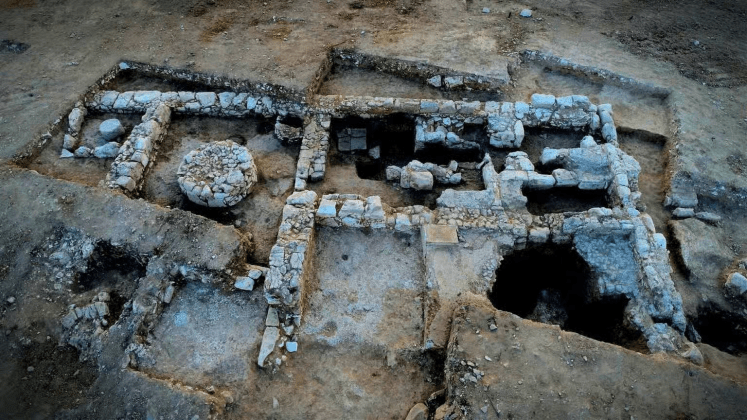
Once more expanding empires helped soap travel far and wide.
This time the Islamic expansion and invasion/colonisation of land helped the new olive oil soap reach a wider market.
It is sometimes claimed that the Moors introduced soap to Europe or the Iberian peninsula, but it seems they brought an improved luxury version of the soap back to where it likely originated.
One name that is often brought up when we discuss the role Islam played in the topic of hygiene & soap in European history is Abu al-Hasan ‘Ali Ibn Nafi’ (789–c. 857), better known as Ziryab.
There are many claims made about him, for instance that he introduced perfume, regular bathing, dental care, dinner courses, hair care and even dressing for seasons to Europe.
This is of course nonsense, the Romans had all of these things centuries earlier and they weren’t mysteriously forgotten when they went back home.
If anything, the Visigoths who ruled the Iberian Peninsula before the Moors invaded in many ways continued the Roman habits, at least more so than in much of the rest of Europe.
What people also often misunderstand is that he brought new, refined, ways to the courts of Al-Andalus, he showed the rich and famous Islamic families how things were done at courts elsewhere, in a way he was an influencer.
His influence seem to have been very localised, it had little or no impact outside of Al-Andalus and even within the Iberian Peninsula it was also only something the elite heard or cared about.
Another important figure in this part of soap’s history is Abu Bakr al-Razi, (864 or 865 – 925 or 935) a brilliant polymath, a physician, philosopher and alchemist from Ray (Iran).
He wrote many medical and chemical related texts that would be copied & taught throughout the known world for centuries to come.
In al-Asrar (الاسرار “The Secrets”) he also wrote about soap but he wrote about it in a scientific manner.
His writings are among the oldest (known) texts that mention soap ingredients and the alkaline reactions in a systematic and scientific manner, discussing the preparation, the reaction, the properties, the ingredients (both tallow & oil get a mention) etc.
Because of his genius and because his texts are among the oldest that actually describe soap in a scientific manner, he is sometimes credited with inventing soap or inventing olive oil soap.
But as the earlier evidence has shown, this is not true.
It is also important to remember that we don’t know for sure how much of what he wrote down was his own knowledge or the result of his own experiments.
He never claimed that what he wrote was his own original work and like many writers at the time, he mainly collected & recorded knowledge he gathered.
He preserved & transmitted information, but we don’t know where he collected it.
Much of it may have been his own, much of it he may have learned from local soap manufacturers, he may even have copied it from older now lost texts.
I don’t say this to try and take credit away from him, I’m just making sure that we keep in mind that knowledge doesn’t always come from the first person who decided to write it down.
One of the other reasons soap from the middle east & Northern Africa was different was because in these regions they didn’t have as many trees as Europeans did, so in stead of using wood to get their alkali/ash, they got theirs from plants such as Anabasis articulata, Salsola Kali & Soda Rosmarinus.
Finding out when olive oil based soap actually reached Europe and when it was first also manufactured there is the next chapter in this story.
It is often claimed that crusaders encountered olive oil soap in the Levant and brought it back home, but I have not found any evidence for this.
It is often claimed that the Moors introduced the olive oil soap to Europe during their rule of the Iberian peninsula, but I’ve not found any evidence for this either.
I do know that there were soap factories in Medieval Iberia, including ones managed by Muslims, we have evidence for them existing but only at the end of the 14th century (source)
This strongly suggests they would have made olive oil soap as tallow would be haram, but I have no way of proving this.
I hope to eventually find it, when I do I will update this article.
Personally I think that it is much likelier that olive oil soap was first introduced to Europe through Byzantine & Mediterranean Sea trade, we know this trade existed but there’s also not enough evidence to claim that this is how it reached Europe first.
So we’ve arrived at a mysterious few centuries of silence, we know people were making, trading and using soap all over the place, many different kinds, made with all sorts of varying ingredients.
But we can’t find records telling us that Europeans were using oil based soap, imported or manufactured locally.
That doesn’t mean they didn’t, we just can’t prove it, yet.
Around AD 1150 a new version of the popular and well known book Mappae Clavicula was written, with this instruction for making soap:
How soap is made from oil or from tallow.
On a wicker rack made of small twigs, or through a thick and strong strainer, spread well-burnt ash from good wood. Pour heated water over it lightly so that it passes through drop by drop. Collect the lye underneath in a clean vessel, and strain it a second or third time through the same ash so that a strong and colored lye is made; and this is the first lye of the soapmaker.
When it has been well purified, set it to cook. When it has boiled for a long time and begun to thicken, add sufficient oil and stir it very well.
If you wish to make it with lime, put a little good lime there; and if you wish it to be without lime, allow only the aforementioned [mixture] to boil until the lye is cooked away and reduced to a thickness. Afterward, allow it to cool in a suitable place [and drain] whatever remains there of lye or water; this purification is called the second lye of the soapmaker.
Afterward, for two, three, or four days, stir it with a spatula so that it coheres well and is leveled out, then set it aside for use.
Truly, if you wish to make it from tallow, the process will be the same, but in place of oil, you will put well-beaten sheep’s tallow; and you shall add fine flour, by estimation, and they shall be cooked to a thickness, as was said before. In the second lye, of which I spoke, you shall put salt and cook until it is dried out, and this will be affronitrum for soldering.
Every time new copies were made small changes & additions were made.
Most of the book is a copy of older texts and we don’t know who added this soap recipe or where this knowledge was obtained, but scholars think that consensus is that it is a Byzantine/Italian hybrid that was finished in Carolingian monasteries.
The Phillipps-Corning version I shared above is the oldest that contains this recipe, it was probably written in Northern Europe, possibly England or Flanders.
This too confirms that olive oil based soap was known in 12th century Western-Europe and possibly as early as the 9th century, although earlier versions are not always clear on this.
12th century recipe for olive oil or tallow soap from ‘A most Copious and Exact Compendium of Sope – Medieval Soap Recipes.’ by Susan Verberg, original source: ‘Mappae Clavicula; a little key to the world of medieval techniques’ from the 12th century.
280. How soap is made from olive oil or tallow
Spread well burnt ashes from good logs over woven wickerwork made of withies, or on a thin-meshed strong sieve, and gently pour hot water on them so that it goes through drop by drop.
Collect the lye in a clean pot underneath and strain it two or three times through the same ashes,
so that the lye becomes strong and colored. This is the first lye of the soapmaker. After it has
clarified well let it cook, and when it has boiled for a long time and has begun to thicken, add
enough oil and stir very well. Now, if you want to make the lye with lime, put a little good lime
in it, but if you want it to be without lime, let the above-mentioned lye boil by itself until it is
cooked down and reduced to thickness. Afterwards, allow to cool in a suitable place whatever
has remained there of the lye or the watery stuff. This clarification is called the second lye of the
soapmaker. Afterwards, work [the soap] with a little spade for 2, 3 or 4 days, so that it
coagulates well and is de-watered, and lay it aside for use. If you want to make [your soap] out
of tallow the process will be the same, though instead of oil put in well-beaten beef tallow and
add a little wheat flour according to your judgment, and let them cook to thickness, as was said
above. (Smith & Hawthorne).
Soap making seems to have become quite popular in Bristol, in the 12th century the monk Richard of Devizes wrote the following:
“Apud Bristollum nemo est qui non sit uel fuerit saponarius, et omnis francus saponarios amat ut stercorarios.”
(At Bristol, there is no one who is not, or has not been, a soap-maker, and every Frenchman loves soap-makers as much as he does dung-collectors.)
Source: The chronicle of richard of devizes of the time of king richard the first
Aleppo soap, made in the region where now Syria is, did become quite famous during the middle ages, it was made with olive oil but also with laurel oil, but as mentioned before it had to be transported for long distances and thus remained a luxury product.
In the Iberian Peninsula laurel was very difficult to find but there was a huge olive oil industry, in part thanks to the Romans.
This is where Castile soap was born, made without laurel oil and very famous and much wanted in Europe, but there’s no evidence for it being manufactured till the very end of the middle ages and remained a luxury for centuries to come.
So although it is more than likely that medieval Europeans had olive or laurel oil based soap, most of it would have been imported from far away and would cost quite a lot of money.
We have no evidence for this kind of soap being manufactured in Europe till the end of the middle ages, but this is when it started to pick up.
In part thanks to Spain taking over the olive oil industry (still the largest in the world today) their Castile soap soon started to become more obtainable throughout Europe.
And this is how things remained for centuries.
There was nice, fancy, expensive soap imported from the south, but the overwhelming majority of people still used the good old fashioned tallow soap.
It wouldn’t be till the industrial revolution that the next chapter of the soap story began.
In the late 18th and 19th century chemists started properly understanding how soap worked and refined the recipes and manufacturing process to create a higher quality soap.
Chemists like Nicolas Leblanc and Ernest Gaston Joseph Solvay formulised, developed and improved the soap making process, even discovering new, better and cheaper ways to make sodium hydroxide (caustic soda).
Colonialism also allowed European powers to import ingredient cheaply at a massive scale, soon palm and coconut oil became available to soap manufacturers.
The Industrial Revolution resulted in factories that could manufacture huge amounts of products at incredible speed.
All these developments resulted in very cheap but good quality oil based soap becoming available to the general public, brands like Ivory Soap (1879) in the US and Sunlight Soap (1884) in the UK became a common sight in even working class households.
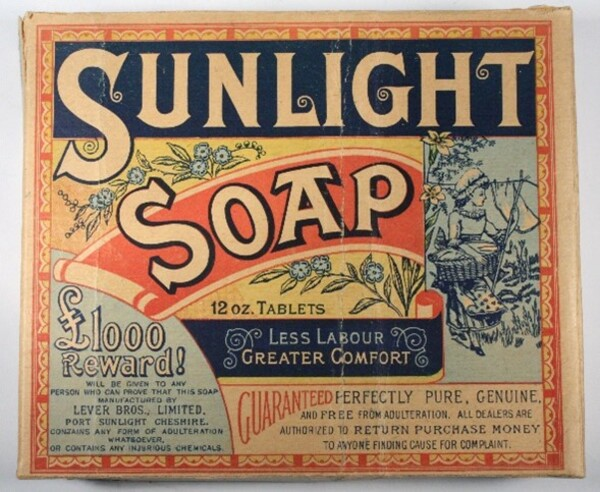
Soon it was no longer worth the hassle to make soap at home and even little soap manufacturers closed their businesses, everyone switched to the new cheap soap.
Of course olive/laurel oil based soaps remained a luxury to this day, still a bit more expensive than regular soap.
So the soap most of us use today was actually invented in France, Belgium, the UK and US in the 18th & 19th century, but the source of all body soap goes back 2000 years ago to a few Gauls somewhere in (probably) Germany and likely even further back.
Timeline of Soap history:
- Unknown date & place: By mixing vegetable or animal fat with water & ash, soap is invented, this likely happened in separate places at different times independently.
- 2800 BC: a soap like product is mentioned in Babylonian texts.
- 1550 BC: mention of soap like product in Egypt, probably for laundry.
- AD 77: Romans first mention of soap in a solid form being used by Gauls in Western Europe.
- AD 2nd century: first mention of soap being used for the body while bathing, by Gauls in Anatolia.
- AD 2nd century: first mention of soap with fragrance.
- AD 4th century: mention of using soap to clean the head
- AD 6th century: Gallic soap mentioned in the Byzantine/Eastern Roman empire region.
- AD 7th century: Gallic soap mentioned in Alexandria in Egypt.
- AD 9th century: soap factory/workshop in Rahat, Israel
- AD 9th century: Abu Bakr al-Razi records soap recipes and the manufacture of soap in a scientific manner.
- AD 18th & 19th century: new ways to make cheaper soap ingredients developed by chemists.
- AD 18th & 19th century: Colonialism provides Western manufacturers with new oils at low prices.
- AD 18th & 19th century: Factories allow mass scale production
Sources:
- ‘A most Copious and Exact Compendium of Sope – Medieval Soap Recipes.’ by Susan Verberg
- ‘Some cosmetic recipes in medical texts of late antiquity:
Treatments for the face in the Libri Medicinales of Aetius Amidenus’ by Irene Cala (2019) - ‘À nouveau le savon de Constantin’ by Jean-Pierre Callu (1995)
- ‘Il sapone di Costantino’ by Innocenzo Mazzini (1992).
- 6th century proto-guild for soap makers in Naples
- An Experimental Exploration of the Earliest Soapmaking
- A Soap-Production Factory from the Ottoman Period in Sūq al-Fakhir, the Old City of Jerusalem
- ‘Wage labor & guilds in medieval Europe’ by Steven Epstein (1991)
- Medieval Sourcebook: The Capitulary De Villis 9th Century
- The Capitulare de Villis, Smithsonian Associates
- The Muslims of Valencia, In the Age of Fernando and Isabel: Between Coexistence and Crusade, by Mark D. Meyerson (1990)
- ‘Shampooing; or, Benefits resulting from the use of the Indian medicated vapour bath’ by S.D. Mahomed (1822)
- ‘The travels of Dean Mahomet : a native of Patna in Bengal, through several parts of India, while in the service of the honourable the East India Company’ by S.D. Mahomed (1794)
- History of Cleansing material in indian culture, by Pooja Rhine (2024)
- ‘An Ancient Cleanser: Soap production and use in Antiquity’ by K.L. Konkol & S.C. Rasmussen (2015)
- ‘Poucher’s Perfumes, Cosmetics and Soaps‘ by H. Butler (10th edition, 2000)
- ‘On Frankincense-scented Soaps, Peelings and Cleansers or on Cosmetics and Commotics in Antiquity and Early Byzantium’ by Zofia Rzeźnicka & Maciej Kokoszko1 (2021)
- How to Make Medieval Soap: A 14th-Century Recipe You Can Try, medievalists.net
- Articles, links & videos about Medieval hygiene
How to make your own: