The Defense Advanced Research Projects Agency is soliciting ideas for a program that seeks to develop artificial intelligence tools meant to improve adult learning of complex subjects needed for national security such as cyber defense and AI engineering.
DARPA said Thursday the AI Tools for Adult Learning program seeks to come up with AI technologies that could provide tailored learning experiences to improve skills development among adults who have finished postsecondary education.
“In addition to a post-pandemic economy, the need to improve access to education and upskilling for historically marginalized learners is more important than ever. AI tutoring could dramatically improve learning success, particularly in increasingly common remote and self-directed learning environments,” said Joshua Elliott, AI Tools for Adult Learning program manager at DARPA’s Information Innovation Office.
The agency is asking technologists, digital learning tech developers, researchers and other interested stakeholders to submit proposal abstracts through Dec. 18.
DARPA officials and industry experts will assess the submitted abstracts and pick a subset of proposers that will move to the second phase and then review the proposals for technical merit. With the third phase, the finalists will present their concepts before a panel.
DARPA will award $750,000 in total funding to winners to further develop their concepts.
The agency will host an info session on Nov. 10 to provide interested participants information on the program.
Related Articles
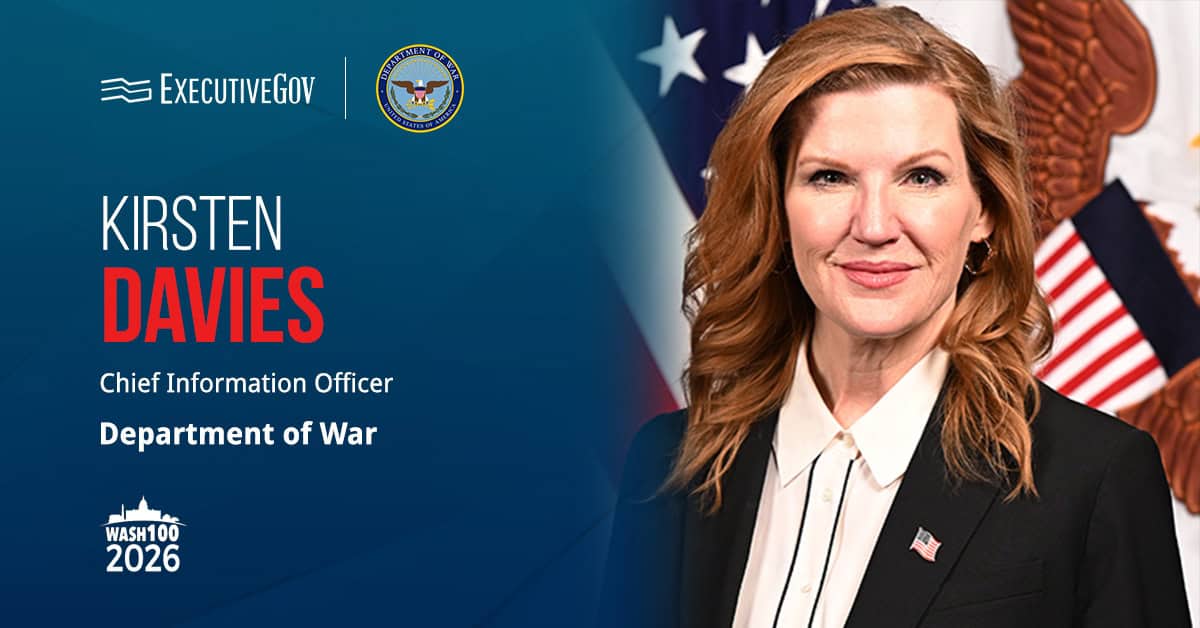
Kirsten Davies, the Department of War’s chief information officer and a 2026 Wash100 awardee, emphasized a mission-first approach to technology modernization, stating that DOW’s information enterprise must directly support the warfighter and align with the National Defense Strategy, DOW said Tuesday. The DOW CIO’s remarks underscore how senior defense technology leaders are aligning modernization efforts with measurable mission outcomes and direct support to the warfighter. Reserve your seat at the 2026 Digital Transformation Summit on April 22 to connect with government and industry executives driving the next phase of federal digital modernization. “Our mission is to support the National Defense
The Department of Transportation has promoted Devin Ure to deputy assistant secretary for budget and programs. Ure announced the appointment Sunday in a LinkedIn post. “I’m incredibly grateful for my previous role as the Chief Financial Officer for the Office of the Secretary at U.S. Department of Transportation and for the mentors who supported me along the way. I’m looking forward to working with the talented team we have,” said Ure. Who Is Devin Ure? Ure is a career public servant with extensive experience applying analytics-driven strategies to financial management and organizational modernization. He has implemented automation, dashboards and predictive tools to
The Idaho National Laboratory and NVIDIA have partnered to leverage artificial intelligence to accelerate the deployment of advanced nuclear energy systems. As AI adoption continues to expand across government and industry, collaborations like the INL-NVIDIA effort underscore how emerging technologies are being applied to complex national priorities. These developments reflect the broader momentum behind AI-driven modernization efforts across the federal landscape. Save your spot now at the 2026 Artificial Intelligence Summit on March 18! INL said Tuesday the partnership supports the Department of Energy’s Genesis Mission and focuses on a “grand challenge” known as Prometheus, which aims to bring commercial-scale