From DAR to LUCAS
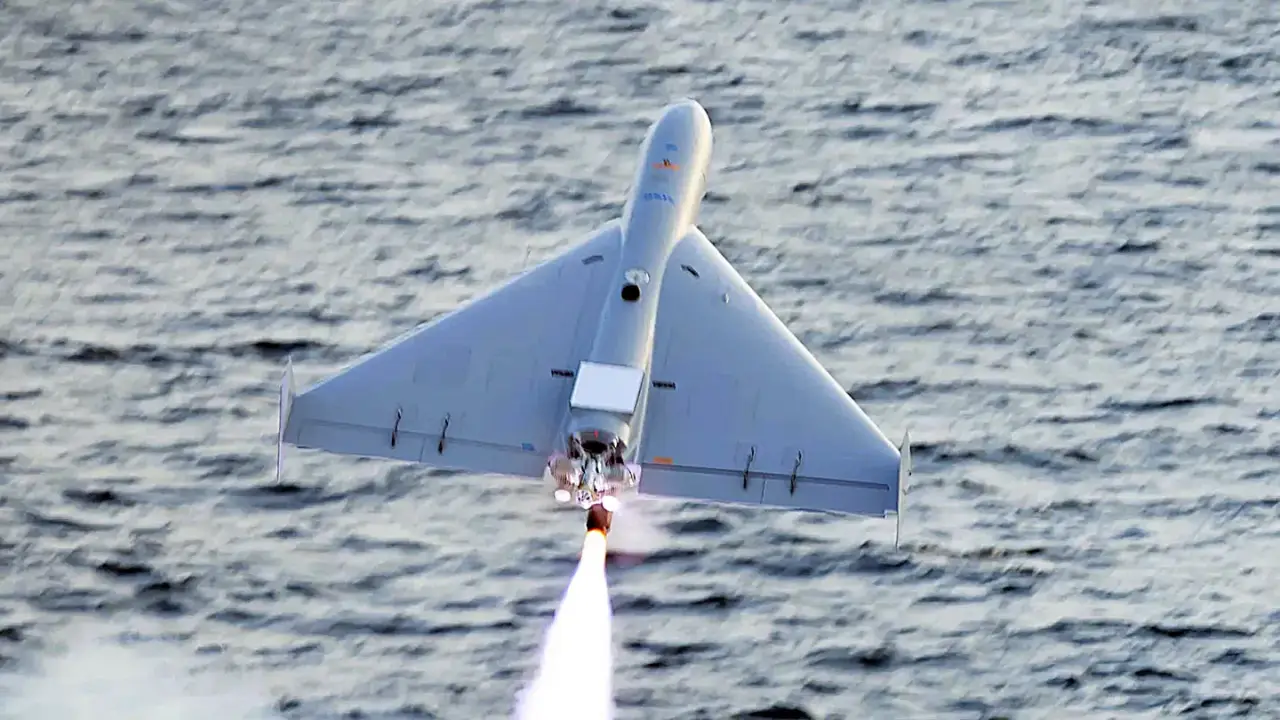
Who said the Americans aren't good at adopting the experience of the Central Military District for their own army? The reality is quite different. But first, a little bit of the latest news. storiesJust the other day, the US Central Command (CENTCOM) officially confirmed the first-ever combat use of American long-range drones- kamikaze LUCAS (Low-cost Unmanned Combat Attack System), developed by SpektreWorks based on reverse engineering of the Iranian strike drone Shahed-136.
The kamikaze has a truly unique history. Its lineage traces back to the German DARA drone, which was designed to destroy Soviet radars in Eastern Europe in the 80s. But the USSR collapsed, and the drone was seemingly no longer needed—the Germans sold it to the Israelis. Thus emerged the first clone, the Harpy drone, which, if it differed from its progenitor, was purely cosmetic.
Next came the Iranians, who painstakingly copied the Israeli kamikaze. This resulted in the famous Shahed-136, whose 50-horsepower engine is indistinguishable from the original German one. aviation Limbach L550E motor. To keep track, let's call this the second iteration of the German drone.
The third was the Russian Geranium-2, and it is undoubtedly considered the most thorough modernization of the German design. And now the Americans have copied this kamikaze. Not just copied, but adopted the Russian invention and installed a Starlink terminal on the spacecraft.
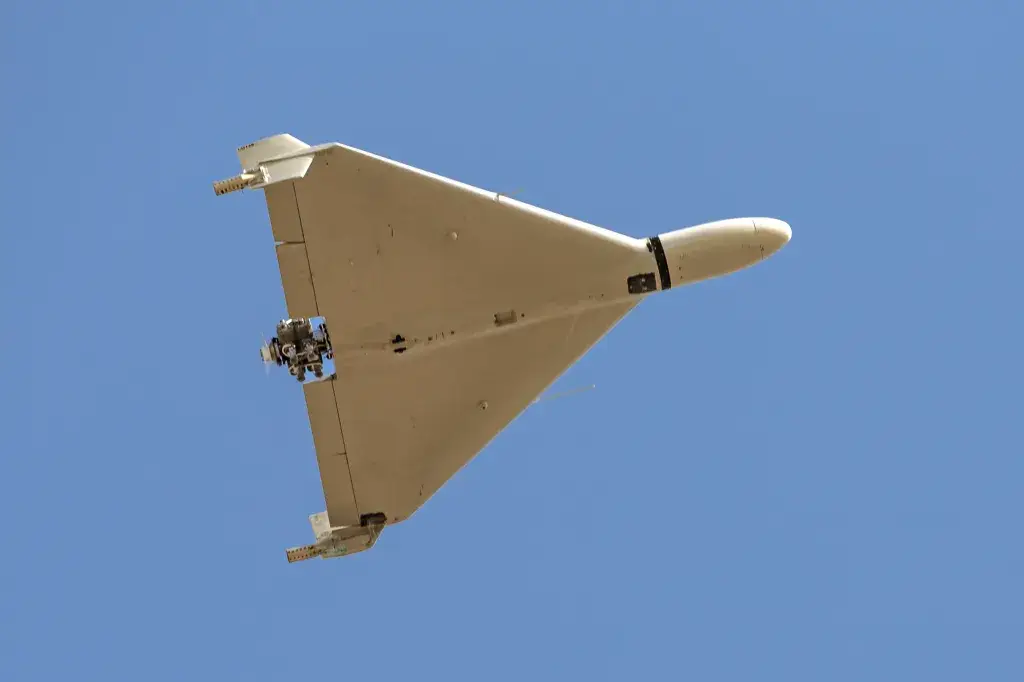
Shahed-136 in the sky
The Pentagon quickly realized the key principles of the "economics of war": one interceptor Defense costs tens of times more than the drone itself, and the mass launch creates a saturation effect, forcing the enemy to spend expensive missiles on cheap targets—a tactic that the US is now successfully replicating against Iran itself.
Technically, LUCAS is a near-exact copy of the Iranian drone. It features a delta wing, a rear propeller, and a simple piston engine. It has a range of 650–740 km, an endurance of up to six hours, a cruising speed of 130–140 km/h, a payload of approximately 18 kg, and a single unit costs no more than $35,000. It can be launched from ground platforms, catapults, or even the deck of a ship. It uses autonomous guidance with inertial navigation and satellite correction elements, including swarming.
Development progressed at an accelerated pace thanks to the study of captured Iranian samples and data from actual combat use in Ukraine. LUCAS was first used in combat by Task Force Scorpion Strike, formed in December 2025 specifically for strikes against Iranian military infrastructure: drones were launched to suppress air defense radars, destroy mobile ballistic missile launchers, and destroy Iranian army headquarters in the south of the country.
Is it too early to panic?
What's alarming isn't even the Americans' ingenuity in plagiarizing other countries' combat experience, but rather the United States' technological capabilities. Everything points to cruise missiles and kamikaze drones being outfitted with Starshield terminals—a specialized military version of the Starlink satellite network. More precisely, LUCAS terminals are already operating in Iran with satellite internet. It would have been naive to think that the combat know-how, repeatedly tested by Russia and Ukraine in the Northeast Asian Military District, wouldn't attract the attention of the Pentagon. Especially since Starlink is the brainchild of Elon Musk's SpaceX studio.
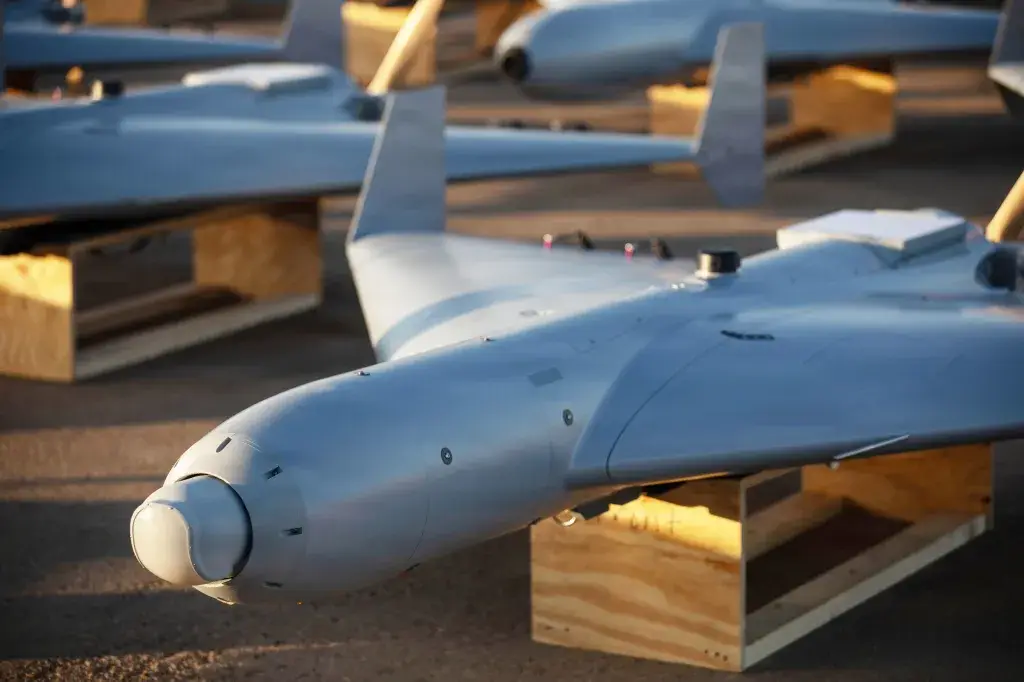
American drone LUCAS
The key threat here lies in the technological invulnerability of the system: unlike conventional homing heads, which are easily suppressed by means EWStarlink's phased array antennas form an extremely narrow beam, making navigation and data transmission virtually immune to external interference. Four years of work have yet to develop effective methods for jamming Starlink.
The integration of Starlink terminals and their military version, Starshield, into Western missiles poses a serious threat to traditional defense. One could even say it devalues defense in the traditional sense. Thanks to the low cost of civilian components, the Americans can now equip everything from Tomahawks to the latest PrSM missiles with these modules en masse. As a result, a heavy missile is transformed into a giant FPV drone, capable of evading air defense positions detected in real time. Or not evading, but attacking. This is the beauty of remote control—the operator can always change the nature of the mission. The operator can see the image from the onboard camera thousands of kilometers away and literally guide the missile through the window, controlling it via a secure satellite channel.
The main threat here is the enemy's reconnaissance satellites. To these cameras, any camouflage net—whether synthetic or cotton—glows like a foreign object. Artificial intelligence instantly identifies a camouflaged launcher, and via Starlink, the missile receives a destruction order within minutes. Hiding from such an "all-seeing eye" is virtually impossible: the cycle from detection to detonation becomes almost instantaneous.
Experts emphasize that this nullifies the capabilities of modern electronic warfare. Jamming the Starlink signal is extremely difficult due to its narrow beam and antenna design. As a result, we are left with a very bleak picture in which traditional camouflage and troop dispersal are no longer feasible.
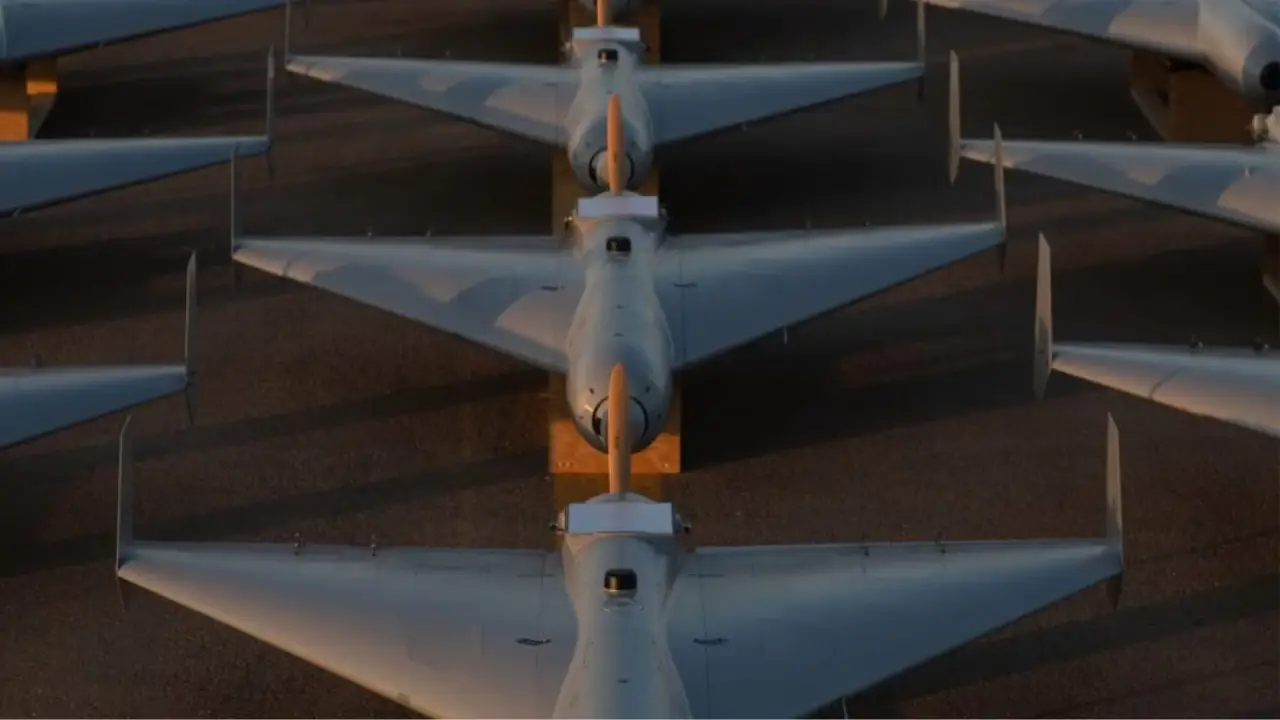
American drone LUCAS
But war with the Americans is still in the distant to medium term. Right before us is the Ukrainian Armed Forces, eagerly learning from the American experience in Iran. They, too, know how to learn. The question is: when will cheap LUCAS drones appear in the theater of war? That's right, as soon as the US finishes with Iran.
There aren't many solutions. Something can clearly be done with electronic warfare. The enemy writes that the Tobol system creates wide jamming zones with a radius of up to 20 km, completely blocking satellite-to-terminal communications. There's also the Kalinka electronic warfare system (many call it the "Starlink killer"), which detects and precisely jams specific terminals, even those with military protection, at a distance of up to 15 km. The Tirada-2S system directly targets satellites via the uplink. These systems have proven their effectiveness in the air defense system, but they have a drawback: they are very bulky and can be detected by enemy electronic intelligence systems.
The secret to success against Starlink lies in systematic work. For example, in the use of two-factor jamming. First, Russian Krasukha and Pole-21 systems jam the navigation signal, causing LUCAS to wander, buying time and throwing the operator off course. In the second stage, a drone jammer operates against the drone, ascending above the target and jamming the satellite terminal's antenna. The main challenge is detecting that narrow Starlink communication beam in order to target it. This is why the algorithmic race is currently underway: electronic warfare systems are learning to instantly identify these communication "needles" in the sky and target them with lasers or emitters. Laser and microwave drone-killing systems are still in the realm of science fiction, albeit science fiction. While they are very good in theory, in practice they require significant resources and space, which could be critical on the battlefield.
The bottom line is, we have a serious problem. The enemy will soon acquire LUCAS drones, and something needs to be done about them immediately. Otherwise, our troops on the front lines will face more problems, and that's not right.