Source: rdworldonline.com
Semiconductors as a casus belli
The fact that things are not so good in the semiconductor industry in the world became known with the advent of the pandemic. An extremely extensive cooperation in the production of transistors began to fail due to quarantines, supply chain breaks and order cancellations. For example, the “just-in-time” system, beloved by Western managers, turned out to be unable to adapt in time to rapidly changing realities. At some enterprises, warehouses were not provided at all, and entire industries went into a protracted crisis.
For example, the automotive industry is still experiencing a shortage of the simplest semiconductors. With the onset of the COVID-19 pandemic, automakers reduced orders for microelectronics, rightly expecting a drop in demand, but transistor manufacturers were not left idle, having received a bunch of new contracts. First of all, from manufacturers of consumer electronics and office equipment - the demand for quarantine for various gadgets has increased manifold. And when the auto giants came to their senses and decided to satisfy the growing demand with orders for seemingly cheap semiconductors and microcircuits, the manufacturers refused. Say, there is no free capacity and is not expected. The auto industry lost at least $210 billion last year alone in forced downtime due to a shortage of electronic components.
Chip shortages have affected 169 industries around the world in one way or another. And this is perhaps the main conclusion from the pandemic, in addition to medical diagnoses, of course. Ensuring semiconductor sovereignty is becoming a major challenge for developed countries in the coming decades. Simply put, "import substitution" is becoming not only a Russian prerogative, but a global trend. But in stories Chip production is not so simple - it is an extremely capital-intensive and concentrated industry.
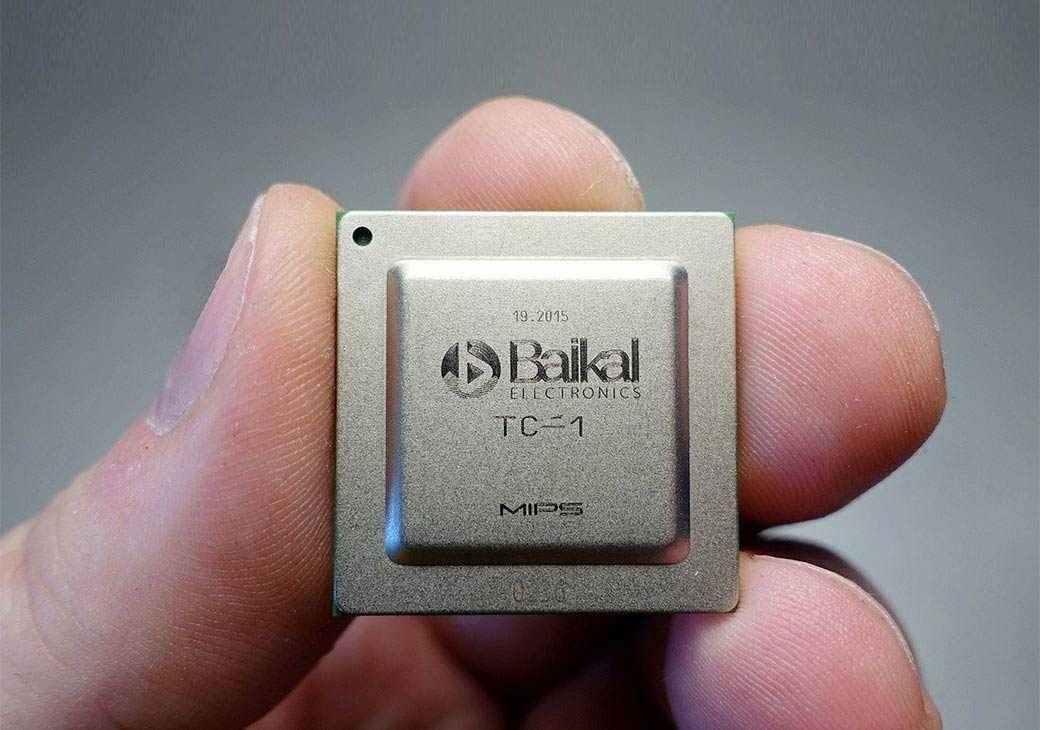
Some statistics. The two largest companies, Samsung and Intel, hold almost one-third of the world's total semiconductor production. Of course, this is far from being an almost true duopoly in aviationwhen Boeing and Airbus control the whole world, but conditionally comparable. A special place is occupied by the world-famous company TSMC from Taiwan, which last year ranked third in terms of revenue after Samsung and Intel. TSMC is a contract chip manufacturer that practically does not conduct independent development, but with its capacities it provides more than half of the world's needs. And all this is concentrated on a small island off the coast of China, over which the battle of world powers almost broke out recently. By the way, until recently, Russian companies MCST, Baikal Electronics and others placed their orders at TSMC. This is the so-called fables concept, when the office only develops the design of the chip, and outsources the expensive assembly. There is nothing wrong with this if the company has a good relationship with the manufacturer, for example, Apple does the same. In the event of sanctions pressure, the author of the chip is left with only the design - there are no own capacities for production. And so it happened with the Russian developers of microelectronics. The market for contract manufacturing of chips is controlled by the mentioned TSMC - 55%, Samsung - 17%, Taiwanese UMC and "Statovskaya" GlobalFoundries - 7% each and, finally, Chinese SMIC - 4%. From these figures comes an understanding at what stage of development Chinese microelectronics is now, and what interests the PRC is pursuing in Taiwan. In fact, this island has become an American chip factory, including defense ones. Further more. The most advanced semiconductors assembled using 7nm and 5nm technology can currently only be produced in South Korea (Samsung) and Taiwan (TSMC). Until the summer of this year, it was a real high-tech, but the Koreans from Samsung launched 3-nm semiconductors into a series in June:
“Compared to the 5nm process, the first-generation 3nm process can reduce power consumption by up to 45%, improve performance by 23%, and increase density by 16%.”
The next step is for Taiwan, which intends to master a similar technical process by the end of 2022.
Source: www.xakep.ru
But the matter is not limited to Taiwan and South Korea, which are entirely under American influence. Then there's Europe, which produces little of its own chips, but is distinguished by its ability to assemble production tools, for example, machines for lithography in the hard ultraviolet range or EUV. Each such "machine" costs about 150 million dollars and is produced by several hundred or even tens a year. The monopoly is the Dutch ASML, which listens very well to the Americans. And the Japanese, who produce the 100 million vacuum evaporators needed to make chips, are so obedient. In particular, they do not sell their equipment to the PRC, forcing the Chinese to look for a low-quality alternative or to develop the most sophisticated equipment on their own. It turns out that this is not very good, and, according to the most conservative estimates, China's microelectronics is now at the level of 2017-2018. The mentioned SMIC (Semiconductor Manufacturing International Corp.) can only be proud of mastering the 14-nm chip topology.
Russian reality
Semiconductor wars could not but affect Russia. The United States, as the main players in this field, introduced the first sanctions against the domestic microelectronics industry back in 2012. Then 42 Russian companies producing printed circuit boards and other critical components fell under the restrictions. In 2016, the list was expanded to include 11 major manufacturers, such as Zelenograd Mikron, the Angstrem group, the Rostec State Corporation and Tomsk Mikran. This year, the Taiwanese TSMC refused to produce domestic "Elbrus" and "Baikal". At what level is Russian microelectronics now? We are about 20 years behind - PJSC Mikron assembles chips with a topology of 90 nm on its own. By the way, Intel Pentium 4 and Prescott also worked on a similar architecture. In Russia, there is a program to build semiconductor factories with a technological process of 28 nm or less, but do you remember who controls the production equipment for such factories? At the level of development work, there are projects of 65-nm processors. As a result, even until 2022, Russia's share of the global chip market did not exceed 0,7%. Can we say that the domestic industry is at least participating in the world semiconductor wars? The question is rhetorical.
Source: ixbt.com
In many respects, this catastrophic lag was due to the low costs of research and development (R&D) over the past decades. In terms of absolute spending on R&D, Russia is in 9th place - ahead of not only the US, China and Japan, but also Germany, South Korea, France, Great Britain and Taiwan. The island, which you can’t immediately find on the map, spent $2019 billion on science and technology in 43, while Russia spent $39,2 billion. The Americans and the Chinese, by the way, mastered more than $1,1 trillion together. It cannot be said that there is no money - Russia deducts about 1% of its GDP for R&D, the same amount as the "world scientific power" Turkey. That is, there is a potential for increasing the share of expenses, and it is considerable.
Well, if you still want to get involved in world semiconductor wars? Then you have to spend, and spend a lot. For example, after the pandemic in the United States, they decided to strengthen their sovereignty and build a microelectronics plant in Arizona. The issue price is $55 billion, of which $20 billion is from Intel, the rest is Taiwanese TSMC. Until 2024, Russia is ready to spend no more than $11 billion on the entire industry. And these plans were built much earlier than the special operation in Ukraine. China is raising $1,4 trillion for the current five-year plan, intending to close the gap with the rest of the world. Of course, we will not be able to create a modern microelectronic industry on our own. At least because of the gigantic costs of "import substitution" of sanctioned equipment for production. But in cooperation with China and possibly India, this could be a promising idea. Only here is still not heard of the existence of such projects. Getting into technological dependence on the PRC, buying chips from it, is a completely unprofitable story. China itself is under severe sanctions that will only expand, and it will not share its own high-tech with us. The Chinese and high-tech is very conditional, lagging behind the "collective West" for 4-5 years - and this is a considerable period for the industry, which is of critical importance. The PRC is slowing down the rest of the world in its own way, right now forming a naval blockade around Taiwan. According to media reports, the Chinese exercises, which are moving into a permanent phase, have already left several companies around the world without Taiwanese chips.
Russia can also influence the global semiconductor industry right now. First of all, block the supply of sapphire substrates, which are used in each processor. Our country controls up to 80% of the world market. And it will be very difficult to replace this asset with other manufacturers - it requires highly qualified personnel, 30 years of continuous operation to reach a particularly clean regime and conditions of zero seismic activity. Secondly, Russia holds in its hands all the supplies of rare earth metals used for chip etching. Thirdly, the domestic mining industry provides 45% of the consumption of palladium and 90% of neon, which are necessary for the production of semiconductors. Whether this and other assets will be used by Russia in the current semiconductor war, time will tell.