Toyota's sustainable pickup truck prototype was initially presented at G20 Energy Transition Week and is now on the radar of the Brazilian automotive industry
Toyota Brazil has taken a strategic step toward a cleaner automotive sector by officially announcing the development of the country’s first biomethane-powered Hilux pickup truck. The project, which is still in the prototype phase, symbolizes the Japanese automaker’s advancement in the use of biofuels as an alternative to traditional fossil fuels.
The model was first shown in a restricted manner during the G20 Energy Transition Week, held in October 2024 in Foz do Iguaçu (PR). The event, aimed at authorities, diplomats and experts in the energy sector, marked the beginning of Brazil's transition to an economy less dependent on oil and focused on clean energy.
Known for its robustness and reliability, the Toyota Hilux is one of the best-selling vehicles in Brazil in the mid-size pickup truck category. Now, with an experimental version powered by biomethane, the model gains new meaning as a symbol of sustainable mobility in the countryside and in the city.
Toyota's proposal is to evaluate the vehicle's performance when using renewable gas extracted from organic waste, such as agro-industrial waste, sewage and urban garbage. biomethane is considered a renewable energy source with enormous potential for expansion in Brazil, especially in agribusiness.
The choice of the Hilux for biomethane testing was no coincidence. The pickup truck is widely used in agribusiness, construction and public services. According to Toyota, the prototype model is part of a global strategy to accelerate the decarbonization of the automotive sector through the use of alternative biofuels.
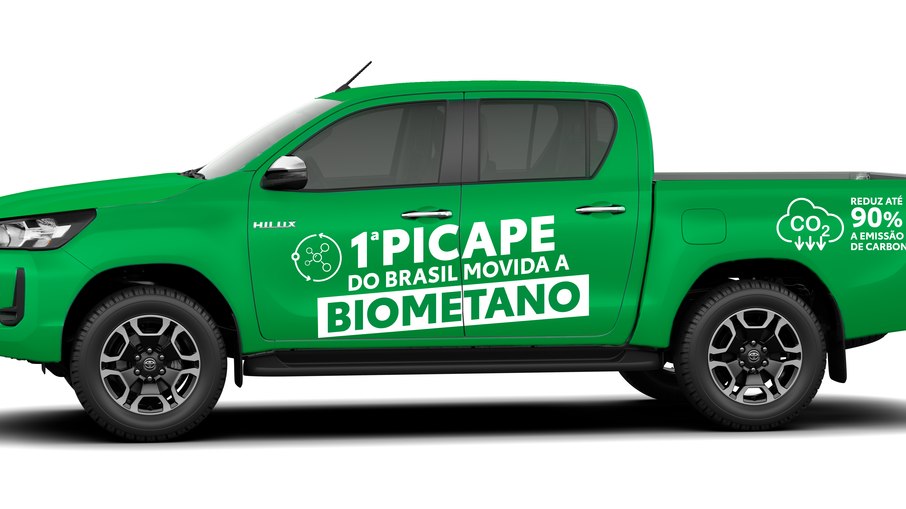
Toyota has invested in several sustainable solutions, including hybrids, electric vehicles and now biomethane-powered vehicles. The intention is to offer alternatives that meet the needs of different markets, respecting regional characteristics and local infrastructure.
O biomethane It is a renewable gas obtained from the purification of biogas — a compound generated by the decomposition of organic matter. With characteristics similar to those of natural gas for vehicles (NGV), biomethane can be used in adapted combustion engines, such as the one in the Hilux prototype.
The main advantage of biomethane is the reduction of greenhouse gas emissions, since its production and use cycle is considered carbon neutral. Furthermore, its use promotes valorization of agricultural and urban waste, strengthening the circular economy.
Brazil, with its strong agricultural production and organic waste generation, is one of the countries with the greatest potential for decentralized biomethane production, especially in rural areas. Advances in technology applied to vehicles such as the Hilux could encourage the creation of green corridors in the interior of the country.
Although it has not yet released complete technical data on the biomethane-powered Hilux prototype, Toyota reported that the model is being evaluated under real-world conditions, with a focus on performance, autonomy, consumption and pollutant emissions.
The automaker's goal is to identify the viability of the technology for future commercial applications, not only in Brazil, but in other emerging markets with similar profiles. Toyota is already conducting similar research in countries in Asia and Latin America, where the supply infrastructure for electric vehicles is still limited.
If the tests are successful, the Biomethane-powered Hilux could become the first sustainable pickup truck mass-produced or adapted in Brazil, paving the way for a new generation of environmentally friendly commercial vehicles.
Sustainable pickup truck reinforces Brazil's position in renewable energy
Toyota's announcement is in line with federal government guidelines for expand the use of renewable sources in the transport sector. Brazil is a world reference in ethanol, biodiesel and, more recently, biomethane, which has been gaining ground with incentives for distributed production.
During the G20 Energy Transition Week, Brazilian authorities and industry representatives highlighted the country's role as a leader in global energy transition, thanks to the strategic use of biofuels and gradual electrification of the fleet. Toyota was one of the companies that committed to develop solutions applicable to the Brazilian reality, like the biomethane Hilux.
Among the main potential users of Hilux powered by biomethane are rural producers, who already have access to the raw material for generating fuel. In addition, the vehicle can be advantageous for public fleets, environmental services, short-haul logistics and mining, where the demand for powerful and sustainable vehicles is constantly growing.
The adoption of technology can also reduce the operating costs of companies and cooperatives that already invest in biodigesters for energy use. With this, Toyota's sustainable pickup truck can become a key piece in projects rural energy self-sufficiency.
Although the model is still in the testing phase, Toyota Brazil indicates that the development of the Hilux powered by biomethane may result in future national production or adaptation of imported models. According to sources linked to the automotive industry, the performance of current tests will be decisive for decision-making.
The prototype could also encourage other automakers to explore similar solutions, creating a new front of innovation in the automotive segment. sustainable utility vehicles.