For years I’ve wanted to write something substantial about science and technology in the age of the Portuguese Discoveries, in the 15th and 16th centuries. What always interested me most was how it all came together through science, human drive, and technology. I had been slowly accumulating books, podcast episodes (some with me hosting), notes, and references.
Then, in a brief exchange on Twitter a few days ago, I asked Jorge Ventura, an Azorean navigator and author, if he had any reading suggestions, and he pointed me to A Marinharia dos Descobrimentos, by A. Fontoura da Costa (from the 1930s). It was exactly the right recommendation.
This is still not it (the full “writing”, I mean), but it’s a start.
Leafing through the book, I found precisely the kind of material that fascinates any geek with a taste for history. Not sweeping abstractions about national destiny or heroic “epic” narrative, for which we already have Camões’s Os Lusíadas or the stories of Fernão Mendes Pinto, but objects, diagrams, and technical solutions to very concrete problems. What stands out most is that the Portuguese did not advance through magic, nor through some sudden explosion of isolated genius. They advanced because they took existing technology and made it work at sea.
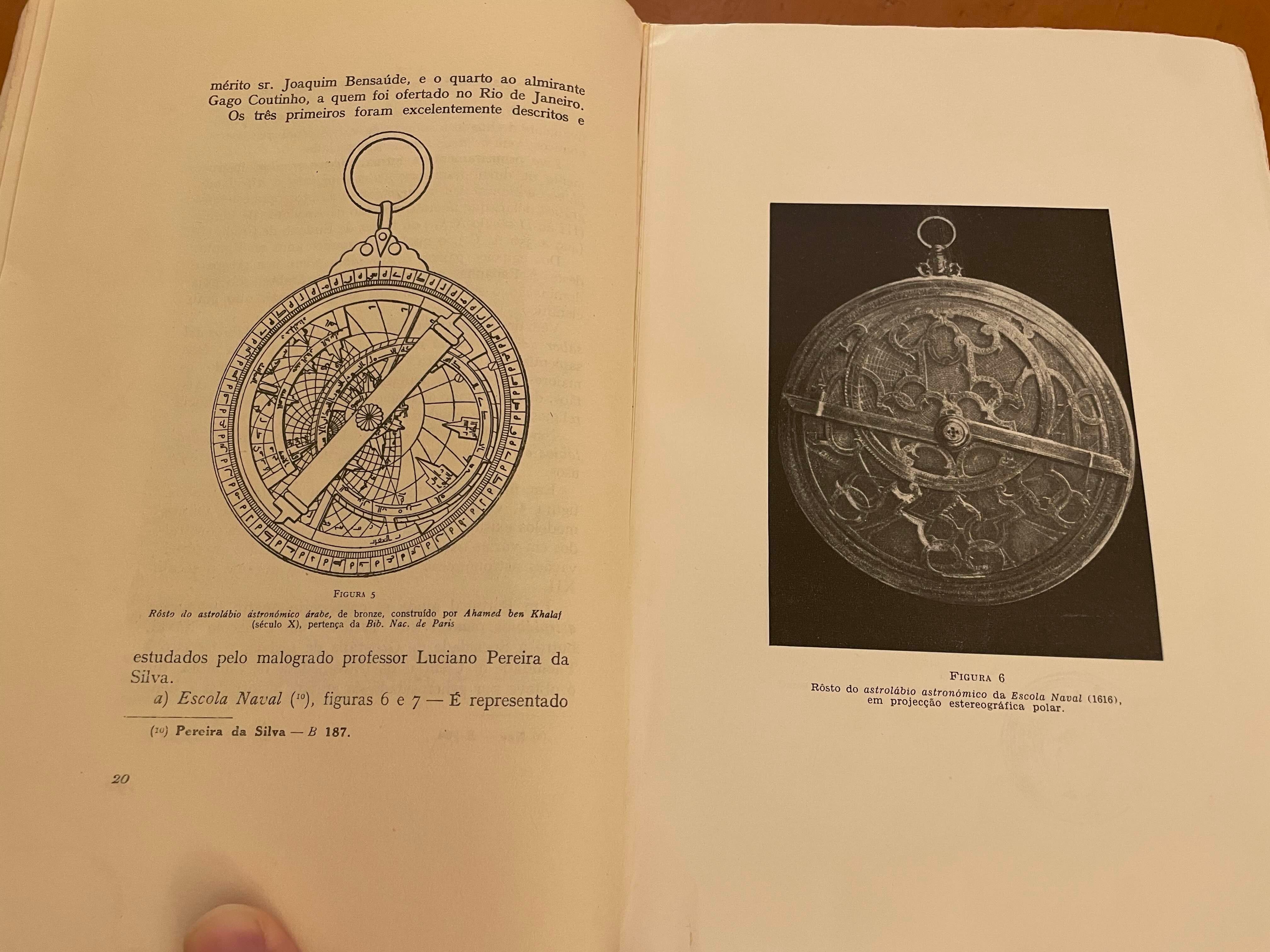
Astrolabes reproduced in A Marinharia dos Descobrimentos: inherited technology adapted for Portuguese nautical use.
The astrolabe is the obvious example. It was not a Portuguese invention, yet it appears here as a working tool, almost like repurposed hardware adapted for an extreme environment. The same can be said of astronomical navigation more broadly: diagrams of Polaris, constellations, and sky-reading schemes, visual guides for astronomical orientation, which in practice turned the night into a usable interface.
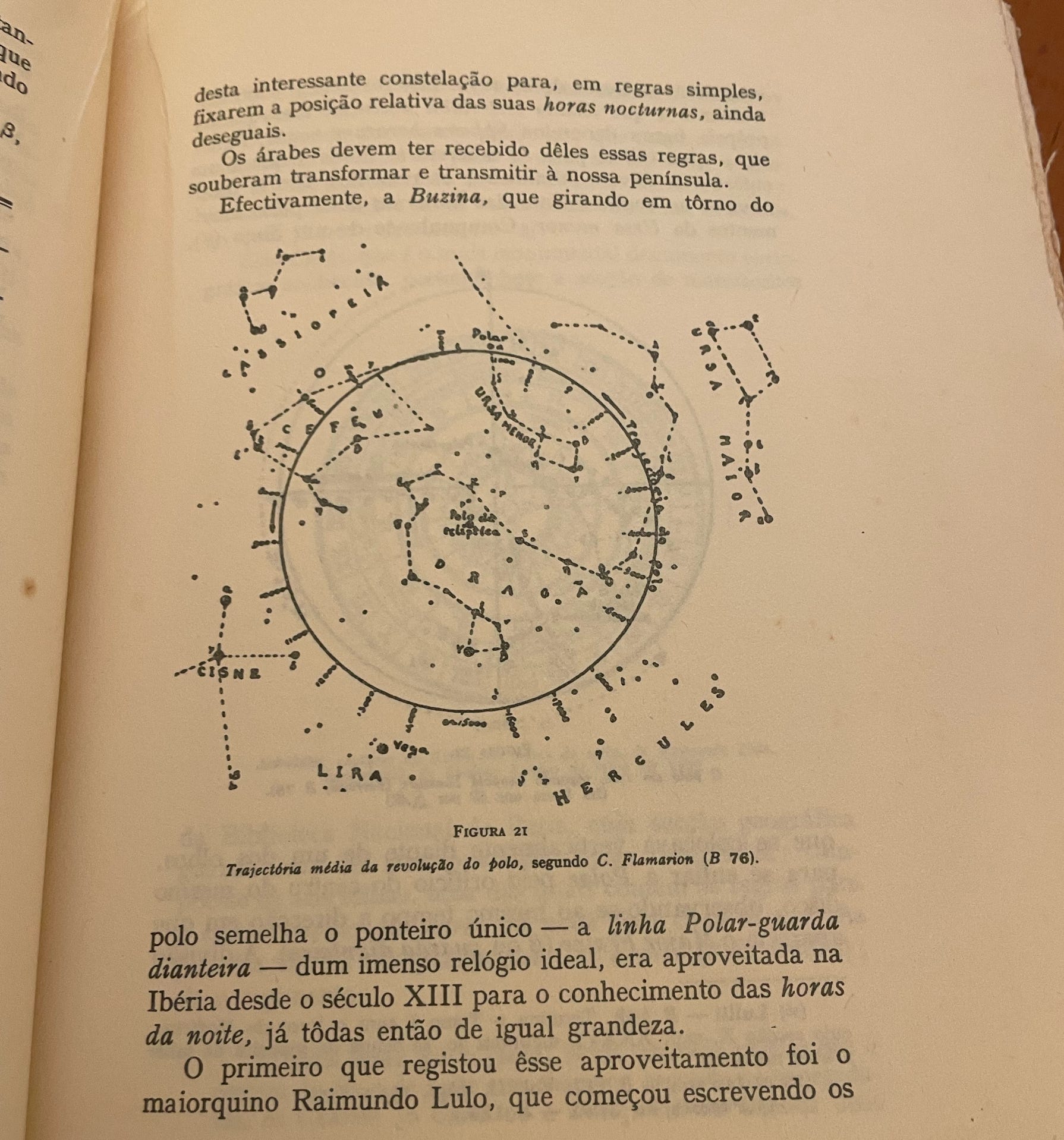
Astronomical orientation scheme based on Polaris and the constellations: the sky as a navigational interface.
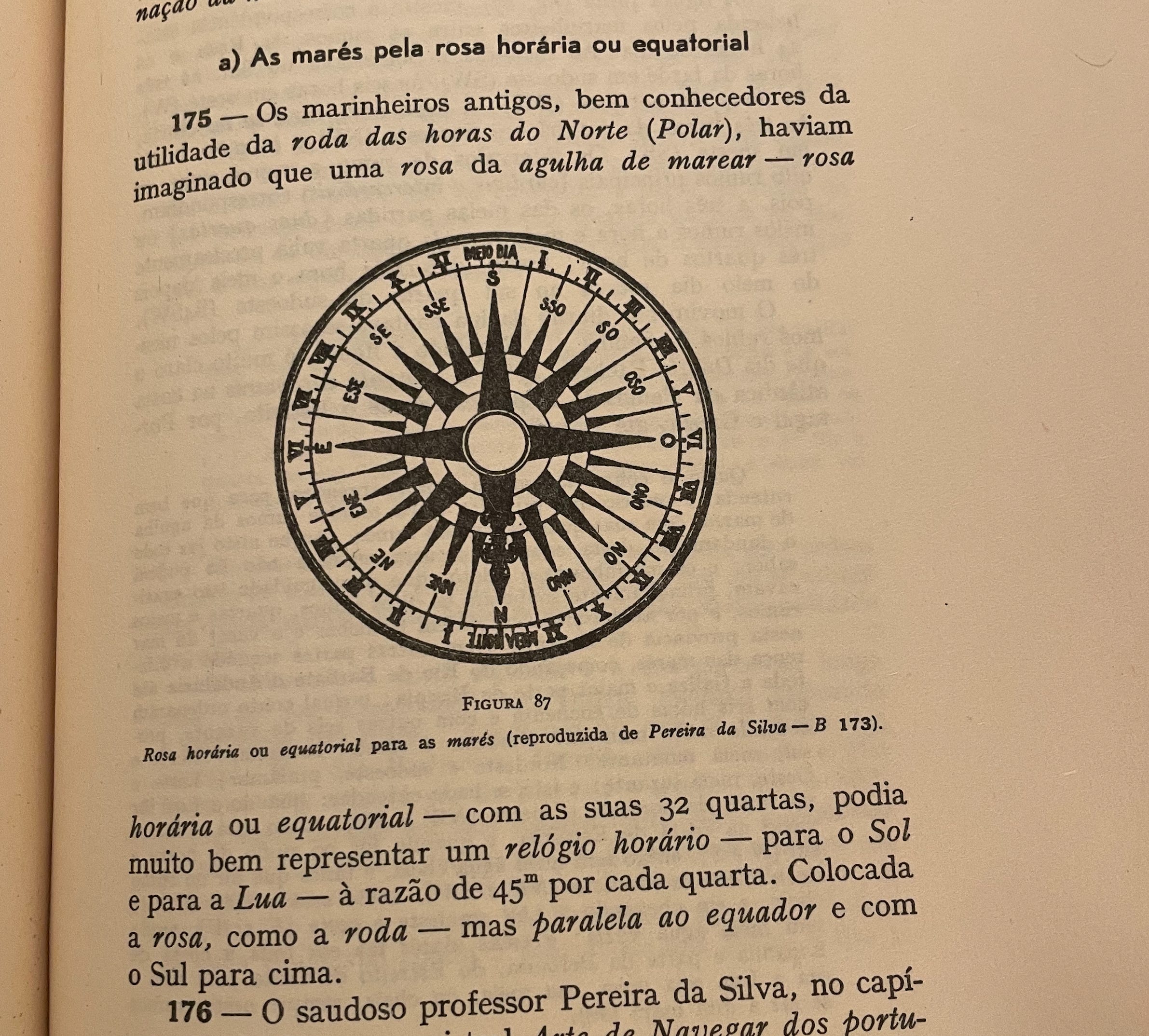
The hourly or equatorial rose for tides: a conceptual device linking direction, time, the Sun, the Moon, and the tide.
But there are even better details. One of them is the so-called hourly or equatorial rose for tides. It is not just a compass rose: it is a conceptual device for relating direction, the Sun, the Moon, time, and tidal movement. Almost a small analog computer. Another is the succession of maps and charts in imperfect and corrected versions, where you can actually watch knowledge being refined iteratively, as if you were looking at successive builds of a cartographic system still in debug mode.
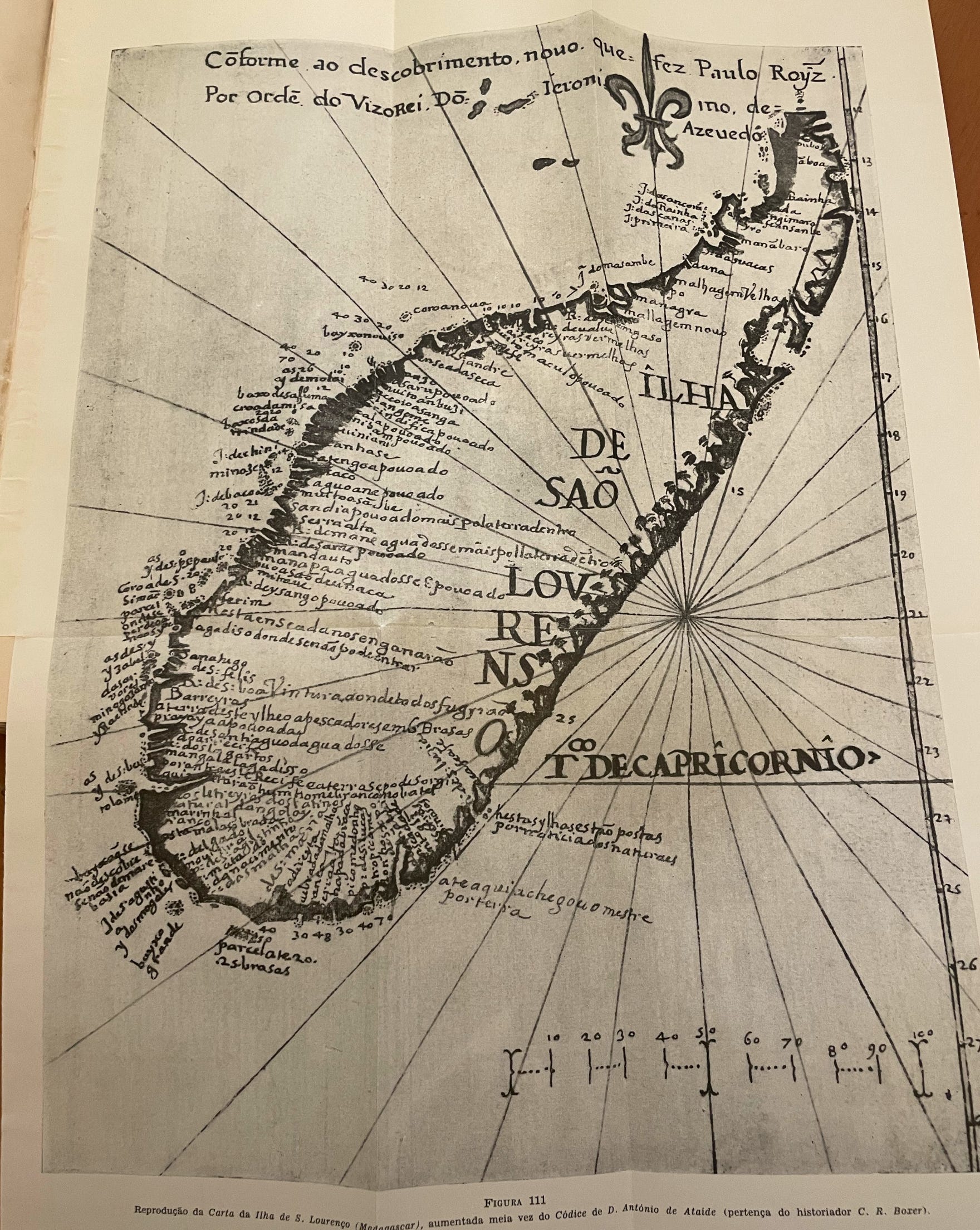
Chart of the island of São Lourenço, now known as Madagascar: cartography as an iterative process of observation, correction, and refinement.
It also helps to see that this technical explosion did not emerge from nowhere. First under Prince Henry, and later under John II, there was a political decision to create incentives to explore, measure, and profit. Henry sponsored voyages, brought together pilots, cartographers, and experts in nautical astronomy, and helped turn navigation into a sustained project.
John II was even colder and more effective, and he seems to have relished keeping things secret and out of Castilian hands, something Manuel I later diluted. He reinforced the royal monopoly over African trade, backed specialists such as José Vizinho and Abraham Zacuto, and made the search for a sea route to India a matter of state priority.
Another detail I especially like about this early phase of Portuguese expansion is that the Casa da Guiné, and later the Casa da Índia, which made that progress possible, were not modern private companies. They were Crown institutions set up to manage monopolies, organize fleets, gather information, control commodities, and turn discovery into revenue, while still leaving room for contracts and leases with private actors. One of my favorite stories from the Discoveries, in fact, took place not by sea but over land, in the lonely figure of the spy-explorer Pêro da Covilhã.
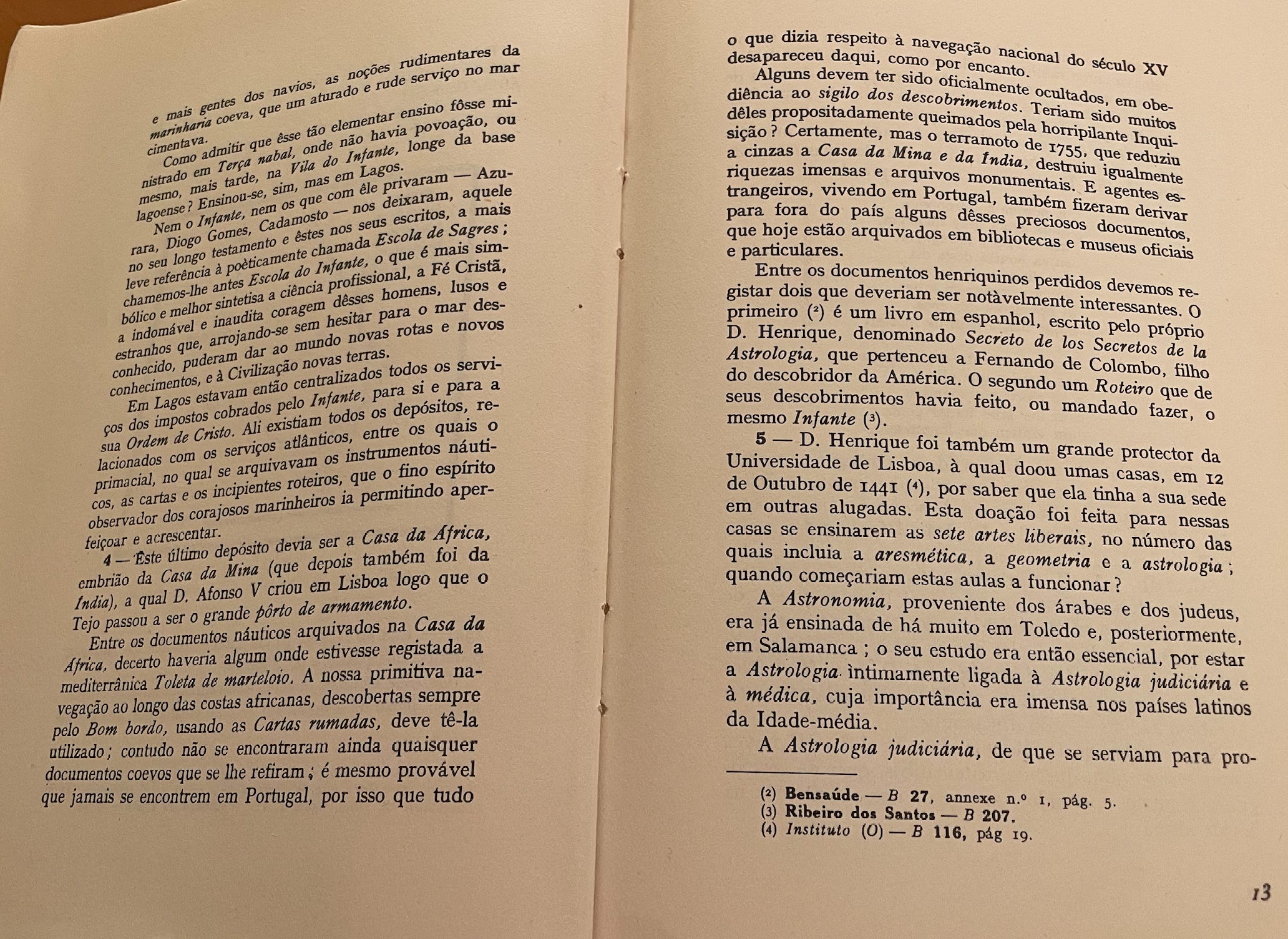
Pages on the Casa da Mina, the Casa da Índia, and nautical astronomy: navigation also meant organizing information.
And the engine behind all this was not merely scientific curiosity, though some certainly had that too. It was commerce, power, and religious legitimacy: gold, spices, direct routes, papal backing, evangelization, and prestige in the eyes of the clergy.
Once this model began to produce results, imitation was inevitable. Castile responded with Columbus, after he had been rejected by the Portuguese king, who may well already have suspected the existence of America, and perhaps even Brazil, and with its own imperial machinery. Later, the Dutch and the English pushed the same impulse into a more explicitly commercial form, through chartered companies and private capital.
Seen up close, the Discoveries look like a clear mixture of applied science, improvised engineering, intelligent reuse of inherited technology, and an obsession with turning the unknown into something measurable, navigable, and commercially useful. And from that came very different consequences, some extraordinary, others brutal, just as the world in which all this happened was itself brutal and violent.
On the one hand, a small and peripheral kingdom, “trapped” between Castile and the Atlantic, while also facing the African coast, tried to break through its limits by way of the sea and of shorelines still little known, in a movement that Portuguese tradition would later romanticize with the grand formula of “giving new worlds to the world.”
On the other hand, that expansion came at a tremendous human and moral cost. There was the extreme hardship of the voyages, with high mortality among crews; the growth of the slave trade on an ever larger scale; and, in the Americas, the violence, disease, and devastation imposed on native populations, in a process in which the Castilians reached particularly aggressive and destructive levels. All of this belongs to the same story and cannot be separated from its technical and commercial dimension.
At the same time, the expansion itself generated moral and political tensions that would later feed criticism, debate, and attempts at restraint, in figures such as Father António Vieira. But that does not erase the essential point: the same impulse that produced knowledge, routes, wealth, and power also produced exploitation, suffering, and destruction.
As the decades and centuries passed, part of that scientific, technological, and mercantile impulse gradually decayed, as later kings preferred projects of grandeur, display, and ostentation to a more disciplined culture of knowledge and commerce.
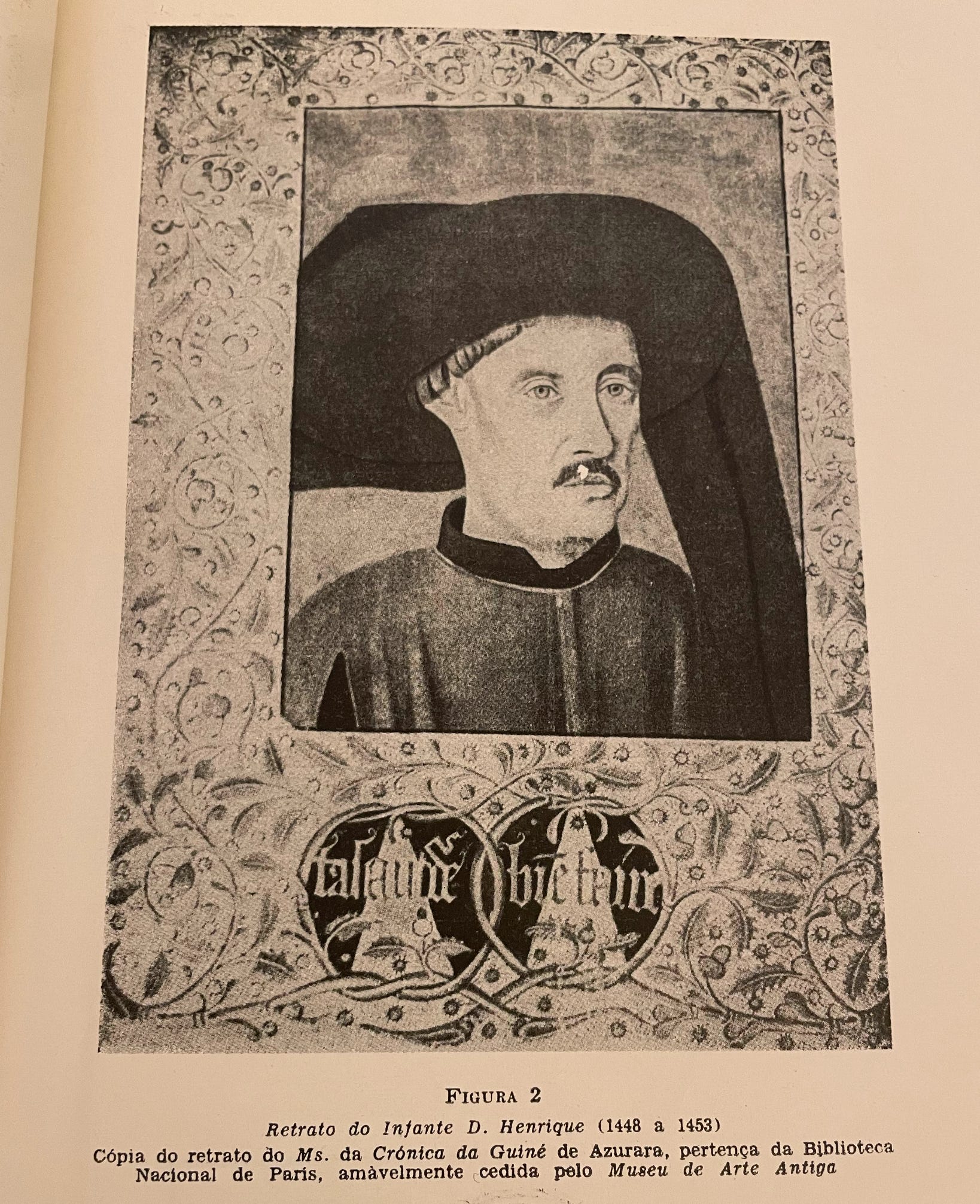
Portrait of Prince Henry, a central figure in the early patronage of Portuguese maritime expansion.