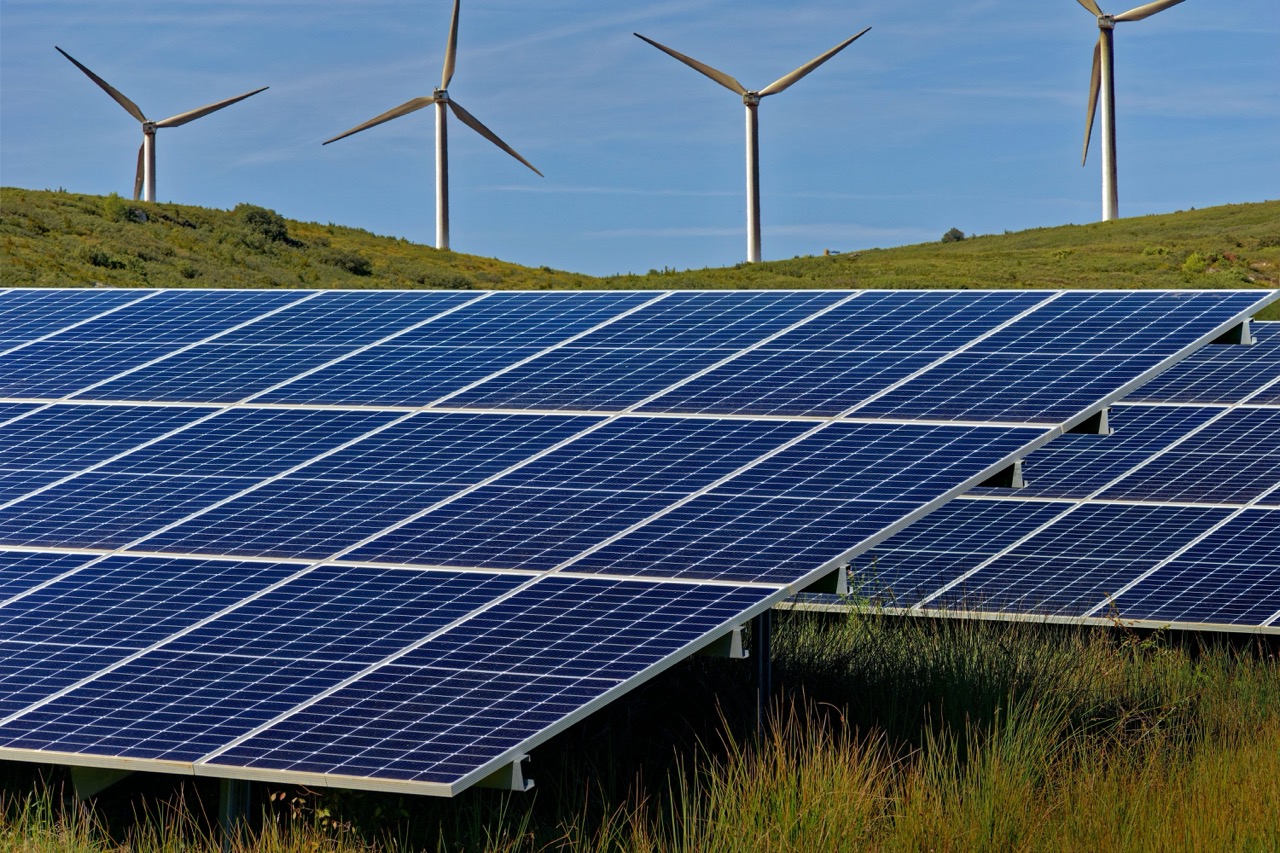
Solar additions have risen to record levels. The challenge now is to maintain this growth, while also stepping up on wind.
6 Nov 2025
33 Minutes Read
Table of Contents
Highlights
Average annual growth rate of renewable additions needed from 2023 to 2030 to meet a tripling of renewable capacity.
Actual annual growth rate of renewables additions from 2023 to 2025.
New annual growth rate needed for renewable additions from 2026 to 2030 to meet global tripling, given the high additions in 2023- 2025.
Executive summary
Renewable additions in 2025 are once again expected to surge, putting tripling within reach
Tripling global renewables capacity by 2030 is the single biggest action this decade to stay on track for the 1.5C climate pathway.
At the UN’s COP28 climate change conference in December 2023, world leaders reached a historic agreement to triple global renewables capacity by 2030. The International Energy Agency (IEA) and International Renewable Energy Agency (IRENA) both show that a global tripling of renewables to at least 11 TW by 2030 is the optimal pathway to keep 1.5C within reach.
Despite the landmark COP28 agreement to reach 11 TW of renewables by 2030 and rising renewable capacity additions every year since, current national targets for 2030 only aim for just over a doubling of renewables by 2030.
Tripling renewables is within reach, although stronger efforts are still required. Renewables are growing fast, proving they can deliver at scale. But achieving 1.5°C and ensuring secure power systems requires more than tripling alone. What’s needed is not just speed, but balance: between solar and wind, between generation and storage + grids, and ambition and delivery.
The amount of solar being built in 2025 alone is jaw-dropping, following three years of stellar growth. We now know we can build renewables at speed. The next step is to prove we can keep up this momentum on solar every year and accelerate the pace on wind and hydro too. Speed and consistency are the keys to keeping clean electricity affordable. The focus in many countries now has already shifted from scaling up to just maintaining the current high annual build-rate. Laying out targets can help better plan for that consistency.
Key takeaways
01
Renewable capacity additions are forecast to rise by 11% in 2025.
New Ember analysis of monthly solar and wind deployment data up to September of this year suggests that 2025 will be another record year – driven primarily by solar and China’s continued deployment. Ember forecasts global renewable additions will reach 793 GW in 2025, a rise of 11% compared to 717 GW in 2024. This builds off rapid growth of 22% in 2023 and 66% in 2022. Solar additions are expected to rise by 9% and wind by 21%, with solar still adding more capacity in absolute terms. China is projected to account for 66% of global solar capacity and 69% of global wind capacity additions in 2025.
02
To triple renewables by 2030, annual additions do not need to keep accelerating – but that does not mean it will be easy.
To achieve the global tripling target, renewable capacity additions needed to rise by 21% every year from 2023 to 2030. So far, they are outperforming that pace, averaging 29% annually from 2023 to 2025. That means additions now only need to rise by 12% per year from 2026 to 2030. The IEA’s latest renewables main case forecast shows only a 15% shortfall in capacity by 2030. However, the shortfall in generation is much larger at 28%, because the capacity shortfall comes primarily from wind and hydro, which generate more electricity per unit of capacity than solar.
03
National renewable targets still aim for just over a doubling, falling short of a tripling.
The sum of global national renewable targets for 2030 has only increased by 8% since 2022. The report finds that the current sum of national targets is 7,793 GW, reflecting a slight rise driven by an increase in China’s 2030 target based on its 2025 Nationally Determined Contribution (NDC), offset by a decline in the assumed target for the United States. The continued lack of ambitious solar and wind targets leaves the renewables industry without the long-term certainty it needs.