For decades, the National Institutes of Health published between 650 and 850 Notices of Funding Opportunities each year. These announcements tell the research community which diseases need study, which populations are underserved, which scientific gaps need filling. They are how NIH directs resources toward problems that won’t get solved by waiting for whatever grant applications happen to arrive.
In 2024, NIH published 756 funding announcements.
In 2025, it published 120.
In 2026, as of March 15, it has published 14.
I spent 22 years as a program official at NIH writing these announcements. I know what they accomplish and what happens when they disappear. This essay is about what the data reveals and what it means for every disease, every research area, and every population that depends on NIH-funded research.
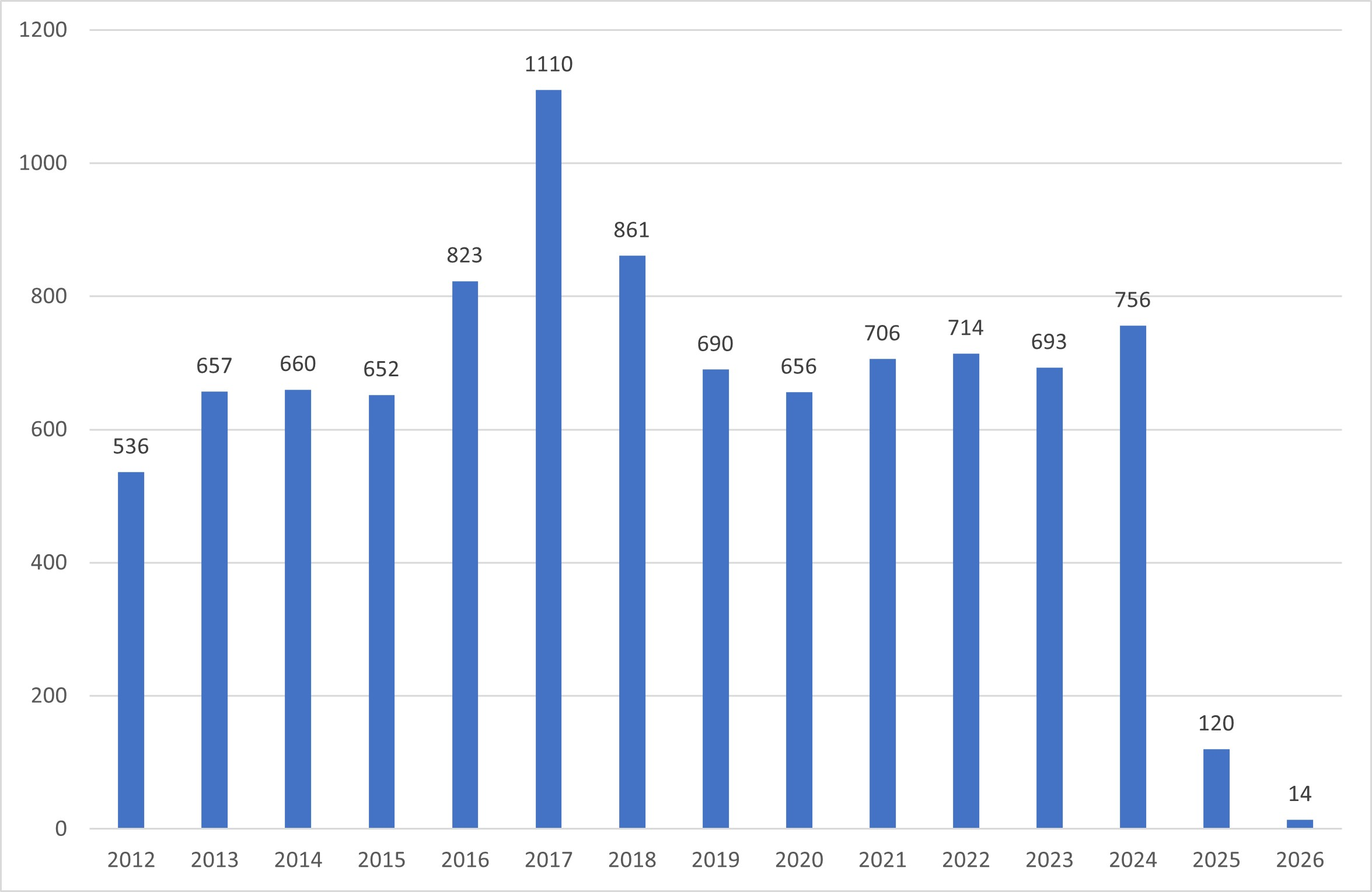
Figure 1. NIH NOFOs Published Over Time
A Notice of Funding Opportunity (NOFO) is how NIH tells researchers what the agency needs. It specifies a research problem, explains why it matters, describes the approach NIH is looking for, and sets aside dedicated funding to solve it.
NOFOs exist because not all research needs are obvious to individual investigators. When a new pathogen emerges. When clinical trials reveal an unexpected side effect that needs investigation. When one population experiences a disease at higher rates than others but nobody knows why. When a promising scientific approach exists but no one is applying it to a specific problem. These are moments when waiting for unsolicited grant applications is not enough.
Writing a NOFO was one of my primary responsibilities as a program official. When my institute identified a gap, I would work with scientific experts to define the problem precisely, determine what kind of research was needed, and draft an announcement that would attract the right investigators. The announcement would be reviewed by our advisory council, posted publicly, and researchers across the country would know: NIH has identified this as a priority and has set aside funding to address it.
This is scientific stewardship. It is not top-down control of what researchers can study. Investigators can always submit unsolicited proposals on any topic within an institute’s mission. But NOFOs allow program staff to actively direct resources toward problems that need attention rather than passively waiting to see what applications arrive.
And then it stopped.
I downloaded all available NOFO data from NIH’s historical records and grants.gov and analyzed every funding announcement published from 2012 through March 15, 2026. What I found was worse than anything reported in the media.
From 2012 through 2023, NIH published an average of just over 700 NOFOs per year. There was variation (a peak of 1,110 in 2017, a low of 535 in 2012), but the system was stable. Institutes identified research needs and issued announcements to address them. In 2024, that number was 756, still within the normal range.
Then the collapse began. By 2025, only 120 announcements were posted, an 84% decline. As of mid-March 2026, only 14 have been published. If the current pace continues, this year will see a 98% reduction from historical norms.
The decline is not limited to a few institutes. It is systemic. The National Cancer Institute, which historically published more NOFOs than any other institute, has gone nearly silent. The National Institute of Allergy and Infectious Diseases, responsible for pandemic preparedness and emerging disease response, has published almost nothing. Institutes focused on mental health, aging, drug abuse, environmental health, and rare diseases have all but stopped issuing targeted funding announcements.
This is not a temporary slowdown. It is a structural collapse.
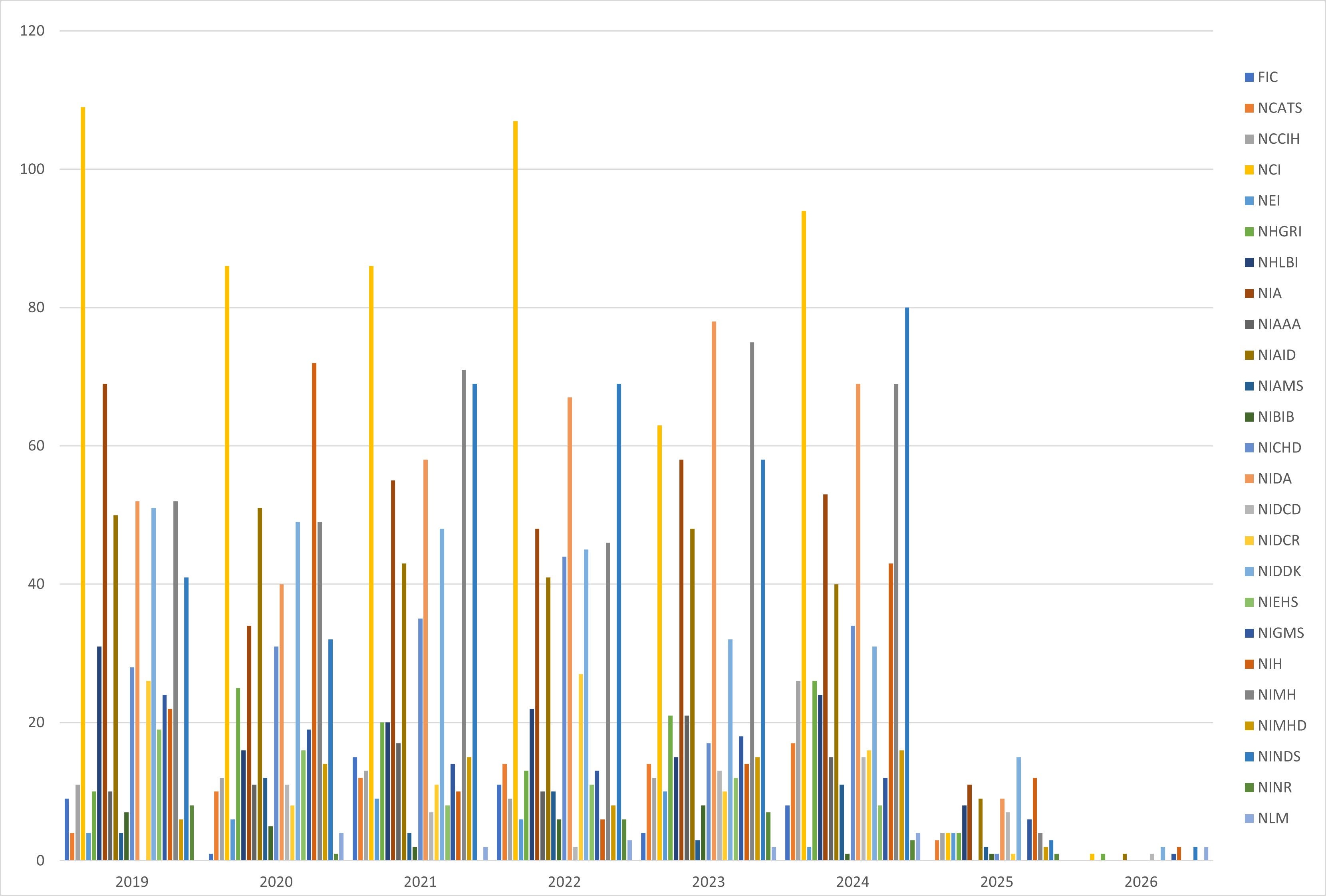
Figure 2. NIH NOFOs Published by Each Institute/Center Over Time
The collapse began with a policy change. In recent guidance, NIH leadership announced an “overall reduction in number of NIH NOFOs.” The stated goal was to streamline funding opportunities and reduce redundancy.
At the same time, the approval process for NOFOs was fundamentally restructured. Previously, funding announcements were primarily reviewed and approved within individual institutes by scientific program staff and external advisory councils composed of researchers and public representatives. The process typically took weeks to a few months.
Under the new system, every NOFO must be approved by political appointees in the NIH director’s office and the Department of Health and Human Services before it can be posted. The approval process now takes a minimum of six months, and many announcements seem to be remaining in review indefinitely.
More recently, NOFOs must also be approved by the Office of Management and Budget. This adds another layer of political review to what was previously a scientific decision-making process. OMB now has effective veto power over which research priorities NIH can pursue.
Additionally, NIH stopped publishing funding announcements directly through its traditional NIH Guide for Grants and Contracts. Instead, all NOFOs must now be entered into grants.gov as “forecasts” and wait for approval before becoming active funding opportunities.
The effect of these changes is visible in the data. Institutes are still identifying research needs. Program staff are still writing announcements. But the announcements are not being approved. They sit in forecast limbo, written but never posted, planned but never executed.
This is where the data becomes particularly damning.
In 2025, NIH institutes entered 391 total funding announcements into grants.gov (they all start as forecasts). Only 120 of them were actually posted and opened for applications. That means 271 announcements (69% of what was planned) were written, reviewed internally, entered into the system, and then blocked at the final approval stage (they still appear as forecasted).
In 2026, so far institutes have forecasted 75 announcements, and only 14 have been posted. Sixty-one remain in limbo (81% of what was planned).
These are not ideas that were considered and rejected for scientific reasons. These are fully developed funding announcements that passed internal scientific review, were deemed important enough to allocate budget toward, and were ready to go. They are sitting in a bureaucratic queue waiting for political approval that, in most cases, never comes.
The forecast graveyard proves this is not about scientific prioritization or budget constraints. If it were, the announcements would not have been written and forecasted in the first place. This is about centralized control. About requiring that every research priority, every identified gap, every targeted funding decision be approved by political appointees rather than scientific program staff. And the result is paralysis.
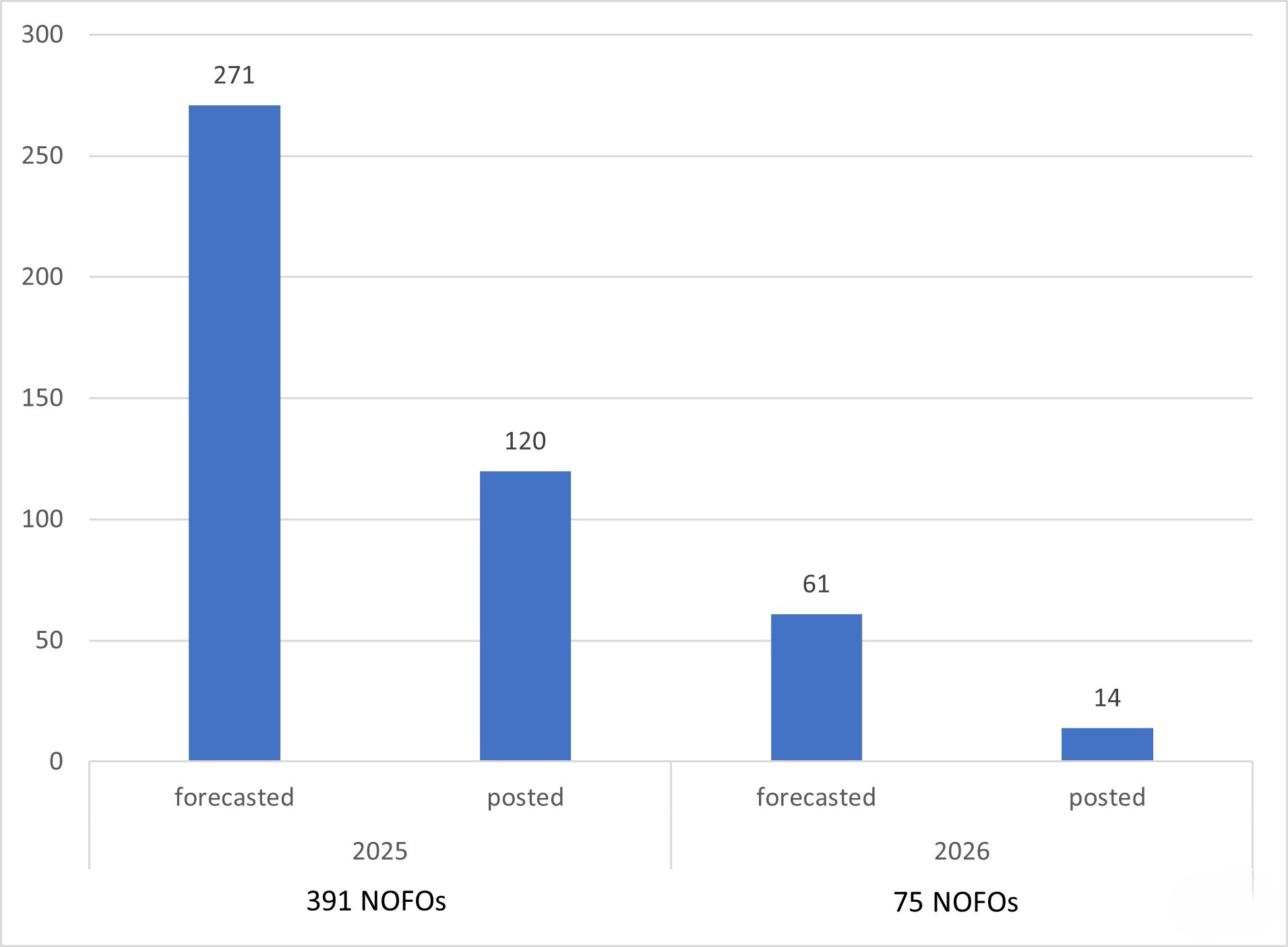
Figure 3. NIH NOFOs in Grants.gov Under the New “Forecast” Policy
When NIH stops issuing targeted funding announcements, specific kinds of research become much harder to sustain.
Rare disease research suffers because individual investigators are unlikely to propose studies on conditions affecting small populations unless NIH signals it is a priority and has dedicated funding. Research on health disparities struggles for the same reason. Studies requiring particular methodologies, specific patient populations, or coordination across multiple sites all depend on NOFOs that describe exactly what NIH is looking for and commit resources to support it.
Emerging threats become harder to address quickly. When COVID-19 emerged, NIH issued emergency funding announcements within weeks. Those NOFOs allowed the agency to mobilize researchers rapidly toward specific problems: vaccine development, therapeutic testing, long-term effects, vulnerable populations. Without the ability to issue targeted calls, response to future health emergencies will be slower and less coordinated.
Innovation in underfunded areas stalls. There are always scientific approaches or technologies that show promise but have not yet attracted enough investigator interest to generate unsolicited applications. NOFOs can seed these areas by explicitly inviting proposals and providing startup funding. When announcements stop, these nascent fields often wither before they mature.
Scientific program staff lose the ability to steward their fields. Part of my job was watching for gaps, talking to researchers about unmet needs, and working with my institute to direct resources toward those problems. That function is being eliminated. What remains is passive grant processing: review whatever applications arrive and fund the highest-scoring proposals. That approach works for well-established research areas with active investigator communities. It fails for everything else.
The collapse of NIH funding announcements is part of a larger pattern I have documented in previous essays: restructuring the agency without congressional authorization.
Congress rejected proposals to consolidate NIH’s 27 institutes and centers. But if all institutes are restricted to processing generic unsolicited applications through the same centralized approval system, the functional distinction between them disappears. Why maintain 27 separate entities if none of them can independently set research priorities or direct resources toward identified gaps?
The NOFO collapse accomplishes administratively what could not be achieved legislatively. It strips institutes of the autonomy that made them distinct. It centralizes decision-making under political appointees. It eliminates the scientific stewardship function that program staff have exercised for decades. And it does all of this without a single congressional hearing or recorded vote.
This represents a redefinition of what NIH does. The agency is being transformed from an institution that actively identifies and addresses research needs into a passive funding mechanism that distributes money to whatever proposals happen to arrive. That transformation has profound implications for every disease that depends on NIH research, every population whose health needs are not currently being addressed by unsolicited grant applications, and every future health crisis that will require rapid, coordinated research response.
I spent 22 years identifying research gaps and writing announcements to fill them. When a new disease emerged, when a population was being overlooked, when a promising area needed resources, we could act. That is what scientific stewardship looks like. It is not perfect. It makes mistakes. It can be slow. But it represents accumulated expertise about what research is needed and how to direct resources toward it.
The data shows that function being eliminated in real time. Active direction of resources toward need has been replaced by passive waiting for whatever applications arrive. Scientific program staff exercising judgment about research priorities have been replaced by political appointees controlling every announcement.
The 151 announcements sitting in forecast limbo for 2025, and the 47 blocked so far in 2026, prove this is not happening because of lack of scientific need or budget constraints. The announcements were written. The problems were identified. The resources were allocated. What changed was who gets to decide whether those announcements become active funding opportunities.
This is not efficiency. This is not streamlining. This is the systematic elimination of scientific stewardship at the world’s largest biomedical research funder.
And most people have no idea it is happening.
This essay is part of an ongoing series reflecting on what I learned over more than two decades working inside the U.S. biomedical research enterprise. Each piece stands alone, but together they examine how science is shaped not only by ideas and funding, but by the structures that support or constrain them.
National Institutes of Health. (2025). Updates to finding NIH funding opportunities and information. https://grants.nih.gov/policy-and-compliance/implementation-of-new-initiatives-and-policies/updates-to-finding-nih-funding-opportunities-and-information
Kaiser, J. (2026, March 3). Delays in awards and funding calls worry NIH-funded researchers. Science. https://www.science.org/content/article/delays-grant-awards-and-funding-calls-worry-nih-researchers
NOFO data was compiled by the author from NIH Guide for Grants and Contracts historical archives and grants.gov records, downloaded March 15, 2026. Analysis covers all funding announcements published from 2012 through March 15, 2026. Charts showing year-over-year trends, institute-level breakdowns, and forecast vs. posted comparisons are available in the original essay.