
One binary.
Many languages.
Native performance.
curl -sSL --tlsv1.2 elide.sh | bash -s -elide.pkl ↓elide install ↓
amends "elide:project.pkl"

name = "my-app"
local logbackVersion = "1.5.32"

dependencies {
  maven {
    packages {
      "com.google.guava:guava:33.5.0-jre"
      "org.slf4j:slf4j-api:2.0.17"
      "ch.qos.logback:logback-core:\(logbackVersion)"
      "ch.qos.logback:logback-classic:\(logbackVersion)"
    }
  }
}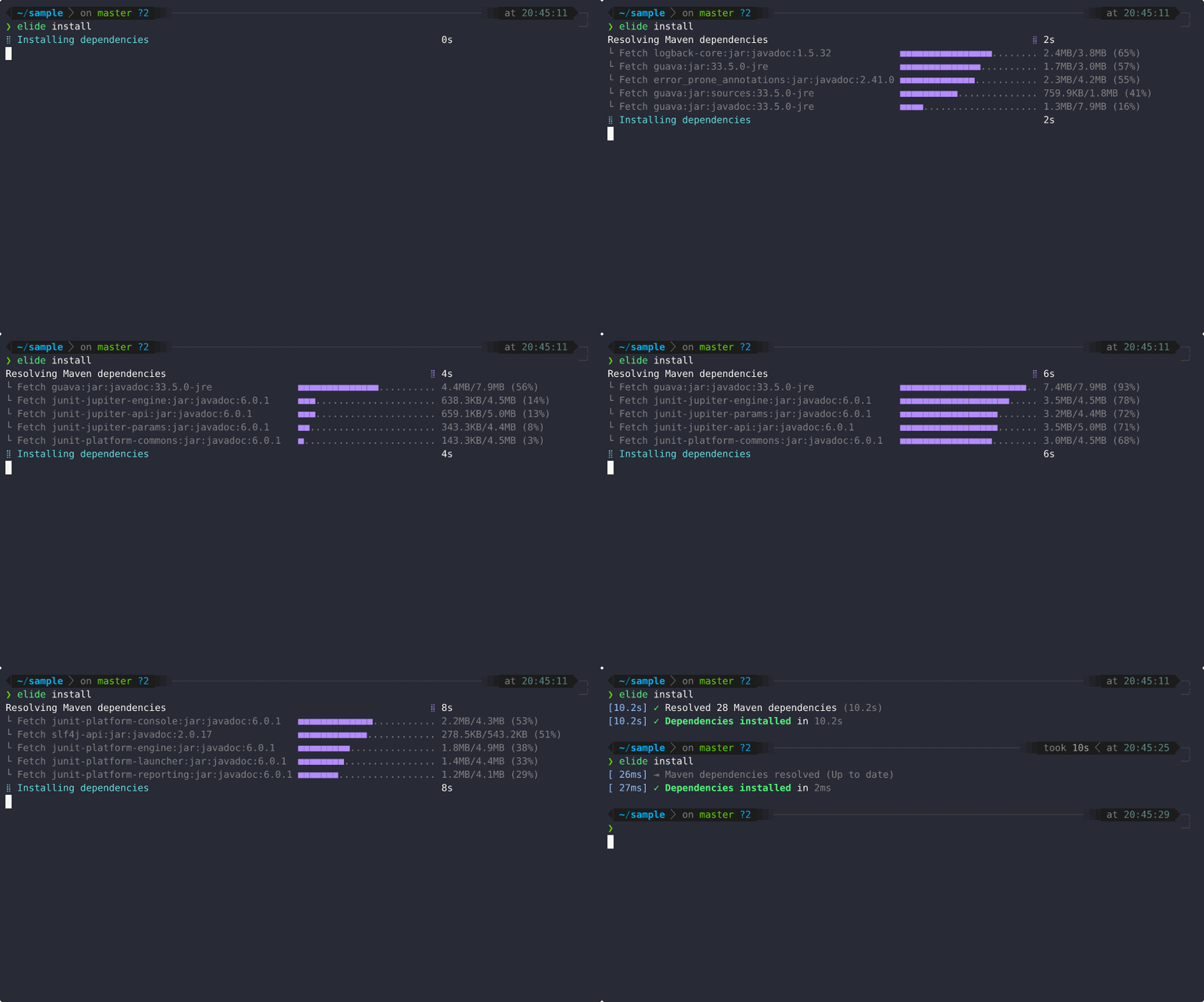
$ elide install
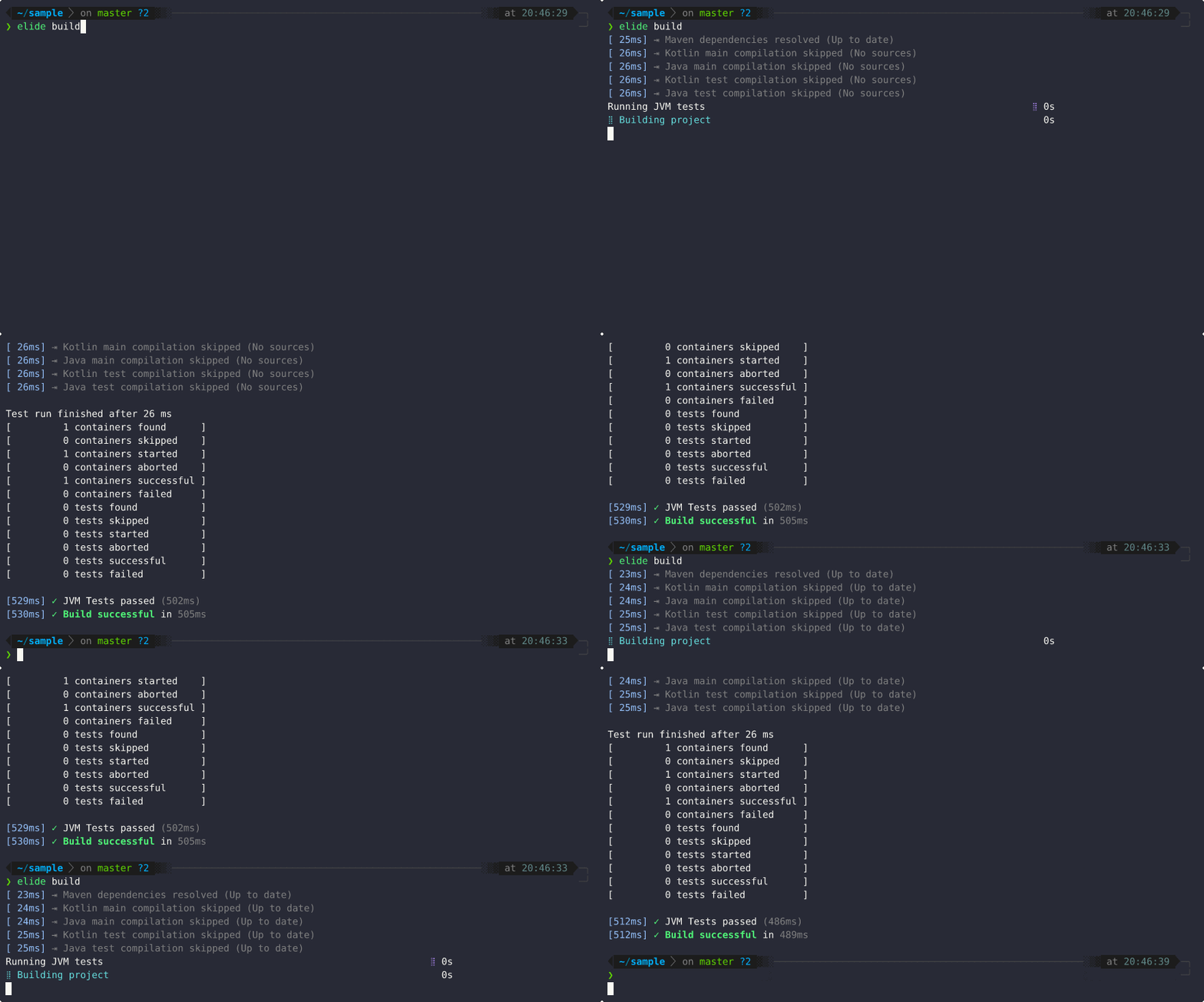
Hello.ktelide build ↓
// Built-in compiler.

fun greeting(name: String = "Elide") = "Hello, ${name}!"

fun main() {
  val x = 42
  println(greeting() + " The answer is ${x}")
}
$ elide kotlinc -- Hello.kt
elide.pkl ↓
artifacts {
  ["classes"] = new Jvm.Jar {
    sources { "main" }
  }
  ["native"] = new Native.NativeImage {
    from { "classes" }
  }
}
$ elide build :native
5ms cold start on linux
100× faster than Next.js
36× faster than kotlinc
20× faster than javac
3× faster than CPython
🔒 Memory safe
Benchmarks
~5ms cold start
SSR cold-start benchmarks on Linux x64.
Demo
elide.pkl ↓
amends "elide:project.pkl"

name = "my-app"
local logbackVersion = "1.5.32"

dependencies {
  maven {
    packages {
      "com.google.guava:guava:33.5.0-jre"
      "org.slf4j:slf4j-api:2.0.17"
      "ch.qos.logback:logback-core:\(logbackVersion)"
      "ch.qos.logback:logback-classic:\(logbackVersion)"
    }
  }
}
$ elide install
Hello.kt
// Built-in compiler.

fun greeting(name: String = "Elide") = "Hello, ${name}!"

fun main() {
  val x = 42
  println(greeting() + " The answer is ${x}")
}
$ elide kotlinc -- Hello.kt
elide.pkl ↓
artifacts {
  ["classes"] = new Jvm.Jar {
    sources { "main" }
  }
  ["native"] = new Native.NativeImage {
    from { "classes" }
  }
}
$ elide build :native
Kotlin
Kotlin as a first-class citizen. Compiler plugins, KotlinX, and JUnit out of the box. No plugins, no configuration; it just works.
import …kotlinx.serialization.json.Json
import kotlinx.serialization.Serializable
@Serializable
data class Config(val name: String, val port: Int)
fun main() {
val config = Json.decodeFromString<Config>("""{"name":"elide","port":3000}""")
println("Running ${config.name} on port ${config.port}")
}
NORMAL hello.kt 10L, 285B
$ elide run hello.kt
Running elide on port 3000
Dependencies
Apple Pkl as a manifest format. Like package.json or pom.xml, but typed and composable. Dependencies resolve automatically.
amends "elide:project.pkl"

name = "my-app"
local logbackVersion = "1.5.32"

dependencies {
  maven {
    packages {
      "com.google.guava:guava:33.5.0-jre"
      "org.slf4j:slf4j-api:2.0.17"
      "ch.qos.logback:logback-core:\(logbackVersion)"
      "ch.qos.logback:logback-classic:\(logbackVersion)"
    }
  }
}
NORMAL project.pkl 16L, 347B
Why Elide
Agents
Elide lets your agents see inside running programs so they can help modify behavior live—up to 75× faster than traditional runtimes. An AI agent can test code as it builds, inspect runtime state, and iterate without restarting. The runtime becomes a collaborator, not a black box.
Performance
100x faster than Next.js isn't a theoretical benchmark. It's what happens when you compile JavaScript to native machine code instead of interpreting it. Same for Python. Same for Kotlin.
Safety
You don’t have to rewrite in Rust to get memory safety—so you can protect yourself from 45% of software-related breaches. Elide sandboxes your existing JavaScript, Python, and JVM code at the runtime level. The safety comes from the runtime, not the language.
Productivity
No more, “which Node version?” No more, “which JDK?” No more, “which Python?” With one binary, every developer on the team can work in their favorite language.
Compatibility
No migration guide because there's nothing to migrate. Same file extensions, same imports, same APIs. Faster output.
Install
Script
$ curl -sSL --tlsv1.2 elide.sh | bash -s -
COPIED
Docker
$ docker run --rm -it elide.dev/elide
COPIED
GitHub Actions
uses: elide-dev/setup-elide@v4
COPIED
Newsletter
Register a callback
Get updates on releases, features, and announcements. No spam.