With backing from Shochiku Games alongside EGG’s prototype fund, Misfits Attic, has successfully brought its roguelike, chess dungeon-crawler to full 1.0 launch. Until May 5th, you can buy Below the Crown for 35% off on Steam. The studio has now shipped three titles and to further celebrate, you can buy all 3 games (BtC, Duskers and A Virus Named Tom) in the Misfits Attic Anthology Bundle for 55% off on Steam.
I’ve had a front row seat to the game’s development process. I played the original pen & paper prototype of “Chess the Gathering” a decade ago (at Humble Bundle’s board game night) and have watched Tim Keenan (Misfits Attic’s Founder and Creative Director) craft a new digital version when we decided to work together as EGG was founded.
Tim has put a tremendous amount of thought and care into the game’s design. As such, Below the Crown recently received an IGF Honorable Mention For Excellence In Design at this year’s GDC and has achieved 100% positive in recent reviews and 96% positive overall on Steam.
In the video above, Tim shows us a window into his design process for his previous award-winning title, Duskers. One of Tim’s super powers is that he can remain steadfastly objective while inside the crucible that is game development. He treats game features like puzzle-pieces. He inspects them, turns them around and sees how they fit when playtested in the build. If a new feature interlocks elegantly with the rest of the game prototype, it stays in. Otherwise it gets cut and it’s on to test the next idea.
Tim manages to run his iterative design loop across multiple playtests per day and the result is that he can innovate gameplay mechanics in ways that would exhaust or frustrate most other designers.
Below the Crown is the result of this rigorous, Darwinian evolution toward fun. It distills the best attributes of chess and mixes them with the tried-and-true foundation of roguelikes while leaving the weaknesses of each genre behind.
Compelling song mashups require shared characteristics amongst the participating tunes (melody, chord progression, tempo and rhythm). There are plenty of songs that simply can’t combine because they are just too different. But someone with musical skill and discerning taste might discover that the instrumentals of Back In Black can undergird the vocals from We Will Rock You to create something uniquely awesome.
The same is true for a mashup of game genres. Tim’s design skill and relentless creativity allowed him to prove via prototyping that chess can intertwine beautifully with the traditional roguelike genre.
Specifically, both chess and roguelikes are turn-based, grid-based and when you lose… it’s game over man… permadeath! Furthermore, the high fantasy, dungeon crawl setting of traditional roguelikes aligns perfectly with the medieval origins of chess and the style of its pieces.
From this solid starting foundation of shared characteristics, Tim could then pick and choose the best unique features from each game genre while layering on some new ones of his own. Here’s how he did it…
Chess was created in India around 600AD and modernized in 1475AD to a version very similar to what we play today. The fact that it has survived for centuries virtually unmodified (other than little changes like “en passant” and “castling”) means it is doing something very right. A player can look at any piece and quickly identify what it is and how it moves. I’m no grandmaster, but show me any board with chess pieces on it and my “chess brain” activates, automatically calculating threats and opportunities. The visual grid language and combat system that define chess are clear and logically perfect.
What’s not compelling in chess is that the board and piece layout is always the same. Thus rote memorization of openings has become critical in high-level play.
Additionally, there’s an emotional load to every game. When you lose, you feel stupid. Lose enough times in a row to “try-hards” who have everything memorized and you start to hate the game. Even grandmasters like Bobby Fischer have expressed hate towards chess for similar reasons.
Below the Crown uses the elegant core mechanics of chess as its combat engine but leaves the memorization and analysis paralysis behind.
A wonderful attribute of roguelikes (that chess does not have) is procedural level generation. While the rules remain constant, every play-through is different. This makes roguelikes infinitely replayable.
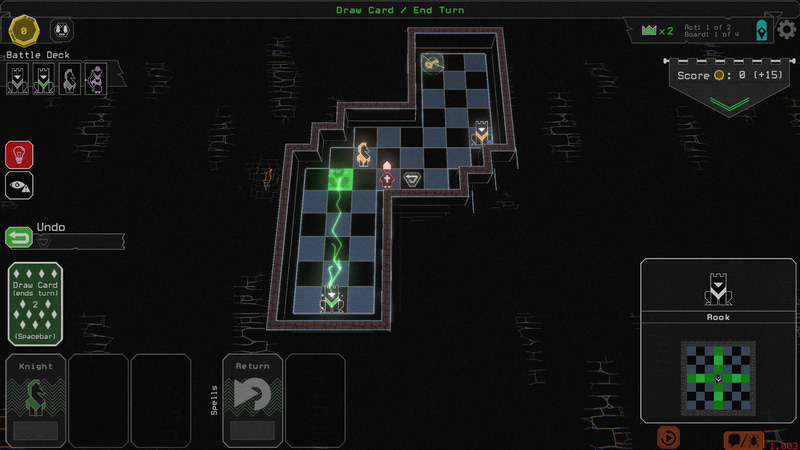
Below the Crown leans into this concept by remixing the chessboard into dungeons of varying shapes and sizes with enemy pieces at unique locations. Memorized openings are now inapplicable and impossible.
However, a tedious part of roguelikes is the spreadsheets of numbers that define their combat. Player stats, inventory management, equipped items and enemy stats all must be input into the number crunching of battle. If I want to try to predict how it all works in order to derive successful combat strategies, it can feel worse than doing my taxes. Using chess as BtC’s combat engine overwrites the need for any advanced algebra and lets the player jump right into the game.
While enemies are largely traditional chess pieces with few exceptions (thus preserving player intuition on threat assessments and tactics), the player is a special wizard. You enter every dungeon alone but get multiple actions that are similar to Magic: The Gathering. Each player-turn allows you to move a piece, summon a new piece and cast a spell (if the cards are available in your deck).
Though you start every dungeon completely outnumbered, with care and planning you can usually checkmate the enemy king or eliminate his minions without sustaining much damage.
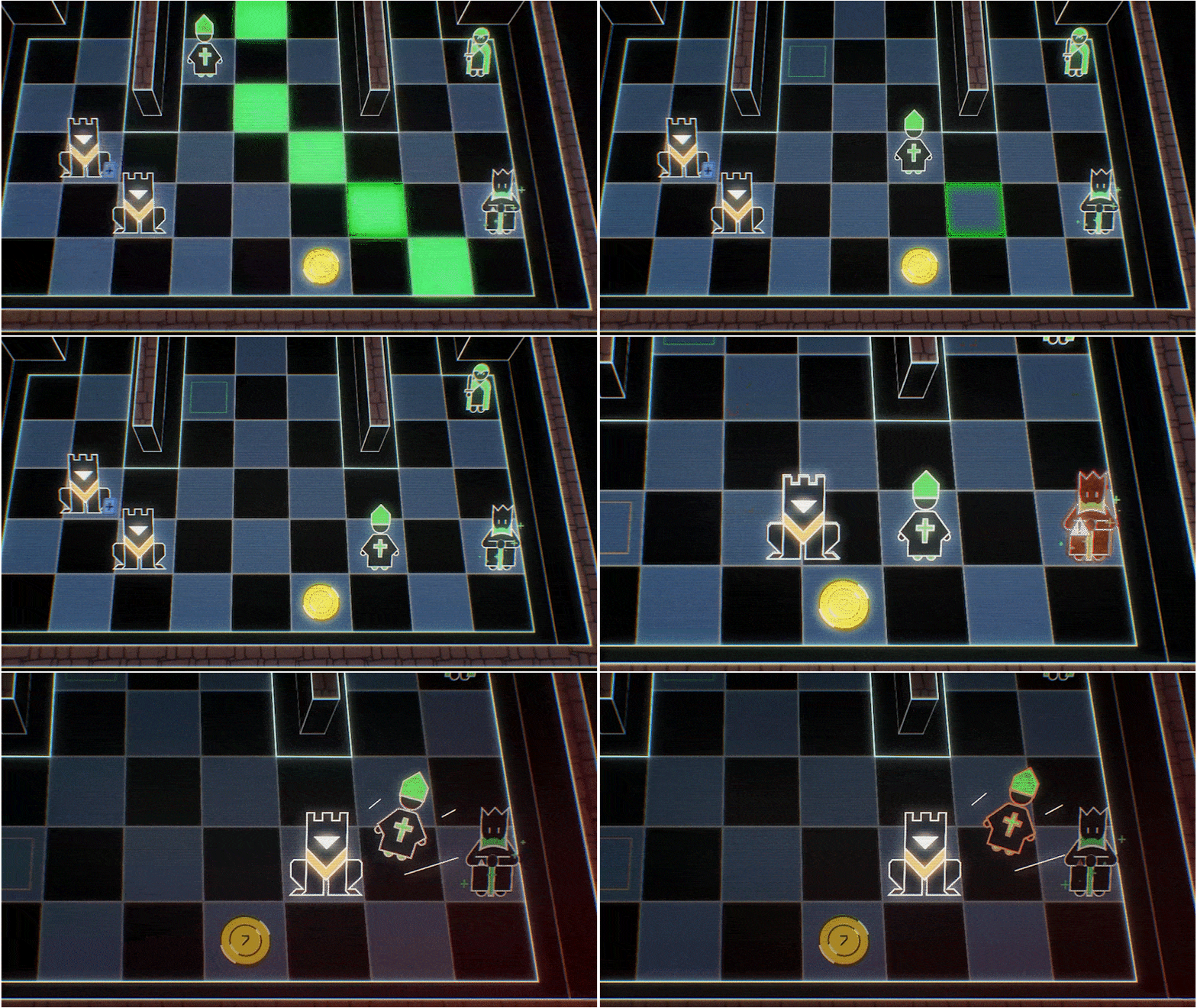
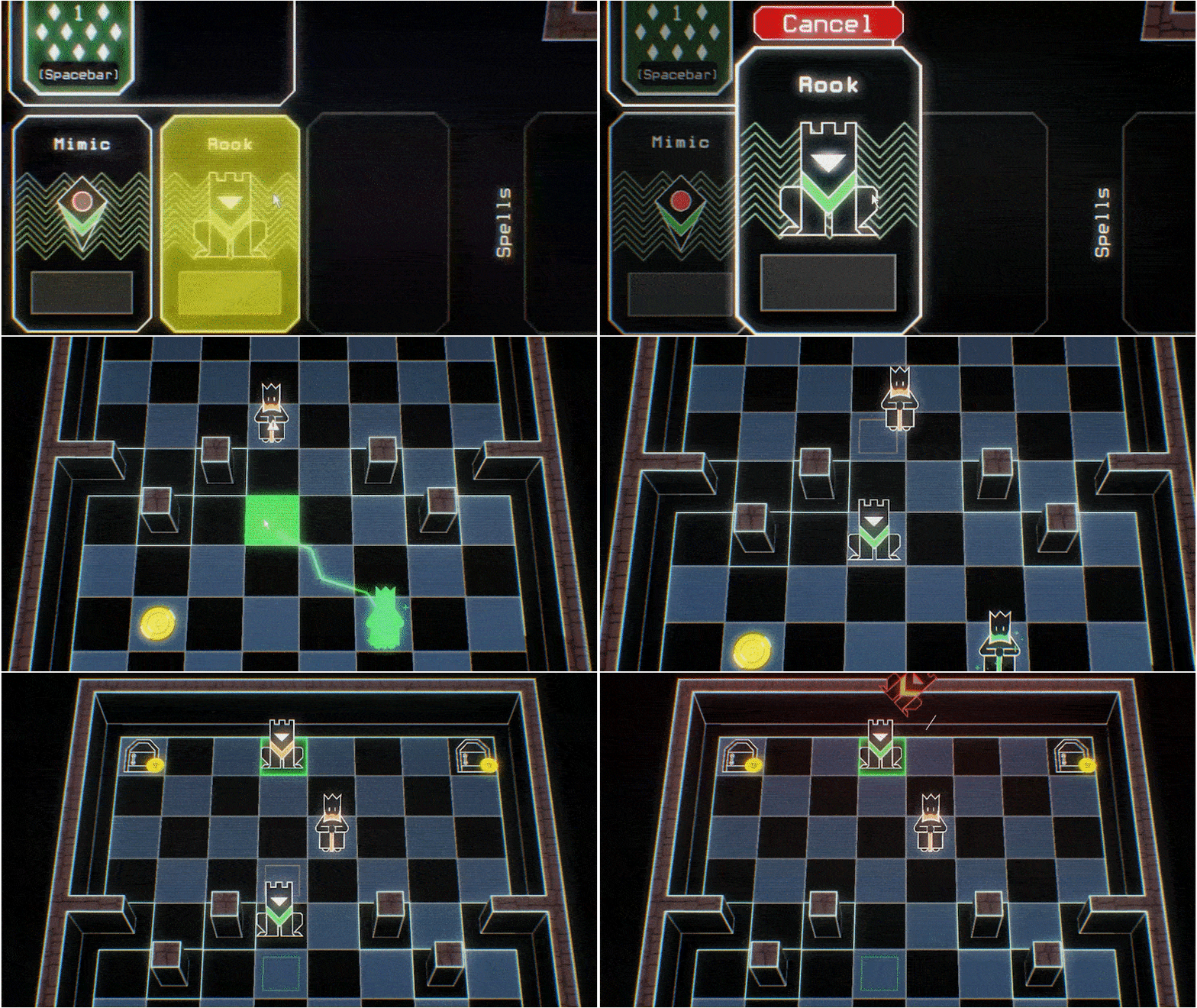
Imagine for a moment being able to summon a rook that puts the enemy king in a “skewer” like the gif below.
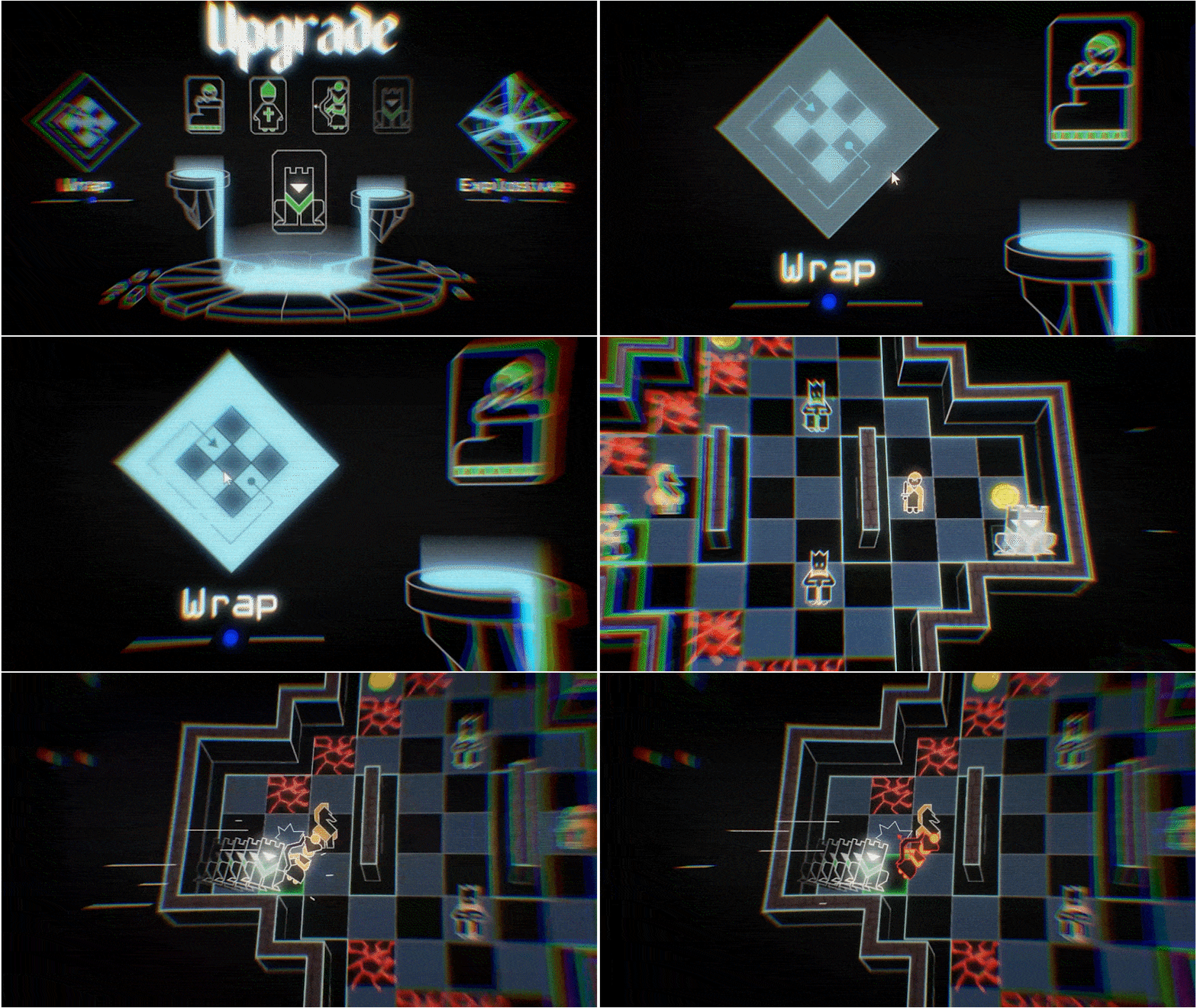
Or imagine, for example, being able to cast "wrap” on a rook so that it can teleport through the side of the board to capture a piece like in the gif below. (Wrap is just one of many piece upgrades available in the game.)
Some New Pieces:
I won’t spoil everything but here are some of the new pieces you will encounter…
The Prince: Similar to the Battle Room in Ender’s game, there’s no explicit sense of up vs down inside a BtC dungeon. As such you won’t see any traditional pawn pieces. Instead, Tim has created the “prince”: a non-king piece that moves like a king but functions a bit like an omni-directional pawn.
The Archer Queen: Imagine a queen that can only do damage to enemies that are not occupying an adjacent square. If you can rush an archer queen so that you stand within one square of her, she won’t be able to attack you.
Custom Boss Pieces: At the end of a dungeon run, you’ll encounter powerful boss pieces with unique combat abilities. You’ll have to be clever and careful to outwit them in battle.
Custom Board Tiles:
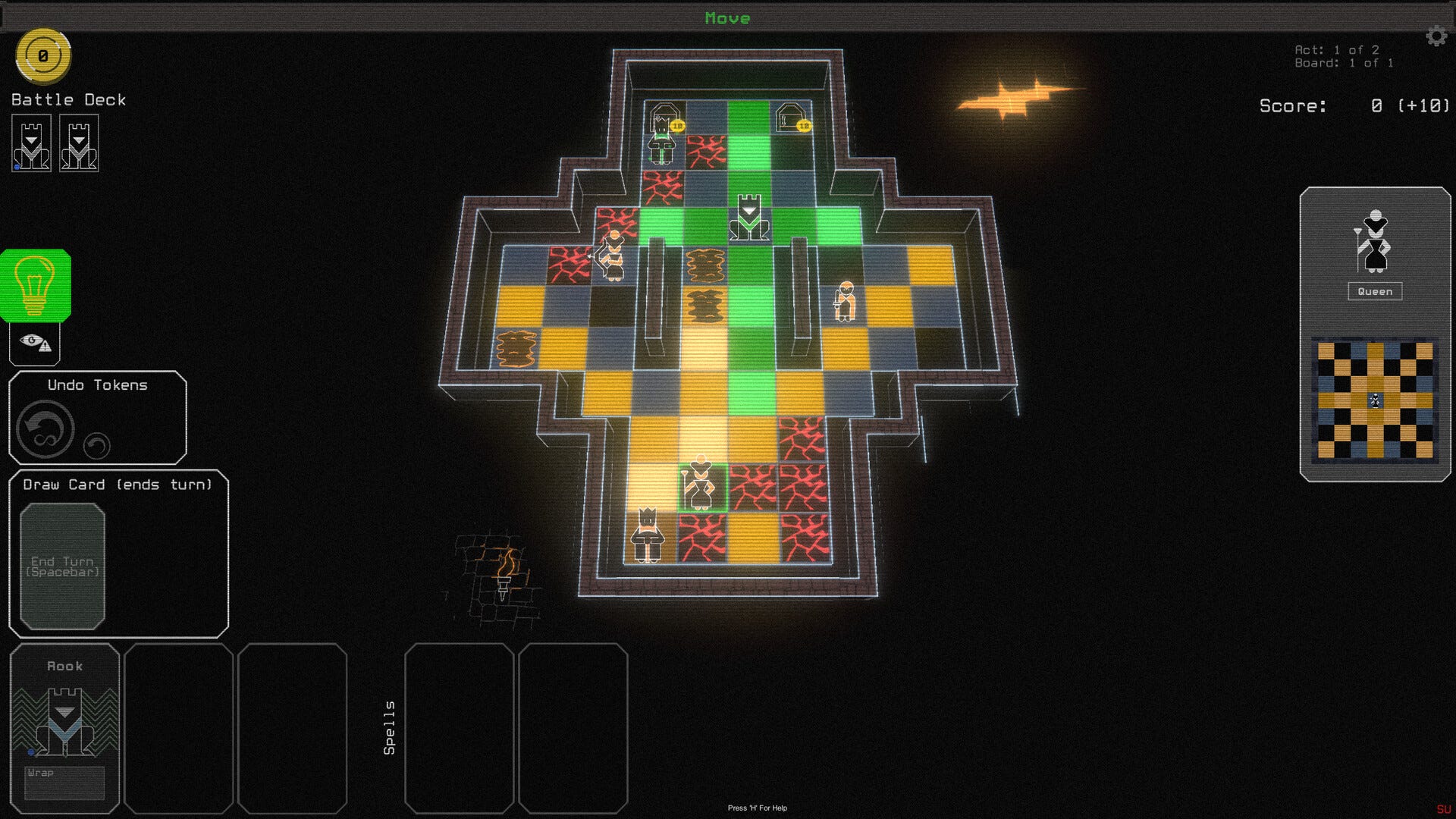
Hazard tiles alter the normal movement of pieces. For example, swamp tiles will act as a barrier that forces a piece to fully stop when it slides onto it. Lava tiles will kill whatever touches them.
Power-ups like coins and undo tokens can be collected if you can move to their square or summon a piece on top of them.
The Rune System:
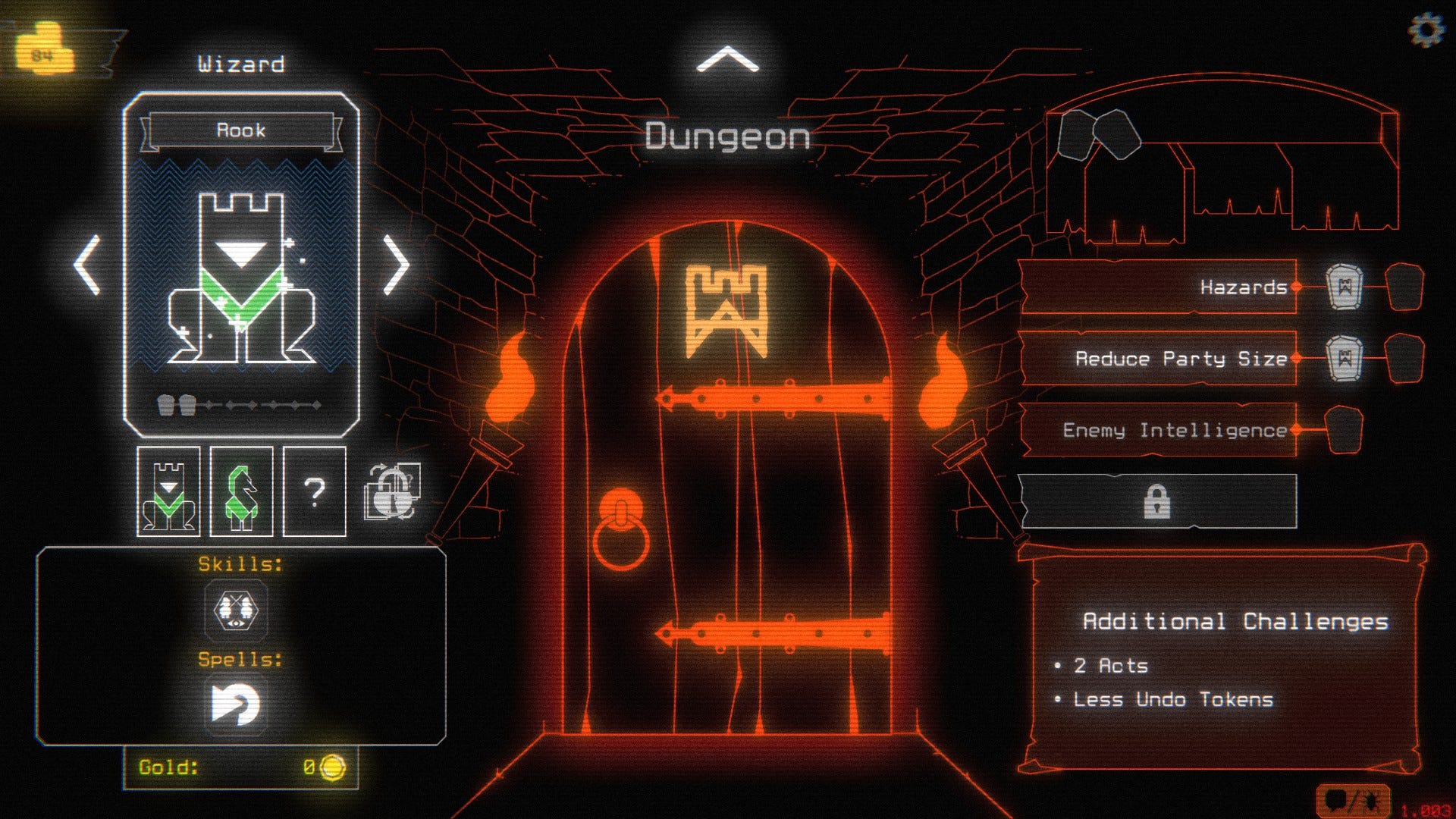
Runes are the main progression mechanic in Below the Crown. Socketing runes at the beginning of your run sets the difficulty in each category. If you socket all the runes you have and complete your dungeon run, you’ll be rewarded with an additional rune. If you can beat a run with all rune sockets full, achieving max difficulty, you are truly a Below the Crown grandmaster.
Daily Challenges:
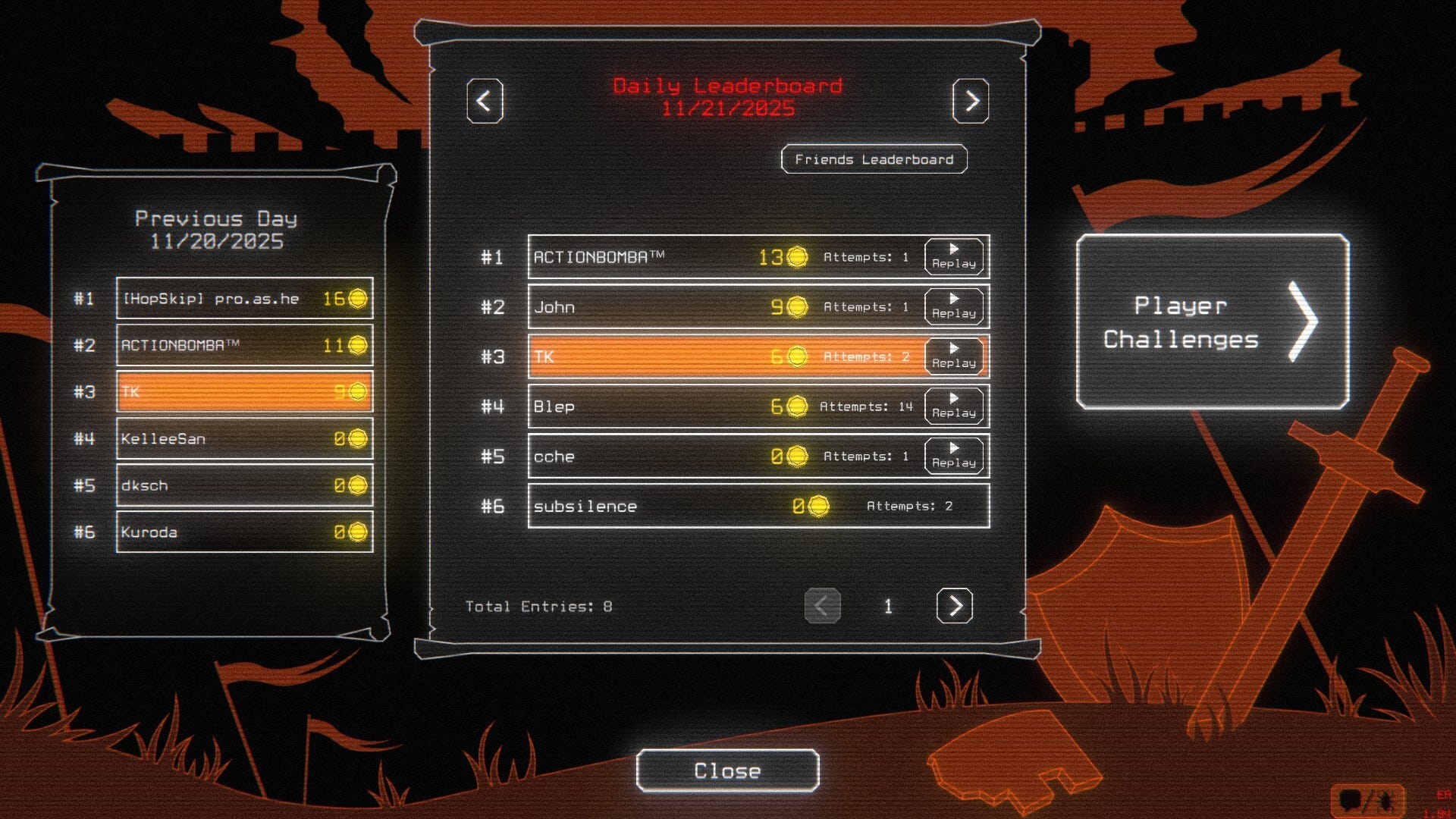
If you don’t have time for a full dungeon run, you can try the daily challenges for a shot at prestige on the scoreboard. Tim himself is usually a top scorer but expect to see me on there from time to time as well. Personally, I like the BtC dailies way more than Wordles or Sudokus.
Atmosphere And Storytelling:
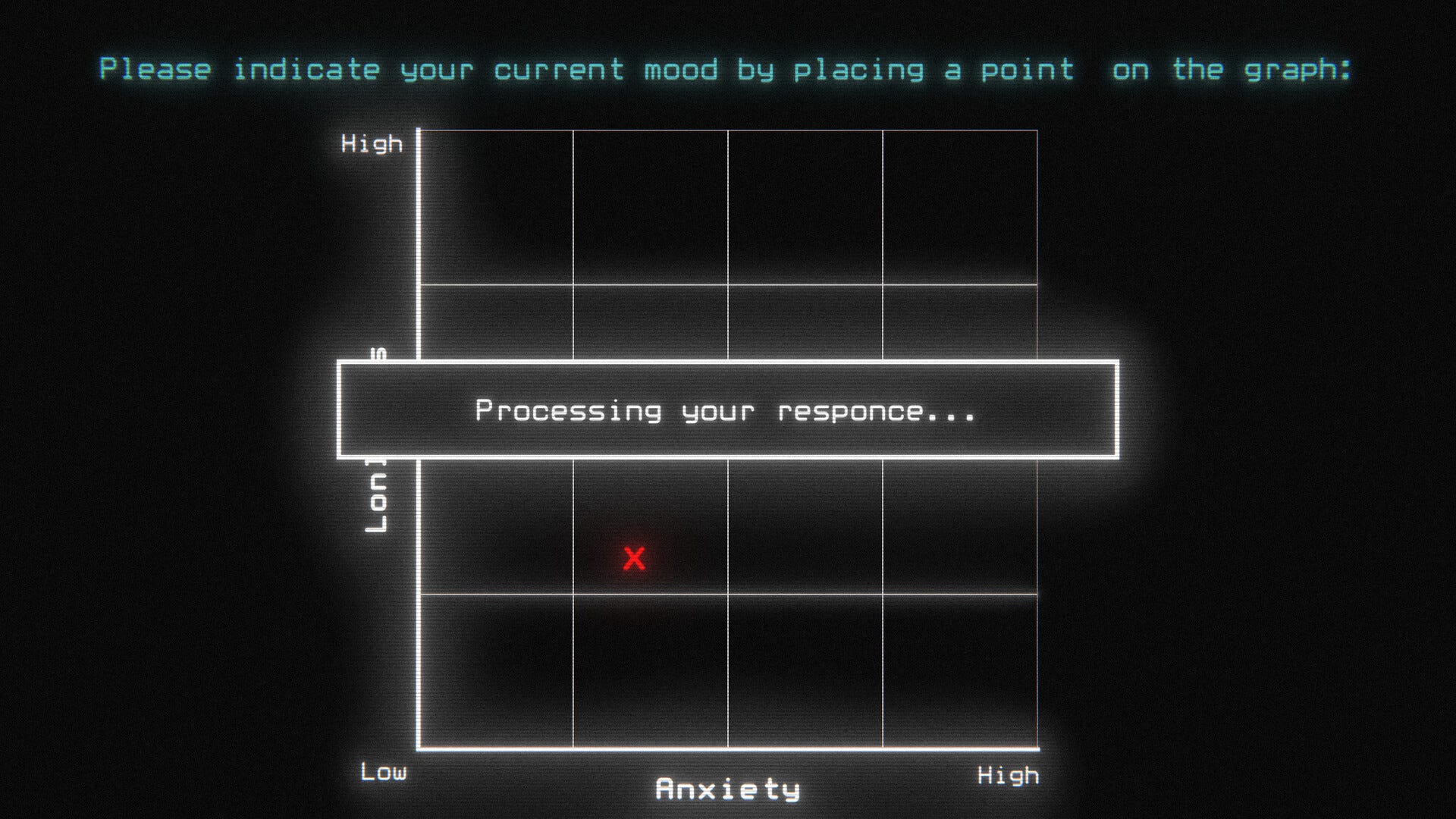
Tim carefully designs the setting of his game worlds. I won’t spoil anything but let’s just say there’s more going on here than just chess dungeon puzzles.
BtC’s thoughtful fusion of chess and roguelikes results in what Tim would call a “chocolate and peanut butter” effect where the whole is greater than the sum of the parts. The best features from each genre delight the player while eliminating what would normally be their stand-alone weaknesses. On Steam, the 100% positive in recent reviews and 96% positive overall speaks for itself.
If you like either chess or roguelikes I highly recommend you give it a try. Congrats to Tim and Misfits Attic on this successful launch. EGG is delighted to have been a part of the journey and I’ll hope to see you all in battle on the daily challenge scoreboard.