Open-access content —
Mon 11 Nov 2024 — updated 13 Nov 2024
From the archive: Just so you know, this article is more than 1 year old. External links and some functionality may no longer work.
The world’s largest offshore wind farm is being built at Dogger Bank. Image credit | iStock
Electrification is seen as the way towards a decarbonised future, so plans are afoot to bring the UK network up to the task.
A light breeze is all it takes to turn a giant wind turbine, each blade longer than a football field with tip speeds reaching 321km/h (200mph). When the wind blows, the electricity generated by a single rotation of a turbine can power a home for two days.
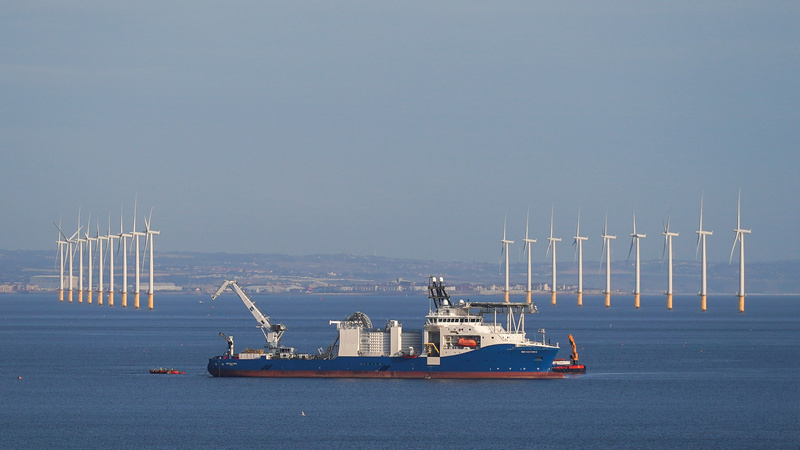
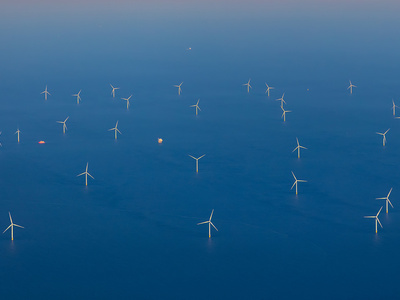
Off the north-east coast of England and deep into the North Sea’s Dogger Bank, where the world’s largest offshore wind farm is being built, vast turbines are harnessing the blustery winds day and night. Scotland, to the north, with its abundance of natural power, has more electricity than it can consume. “There’s more power coming down than current links can cope with,” says Manu Haddad, professor in high voltage engineering at Cardiff University – one of a handful of universities working with National Grid. “It’s like a river trying to flow through a little pipe.”
Speeding up delivery of the UK’s strategic transmission infrastructure to transport clean electrons to London and the south-east of England, where demand is highest, is a complex and urgent puzzle. Slow planning processes are clogging up development. By 2030, the Labour UK government has pledged to decarbonise all electricity, five years earlier than its predecessor. This requires a drastic revamp of the grid with thousands of miles of planned new high voltage cables – the ‘motorways’ of power across the country and under the seas.
Keeping up with demand
It was simpler back in the 20th century when the electricity grid was centred in the middle of the country, close to coal-fired power stations beside the industrial heartlands. It was a system designed for a predictable one-way energy flow from power plant to consumer. It has been 80 years since the UK built a new ‘supergrid’.
Now National Grid, which covers England and Wales, and the network’s Scottish counterparts must connect decentralised generation from a windy coast, ever-expanding solar farms and nuclear power. Without sufficient storage or mechanisms to balance the grid, excess energy may go to waste. And with this upheaval, National Grid is striving to win the hearts and minds of the public to build new, large-scale infrastructure that no one will want in their own backyard.
In the past, winter saw the greatest demand for electricity; today, a hot summer in London can see energy needs soar as the population turns on the air conditioning. More efficient goods and smarter use of technology can attenuate demand in the UK, which stands at about 40GW. But this is expected to double in the coming years, as more people switch to electric vehicles and heating is electrified – or so the government hopes. Power-hungry AI technologies could boost demand further.
But energy infrastructure is already stretched. Housing development in west London has stalled, the Greater London Authority declared last year, because the grid has run out of capacity – in part due to demand from data centres along the M4 corridor. By 2030, data centres are estimated to be responsible for 4% of global electricity consumption.
The regulator Ofgem expects the UK’s generation capacity to grow from 120GW to 300GW by 2035. The largest overhaul of the grid in decades is driven by increasing renewable generation, and the UK’s target of reaching up to 50GW of offshore wind in the next few years, up from 30GW of installed wind power capacity in 2023. Over the next six years, this means building five times more electricity network infrastructure than in the past three decades. National Grid will play a key role in decarbonising the UK’s electricity networks, investing more than £30bn in the UK by 2029.
Most of the build will be carried out by National Grid’s transmission company, which owns the infrastructure, and two Scottish counterparts.
This investment in energy infrastructure is unprecedented. In late 2023, National Grid launched a high-voltage direct current supply chain totalling £57.69bn with anticipated contracts for cabling, converters and civil engineering to cover existing projects and some unspecified future projects. Switching to carbon-free energy could be the biggest opportunity of this century, say industry insiders.
‘Pylon wars’ add uncertainty and significant time to new projects. Image credit | iStock
Getting the go-ahead
“This is the largest investment in the network since the network itself,” says Joe Northwood, director of operational support in strategic infrastructure at National Grid. “It’s a total repurpose to get the network to its next phase.” This means potentially procuring some 14,000km of cable – a third of global market capacity, says Northwood. Other countries are competing for the same resources linked to cabling and commodities, and new National Grid partnerships with key suppliers for the upgrade promise a level of certainty, he says. “We need to ensure we’re seen as an attractive buyer.”
To meet anticipated demand, National Grid has outlined 17 hefty new projects for high-capacity transmission of clean energy that the network’s operator has flagged as urgent, and which will connect both onshore and offshore wind to meet the government targets via a mix of subsea, overhead and underground cables. In Yorkshire, the first of these projects has already been given the go-ahead, with construction expected to begin this autumn. “We can only get the benefits of clean, green, diverse and renewable energy when the network is there and available for it to flow,” says Northwood. “We’ll increase capacity of overhead lines, put in different conductors, change the towers and ensure we get the most juice out of existing lines first. Where we have gaps, we will add new overhead line routes.”
The answer also lies under the sea. A collection of high-voltage subsea cables stretching along Scotland and England’s eastern coastline are planned, with a 525kV cable proposed between East Lothian and County Durham capable of powering up to two million homes. A consultation was launched for two subsea power motorways each some 640km (400 miles) long – Eastern Green Link 3 and Eastern Green Link 4 – to move offshore wind energy down to the Midlands and on to the south of England. A new subsea cable is also proposed between Suffolk and Kent.
Installing cables – whether overhead, in trenches, under the sea or in tunnels – is complex and expensive. New high-voltage capacity will change the dynamics of the grid, says Professor Gareth Harrison, head of engineering at Edinburgh University – another institution working with National Grid. Robots and subsurface jets cut channels in places to bury the cables on the seafloor and protect them from ships’ anchors and inquisitive sea life. But the UK already has expertise under water – in 2021, the longest subsea cable measuring 720km, North Sea Link, was completed to connect the UK with Norway.
“Working on the seabed is complex,” says Harrison. “It undulates – you’ve got different terrain [and] unexploded munitions as you come around the north channel. It was a place where stuff was dumped after the war.” Large vessels must lay the heavy cable with precision. “It’s very impressive technology,” he adds.
Finding and fixing faults on subsea cables is costly as they must be hauled to the surface for repair. But if subsea work is complicated, then placing high-voltage cables in subterranean air-conditioned tunnels is even more expensive – but necessary in the UK capital. “The tunnelling is on a scale with Crossrail and HS2, particularly around London where there just isn’t space and you can’t just stop the traffic,” says Harrison.
Even trenching cabling some 20 metres underground has challenges. “You’re talking motorway-scale disturbance [in land use],” says Harrison. Climate change has altered moisture levels in the ground, and drier earth is less able to cool the cable, he says. Although overhead cables, which can now run at high voltages, are about 20 times cheaper and easier to install than underground tunnels and simpler to fix, they stoke vociferous opposition from campaigners. ‘Pylon wars’ can stall projects.
How hotter temperatures will trouble the transmission system is under investigation by researchers at Edinburgh. Will high winds, or the lack of them, affect safety and cable temperatures? “The hotter it is and the less wind there is, the more cables will sag,” says Harrison.
Investing in the infrastructure
Engineers at Cardiff University have worked with National Grid to understand how to protect the network against surges induced by lightning strikes or caused by switching operations. Cardiff is also looking at smart grids, microgrids and integrating renewables at distribution level – typically distribution is characterised as the ‘country roads’ of the network – supplying households and connecting rooftop solar power and smaller generation.
A backlog of connectivity still hampers the UK’s ability to realise capacity – there’s a huge queue representing energy capacity of 701GW, rising to an estimated 800GW by the end of the year (See Getting connected). Ofgem is working with the government, operator National Grid ESO and network companies to streamline connections.
Remodelling energy infrastructure to meet future transport needs is another challenge that engineers at Cardiff are investigating, says Haddad. Battery electric heavy goods vehicles of the future would require the grid to be reinforced alongside motorways to allow for powerful megawatt chargers. Lorries make up just 1% of all vehicles on the road, but are responsible for 20% of the UK’s transport emissions; electrifying them will come at a cost, but could help the UK towards net zero. Researchers are also investigating the potential for electric trucks of the future to power through overhead [pantograph] cables. “At the moment this is being looked at seriously in Germany and Sweden,” says Haddad.
Last year a report urged greater ambition, calling on the government to streamline and speed up the way in which authorities consult communities and get planning permission for transmission infrastructure, without neglecting the impact upon those affected. “[Planning and consent] still adds uncertainty and significant time to the process – this is time we cannot afford,” wrote Nick Winser, the electricity networks commissioner and past president of the IET.
Finding enough people with the skills to design, build and install the complex systems is a familiar problem and one that authorities cast as a huge opportunity. Investment in onshore network infrastructure could support 130,000 jobs and add up to £11bn to the UK’s economy in 2050, the previous Conservative government estimated.
Smart grid technologies will help make more efficient use of supply, says Northwood. In the future, he adds, wind power in the North Sea offers an opportunity on the scale of oil and gas, and European counterparts will be seeking to exploit natural resources too. “The more interconnected and the more resilient our network, the more we can import or export as we need it and we’ll have the infrastructure to allow us to do that,” he says.
Decarbonising electricity within five years is an opportunity for the UK to demonstrate what is possible, say campaigners – almost an Apollo-style Moon mission. It requires reform of finance, planning and contracts – and bringing the public onside will be tricky but essential.
“The UK has this opportunity to show what electrification and clean technologies can do,” Emma Pinchbeck, chief executive of industry group Energy UK, told a webinar. Since 2010, the UK has shown clean energy is cheaper than fossil fuels and can provide the bulk of secure supply. “We now need to see a massive roll-out of infrastructure of the kind that we haven’t seen for the past decades,” she said.
You may also be interested in...

Elia Transmission Belgium has secured €650m to realise the first phase of the Princess Elisabeth Island project, an artificial energy island off the Belgian coast.
Open-access content

Czech power company ČEZ Group has signed a deal with Rolls-Royce SMR to expand production on its small modular reactors (SMRs).
Open-access content
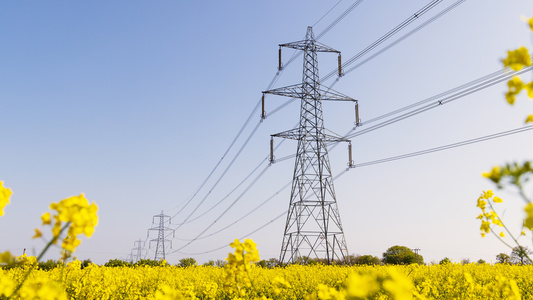
The energy ministers from the UK, Scottish and Welsh governments have jointly commissioned the National Energy System Operator (NESO) to create a Strategic Spatial Energy Plan (SSEP) for the energy system, land and sea, across Great Britain.
Open-access content
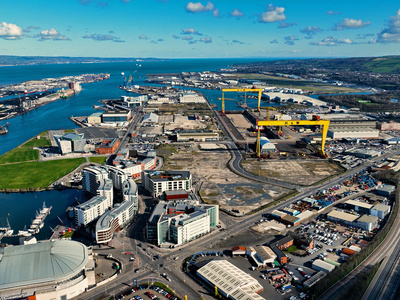
The UK government should redirect military industry resources towards addressing the climate crisis and improving the domestic economy, a report from the Common Wealth think tank has urged.
Open-access content

Tokamak Energy has released initial designs for its pilot fusion energy plant which it hopes can be built within the next decade.
Open-access content

The US justice department has said that Grace Ocean and Synergy Marine, the Singaporean companies that owned and operated the Motor Vessel (MV) Dali container ship, have agreed to pay $102m to resolve a civil claim arising from the destruction of the Francis Scott Key Bridge.
Open-access content
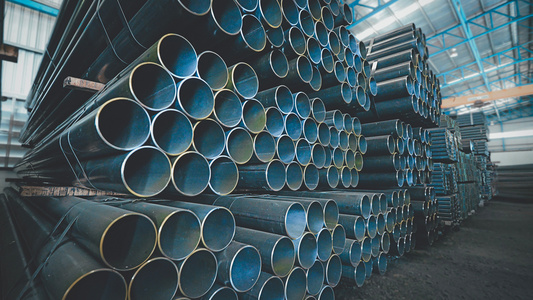
The Neom gigaproject currently under construction in the Saudi desert is reportedly using one fifth of the entire world's currently available steel.
Open-access content

Cyber-informed engineering could empower mainstream engineers with the know-how they need to secure operational tech against rising cyber threats.
Open-access content
More from Energy
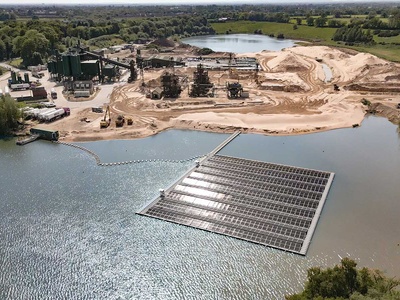
A 400kW floating photovoltaic array has been installed at Bathgate Silica Sand’s Cheshire quarry.
Open-access content
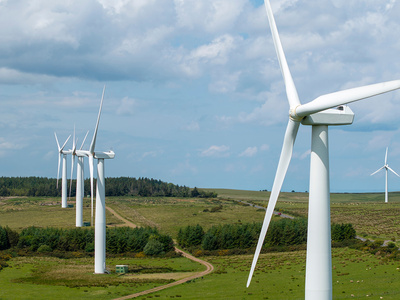
Accelerating the roll-out of renewable energy could generate up to €600bn in net benefits across the EU, according to a study.
Open-access content
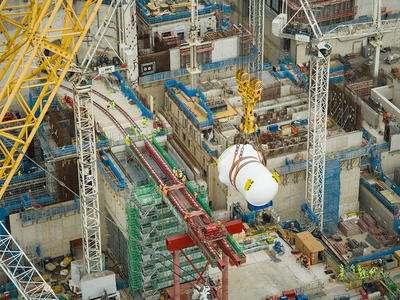
The world’s largest crane lifted Hinkley Point C’s second nuclear reactor into place before its precision installation inside the reactor building.
Open-access content
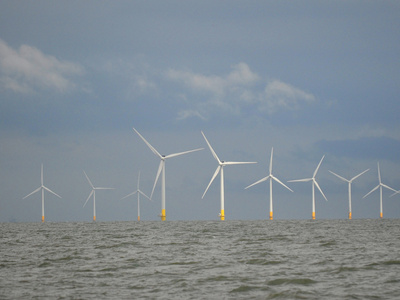
Recycling the UK’s offshore wind turbines when they are decommissioned could produce enough magnets to build a million electric vehicles a year, according to a report.
Open-access content
More from Infrastructure
Projected and operational offshore wind developments could cover or 11% of the North Sea by 2050, according to a new s
Open-access content
The total cost of HS2 could now top £102.7bn and trains may not start running until 2039 – six years later than the most recent target of 2033, transport secretary Heidi Alexander has admitted.
Open-access content

Data centres are looking to take overworked IT engineers out of the hot seat and let automation tech do more of the operational grunt work.
Members'-only content

It has been announced that the Future Homes Standard will mandate that most new homes built from 2028 must include on-site renewable energy generation as standard.
Open-access content
More from Legislation And Regulation

Gadgets including smart glasses and invisible earpieces could make it easier for students to cheat, Ofqual says.
Open-access content

Ofcom has said social media platforms should start implementing automated detection technology to stop the spread of revenge porn online.
Open-access content
Sir Keir Starmer has announced plans to nationalise British Steel in order to address concerns around security and to bolster domestic industries.
Open-access content

The IET’s Wiring Regulations are a constantly evolving body of work and the latest iteration was launched in April 2026. It contains substantive changes in areas such as batteries, medical environments and power over Ethernet. E+T asked Mark Coles, head of technical regulations at the IET, to explain the background to the update and summarise the key changes in the latest revision.
Members'-only content
More from Renewables
A 400kW floating photovoltaic array has been installed at Bathgate Silica Sand’s Cheshire quarry.
Open-access content
Accelerating the roll-out of renewable energy could generate up to €600bn in net benefits across the EU, according to a study.
Open-access content
The UK’s National Grid is to extend the roll-out of technology to increase power line capacity across a further 585km of transmission routes.
Open-access content
The 800MW Springwell Solar Farm has been granted approval as Britain breaks the solar power generation record with the sunny spring weather.
Open-access content
More from Helena Pozniak

Physicist and space systems engineer Portia Bowman has worked on major projects with the European Space Agency and Nasa. After moving to an in-orbit servicing company, she went on to found her own venture in the UK, Growbotics, dedicated to pioneering circular design in space.
Members'-only content

Heat pumps have had a sluggish start to life, particularly in the UK. But now the technology is on an upward trajectory.
Open-access content

As a historic new treaty to conserve sea life comes into force, how will the world’s most remote oceans be policed and protected?
Open-access content

The IET aims to ‘engineer a better world’, inspiring, informing and influencing the global engineering and technology community. But what does it mean in practice? We asked five experts what engineering a better world means in their sector
Open-access content
More from Volume 19, Issue 6 - November/December 2024

The most feasible approach for bringing about a new period of glacial growth.
Open-access content

Stratospheric balloons are cheaper and easier to build than rockets and spaceplanes. They can offer hours of magnificent views of the Earth from within a comfy space capsule. But something has been holding their developers back.
Open-access content

Humanist chaplain at Massachusetts Institute of Technology (MIT), Greg Epstein believes that technology – more accurately ‘tech’ – has become the 21st century’s most powerful global religion. He also believes it’s time it had its own Reformation.
Open-access content

Steve Schneider, director of the Surrey Centre for Cyber Security, professor of secure systems at the University of Surrey and chair of the IET Working Group on e-voting.
Open-access content