Those who know me well will be aware (and slightly amused by the fact) that I’ve had a bit of an obsession with buying used clothes on Vinted over the last year. I’ve been finding a lot of joy in experimenting with different styles and looks and getting more acquainted with brands and materials, so for the benefit of my fellow mens-wear wearers I’ve written up some notes of what I’ve learnt. I’m not exactly a stylistic trendsetter, but I’d be pleased if someone else might get use from my diligent work filling my wardrobe with pretty colours.
On an average day I’m not particularly glam. I’m writing from the perspective of a mid-aged straight man who likes colours and appreciates fabrics. The brands I know about and wear are a pretty small subset of what’s out there and often local to the UK. If you’re looking for a few pointers to better understand menswear and where to look for nice clothes, I think this guide has got you covered. If on the other hand you really like business-suits, sneakers or street-wear, then it’s possible that my advice isn’t really what you’re looking for.
What I’ve tried to create here is an encouraging handful of supportive reflections and practical pointers, meant to gently nudge you to try wearing something new and exciting. For that reason, I’ll start out with On Comfort and On Colours, which both lend themselves to gently question the idea that menswear has to be boring and conforming. In the section On Materials, I’ll walk you through the different types of clothes you can put on your body and which brands in my opinion makes nice versions of them. On Fit will take you through how to find clothes that look good on you while On Upkeep details how to look after your clothes once you’ve bought them. Finally the last two sections, On Ethics and Sustainability and On Pricing and Privilege I discuss the ethics of buying garments and how to go about it on the cheap. Enjoy!
Shopping for menswear can be a bit of a fraught and conformist exercise. There’s a lot of in-group/out-group nonsense that gets in the way of wearing clothes because they bring joy. That sucks. If you find some entrenched resistance to the idea of wearing joyful clothes, then you’re not alone. The pressure to conform is real and it only takes looking at random men as you walk down the street to notice how uniform they look. Building up my own comfort with choosing outfits has taken time and lots of gentle encouragement. May both be plentiful in your life.
Attention is rarely neutral. There might be days where a comment on your clothes or a head turning as you walk past feels great, and days where it really doesn’t. Your comfort matters. Both in terms of choosing what outfits bring you joy and in choosing when to wear them.
Whatever your style and whatever your tribe is: wear colours. They bring such joy to you and those around you. Like flowers in a sun-washed field and autumn leaves as the year gets darker, every bit of colour makes the world a better place.
I’m not saying you need to wear all the colours at the same time. Maybe take your normal outfit and wear it with a rust-red t-shirt. Or golden brown corduroys or a forest green hoodie. If you normally wear navy, try matching with mustard yellow. If you like dark grey, layer it with anything bright. If it’s autumn, try a saturated brown-red anything.
Adding multiple colours together isn’t an exact science. Try colours together in front of a mirror and see how they look. If they look good, they match. Success. Wear them proudly. My main approach when trying combinations is to pick two colours you like together: one for your trousers and another for your top and match extras like socks and t-shirt to one of them. I enjoy layering two similarly coloured tops, but it feels trickier to find variants of the same colour that are friends with each other.
For inspiration look to your surroundings. A late summer hawthorn with dark green leaves and brown-red berries? That works. Edinburgh yellow-brown sandstone with layers of soot and black lintels? That works too. Sea-buckthorn and ocean blue? Hell yes.
Most of the clothes sold on a UK Main Street are made under slavery-like conditions in far away places and full of plastic fibres. Buy second hand (charity shops, De-pop and Vinted will have you spoilt for choice) and buy clothes made out of natural fibres (cotton, wool or modern types of viscose like Tencel or Lyocell). It’s so damn simple to minimise your impact by shopping second-hand that it feels like a no-brainer and I wish other parts of my life like transport and heating had equally great sustainable alternatives. If you still prefer to buy your clothes new, there’s plenty of brands that focus on low-impact and high ethics. You’ll pay for the privilege purely because making fabrics and garments is both resource intensive and labour intensive.
When it comes to natural fibres, there’s a wide array of materials and fabrics that make up the garments that I (and most everyone else) wear day to day. I’ll try to list the most common of them here and recommend specific brands that I’ve noticed using them in ways I like. My exposure to brands is a bit patchy. My personal taste and style leans towards rugged rather than refined so the brands I’ve got any experience with will tend to reflect this.
I’m also conscious that the brands I wear are often focused on quality materials and even buying them second-hand requires a level of economic privilege that not everyone has. I’ll discuss pricing and privilege a bit more in the section “On Pricing and Privilege” below.
I love high quality cotton. It’s silky smooth and has a nice sturdy heft. I buy quality cotton t-shirts from Arket, Carhartt or Mads Nørgaaard, Good Measure when I find them cheap on Vinted. Muji and Uniclo are slightly cheaper while Sunspel and Merz B Schwanen are supposed to be fantastic but even used they cost more than I’m willing to pay for a t-shirt. A good quality cotton t-shirt will often have a bit of weight and structure that makes it feel substantial against your skin and drape smoothly over your body. The cotton doesn’t have to be thicker, but it’s often woven to feel smoother and more luxurious against the skin like how high thread count bed linen feels more silky.
Twill
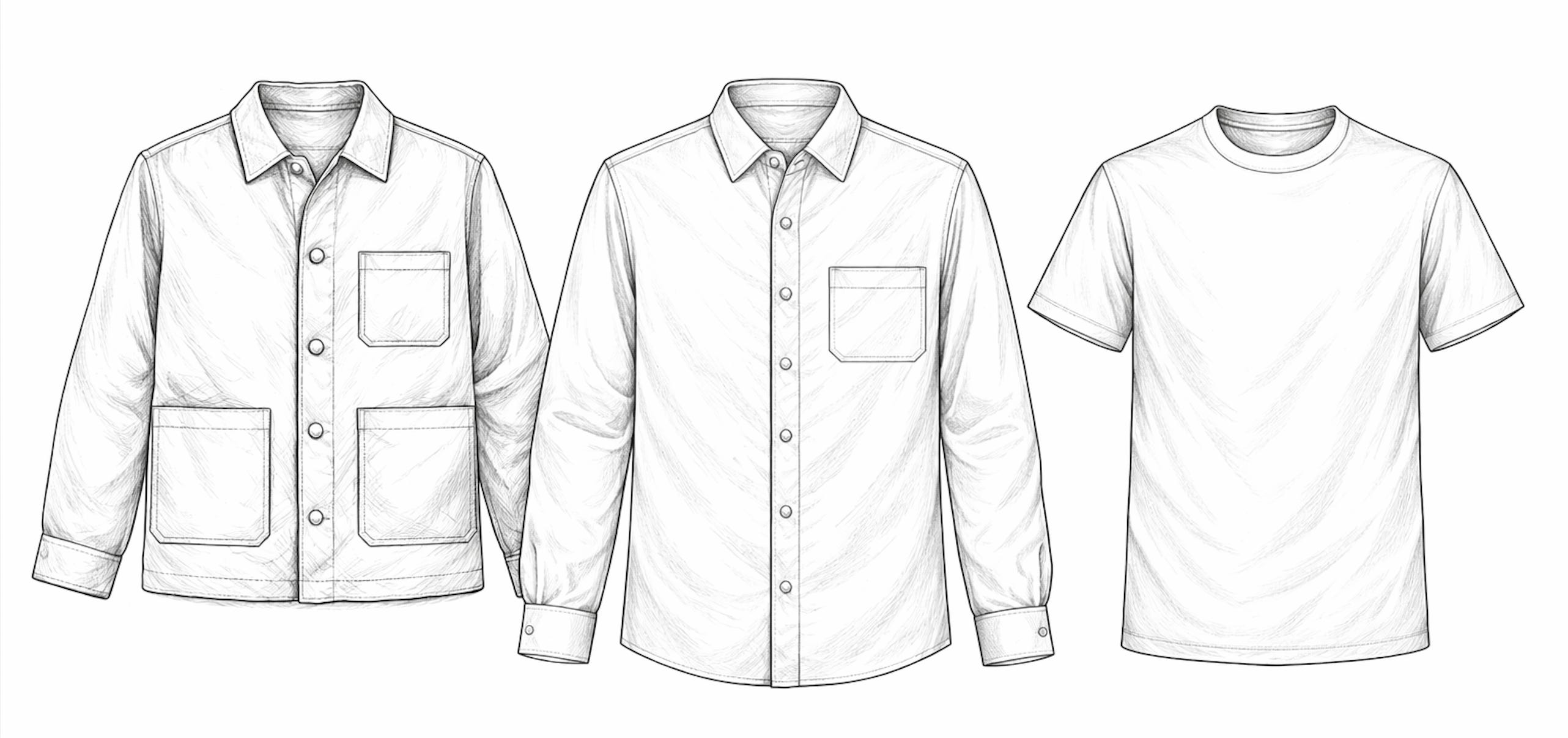
There’s a bunch of brands doing a nice thick plain, twill cotton chore shirt. Twill is a ubiquitous hard-wearing cotton fabric and chore shirts are fairly square shirts with a few pockets that you’d imagine a mechanic from the 50’s wearing. They are evidently in vogue and I approve because they look great and they’re simple enough that the quality of the cotton stands out. My favourite among them is the plain chore shirt from Form&Thread which feels both silky smooth and hefty at the same time and I feel like a prince wearing it. Uskees and Colourful Standard also make these in a thick twill in bold colours and they are possibly less princely but even more rugged and cosy.
Brushed Cotton
Brushed cotton and plaid flannel shirts are probably my favourite autumn and winter wardrobe stable. They often come in pretty plaids and layer well. In early autumn you can wear one on top of a t-shirt and later in the year wear a warmer top underneath. Get them slightly oversized and you can put them over practically anything. Finisterre, Portuguese Flannel, YMC and Folk have a great selection of brushed cotton in pretty colours, but none of them are cheap unless you’re lucky on Vinted.
Corduroy
Corduroy is another fabric that I swear by. Corduroy trousers are often roomy, comfortable and span the gamut from practical (Finisterre, Uskees) to fancy (Wax London, Community Clothing), sometimes within the same set of trousers. There’s something velvety about the fabric, catching the light and changing colour that I really love. It’s a bit magical for a fabric which also feels so approachable and ordinary. I love corduroy over-shirts (think shirt you can wear over another shirt or as a jacket) and light jackets for the same reason. Form&Thread, Folk and Percival make some truly stunning corduroy jackets, and I’m frequently pairing corduroy trousers with a corduroy shirt or jacket in a different hue.
Denim
Denim is a flavour of twill with a fashion industry devoted to it. It’s inflexible and very hard wearing and has become a staple in menswear uniforms. Those who care about denim as a stylistic choice will sing the praises of Japanese selvedge denim which is sturdier than normal denim and very pricy. It does look good though, and because it’s so ubiquitous, it is a great match for practically anything. Good luck buying jeans second hand though. Everyone grows out of their skinny jeans and so that’s 90% of what’s listed on Vinted. It’s worth knowing that there are a handful of great denim brands that focus on sustainability like Nudie Jeans (who offer lifetime repairs) and Monkey Genes. I’ve also had good experience with jeans from Folk and Samsoe & Samsoe. For more ideas, here’s a great guide on buying ethical denim.
Chinos
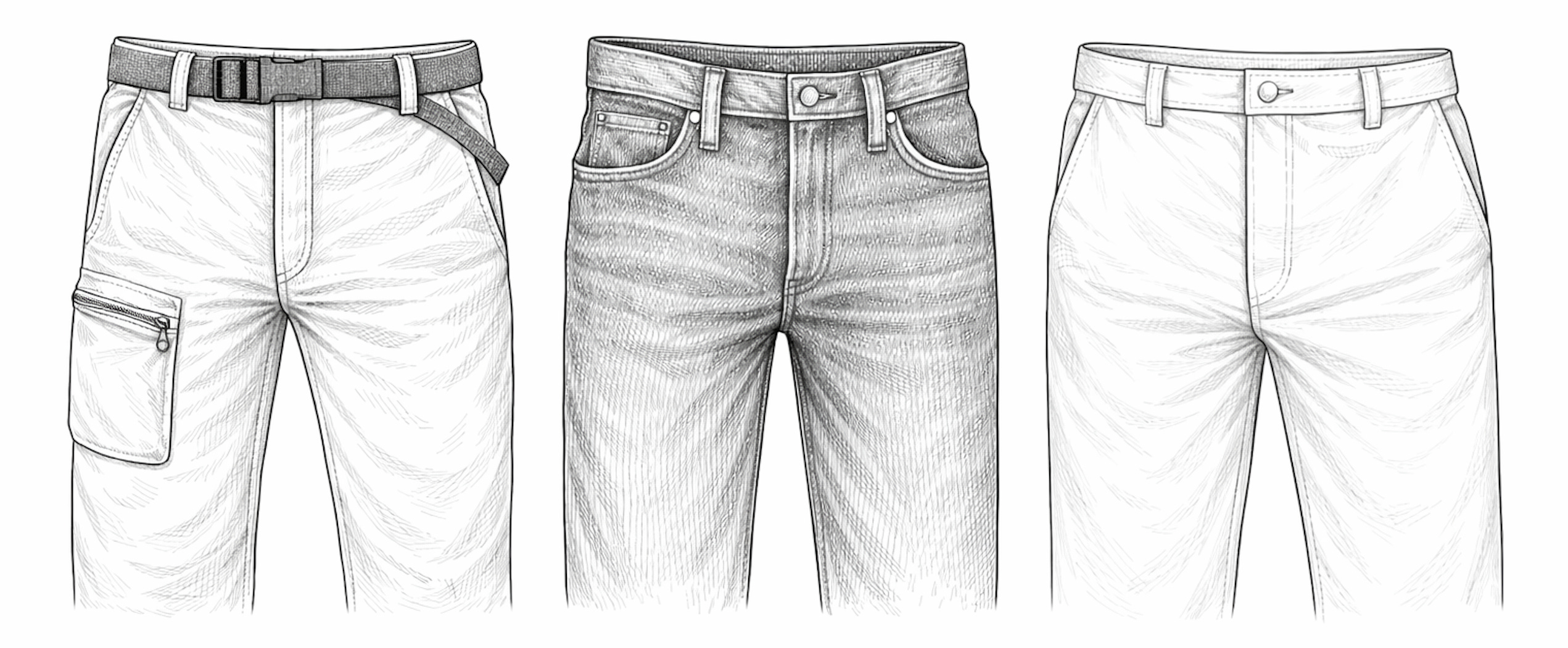
Speaking of trousers, traditional men’s fashion will have you wear chinos. They’re often a bit tight and not great for doing gymnastics, but something I really like about chinos is that they come in a wide array of colours. Spoke, Meyer, NN07 and Knowledge Cotton Apparel are choices I like, but all the menswear brands make them. One life-hack for getting comfortable but not baggy trousers is to buy climbing trousers instead. They are made for stretching your legs in wild directions, they come in lovely colours and even if they’re a more relaxed look than a nice pair of chinos, they still look great. Win win win. Rab, Gramicci, Parna and Patagonia all make nice ones.
When I was backpacking I would bring a single merino wool hoodie, two or three merino wool t-shirts, and a thermal inner layer with me, no matter if I was going to Egypt or Norway. If the cold was biting, I’d layer them all to keep warm at night, and if the weather would warm I’d shed my woollen layers one by one. Wool has this almost magical property that it doesn’t get smelly as fast as cotton (or polyester which is instantly stinky) and that it dries really fast. For long trips where I’d either wash my clothes by hand or not at all, this saved me loads of grief. It felt a bit like a magical life-hack.
At home I have a few woollen tops that I layer with in late autumn and winter. Some of them are merino wool thermal layers that go under a hoodie on a cold day (Icebreaker, Prana and outdoor brands like Marmot & Patagonia all make them) and others are thin wool shirts that I wear a flannel shirt or corduroy jacket above. Having an overshirt to layer with makes it easy to adjust how warm I’m feeling and makes for fun colour combinations. Practically all men’s wear brands make them and they’re often cheap to come by used if you’re not picky about the brand. For proper cold days I have a couple of chunky knits as backup, but they’re too bulky to wear other things over so I find them a bit less versatile. Finisterre makes a bunch that are high quality and made sustainably with a rugged aesthetic. Peregrine fits the same niche, albeit slightly more old-fashioned and all made in England.
While the above are all knitwear (i.e. not made on a loom), there’s also a long tradition in the UK for woven wool cloth like tweed, melton or boiled wool. It’s often used for overshirts, jackets and coats and is thick and durable fabric with a slightly felted feel. Brands like Percival, Aubin & Wills, Kestin or Folk will do variants based on chore jackets that layer well on top of a hoodie or shirt and keep you warmer than a flannel. I’ve got a couple of woolen shirts and a thicker jacket and I love that they combine feeling really comfortable with looking a bit smart. It’s fun to play with. I often layer a hoodie underneath to balance out the smartness with a more down to earth look.
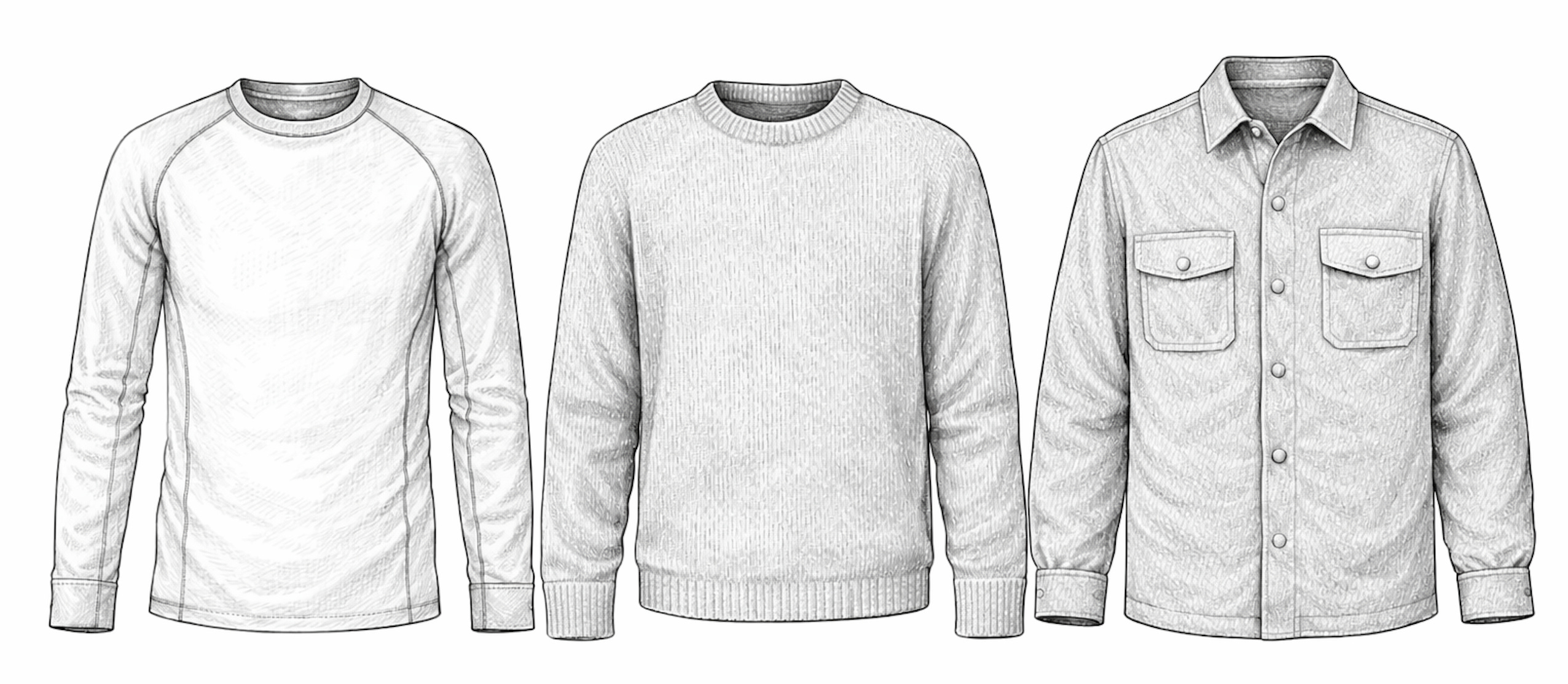
There’s a lot of different types of wool with various degrees of softness and textures. Your standard wool jumper is often itchy on the arms, and I tend to layer it on top of a long-sleeved t-shirt or thermal layer to avoid direct contact with my skin. For softer choices, try lambswool or merino wool. Cashmere is even softer than merino but usually costs a fortune. Sometimes cashmere jumpers come up on Vinted with a few holes from Moths in them. If you know how to darn, you can buy one for cheap, stick it in the freezer for 48 hours to kill any remnant moths and then fix it up. I’ve acquired a really nice cashmere shirt from October Editions this way, and it brings me so much joy, in part because I had to work for it.
Buying wool from new feels complicated. It’s a very environmentally costly fabric to produce in addition to being bad from an animal welfare perspective. They’re easy to find on vinted on the other hand, and if you’re not concerned with getting something from a trendy brand you can often get a good quality for less than 10% of the original price. There’s one important caveat though: I’m convinced two thirds of all woollen jumpers sold on Vinted have shrunk in the wash. Some sellers will be honest about this and others won’t. So for this reason I’m extra careful making sure to get measurements to avoid being disappointed that the sleeves don’t reach my wrists.
Silk comes in a lot of different qualities. That might seem obvious but I don’t think I realised this before I had tried to wear a few different silk shirts and felt the difference. At its best the fabric can be so light and smooth that I barely feel it touching my skin. This is an incredible quality on a very warm day where the lightness of the fabric will allow even the softest breeze to cool you down.
Linen is similar in that cheap linen looks alright but doesn’t feel very smooth on the skin. Nicer linen will feel very soft and often have a soft sheen to the fabric that I find very appealing. A lot of linen shirts tend to be off-white, which seems to be what we’ve culturally decided is the appropriate colour for anything made of linen. It seems like a silly choice and makes it less suitable for everyday wear so I keep an eye out for linen shirts in other colours. We’ve also all collectively decided that linen shirts should thin, but thicker linen while being maybe a bit warmer is so much nicer against the skin because of the weight of the fabric. Original Fibres, Our Legacy, Koi and Wax London are a few brands I can think of that make nice linen products, but they all cost a fortune, so I keep scanning vinted for bargains.
Finally there’s hemp which I’ve mostly seen featured in hippie festival clothing and a few sustainable brands as a sort of rough and unrefined natural material. That’s not the full story though, because I recently discovered that there’s a brand called Babble & Hemp which makes just about the nicest shirts that I’ve ever worn. The shirts feel like high quality linen and come in beautiful colours. There must be more brands out there doing something like this, but I’ve yet to find them. Please let me know if you come across any.
I avoid polyester, rayon, nylon and other synthetics if I can help it. I worry about the micro-plastics and for inner layers like t-shirts I find that they stink the moment I get sweaty. There’s enough stuff made from plastic in this world already. Viscose is technically a natural product in that it’s made from wood pulp. It’s often used for dress shirts and can feel very smooth. The chemical process to produce it is very polluting, and I don’t like how it feels on my skin so I avoid it as well, but there are a bunch of sustainable alternatives. Fabrics like Tencel, Lyocell, Modal and Cupro all follow a process similar to viscose, but with much better environmental credentials. They are often made using tree pulp and feel soft and silky while staying breathable. Pricier brands that focus on aesthetics over functionality like Wax London, YMC or A Day’s March will often feature shirts made from these types of fabrics. Other brands specialise in specific fabrics like B.A.M. which makes some silky-soft clothing from an environmentally friendly type of bamboo viscose and sell them for fairly reasonable prices.
I find that it’s useful to get help from a friend to get a sense of what fits and doesn’t fit. Not that I wouldn’t encourage you to trust your own judgement, but a) it’s hard to see if your butt looks good in a pair of trousers without contorting your body into a shape that isn’t useful for judging and b) the encouragement that a fitted shirt looks nice on you is often easier to hear if it comes from someone else.
It’s my suspicion that a lot of men end up in very baggy clothes that don’t particularly show their bodies because it feels less exposing and while a loose-fitting look can be lovely too, it’s nice to have the choice.
When buying new clothes, it helps a lot knowing what measurements look nice on you. This is particularly true when buying trousers online. If you’ve got a pair of trousers that fit you really well, get a measuring tape and measure across the waist and from crotch to hem (bottom of the leg). Also notice how high on your waist the trousers sit. Knowing this you should be able to get a reasonable idea of whether a pair of straight-legged trousers might fit you if you have the same measurements. If you’re into wearing skinny trousers you’ll need to measure the circumference of your thighs and calves too if you want to know for sure that you’ll be able to put the trousers on.
It’s worth keeping in mind that you’re not a size M or L or whatever. It’s the clothes that are labelled with a size and you’re just choosing a size that works for you. Even if most shirts in size M tend to fit you, it might still be right to get that flannel shirt you’ve fallen in love with in size L so that you can throw it over your hoodie without the arm-pits feeling tight. Or maybe getting shorter trousers that only just reach your angles makes for a different and fun look. Have fun and experiment. Don’t worry about fitting in a particular box.
I’ve got a small darning-social-club going on with my neighbour. We’ll bring a few clothes in need of fixing to a pub or cafe every so often and sit and chat while fixing stuff. It’s very wholesome and often provides the impetus to fix a torn pocket or sew a button back on and make a piece of clothing that was gathering dust or a bit annoying to wear in to something that brings joy again.
I think of knowing how to fix clothes as a super-power. A very accessible super-power, granted, but still. If you learn to stitch a hem, darn a hole in a jumper or sew a button in, you’ll be able to make your clothes last way longer and make them more your own while you’re at it. And it’s not a hard skill. A 5 minute YouTube video will teach you all you need to know to neatly fix a hole that’s been bothering you. Go to a local craft-cafe and ask the people there for advice if you get stuck. I’ve felt so damn chuffed every time I’ve repaired a piece of clothing that I end up wearing the garment more, just for a chance to point out to friends that I’ve fixed it.
Washing clothes is surprisingly complex. If you’ve got clothes in nice fabrics, being mindful of how you care for them will dramatically improve how long they’ll last. Generally I tend to wash cottons at 30 degrees. Combined with wearing an effective deodorant like Nuud (strong recommend!), this is usually enough to keep them clean. When t-shirts start smelling a bit dank, sometimes a 60 degree wash is the only thing that will properly remove the smell. If you wash them lower, they’ll come out of the wash smelling clean, but then the moment you start sweating, the dank of years past sitting in the fabric come to join and it’s unpleasant. Washing at 60 is bad for the fabric though, so it’s a bit of a nuclear option.
I wash jumpers and other delicate fabrics by hand. It’s pretty simple. You put the item in a bucket and cover it in lukewarm water and gentle non-bio laundry detergent (no enzymes!). Then you let it sit for half a day before rinsing it (i.e. wash in water without detergent, then wring gently, then repeat a few times) before wringing it gently and hanging it up. Don’t wring your nice woollen jumper like you’d wring a kitchen cloth. Just gently press the water out and let it dry in the bathtub so it can drip. It’ll take a while. All this doesn’t apply to your standard merino wool t-shirt or tight knit hoodie. They can usually be washed on a wool-cycle in your washing machine, but check the care label of course.
Don’t hang your nice woollen clothes on a drying line. The clothepegs will leave marks and so will the line. A lot of them will have care instructions recommending you to dry flat (i.e. letting them dry on a surface). Do that instead. Otherwise you’ll need to wash them again to get the marks out.
Clothing has a big ethical and environmental impact. I discussed this briefly when discussing materials, but I think it would be useful to highlight a few brands that go out of their way to provide clothing with minimal environmental impact and fair working conditions throughout the supply chain:
Outdoor wear: Finisterre, Rapanui and Patagonia. Patagonia is more main-stream where Finisterre is a smaller b-corp that skews more natural fibres and less technical (but with a fair amount of overlap). A lot of their garments are made in Portugal. Rapanui is very similar to Finisterre in looks and ethics but usually slightly cheaper from using less complex materials.
Active wear: B.A.M. makes yoga leggings, running tops, etc in bamboo viscose which is sustainable, breathable and soft. Pangaia does essentials including a bunch of active-wear like from recycled fibres including merino wool.
Mens wear: Form&Thread has a strong focus on supply chain transparency and paying fair wages while keeping prices reasonably low. Babble & Hemp uses hemp as a sustainable fabric in the nicest shirts I’ve ever worn. Uskees specialises in long-lasting functional no-frills clothing usually made from twill and corduroy that looks great. Twothirds is a Spanish brand that focus on low-impact materials and transparent supply. Colourful Standard is a Danish brand that does great range of essentials (t-shirts, hoodies etc) in a great range of colours.
Denim: Nudie Jeans and Monkey Genes both use sustainable practices to make their denim. Nudie Jeans promises life-time repair of their jeans.
While most every clothing brand will proclaim that they’re sustainable and ethical in this day and age, it’s often hard to figure out how strong that commitment is. For each brand above I’ve linked to their profile on goodonyou.eco which is a helpful source of information about the sustainable practices of most clothing brands out there.
Ultimately (and at risk of repeating myself), the choice with the biggest impact is not what brand you buy from, but whether you buy second-hand and how well you look after your clothes. If impact is your main concern, buying a Primark cotton jumper second hand is going to have a smaller impact than getting a similar jumper from Finisterre or Patagonia from new.
An overshirt from Form&Thread will cost £120 from new (RRP), £60-80 on sale and £30-£40 on Vinted. That’s a lot of money, and I’m conscious that there’s a lot of privilege involved in casually mentioning brands that sell at these prices. The reason I still recommend these brands over cheaper alternatives is because clothing fundamentally costs a lot to produce in a way that doesn’t externalise the environmental cost and reduce pricing by having workers working under slave-like conditions. I think this matters and that it’s important to highlight businesses that put work in to make the garment industry more sustainable.
However, as long as you’re buying second hand, I firmly believe that your conscience can relax whether you buy from an environmental brand or not and there’s plenty of brands out there producing beautiful menswear that sells for much cheaper on platforms like Vinted. For suggestions, check out Muji, Uniclo, Asos and Hilfiger for a start.
The cost equation when buying second hand varies a lot from brand to brand. The prices I’ve quoted above for Form&Thread will more or less hold for most of the other brands I’ve mentioned like Folk, Percival, Uskees, NN07, Nudie Jeans and Wax London. A lot of outdoorsy brands tend to have high second-hand prices. That includes Finisterre, Gramicci, Patagonia and Rab which often sell for 40-50% of RRP on Vinted. On the other hand, classic men’s wear brands like Hilfiger will often sell for less than 10% of RRP and it’s not unusual to pick up a nicely fitted cotton shirt in good condition for less than £5 before shipping. Finally luxury brands like Bode, Story Mfg, or Our Legacy will often sell for 30-50% of RRP and cost a small fortune. I can’t pretend to understand the logic of this.
There’s an underlying thread as I’ve been writing this guide of quiet rebellion against the expectation that men (and those who dress masculine) have to wear boring clothes. And while conforming can feel safe, it also takes away the opportunity for joy and delight for both yourself and those around you as you dress up in a beautiful outfit.
I love feeling pretty. And yet, as I write these words down I feel a bit uneasy. Years of conditioning has taught me that the word “pretty” is out of bounds for my gender. It’s taken years to slowly silence that inner voice and at this point all that is left is a whisper, but I still notice it on occasion.
And so the most important thing I’ve wanted to share as I’ve written this guide, is the basic idea that you are allowed to be pretty. To be beautiful. To pick the colours you love. To stand out. To experiment. Forgive me if that feels trite. Your journey might have been different than my own. And after all, there’s nothing special or extraordinary about these words. So if they aren’t already, take them and make them yours. To hell with judging vanity and to hell with archaic gender-norms.