Most of our attention on the people who create weapons of mass destruction tends to focus on the charismatic, usually-male, scientists who are associated with the role of “inventor.” Once the weapons are invented, our attention moves away from the people who make them and either towards the weapons themselves, as objects of a dark technophilia, or to the soldiers who wield them or the politicians who order their use.
But the act of making an arsenal, once the “inventing” is done, is a lot of work by itself. The exponential curve in the US nuclear weapons stockpile over the course of the 1950s and early 1960s wasn’t the product of clever nuclear physicists, it was the product of industrial manufacturing. The US built literal factories for producing nuclear weapons and their components, spreading across the country. We often speak with awe at the size of the Manhattan Project, but it was only a fraction of the size of the Cold War nuclear infrastructure built in the 1950s.

One of these factories was the Pantex Plant, near Amarillo, Texas. Pantex was the hub of a vast nuclear infrastructure, the place where all of the pieces came together and the actual weapons were assembled. It was also where the weapons would be disassembled, when their time in the stockpile had come to an end. Depending on the weapon, this could be difficult work, as many later weapons, especially compact tactical nuclear weapons, were optimized for their mission, not for ease of disassembly.
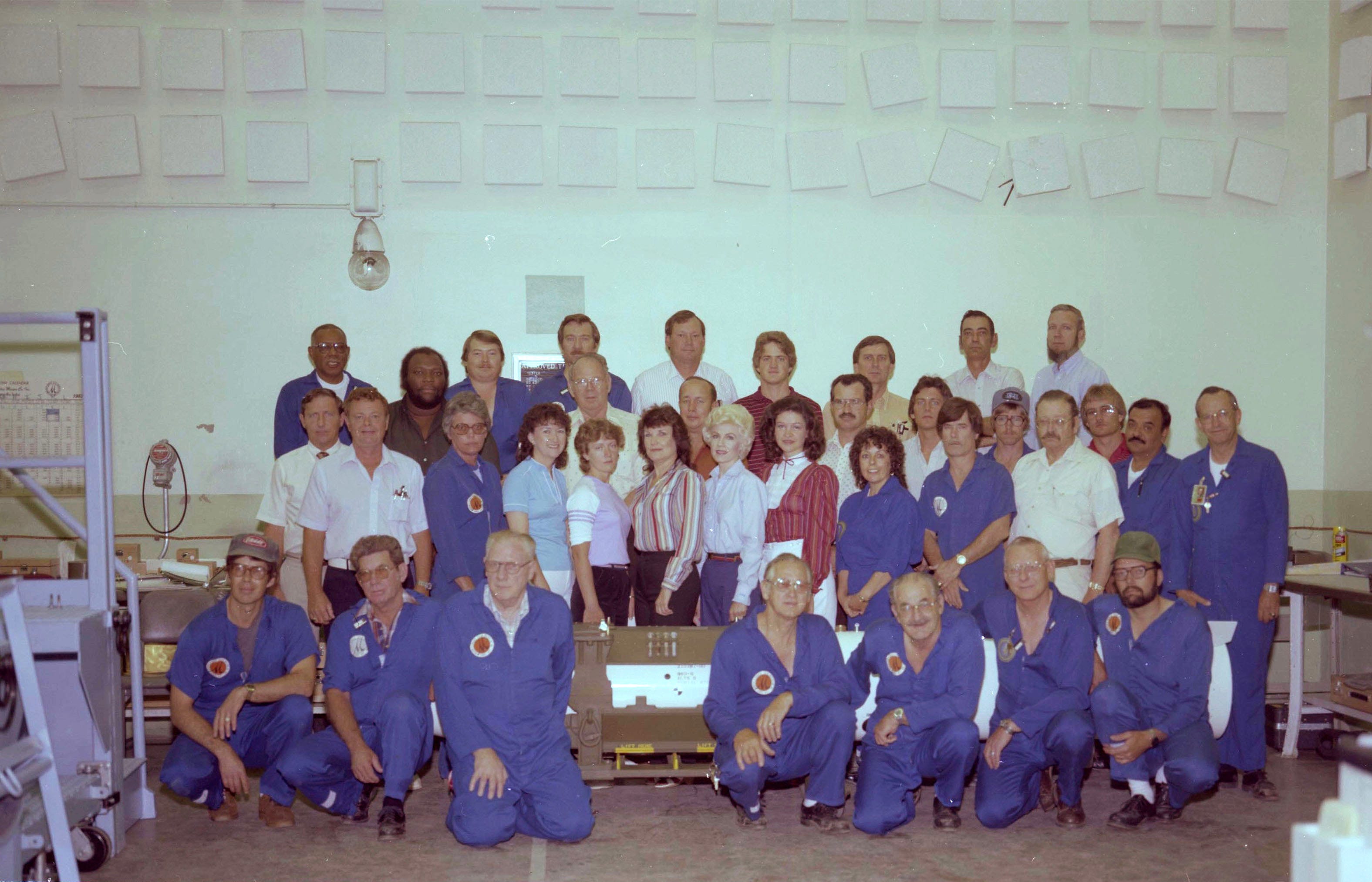
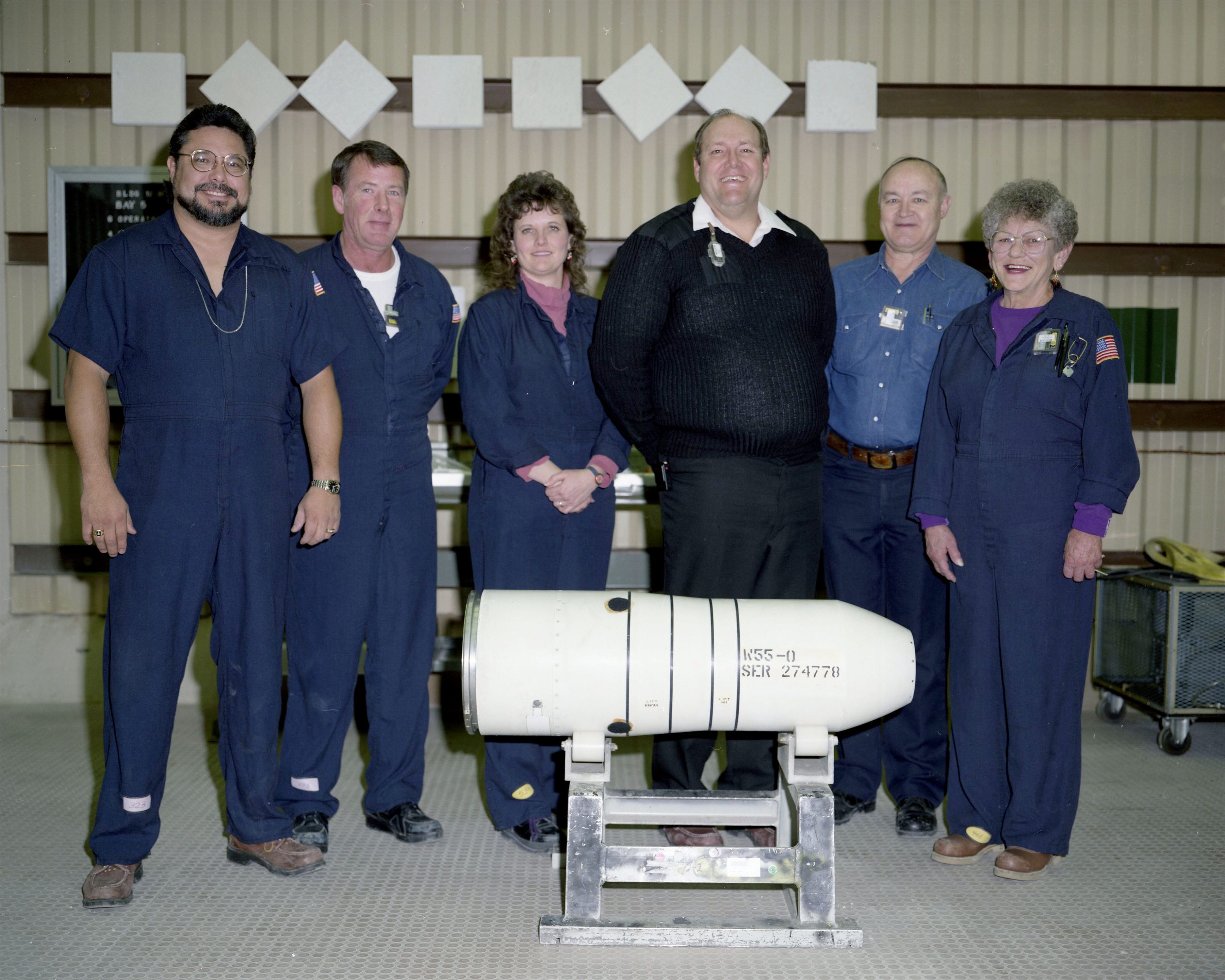
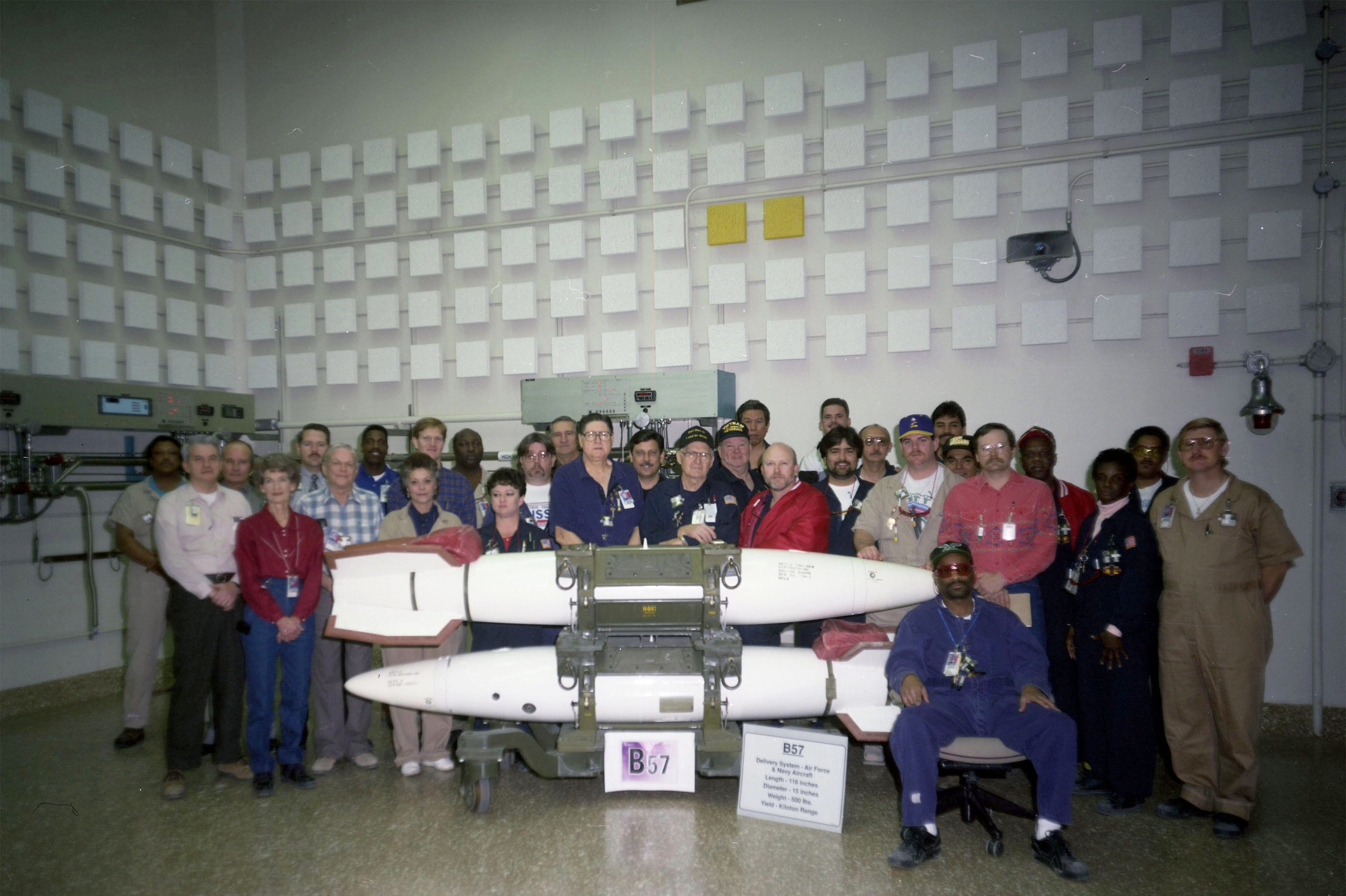
Judging from the copious number of these photographs, it appears that there was a tradition at Pantex for various assembly/disassembly crews to take group photographs with their bombs. They are the height of mundanity, on the whole: normal looking people at work. But, because its Pantex, they are posed around their nuclear weapons. It’s as American as apple pie, in a way.
These photographs fascinate me. Most of them are from the 1980s, and the clothing, the hair, the dispositions — they all feel of the era. Each one has a somewhat different type of gender relationship being presented. The spaces they are in are themselves curious as well — the odd squares on the walls of the cavernous assembly/disassembly rooms.
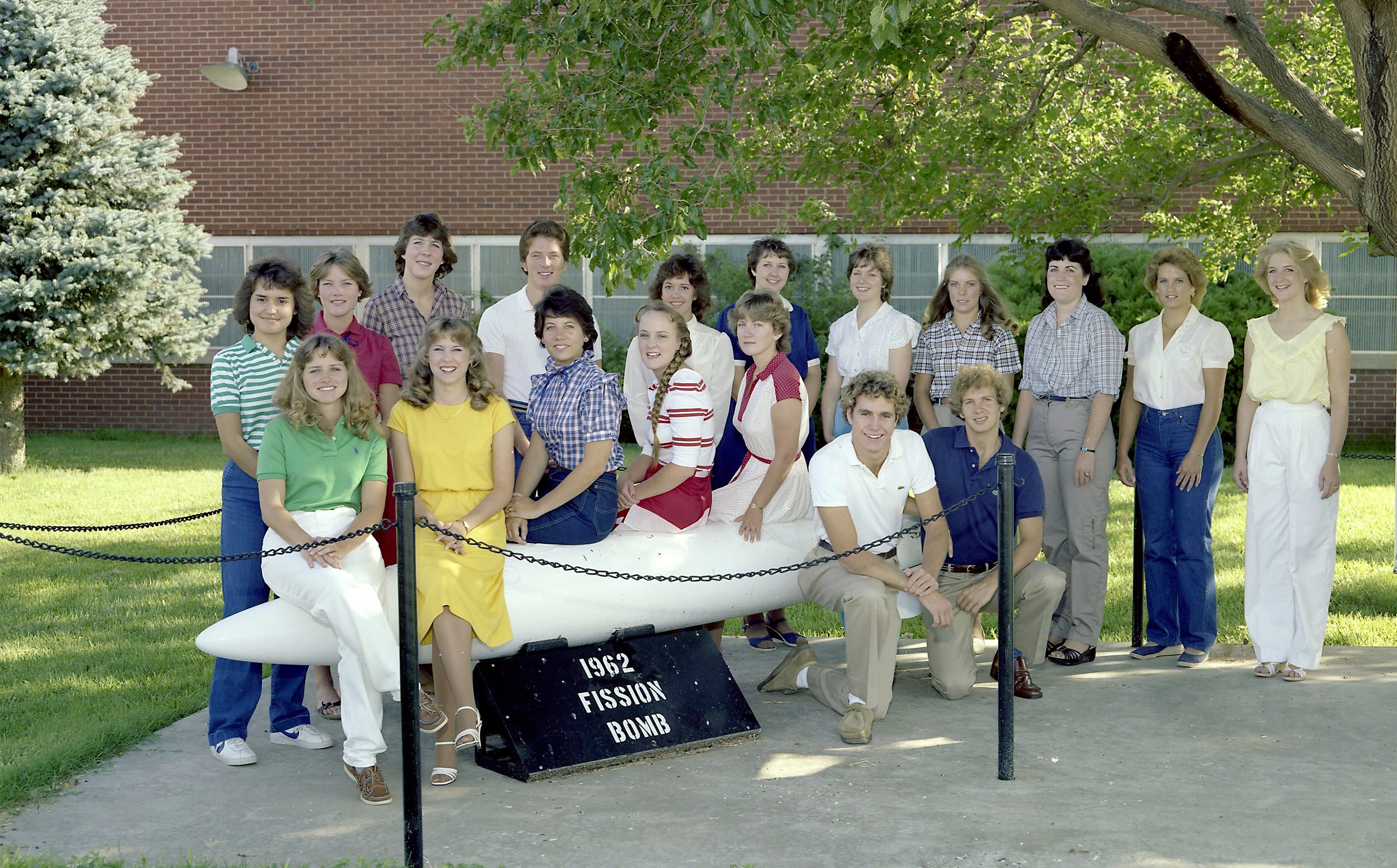
If you removed the nukes, the photos would be pretty mundane. People at their job. And it was, in a way, just a job. I gave a talk at Sandia National Laboratories a few weeks ago and was struck by the mundanity of the lab space. At one point we passed by the building where the graphic designers worked — graphics designers with Q Clearances, so they could make classified brochures and Powerpoint presentations.
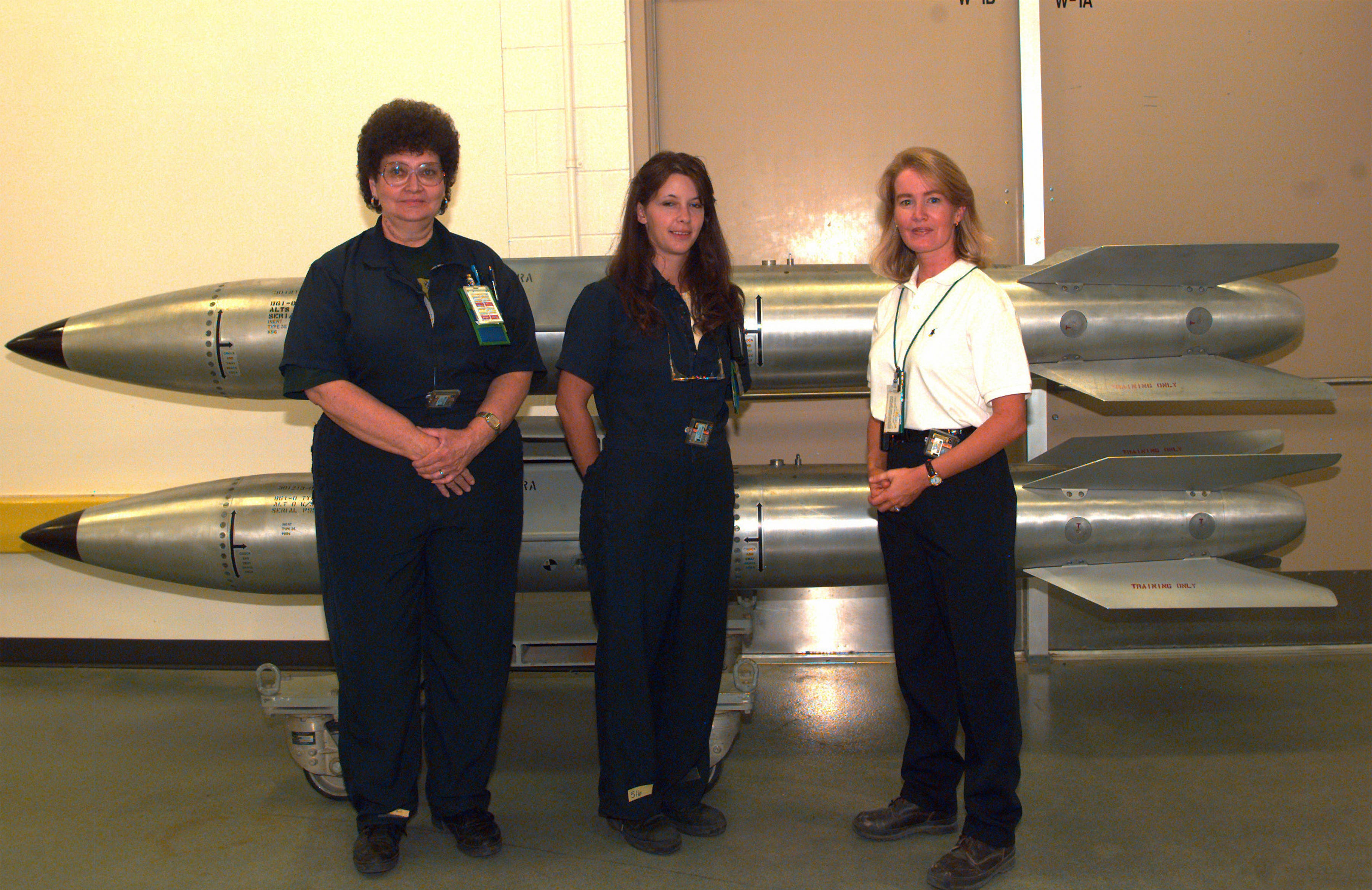
Most of the above photos come from a “history” page that Pantex has put online, celebrating its safety, its “women in the workforce,” and its “infrastructure for innovation.”1 And it’s, of course, easy to be cynical about such a thing. But there’s something to the fact that this kind of blue-collar work does seem to have had a more diverse workforce than the more high-profile weapons work. It’s literally blue-collar work, the kind that doesn’t get movies made about it, except when something goes terribly wrong.

There’s something funny whenever you treat nuclear weapons as anything other than symbols of mass destruction. The weapons are among the most potent symbols for destructive power that one can conceive of outside of fiction, but they’re also mundane technical objects, created and maintained and disassembled by human hands.

My students are often quite curious about how you take apart nuclear weapons. They assume, I think, that nuclear weapons are volatile — like you are taking apart a ticking time bomb. And there are sometimes tetchy aspects to it, like having to crack high explosives that are glued to a plutonium pit. I’ve taken to having a small discussion of it when I teach my courses on the history of nuclear weapons, on the mundanity of disassembly, because I think it highlights that important physicality of the weapons. They’re just things. Made by people. Made, it turns out, by quite ordinary people. The act of making nuclear weapons is, in some ways, just a job. But so also, it follows, would be the act of un-making them.