This text was originally published on Anton Cebalo’s Substack.

In the early 1970s, psychologist Herbert Freudenberger wrote of a condition he was seeing more and more among his patients: emotional exhaustion coupled with a loss of motivation and commitment. He called it “burnout” — borrowing a term initially used in the underground by those suffering severe withdrawal from drug abuse.1
It quickly caught on both clinically and among everyday people, helped by Freudenberger’s autobiographical style in describing it. He had experienced the condition himself in bouts. But more importantly, the diagnosis came at a critical moment in American society as it was transitioning to a more “post-industrial” way of life, yet another term coined around the same time.2 Americans were graduating in greater numbers and increasingly pursuing knowledge-based work in offices, which was especially susceptible to stress and psychological ailments.3
The “burnout” of professionals in a “post-industrial” society: the two ideas were clearly linked. They also provided a window into the new era, one that was loosely being called the “Information Age.” The immediate relevance of Freudenberger’s ideas was obvious, and would soon be made into wellness questionnaires by psychologist Christina Maslach and others. By the 1980s, corporate management realized this malady was here to stay and began to craft methods specifically for dealing with demotivated labor.
These developments have since had time to deepen and mature, and today are more relevant than ever. In the last two years, many workers have resigned, often suddenly, due to a lack of fulfillment and burnout in what’s been called the “Great Resignation.” These familiar sentiments are the starting point for philosopher Byung-Chul Han’s writings which have grown popular as of late.
In his 2017 work Psychopolitics, Han writes of how power today has grown reliant on manipulating psychological states, uniquely made possible by technologies of control. Its symptoms are of the mind, like burnout and diseases of despair, coupled with addiction and compulsion. Understanding psychopolitics helps us to reframe the time in which we live, where one’s mental state has become a leading place of conflict.
Psychopolitics opens with an ominous statement: “freedom will prove to have been merely an interlude," something that's most felt when "passing from one way of living to another."4 Byung-Chul Han views the current situation as the turning of a new page, whose psychological ailments constitute a “profound crisis of freedom." The forces responsible operate on a level which he calls “psychopolitics.”
While Byung-Chul Han writes clearly, he also has a tendency to write aphoristically, very much in the style of a pamphlet. He is best known for his social diagnoses, writing often on themes like alienation, burnout, and how market demands have broken up the social fabric. Psychopolitics itself is a collection of short essays and a distillation of his worldview.
The book, however, is not historical by any means which may confuse the reader over how any of this is unique to our time. After all, psychological techniques on the unconscious, either in the realm of politics or markets, have been used to great effect since the early 20th century. For example, can fascism be called a form of psychopolitics? It certainly relied on mass psychology.
Psychopolitics is not "psychology applied to politics," though. Han describes psychopolitics as a new stage in how we relate to power, made possible by online life. Long ago, in agrarian societies of the past, power was exercised by the sword and threat of death.5 In succeeding industrial societies, power was exercised not by the threat of death, but by discipline and regulation over life. It needed to efficiently manage the physical bodies needed for production.6 Now in post-industrial societies, power is exercised by allowing individuals to exploit themselves in an open, transparent, and increasingly zero-sum environment. Rather than controlling bodies, Han argues psychopolitics is mainly about souls and minds.7
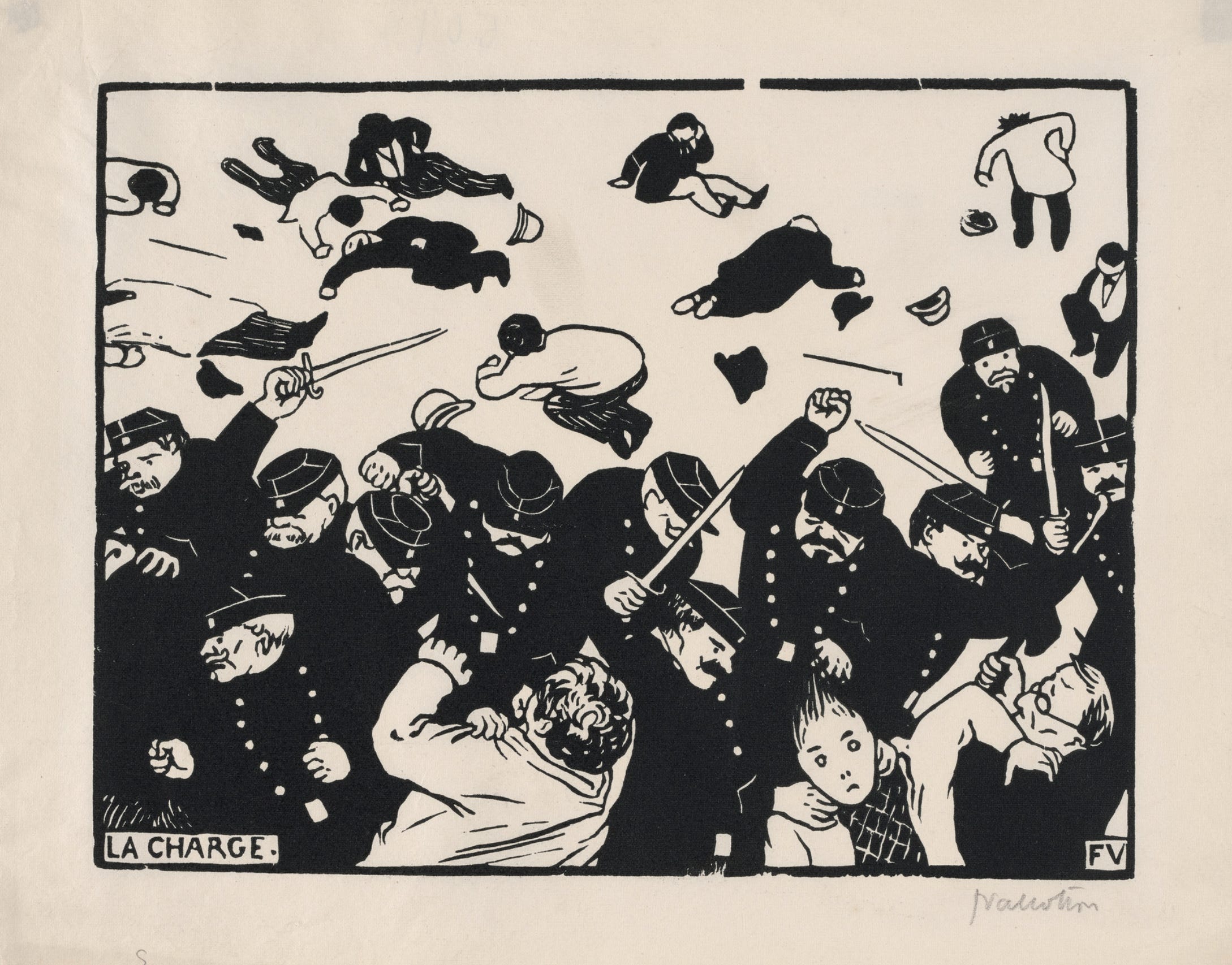
Because sentiment travels fastest in the digital realm, Han likens psychopolitics to a "dictatorship of emotion" in its ability to manipulate desire and opinion.8 In such an environment, "freedom switches over to compulsion" and addiction is rampant.9 Participation is easily reduced to grievance and complaint.10 Grand narratives of the future that used to motivate the past break down.11 This is because there is no longer a "political we" like before nor are there clear classes of mutual antagonism, Han argues.12 Instead, a world dominated by psychopolitics produces a constant "inner struggle against oneself."13 The boundaries between work and leisure weaken as well.14 And trust altogether declines because “the more we are confronted with information, the more our suspicion grows.”15
The ideal subject for psychopolitics according to Han is the always-optimizing "self-entrepreneur" who is unable to form relationships "free of purpose."16 Such social relationships, he argues, would ideally be the basis for healthy, non-coercive freedom. Psychopolitics tends to instead produce generalized anti-sociality.
Han’s writing tends to cut through the noise with concise insight, and I don’t want to quote the entire book here. But what is most convincing about his view is how abundantly clear its symptoms are.
In a previous post, I have already covered the ongoing “social recession” and community decline. Still, there are other signs we live in psychopolitical times: random acts of anti-social violence; deep democratic discontentment17; historical amnesia and memory loss18; and an unprecedented rise in mental illnesses like depression, anxiety, bipolar disorder, insomnia, and attention-deficit disorders.19
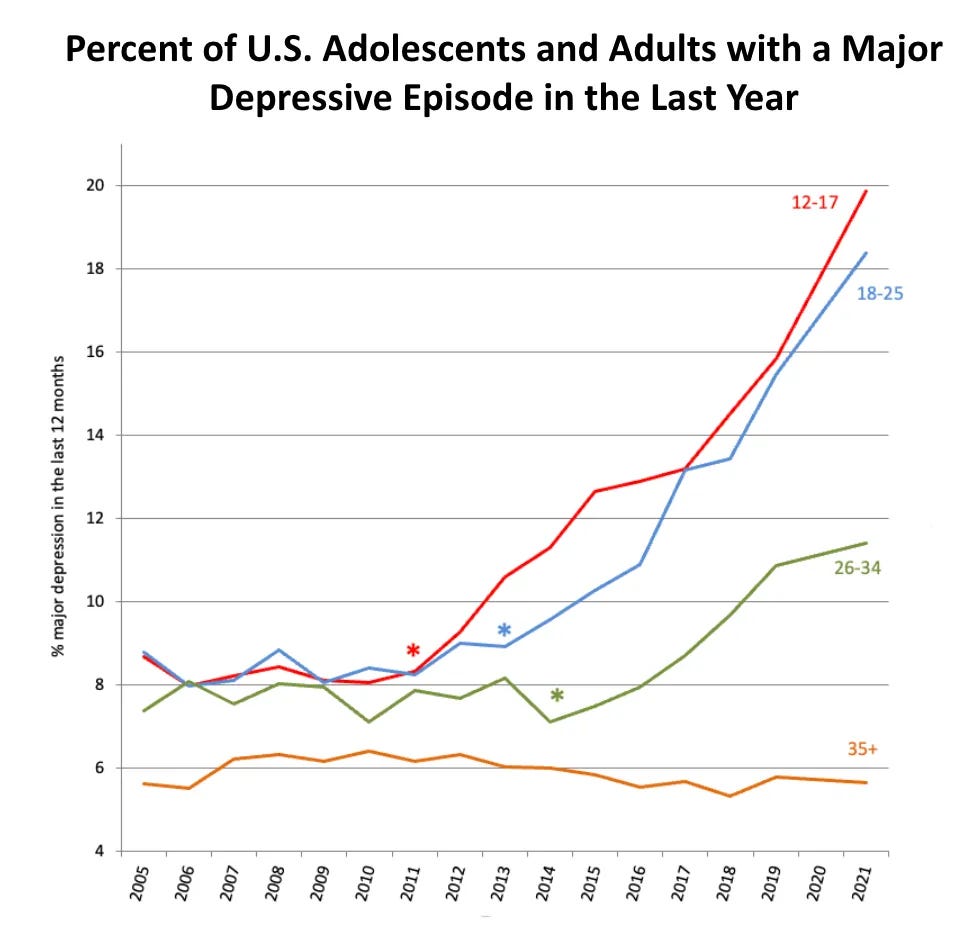
In many ways, it is evident we are living in a psychopolitical time, one especially susceptible to maladies of the mind and soul. A quote for today ought to be “protect me from what I want,” a phrase Han borrows from artist Jenny Holzer.
While these are all pressing problems in their own right, what really strikes the reader when reading Han’s work is the alarming tone. Really, what he is intent on illustrating are the dire stakes if we do not undo “that which is changing freedom into coercion.”20
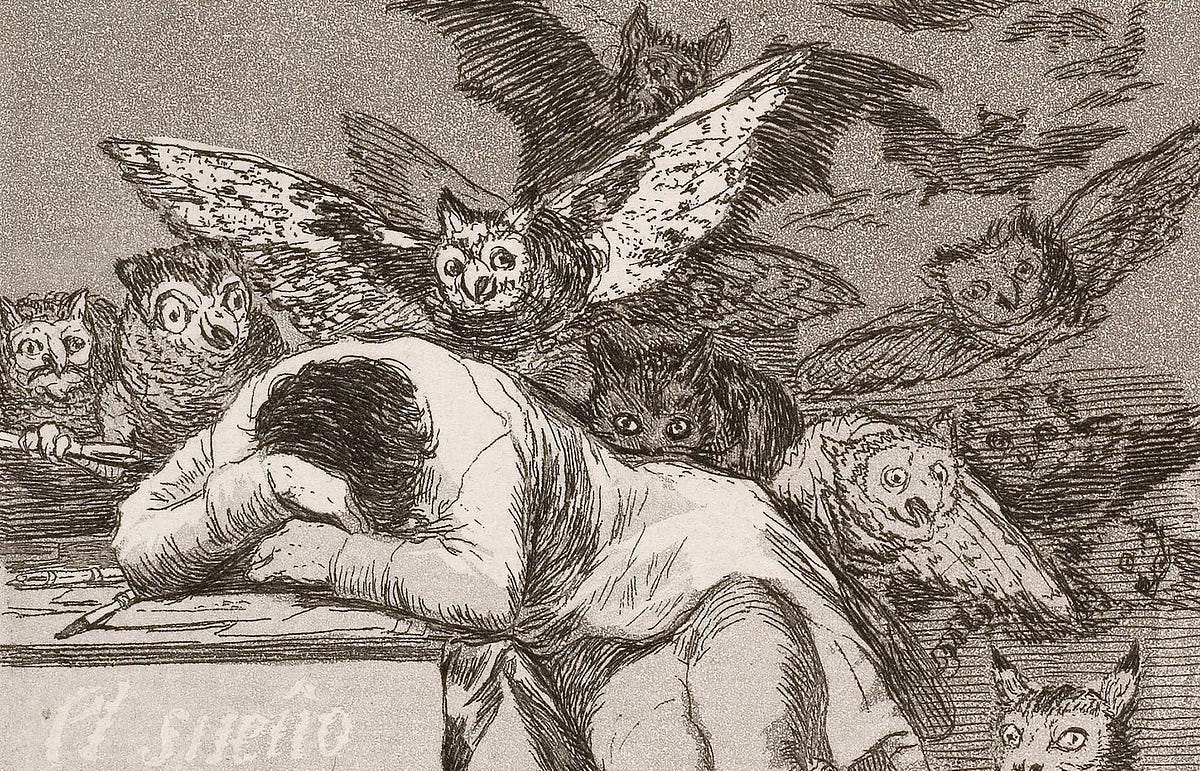
On this question, he unabashedly sets his target on “Big Data,” the platforms and market forces exploiting psychopolitics. The tech monopolies operate on a vast scale, transforming people into raw data and “quantifiable selves” amenable to surveillance, manipulation, and directed consumption. These entities allied with the state could leverage psychopolitics and its proclivity for emotion to simulate desired outcomes. It is creating a situation where, Han believes, “free will itself is at stake."21
He writes:
In the age of digital psychopolitics… influence takes place at the pre-reflexive level.
For human beings to be able to act freely, the future must be open. However, Big Data is making it possible to predict human behavior. This means that the future is becoming calculable and controllable. Digital psychopolitics transforms the negativity of freely made decisions into the positivity of factual states.
Persons are being positivized into things which can be quantified, measured and steered. Needless to say, no thing can be free. But at the same thing, things are more transparent than persons.22
The disciplinary power [of industrial society] discovered “population” as a productive and reproductive mass to be administered carefully. Reproductive cycles, birth and death rates, levels of general health, and life expectancy provided the objects for regulation.
However, this approach is unsuited to the neoliberal regime, which exploits the psyche above all. Big Data provides the means for establishing not just an individual but a collective psychogram, perhaps even the psychogram of the unconscious itself.23
[Digital psychopolitics] manages to intervene in psychic processes in a prospective fashion. Quite possibly, it is even faster than free will. As such, it could overtake it. If so, this would herald the end of freedom.
It is possible that Big Data can even read desires we do not know we habor… [thus] rendering the collective unconscious accessible... in the position to take control of mass behavior on a level that escapes detection.24
The invisible technological forces that Han describes are already in play, molding culture and politics. The thought of a society managed through algorithmic prediction and suggestion is a disturbing prospect. Yet, I am also encouraged by the fact that these systems have so far failed miserably in predicting the future. Human spontaneity is still clearly present nowadays, often expressing itself in spite of any attempt at control, albeit very chaotically. Society has not yet been reduced to just inputs and outputs.
Byung-Chul Han illustrates a grim picture of technological control and emotional manipulation, whose complexity is hard to fathom. Still, we interact with it every day, and part of its appeal is it is mostly curated for us. A psychopolitical breakthrough was the popularization of the “infinite scroll” in the early 2010s, as timelines moved away from being strictly chronological, with Facebook leading the way.25 This also coincided with social media being less about connecting with real-life friends.
A while back, I stumbled upon an essay written in 2017 on a website called Graphite Journal. In it, an anonymous user writes, “the internet is larger than any one metropolis, but browsing it today feels like walking down a narrow circular hallway.”
They go on to recount a story of how in 1956, philosopher Guy Debord looked over some sociological studies on Parisian city-dwellers and noticed something similar. He was surprised to find their movements across the city quite limited, “forming a triangle with little deviation.” From such a realization, Debord proposed the idea of the dérive: the conscious decision to pass through areas and moods previously untraveled, drawn by whatever attraction one finds. The goal of dérive was to reject the narrow hallways one is forced into, and instead, turn them into bigger worlds. “It is high time that we develop a dérive for the internet,” the user writes.
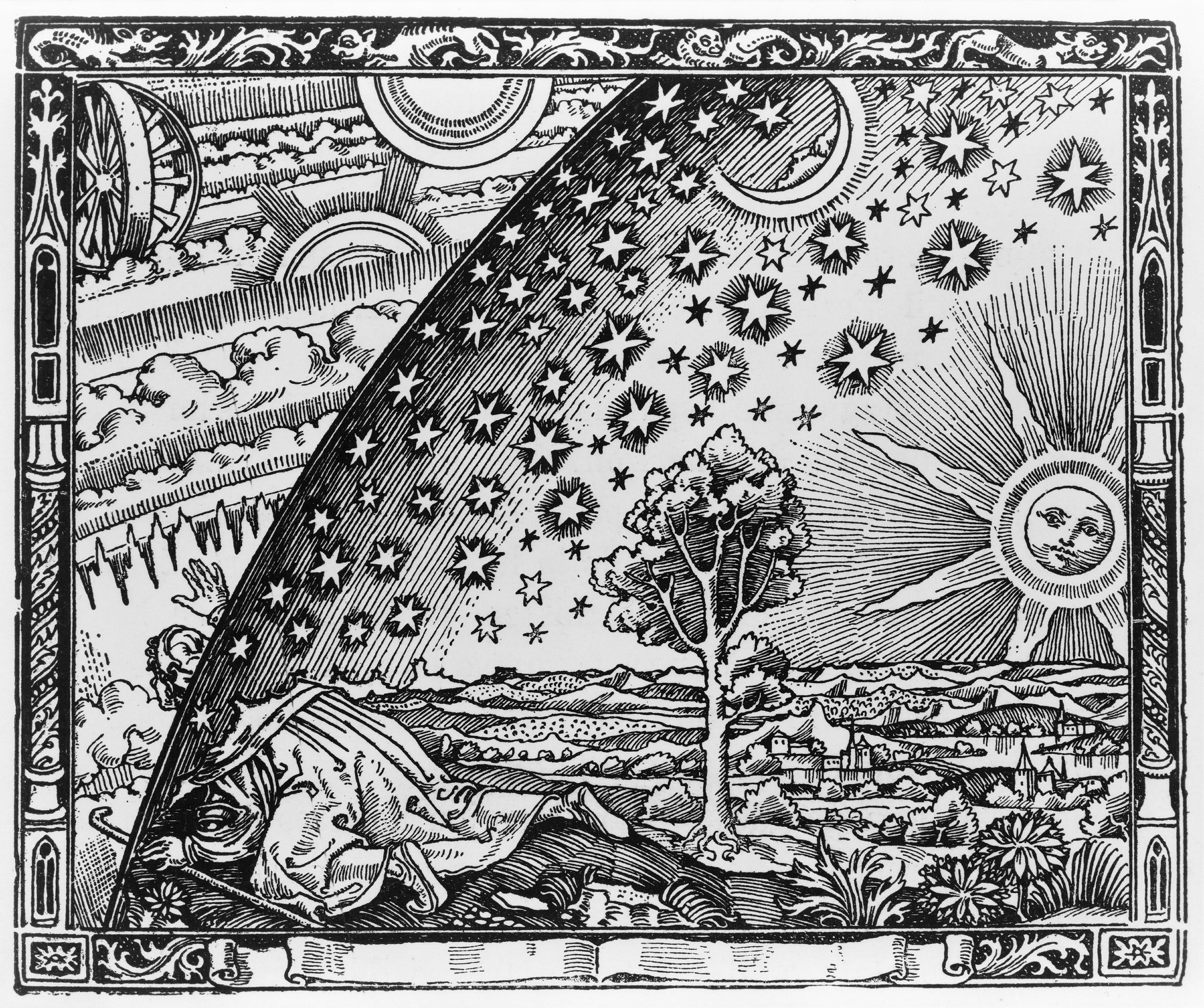
When I read Han’s work, I’m reminded of the need to cultivate thoughts and worlds beyond what’s curated for us. Just as importantly, it also requires cultivating our physical public spaces and “third places” as well, so that we have an actual home and community outside of psychopolitical dynamics. Only then can we develop the personal arsenal to protect ourselves from what we think we want.