The wrestler knows he’s going to lose. He knew it three days ago when the promoter called. He knows it now, climbing through the ropes, his entrance music still pounding through the arena speakers. The crowd knows it too, probably, on some level they refuse to acknowledge. But everyone plays along because the alternative (admitting it’s scripted) would collapse the whole enterprise.
Professional wrestling has a word for this: kayfabe. The maintenance of the illusion. The agreement, unspoken but absolute, that what you’re watching is real even when everyone knows it isn’t.
Politics, it turns out, has the same agreement.
In deportation offices across the country, officers manage queues on their monitors. The queues contain hundreds of names each. Each name represents a person who entered the country legally and overstayed their visa. Each week the officers send emails. Most don’t respond. The cases escalate to supervisors who lack resources to pursue them. The names go back in the queue.
Meanwhile, at the Capitol, senators are giving impassioned speeches about border security. The speeches have not changed the queues. The queues have not changed the speeches. And somewhere between these two realities, one involving spreadsheets, one involving television cameras, lies the actual mechanism of American governance.
That mechanism, however, is not the show you’re watching.
Start with a question that sounds like conspiracy theory but might just be observation:
What if electoral politics isn’t the site of power, but the spectacle that distracts from it?
I am not suggesting politicians are powerless. They clearly aren’t. But the fight you’re shown serves a function separate from the outcome it produces. The fight consumes attention, energy, and activist bandwidth. It divides potential opposition into warring camps. It creates the appearance of meaningful choice while the consequential decisions happen elsewhere, made by people whose names you don’t know and can’t vote against.
The border debate has raged for thirty years. In that time, the unauthorized population has grown, plateaued, and grown again. Court backlogs have expanded exponentially. Visa over-stayers have become the majority of new unauthorized immigrants. Employer verification remains mostly voluntary. Seasonal labor visa programs stay small and bureaucratically constrained.
These are not partisan disagreements about policy. These are bipartisan failures of administration, or, perhaps more accurately, bipartisan successes at maintaining a useful crisis.
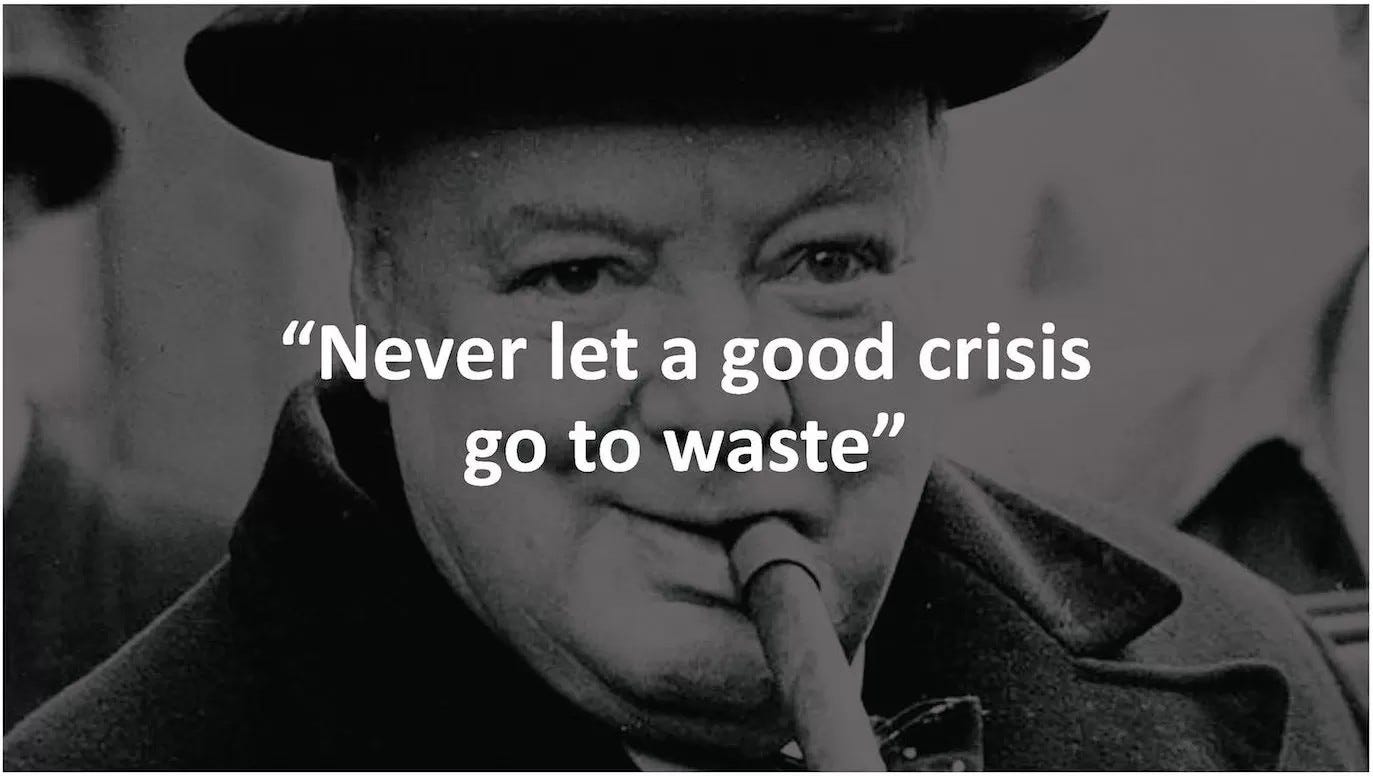
Because here’s what the permanent crisis provides: It gives Republicans a threat to fund raise against. It gives Democrats a moral cause to organize around. It gives cable news an evergreen story. It gives contractors a revenue stream. It gives advocacy groups a purpose. It gives bureaucracies a justification for budgets. And it gives everyone involved a reason to keep fighting rather than solving.
The queue grows. The speeches continue. The show goes on.
To make this case, I want to draw on the work of two thinkers from opposite ends of the political spectrum: two men whose ideas we’re all encouraged to dismiss as fringe thinking, and two whose work I’ve consumed and found genuinely insightful. By invoking both Noam Chomsky and Thomas Sowell, I hope to discourage the cynical, partisan reader from assuming I’m being ideological in precisely the way I’m trying to discourage in this piece. If these two see the same gap between theater and reality, perhaps the gap is real.
They agree on almost nothing about what should be done.
But they share an analytical stance: profound distrust of the official story.
Chomsky spent decades mapping what he called the propaganda model: five filters that determine which stories reach the public and how they’re framed. The short version goes like this:
Media ownership concentrates in profit-seeking corporations.
Advertisers provide revenue and thus influence.
Official sources provide cheap, credible content.
Organized push-back (”flak”) disciplines deviant coverage.
And enemies (e.g., communists, terrorists, immigrants) provide useful frames that justify existing power structures.
The model predicts the coverage patterns we see. It predicts that immigration coverage will oversupply border drama (cheap to film, emotionally potent, threat-framed) and under-supply administrative reality (expensive to report, procedurally complex, lacking villains). Not because journalists are lying, but because institutional incentives make certain stories easy to tell and others nearly impossible.
Sowell, meanwhile, built his career around a different kind of noticing. He insisted on asking: what mechanism are you actually describing? Not what do you hope happens, but what specific behavior changes and why? He mapped what he called a conflict of visions: the unconstrained vision that believes in solutions if only we had the will, and the constrained vision that insists on trade-offs whether you price them or not.
Both approaches reveal the same gap: between the fight you see on TV and social media and the mechanisms that actually govern outcomes.
Put them together and you get something neither man quite said but both implied: electoral theater is mostly deliberate misdirection. Not a conspiracy, exactly. More like an emergent strategy that serves everyone in power (elected and un-elected) by ensuring the public argues about symbols while bureaucrats, contractors, and corporate interests divide the actual spoils.
The border fence runs for eleven minutes on the evening news. Always the same fence, more or less. Sometimes Arizona, sometimes Texas. A helicopter shot. A press conference. Someone in a high-visibility vest gesturing at reinforced steel. The anchor furrows her brow in the scripted pause before the next segment.
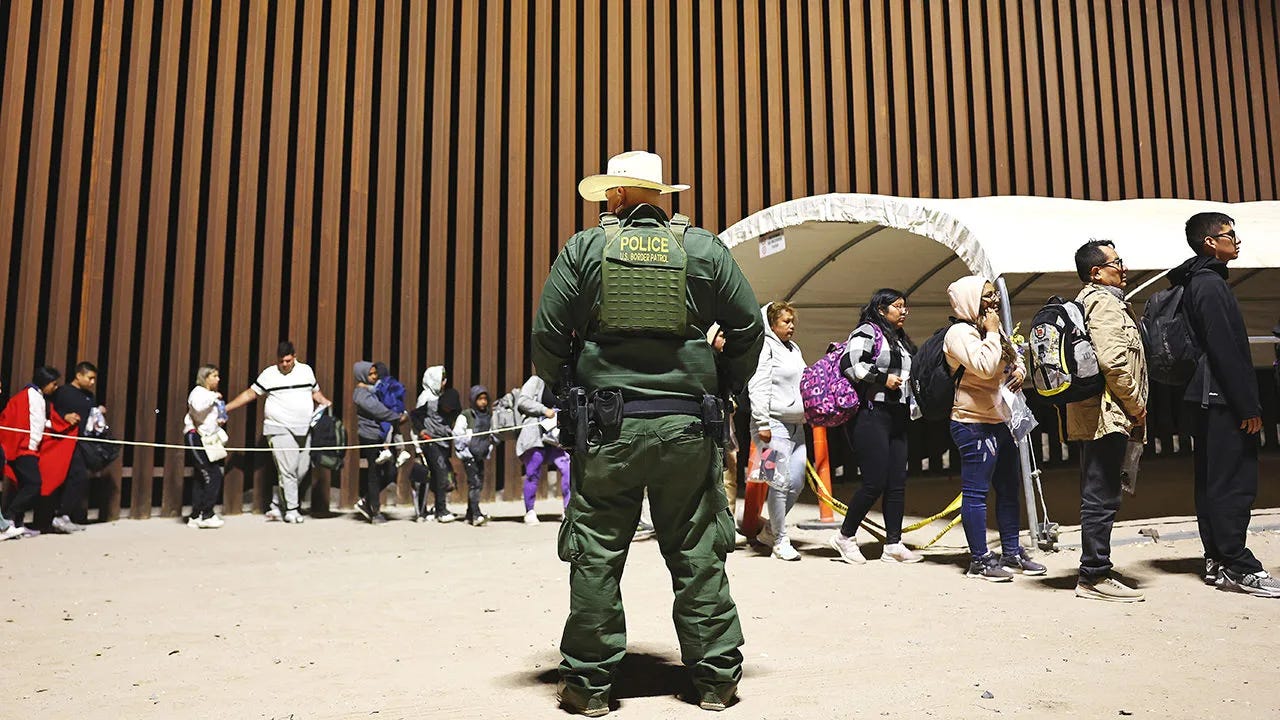
Then it’s over, and you’ve had your immigration news.
What you haven’t seen: The Department of Homeland Security’s Entry/Exit Overstay Report, published annually, documenting that 42% of the unauthorized population entered legally. The Transactional Records Access Clearinghouse data showing 3.4 million pending immigration court cases, with median wait times measured in years. The research by Douglas Massey and his colleagues demonstrating that border militarization converted circular migration into permanent settlement by making return trips lethally dangerous.
These aren’t secrets. They’re public documents, peer-reviewed research, government statistics. They’re just boring. They can’t be filmed. They don’t fit the threat frame. They require a viewer to sit still and read carefully.
I am no longer naive enough to see this as a failure of journalism. Instead, it seems more like a feature of the system.
Chomsky’s filters predict exactly this outcome. The story that serves ownership interests (simple, threat-based, requiring minimal investigation), that advertisers will sponsor (emotionally engaging, non-controversial with corporate partners), that official sources will feed you (pre-packaged press conferences at fences), that won’t generate flak from powerful interests (because it doesn’t examine how employer demand drives unauthorized immigration), and that maintains the enemy frame (dangerous outsiders trying to penetrate our defenses). That’s the story that fits within the Overton window.
The story that might actually explain why the queues keep growing: that story never clears the filters.
Interior enforcement works only if legal hiring channels function. If you audit employers and impose real penalties for hiring unauthorized workers, but legal temporary worker visas take six months to process and require expensive lawyers, you don’t eliminate the market for illegal labor. You just drive it further underground.
This is Sowell’s core insight about dispersed knowledge: the information needed to make the system work is held piecemeal by millions of individual actors (e.g., employers who need workers, migrants who need jobs, caseworkers processing applications). No central authority can know what they know. But policy succeeds only when it aligns incentives with reality.
So, here’s the thing: both parties understand this. Republican business donors understand it intimately because they’re the employers. Democratic immigration advocates understand it because they work with the affected populations. Congressional staffers have read the National Academies’ 500-page review showing small overall wage effects but concentrated distributional impacts on specific groups.
The knowledge exists. The mechanisms are understood. The trade-offs have been priced.
What’s missing isn’t information but the incentive(s) to act on it.
Because acting on it would require disappointing core constituencies. Republicans would have to tell restrictionist voters that real enforcement requires expanding legal immigration. Democrats would have to tell humanitarian advocates that functional asylum processing means faster deportations for those denied. Both would have to admit that enforcement and legal channels are complements, rather than alternatives.
The coalition math doesn’t work. So the fight continues, while ensuring status quo safety for those who are best placed to make the changes needed.
To be clear, this is not an exclusively American dynamic. I have lived in Australia for several years now, and the details differ slightly, but the kayfabe is alive and well here too.
Australia’s Operation Sovereign Borders stopped the boats. After 2013, maritime arrivals, which had dominated political coverage for years, dropped to nearly zero. Journalists, politicians, and activists had spent a decade fighting about maritime interdiction. Then it was over.
But the immigration debate didn’t end. It just shifted (briefly) until people realized the real integrity issue had always been visa over-stays, which are predominantly by air. As of mid-2024, there are roughly 75,000 unlawful non-citizens in Australia, mostly over-stayers. But over-stayers don’t photograph well.
So the political debate returned to the boats. Even though there are no boats. Because the debate isn’t about the boats. It’s about having something to fight about.
The dynamic is revealing: maritime arrivals were never the major compliance issue, but they were the political issue, which meant they became the budget issue, which meant they became the operational priority. Hundreds of millions spent on a problem that was always smaller than the problem that couldn’t get funding.
While senators debate border security, the H-1B visa program, which determines how many skilled foreign workers can be legally employed in the United States, is administered by the United States Citizenship and Immigration Services through regulations, guidance documents, and processing priorities set by career officials you’ve never heard of.
Employer verification? Mostly governed by an alphabet soup of regulatory frameworks (E-Verify, I-9 audits, worksite enforcement priorities) shaped by Department of Homeland Security policy guidance, inter-agency working groups, and quiet negotiations with industry associations.
Court backlogs? Determined by budget allocations in appropriations bills that get minimal coverage, judicial hiring processes buried in executive branch personnel systems, and case management procedures set by the Executive Office for Immigration Review.
These are the mechanisms that actually determine who stays, who goes, and who can work legally. They’re administered by permanent bureaucrats, influenced by industry groups and advocacy organizations through comment processes and informal consultation, and almost completely invisible to public debate.
The elected officials hold press conferences at fences. The unelected officials move the numbers.
And, here’s the thing: this isn’t unique to immigration. Pick any “hot-button issue” that dominates election coverage:
Healthcare: Political debate centers on “Medicare for All” versus “market solutions.” Meanwhile, the Centers for Medicare & Medicaid Services sets reimbursement rates through the Physician Fee Schedule, which shapes the entire architecture of American medicine. The decisions are made by officials implementing the Inpatient Prospective Payment System, the Hospital Readmissions Reduction Program, and dozens of other regulatory frameworks that receive zero election coverage.
Financial regulation: Politicians debate whether to “break up the banks” or “cut red tape.” The actual regulatory architecture (capital requirements, liquidity ratios, stress test parameters, resolution procedures) is set by the Federal Reserve, the Office of the Comptroller of the Currency, and the Financial Stability Oversight Council through processes that make immigration court backlogs look transparent.
Education: Campaigns fight about school choice and federal funding. The actual governance happens through state education agencies, accreditation bodies, and Title IX guidance documents that reshape institutional behavior without anyone voting.
Environmental policy: Electoral politics offers “Green New Deal” versus “drill baby drill.” Climate policy is actually made through EPA guidance documents, fuel efficiency standards set by the National Highway Traffic Safety Administration, and grid reliability rules from the Federal Energy Regulatory Commission.
The pattern repeats. The electoral fight is about symbols, slogans, and identity. The actual policy is about regulatory guidance, inter-agency coordination, and administrative capacity: domains where elected officials have limited visibility and even less control.
Here’s the truly elegant part of the design: by making the symbolic fight all-consuming, the system ensures that motivated reformers exhaust themselves on electoral politics.
The most energetic, capable people who might otherwise challenge power structures instead spend years phone-banking, canvassing, organizing primary challenges, and arguing on social media about which candidate truly represents their values. They pour time, money, and emotional energy into campaigns. They experience their wins and losses as deeply meaningful. They form identities around their political engagement.
And the bureaucracy carries on, unchanged.
Consider the activist who spends thousands of hours organizing for immigration reform. She learns the rhetoric, attends the rallies, pressures her representatives, maybe even helps flip a district. She’s done real political work. She’s changed the composition of Congress.
Has she changed the deportation queues? Has she altered the H-1B processing times? Has she shifted the resource allocation between overstay tracking and border enforcement? Has she influenced the inter-agency working group that determines employer verification priorities?
Probably not. Because those aren’t sites of electoral politics. They’re sites of administrative governance, which is a different game, with different players, operating on different timelines with different accountability mechanisms.
The elegance of the system is that everyone can be right. The activist can correctly say she’s fighting for change. The politician can correctly say he’s representing his constituents. The bureaucrat can correctly say she’s implementing the law as written. And nothing fundamental changes because fundamental change would require coordination across domains that are deliberately siloed.
Chomsky would call it manufacturing consent (creating the appearance of democratic participation while ensuring that participation stays within acceptable boundaries). The filters shape what you see but also what you imagine is possible. If immigration is always framed as border-versus-amnesty, you never ask about visa processing capacity or employer verification infrastructure.
Sowell would describe it as dispersed knowledge meeting concentrated power (i.e., the people with information: employers, migrants, caseworkers, can’t set policy, and the people setting policy can’t access the information). The result is permanent dysfunction that serves certain interests precisely because it is dysfunctional. A working system would eliminate the contractor revenue, the advocacy budgets, the political fundraising hooks, and the media content pipeline.
Neither man would go so far as to call it conspiracy, but both would call it predictable.
And both would note: the people maintaining kayfabe benefit from maintaining kayfabe. Wrestlers don’t break character because breaking character ends their career. Politicians don’t acknowledge the administrative state runs the show because acknowledging it reveals their own marginality.
If you wanted to know whether immigration policy was actually changing, as opposed to immigration politics changing, you’d track five numbers:
Median time from filing to final decision for asylum claims.
Overstay resolution rate at twelve and twenty-four months.
Unauthorized population trend with confidence bands.
Wage and fiscal distribution by skill level and cohort.
Deaths in transit and average smuggler fees.
These numbers exist. They’re published by agencies and research centers. They move slowly, when they move at all, and their movement has little correlation with election outcomes.
The queue has grown under Democratic and Republican administrations. Court backlogs have expanded regardless of which party controls Congress. Visa overstays have remained the majority of new unauthorized immigration through multiple presidential transitions.
These numbers remain largely unchanged because they reflect administrative capacity, regulatory architecture, and institutional incentives: none of which change when you change the talking heads.
Let me clear: Immigration is useful as an example precisely because it’s currently in the news cycle. But the dynamic is general.
Take gun policy. The electoral fight is about “Second Amendment rights” versus “common-sense regulation.” The actual policy happens in ATF guidance documents about pistol braces, state-level concealed carry reciprocity agreements, NICS background check processing priorities, and federal grant programs that shape local law enforcement behavior. These are administrative, rather than legislative, questions, and they change (when they change) through regulatory processes that elections barely touch.
Or abortion policy, now that it’s returned to states. The fight is about personhood and bodily autonomy. The reality is about medical licensing boards, pharmacy regulations, insurance coverage decisions, and county-level enforcement priorities. Political engagement focuses on the symbolic fight. Practical outcomes emerge from bureaucratic processes.
Or drug policy, where electoral politics offers the “war on drugs” versus “decriminalization,” while the actual policy is made through DEA scheduling decisions, FDA approval processes, state medical marijuana implementation, prosecutorial discretion in U.S. Attorneys’ offices, and CDC guidance on opioid prescribing.
The pattern: electoral politics provides the narrative frame and identity formation. Administrative governance provides the actual policy outcomes. The two domains are only loosely coupled. And everyone involved (politicians, activists, journalists, bureaucrats) has an incentive to maintain the illusion that the story you’re following is the story that matters.
As of late 2025, ICE raids are making headlines. Deportation flights are up. The administration announces record enforcement numbers. Immigration is back at the top of the news cycle, and this time it looks different. The Trump administration appears to be doing exactly what it promised: aggressive interior enforcement, expanded detention, accelerated removals.
Does this break the kayfabe? Does it prove that elections actually do determine immigration policy?
Not quite. And perhaps no president in American history has been better positioned to understand the distinction between performance and mechanism than Donald Trump, because he’s literally performed in the ring.
Trump’s relationship with professional wrestling spans decades. He hosted WrestleMania IV and V at Trump Plaza in the late 1980s. In 2007, he headlined WrestleMania 23 in the “Battle of the Billionaires” against WWE owner Vince McMahon, where the loser would have his head shaved. Trump’s representative won, and Trump participated in shaving McMahon bald in front of a sold-out crowd. The event broke WWE pay-per-view records. In 2009, he appeared in a story line where he “bought” WWE Raw from McMahon. In 2013, he was inducted into the WWE Hall of Fame—the first Hall of Famer to later become president.
Here’s the revealing part: according to Triple H, when a WWE story line in 2007 showed McMahon’s limousine exploding, Trump called McMahon genuinely concerned, asking “Did something happen to Vince?” This was just months after Trump had participated in WrestleMania, fully aware of wrestling’s theatrical nature. Trump understood kayfabe intellectually but still responded to its emotional pull.
This makes him the perfect case study. If anyone knows that politics is performance, it’s the man who literally performed staged combat on pay-per-view. And yet what’s he doing? Exactly what kayfabe predicts: spectacular, highly visible enforcement that photographs beautifully and activates both bases, while leaving the underlying administrative infrastructure largely untouched.
Look closer at what’s changed and what hasn’t.
What’s changed: Enforcement priorities, prosecutorial discretion, detention capacity, and the willingness to conduct visible raids that generate media coverage. These are all executive branch decisions, administrative choices made by political appointees directing career staff. They’re real changes with real human consequences.
What hasn’t changed: Court capacity remains inadequate. The backlog still exceeds 3 million cases. Visa processing times haven’t improved. Overstay tracking infrastructure remains underdeveloped. The H-1B program operates under the same basic framework. Employer verification is marginally more enforced but still far from systematic. And crucially, the legal immigration system still lacks the capacity to provide functional alternatives to irregular migration.
In other words, Trump has turned the enforcement dial up within the existing administrative infrastructure. But the infrastructure itself (the mechanisms that determine whether enforcement is sustainable, whether it addresses root causes, whether it creates humanitarian crises, and whether it actually reduces unauthorized immigration over time) remains largely unchanged.
This is actually the most important test of the kayfabe hypothesis. Because what Trump demonstrates is that elections can change policy, but only along the dimensions where presidential authority operates through administrative discretion. He can tell ICE to prioritize different targets. He can expand detention capacity within budget constraints. He can change the tone and visibility of enforcement.
What he can’t do through executive action alone: expand court capacity significantly (requires appropriations), create new visa categories (requires legislation), mandate universal employer verification (requires legislation), or build the compliance infrastructure that would make enforcement sustainable rather than spectacular.
And here’s the deeper pattern: highly visible enforcement that generates constant media coverage is, in many ways, the perfect kayfabe. It gives the appearance of decisive action. It activates both supporters (who see strength) and opponents (who see cruelty). It dominates the news cycle. It consumes activist bandwidth on both sides.
But does it solve the underlying problem? Does it reduce the economic incentives that drive unauthorized immigration? Does it create legal alternatives that match labor demand? Does it address the asylum backlog in ways that distinguish legitimate claims from non-legitimate ones efficiently?
Or does it generate spectacular footage while the structural problems remain and possibly worsen as resources flow toward visible enforcement and away from administrative capacity building?
The kayfabe hypothesis doesn’t predict that nothing ever changes. It predicts that what changes is what makes good television, while what doesn’t change is what requires boring institutional work. Trump’s enforcement surge is spectacular. It’s photographable. It activates partisan identities. It gives both sides something to fight about.
It’s perfect kayfabe.
Professional wrestling faces a paradox: everyone knows it’s scripted, but you can’t acknowledge it’s scripted, because acknowledging it ruins the suspension of disbelief that makes it emotionally engaging. The wrestlers stay in character even in interviews. The announcers sell the drama as real. The audience agrees to play along.
What happens if someone breaks kayfabe? In wrestling, sometimes nothing: the crowd writes it off as part of a new storyline. The ICE raids and Trump’s enforcement surge could be seen this way: not as breaking the kayfabe, but as a new chapter in it. The performance has gotten more intense, the stakes feel higher, but the basic structure remains. We’re still watching enforcement theater while the administrative machinery that determines long-term outcomes grinds on largely unchanged.
But occasionally, someone breaks kayfabe so thoroughly that the illusion can’t be reconstructed. The curtain gets pulled back far enough that continuing the charade becomes absurd.
This might be one of those moments, though perhaps not in the way Trump’s supporters or opponents imagine.
Not because any individual revelation is damning (every fact cited here is publicly available, extensively documented, and basically understood by anyone who’s worked in immigration policy). But because the gap between the electoral theater and the administrative reality has grown so large that maintaining the illusion requires increasingly strenuous denial.
Trump’s enforcement surge makes the gap visible in a new way. It demonstrates that yes, elections can change policy along certain dimensions (the visible, the spectacular, the photographable). But it simultaneously reveals what elections can’t change: the boring institutional infrastructure that determines whether those changes are sustainable, effective, or humane.
Deportation officers have been managing their queues through multiple election cycles, presidential transitions, and countless congressional speeches about immigration reform. The queues have grown by thousands of names. Now, under Trump, removal numbers are up, but the mechanisms that determine queue size (court capacity, enforcement resources, legal processing times, employer verification priorities) have remained essentially unchanged. You can clear more cases through aggressive enforcement, but if the inflow mechanisms and legal alternatives remain dysfunctional, you’re just changing the speed of the revolving door.
What would actually reduce the queues is straightforward. Hire more judges. Fund compliance tracking. Pair employer verification with functional legal hiring channels. Adjust visa quotas to labor demand. Price the trade-offs. Measure the outcomes.
None of this is mysterious. None of it is partisan. All of it is boring.
In short, the system isn’t broken. It’s working exactly as designed. The design is just stupid. Or maybe the design is brilliant. Depends on whether you think it’s supposed to solve the problem or sustain the fight.
Imagine immigration policy built around mechanisms instead of theater:
Statutory twelve-month cap on asylum processing, with published monthly throughput data.
Temporary visa quotas indexed to documented labor shortages, adjusting automatically.
Universal employer verification paired with same-day provisional work authorization for legal applicants.
Exit tracking with compliance nudges and proportionate penalties.
Border enforcement evaluated against circularity metrics (i.e., are return trips becoming safer or more dangerous?)
Transparency dashboards showing court backlogs, overstay trends, and unauthorized population bands.
This isn’t really that radical. In fact, most of it could be implemented through regulatory reform, appropriations adjustments, and agency coordination (i.e., no legislation required).
It won’t happen through electoral politics, because electoral politics needs the fight.
But it could happen if enough people stopped watching the show and started tracking the relevant data. If activists pressured administrative agencies instead of just elected officials. If journalists covered regulatory comment periods instead of just campaign rallies. If voters judged their representatives by changes in the five-number scorecard above instead of by speeches about border security.
The system maintains itself through attention distribution. Your attention goes to the fight. The fight is designed to consume your attention. While you’re watching the fight, the actual governance happens elsewhere.
Chomsky spent his career pointing at the filters. Sowell spent his career pointing at the trade-offs. Both were pointing at the same gap: between the story you’re told and the backstage mechanisms that actually matter.
And recognizing that, really recognizing it, not as conspiracy theory but as institutional logic, might be the first step toward something other than endless kayfabe.
The wrestler knows he’s going to lose. But he goes through the ropes anyway, plays his part, takes his fall. Because the alternative is walking away from the only game in town.
Political activists face a similar choice. You can recognize that electoral politics is largely theater while administrative governance does the real work. But then what? Walk away? Or keep playing the game because it’s the only participation mechanism you’re offered?
The answer might be neither. The answer might be: play both games. Show up for elections, but stop pretending elections are where policy happens. Pressure your representative, but pressure your local USCIS field office too. Donate to campaigns, but also file regulatory comments. Organize rallies, but also attend agency listening sessions.
Treat electoral politics as the opening act, rather than the main event.
Treat the administrative state, that diffuse, unelected, largely invisible network of agencies, officials, and intergovernmental coordinating bodies, as the site where power actually operates.
And recognize that the system runs on your wrongly allocated attention. Every hour you spend arguing about border rhetoric is an hour you’re not spending examining visa processing backlogs. Every dollar you give to a campaign is a dollar you’re not using to hire a lawyer to challenge an unjust guidance document. Every ounce of outrage you spend on a senator’s speech is outrage you’re not directing at the bureaucrat who sets the policy.
The kayfabe works because you agree to tune in, to watch, and to cheer or boo at the appropriate times.
In deportation offices across the country, the queues keep growing. Tomorrow there will be more names. The senators will give more speeches. The cameras will film more fences.
The show must go on. But you don’t have to keep watching.