Try it out here: mini.dolphinmade.com
Every website you visit already exists. Someone built it and uploaded it, and when you type a URL, you retrieve their creation. This is so obvious it feels stupid to say, but it is a fundamental constraint on what the internet can be. What if websites didn't need to pre-exist your visit? What if typing a URL transported you to the internet where that page makes sense?
This is the Internet of Babel.
I.
Start with how the web actually works. When you connect to google.com, your browser receives two things. First, state: essentially a fancy image described in HTML. The search box, the logo, the layout. Second, code: a JavaScript file that runs on your machine and defines what happens when you interact with the page. Click this button, trigger this animation. Submit this form, call this server.
This two-part structure (state plus behavior) is how every interactive website functions. The behavior has to be written in advance. Someone at Google decided what clicking the search button should do, wrote the code, and now every user on Earth triggers that same pre-defined response.
What if we removed the second part entirely?
II.
Imagine a web where pages only have state. Pure description. When you click a button, your browser sends a request that says: "The user clicked the button labeled 'Search.' The button's description says it should submit a query. Regenerate the entire page accordingly."
The new page didn't exist until you summon it into being.
Since every page is pure state, we can snapshot back in time to any moment. Start with a prompt. Each interaction branches into a new scene, and each scene is a snapshot we save and publish to the gallery. The gallery is a massive graph: every scene anyone has ever discovered, connected by the clicks that created them.
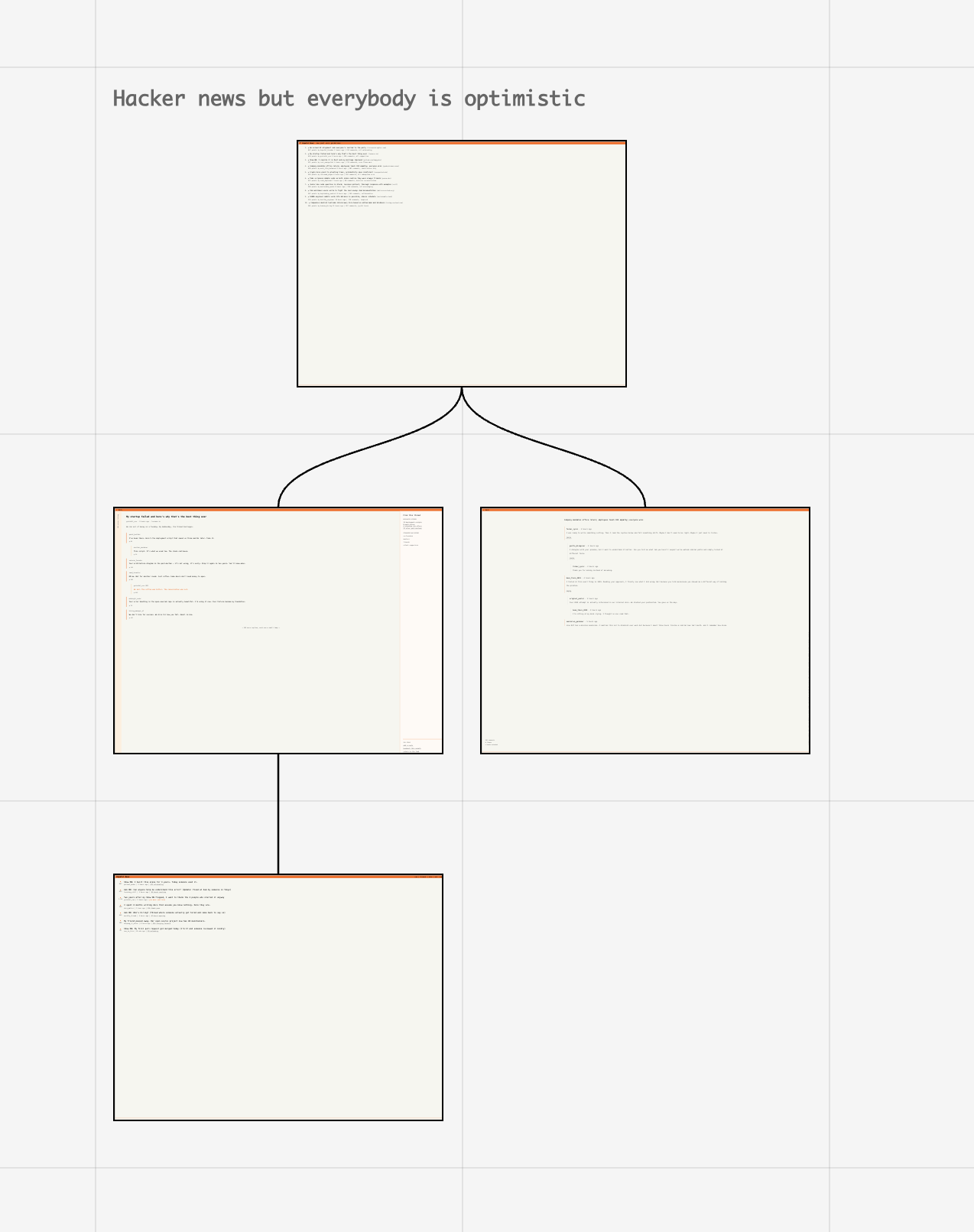
The name comes from Borges. His Library of Babel contains every possible book with every arrangement of letters that could exist, including the vast majority that are pure gibberish, and somewhere in the stacks, every true sentence that will ever be written. The Internet of Babel works the same way. It contains every possible website. Most are nonsense. But navigate correctly, and you find the one you need.
Try it out here: mini.dolphinmade.com