Hey everyone,
We’ve been heads down launching our new State of AI in Design report, and we’re back with more designer founder stories! If you haven’t had a chance to check out the report yet, it’s packed with insights on how design teams are navigating the changes brought on by AI—from where it’s actually being adopted in workflows to where current design tools are falling short, plus tactics to help designers adapt without getting left behind. Let us know what you think.
We’d also love to hear from you: If you're a designer founder or hoping to become one, what topics would you like us to hit on? What do you wish you knew about starting a company? Founder-led sales (which Sam touches on below), finding a co-founder, figuring out what to build? Drop us a note in the comments.
Thanks,
Ben
View the State of AI in Design report
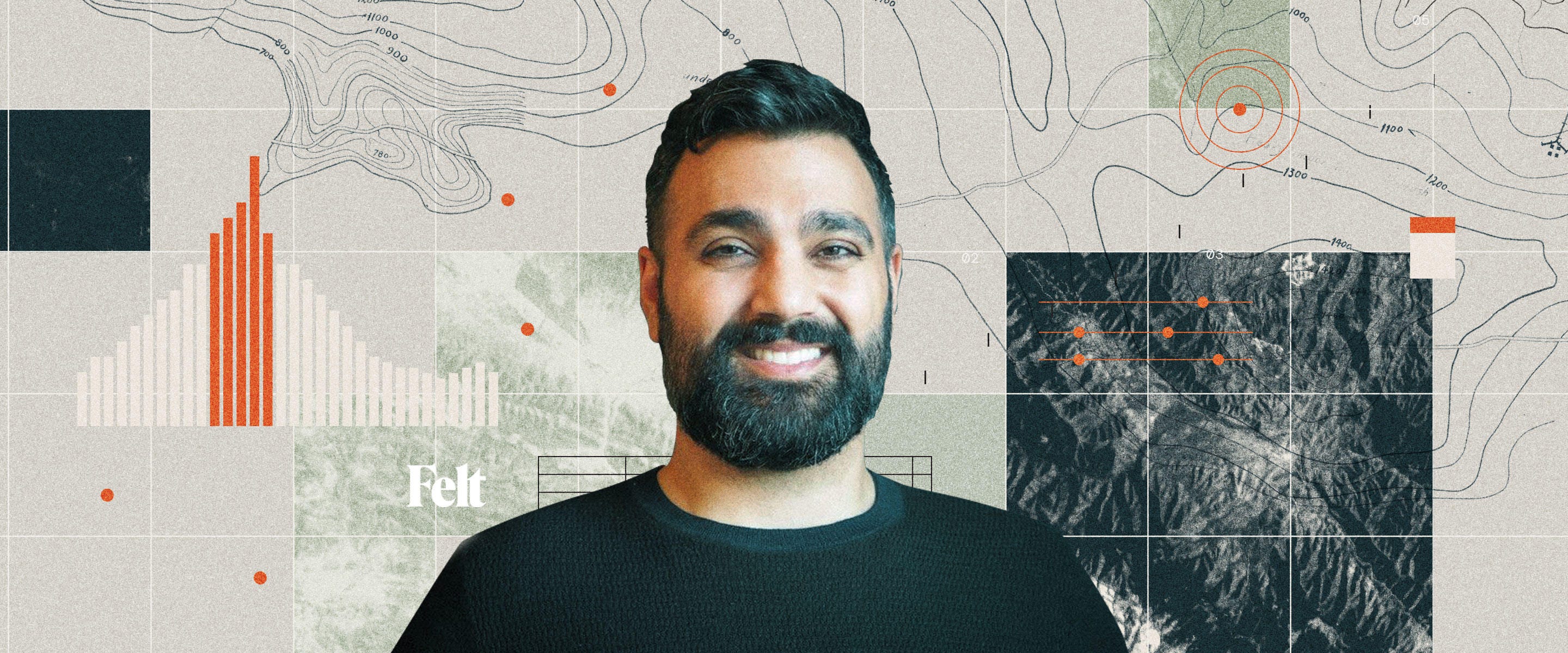
As part of our ongoing Designer Founders series highlighting designers who’ve built companies from the ground up, like Robert Yuen and Chris Kalani, we spoke with Sam Hashemi, co-founder and CEO of Felt.
Before Felt, Sam built Remix, a planning platform used by city agencies to design smarter public transportation systems. The product scaled to over 350 cities in 17 countries before being acquired by Via for $100M.
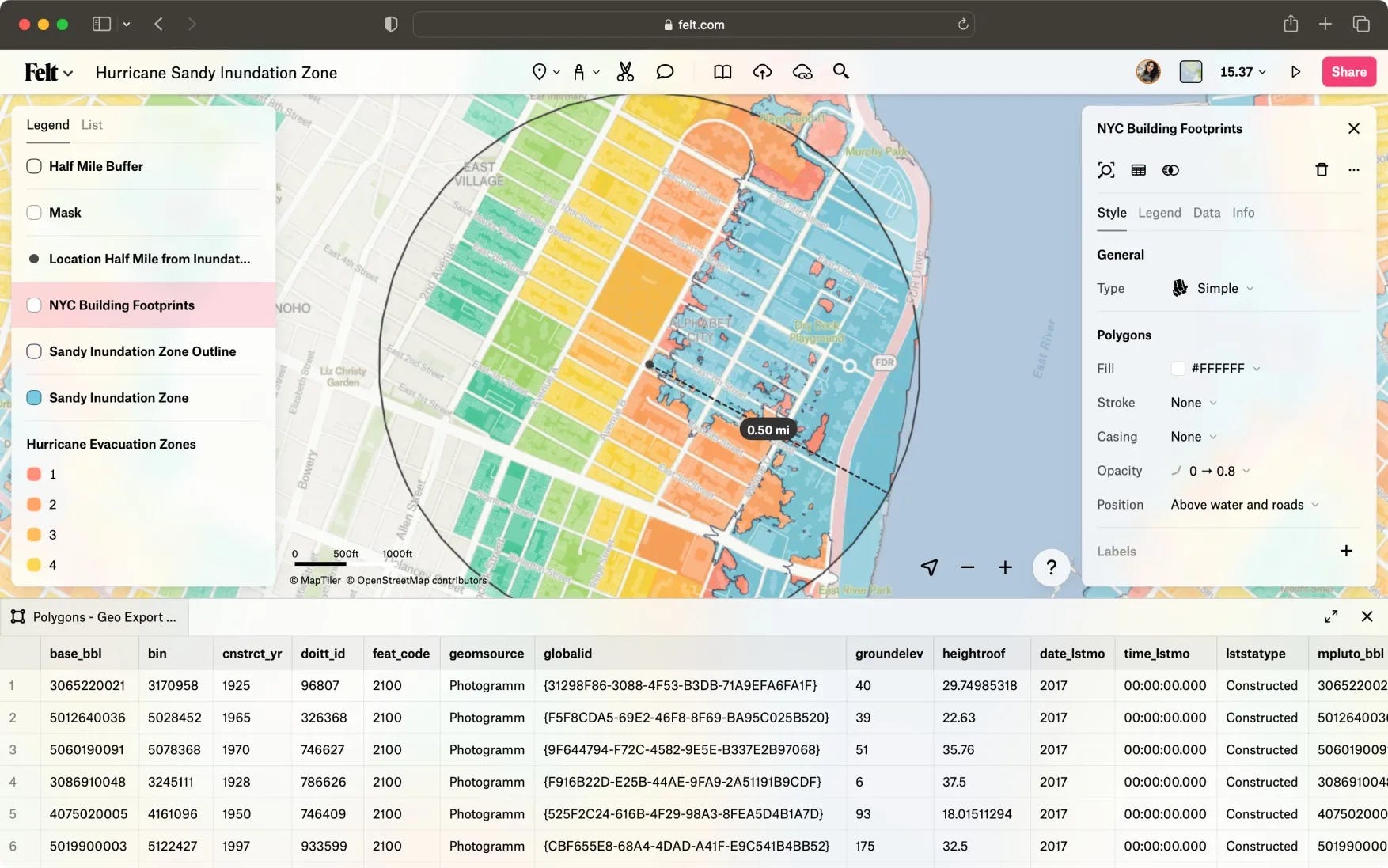
Now, with Felt, Sam is tackling a new challenge: making map creation as intuitive and collaborative as design tools like Figma. Backed by a $15M Series A that included Designer Fund, Felt is gaining traction as the go-to mapping platform for modern teams.
Lessons as a two-time founder
The right balance of listening to your vision versus customer feedback
Rethinking hiring and interview processes
What happens when startups go bold with their brand
The importance of finding your “CEO community”
Why more designers should close the loop with sales
I wasn’t planning to start another company right away. Remix had been a long journey, and after the acquisition, I thought I might take a break. But there was this lingering frustration I couldn’t shake. Every time I needed to create a map—to share information, communicate something, collaborate—it felt unnecessarily hard. The tools weren’t built for how people actually work today.
Maps are such a powerful medium. They hold so much information and context, but most tools require a level of technical knowledge that cuts out a huge number of people who could benefit from them. I started wondering why maps weren’t more like other creative tools. Why couldn’t they be collaborative and intuitive, like Figma or Notion?
That question stuck with me. The more I thought about it, the more it felt like a problem worth solving. That’s really what led to Felt. It wasn’t about jumping back into building just for the sake of it. It was about scratching a very specific itch that I hadn’t seen anyone else tackle in the right way.
How to hire people. When I was building Felt, I was religious about doing a long interview process. I was really trying to suss out every candidate, and it was a four or five hour deal every time. I found, in time, that that was not particularly predictive. A candidate could do really well in the interview, but it didn’t necessarily mean they would do great at the company, and vice versa.
At Felt, we’ve inverted the process. It’s a much lower interview bar. We start with a one or two hour interview. Then we try to get people in for a two week trial—actually join the business and work for a week or two.
Not everyone can do it. It depends on your lifestyle, but I think that more people post-COVID are in these much more flexible situations and are willing to try it. But it gets us much more high quality folks who are culturally-aligned, working-aligned, style-aligned. It's been a complete shift in our hiring approach.
Interviews are just not very predictive. So you just have to get in and do the job. I'm a big advocate now of having some kind of work trial. It's much more informative than an interview.
Earlier in my career, I thought the goal was to design the best possible product from a craft perspective. Every detail mattered, and I wanted everything to be perfect. That mindset helped me develop high standards, but it also made me more focused on execution than outcomes.
Becoming a founder forced me to think differently. Suddenly, design wasn’t just about what something looked or felt like. It was about how well it worked in the context of the business, how quickly we could ship, and whether users were actually getting value from it. Trade-offs became a big part of the job.
That shift also changed how I lead. For me, design shows up in every part of the company. It’s not just in the product—it’s in how we structure meetings, write documentation, and communicate as a team. I still spend most of my Wednesdays on design reviews, which helps me stay close to the product and show the team that quality matters.
But I also try to stay pragmatic. Design is only as important as the problem it solves. If it’s not the differentiator in your market, it might make more sense to lead with something else. At Felt, it is the differentiator, so we invest heavily in it. That’s a decision every founder has to make based on what kind of company they’re building.
Finding the right places to really double down on your vision, and finding the right places to listen to customers. At Remix, I was kind of always in between—trying to integrate them and getting muddled in the process.
Now, I’ve tried to be clear about what I’m doing. There are parts of the work where I’ve declared, this is my vision and I’m just going to do it. This is where the product is going, and I see it coming together even if our customers can't see it yet. Whereas in other areas, I’m very open to what customers are saying and I allow myself to be surprised by what they say and do and care about.
This approach gives you the best of both worlds, instead of having to water down your vision, you know? Steel your vision and really push hard on it. Then be open to everything else—customers, and metrics. Because customers will always tell you they want a faster horse.
I should have talked more about pricing. Because the question of “does this solve your problem?” that doesn't necessarily answer how big a problem it is for your customer.
Talk early and often about pricing. I’ve even had to continue learning that here at Felt. There’s a big difference between, is this a $5,000 problem for you, a $10,000, or a $100,000 problem for you?
Talking about pricing is not a design skill. It’s something I had to learn, and it’s actually pretty key when you’re talking about all the other problems you’re solving.
Brand can be particularly powerful. We had a good brand at Remix, but I think we could have pushed the boundaries much more. We’ve tried to do that at Felt because brand is a way to stand out as an early stage business.
Be really bold in your brand—especially the early days. I think it's unlikely to harm you and it has a lot of potential upside to just be a little bit crazier on the brand front. You get good talent. You'll get more attention to your product. You'll eventually distill the brand down to its core and mature it as you grow the business.
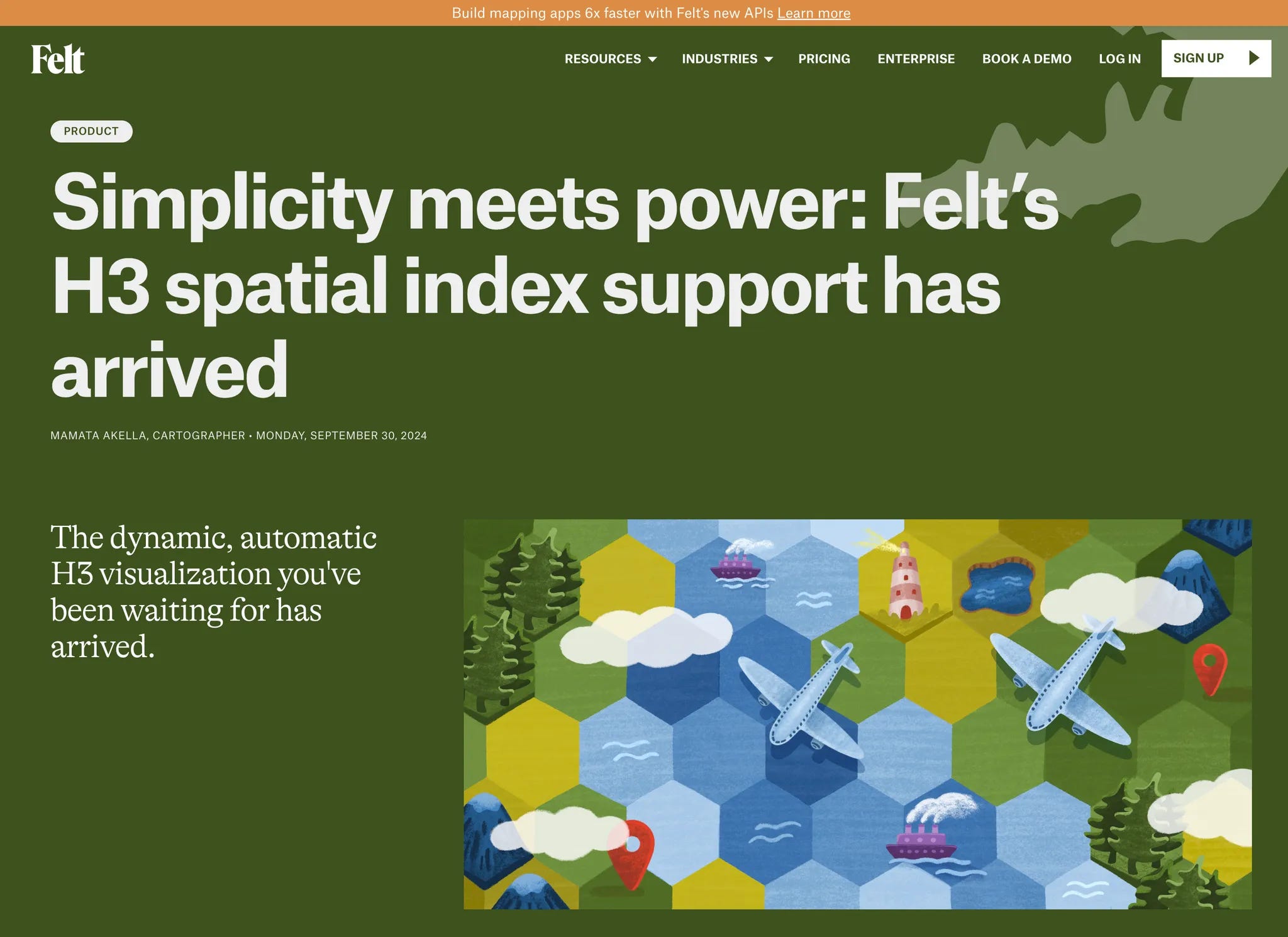
Design is not just in the product. It’s in everything. It's the sales process. It's in how you talk about the product. It's in how you hire. It's in the culture.
You also have to make sure design is an important differentiating value in the market that you’re going after. If it's actually not a differentiating value, then it’s better to differentiate in your sales or engineering, or something else.
At Felt, we’re building a creative tool that’s like using Figma for mapping. So the design details, the care and craft that goes into it, are a highly differentiating factor. So even just focusing my time on hiring really high quality designers that can continue to execute at that level of design means that the business succeeds.
I still spend more time than probably the average CEO does on design. I spend most of my Wednesdays on design reviews.
How I did this at Remix and how I’m doing it at Felt are a little bit different. The first time, I was more focused on getting a department-specific adviser. So, a marketing person who I trusted and could have a meeting with every week to provide some validation if I was on the right track and thinking about marketing in the right way.
This time, I’m more focused on building a CEO community and getting a pulse on things. For example, what shifts or trends am I missing? If designers are all of a sudden using AI to do their work, I don’t want to miss that trend. I’m currently part of two different CEO groups, and we meet once a month and talk through what's going on.
Getting a coach when I was a first-time founder was really helpful, too. Once we scale past the size of my experience at Felt, I think that getting a coach again will be really useful.
If you want to be a designer founder, it’s going to be a big uphill battle—but it's really satisfying on the other end. You come away with superpowers. You can build products you've only dreamed about because you have a whole team aligning around your vision.
As an early designer, the part that excited and frustrated me the most about my work was that I had a vision, but that I couldn't quite pull it off with just myself. As a CEO, you have a huge team to help you achieve your vision. It's kind of like the dream of a designer, I think, that you can dream the world and then, faster than you expect, it comes to life. If you're willing to take that uphill battle, there's a big reward at the end.
This is going to be a weird answer, but I think if we got more designers to close a deal, they'd be more excited. Not only did you make the thing, but you got someone to pay you money for it and get excited about it. It closes the loop. I had this experience as an intern at Salesforce. When I started joining the sales calls and seeing how my designs led to hundreds of thousands of dollars in sales, it completed the loop for me. It’s really energizing.
I think if we get designers to be more involved in the sales process, more of them will want to own the whole thing and be more encouraged to jump into the founder journey.
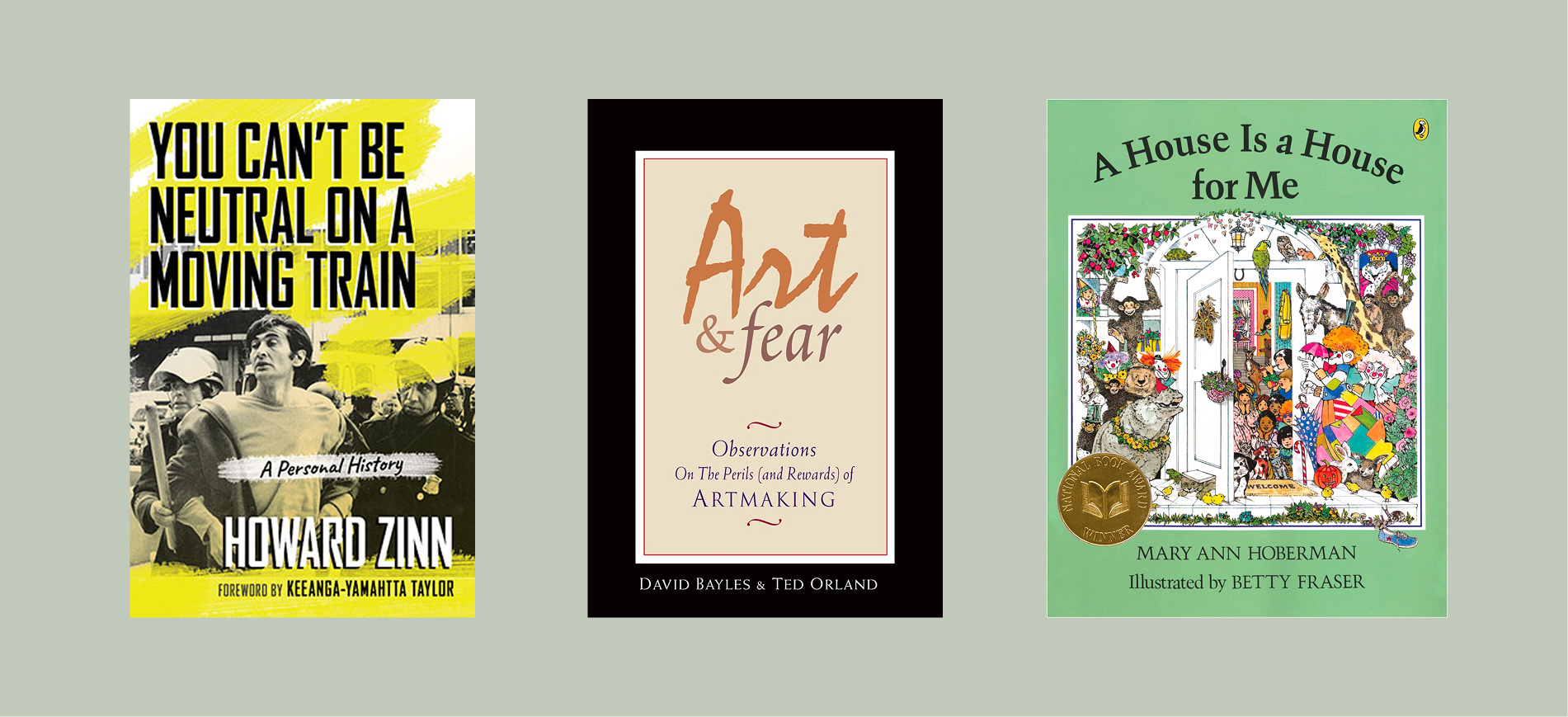
You Can't Be Neutral on a Moving Train by Howard Zinn
Art & Fear by David Bayles and Ted Orland
A House Is a House for Me by Mary Ann Hoberman

Design your own hiring process. What works for another company might not work for yours. Don’t be afraid to try a new format, like Sam did, with asking candidates to join the team for a week or two, to see how they work.
Get clear on your vision. Customers can’t always imagine what you’re building. Be clear on when you’re following your vision—and when you’re incorporating customer feedback.
Be bold with your brand. An eye-catching brand can help your startup stand out, stay top of mind with customers, and even attract talent. As Sam advises, you can always refine the brand as your company grows.
Get comfortable with talking about pricing. Sam says he is still learning how to drill down on what customers are willing to pay for a solution. It isn’t something designers are trained on—but it impacts everything they build.
Find your support system. As a second-time founder, Sam has found a “CEO community” he meets with monthly to keep abreast of trends, so that he can continue to grow as a leader.
Is design actually your differentiator? Be honest about the role design plays in your product—if design isn’t a differentiator, your design skills won’t be much of a superpower. If it is, make sure to invest. Sam dedicates an entire day each week to design reviews.