The Streisand effect is the dynamic where you try & hide a piece of information, and the action of hiding it is what itself causes it to become more widely known1.
The “Streisand Deflect” is when, instead of hiding it and leaving an obvious gap, you add something new that looks similar enough to cover up the original.
The example Urban Dictionary gives is Beyonce releasing an album called “Bodyguard”, so that when you google “Beyonce bodyguard” it pulls up the music album, instead of articles about the affair with her bodyguard.
The “Streisand Deflect” is an example of the broader category of “epistemic noise”. Epistemic noise is any true information added to the system that makes it harder for you to find the truth that you seek.
The Streisand Deflect doesn’t seem too bad because if you keep digging, you’ll find the information you seek. But it works to the extent that people have limited resources to seek truth. If the people you care about censoring it from will not click past the first page of google results, then this strategy is successful2.
I’m writing about this today to celebrate this as a new word that did not exist a week ago. At the time of writing, if you google “Streisand Deflect” you’ll find three sources:
A tweet where Guy declares he will adopt this term
A reddit post about it (referencing the same tweet that Guy found)
The Urban Dictionary definition (which Guy submitted after a twitter discussion)
When I first started learning about all this stuff, I envisioned a research institute that looks for semantic gaps, coins a word for it, then releases it into the wild and see if it catches. This is my first time witnessing the creation of a word from scratch and being around to document it.
New words are coined all the time, and people like Adam Aleksic and Gretchen McCulloch regularly document this. But I think this is unique because it was “artificially engineered” with a precise intention.
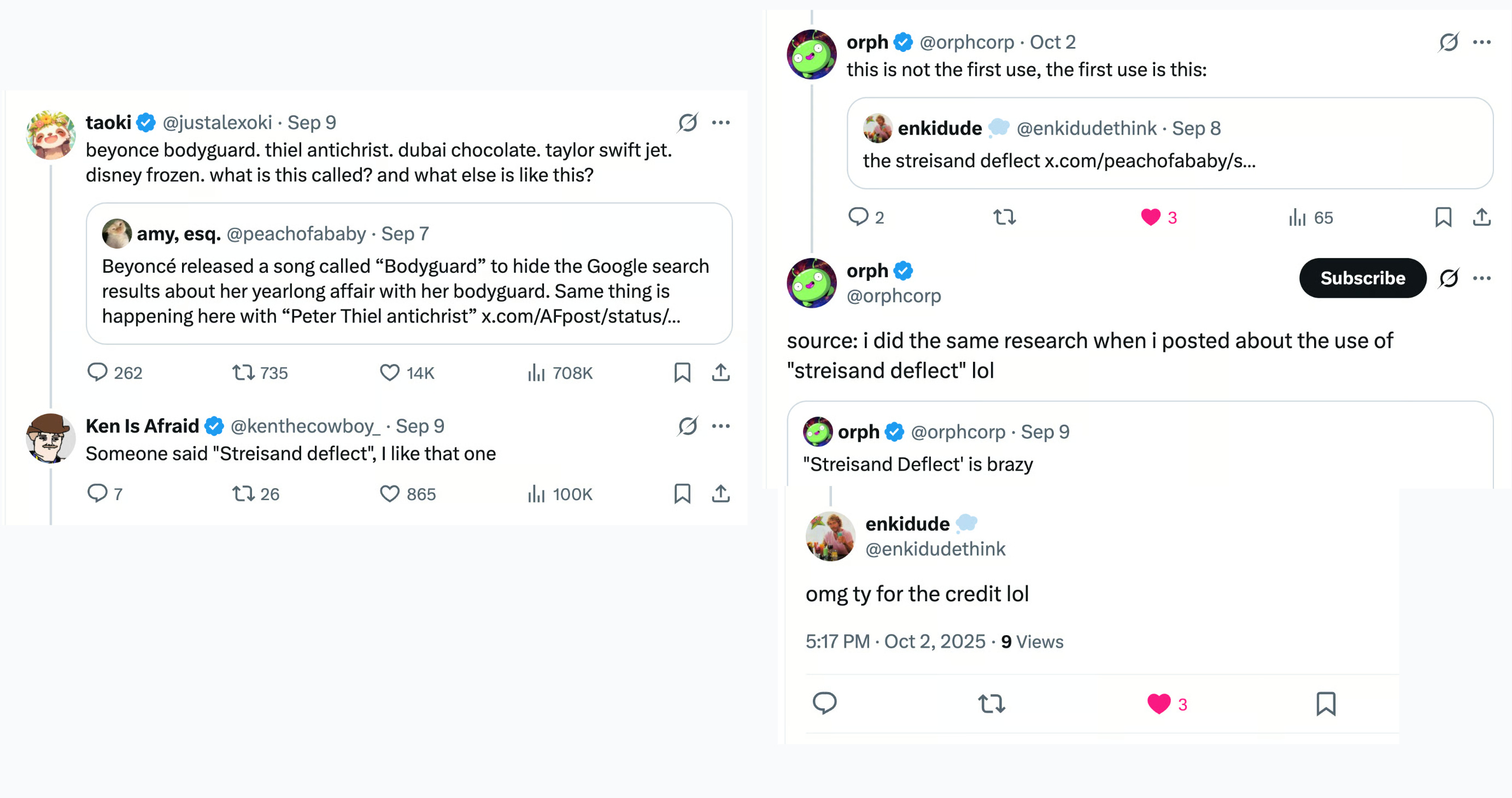
taoki asks “what is the name of this concept”, which goes viral & introduces this concept to a lot of people
kenthecowboy surfaces / endorses the “deflect” term
I get tagged on it & weigh in. I surface a competing term that I think would also be a good candidate: “Streisand Washing”, suggested by way_opener
orphcorp & nosilverv each independently research the origin of the term and converge on “deflect”. The very first use of it is found to be by enkidude
The “precise intention” behind this word is to improve the cognitive immune system for our society. Tactics that are used to hide or manipulate information lose effectiveness when we become aware of how they work. Naming it erodes its power.
Now that we have a word for one such tactic, we can monitor it over the coming weeks/months to see if it produces the desired effect. You can watch this in your own life & in your own communities, see if you spot it. See if it helps you find truth.
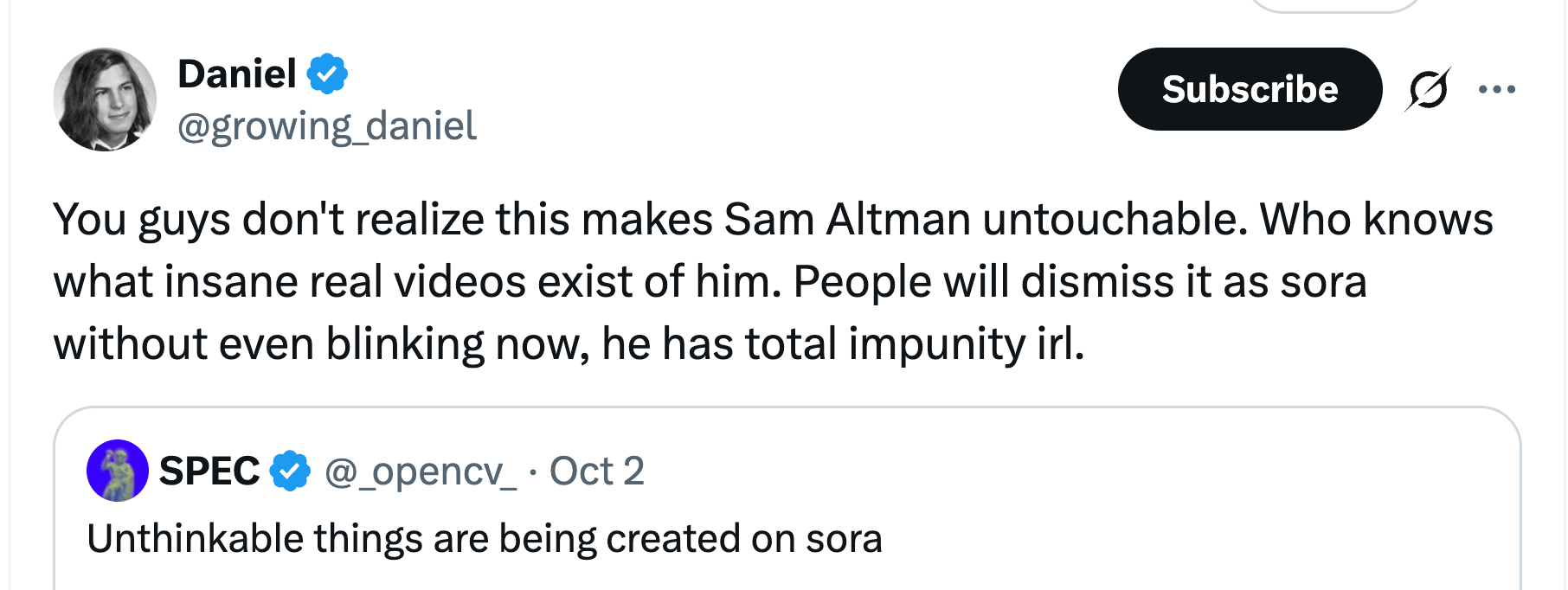
A final note I want to reflect on here is why it’s so difficult to engineer new language in the open.
It’s rare to see an artificially engineered word, because most cases are done in secret. If the word appears to be organic, it will have an easier time spreading. We resist artificially created language because we intuitively recognize it as an attempt at thought control.
When we openly engineer words, we are engaged in an attempt at thought control, but for pro social purposes. Everyone who endorsed this word did so because they believed it would make their society better if it was inside the minds of more people. Perhaps it’s not so much “control” but “navigation”.
The other part of this is power. Using someone’s language is giving them a little bit of power over you. For those who are NOT power seeking, and who just want to develop & spread useful language, this can get in the way the thing propagating. The solution to this problem is “pull vs push”. Instead of trying to get everyone to use your word (pushing it into their language), you ask people to adopt it, remix it, transform it (pulling it into their language)3.
This leaves us with a bit of an ethical dilemma here:
An open community of language engineers wants to properly document & cite where new words come from (ethical disclosure)
Knowing that a word is artificial slows down its adoption. If you don’t like the particular group of people who coined it, you’re even less likely to adopt it4.
This is a kind of “hump” or valley that open memetics has to go through. I think to get through it we must involve more people in the work. It cannot be one specific community creating language and exporting it to others.