At the Communist party events that my parents used to take me to in the 1960s — usually a rally in support of some cause or other — I often noticed a small elderly man wearing a woollen jacket and an old-fashioned smoking cap, who reminded me of Mole in The Wind in the Willows.
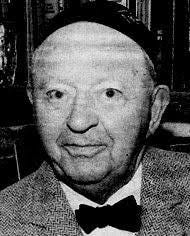
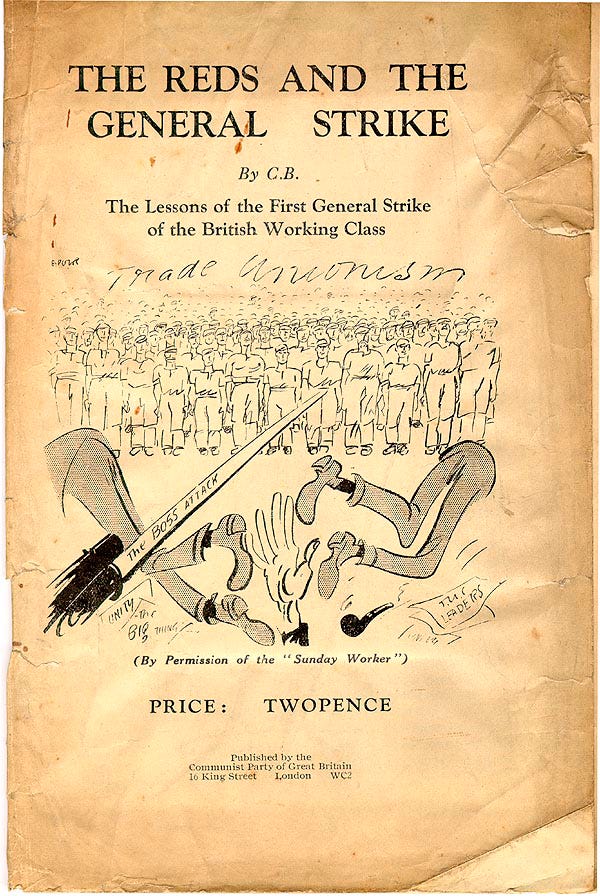
Forty years earlier, Robin Page Arnot, then recently released from Wandsworth prison after a short sentence for sedition, had been sent by the small British Communist party north to Northumberland to help organise the imminent general strike. Several pages in Jonathan Schneer’s Nine Days in May detail Arnot’s extraordinary impact on the area. It was Arnot who put together a plan, persuading almost all the trade unions, trade councils and Labour Party activists to agree to the formation of a council of action based in Newcastle, and to local satellites in towns and villages. The objective was, in effect, to take over the running of the area for the duration of the 1926 general strike.
He almost succeeded. That’s just two degrees of separation. Yet those nine days a century ago, which Schneer describes as “a titanic struggle between the world’s most powerful and best organized labour movement and Europe’s most effective and self-confident government”, are barely recalled today.
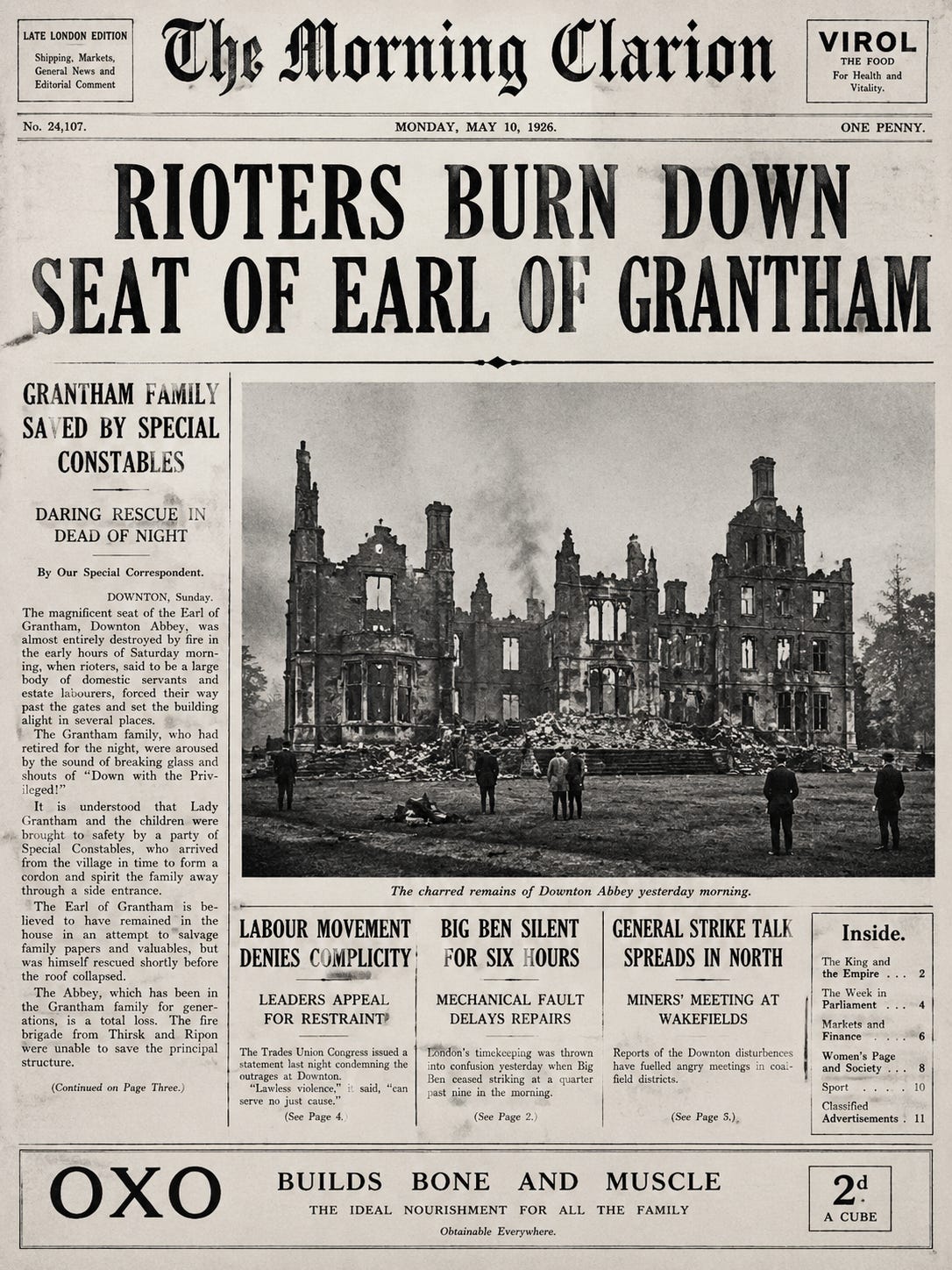
Compare, for example, what most people know about the general strike with what they know about the abdication crisis of 1936, and we can ask why the emotional self-indulgence of a spoiled royal has counted for so much more than a confrontation between the government of that same prime minister — Stanley Baldwin — and the organised working class of Britain. In Britain’s Revolutionary Summer, Edd Mustill complains that the events of 1926 have “vanished from the national story we tell ourselves”. He notes that the interwar saga of Downton Abbey managed to end abruptly on New Year’s Day 1926, with the film sequels then resuming in 1927. This discretion has spared us a storyline in which Matthew Crawley volunteers for some strikebreaking fun, such as that enjoyed by “Boy” Mulcaster in Evelyn Waugh’s Brideshead Revisited — Upstairs Downstairs reimagined as class struggle. Perhaps the problem is that our writers and filmmakers can no longer even imagine the proletarian world of the 1920s and the days when millions worked in the ironworks, on the docks, on the railways — in the 1920s there were 23,500 route miles of track in Britain, today it’s less than 10,000 — and, above all, the coal mines.
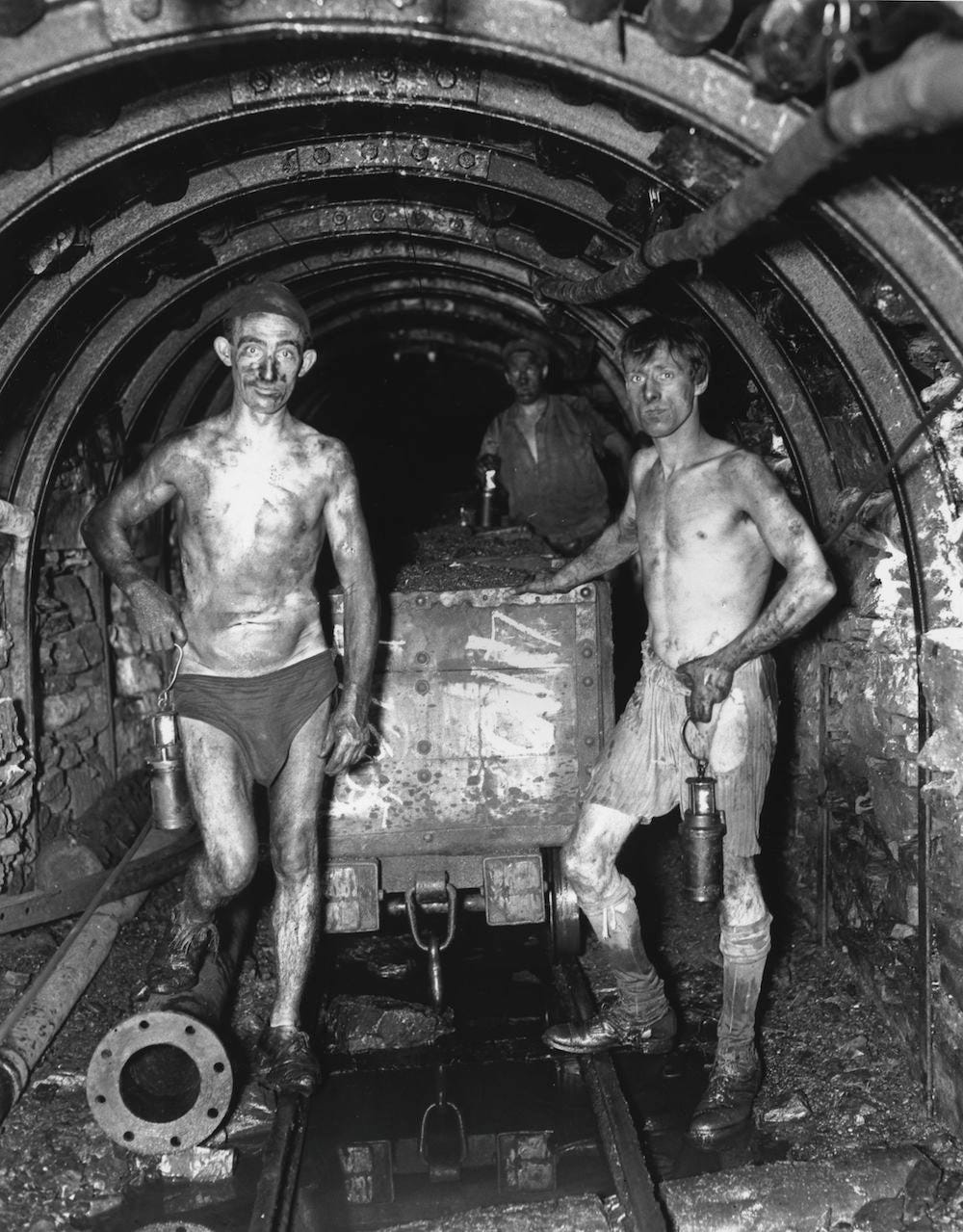
At the outbreak of the first world war, more than a million men were employed in the coal industry. Though poorly paid, a miner still earned more than other industrial workers, Schneer points out. Their hours and conditions were another matter. Depending on the mine (and mines varied enormously in size, depth and ease of extraction), miners could be paid for a seven-hour shift but not the two hours it took to travel to the coalface and back. Some deep mines were so hot that miners worked naked, wearing only knee pads as they pulled coal trolleys along narrow passages on all fours. And it was dangerous. An average of three miners a day died in accidents in the early 1920s. But by the end of the war, the British coal industry was in trouble. In 1926, writes Schneer, “more than 1,400 separate companies owned nearly 2,500 collieries, but 613 of them produced nearly 95 per cent of the country’s coal.”
Mines varied hugely in profitability, but all paid the same wages according to national agreement. After the war, the industry faced domestic competition from oil and electricity; its export business was challenged by cheaper coal from the US and Germany. Demand fell and so did employment and profitability. The answer from the employers, organised into the Mining Association of Great Britain (MAGB), was always the same: cut wages and lengthen working hours. “It is of no avail to suggest that the wages received do not permit of the miners having a proper standard of living,” pronounced one MAGB vice-president in 1925. Naturally, the miners’ union, the Miners’ Federation of Great Britain, vehemently disagreed. For years it had fought incrementally and painfully to improve conditions for its members.
Something would have to give and everyone knew it. Numerous official inquiries into the industry were held, recommending variously nationalisation (which eventually happened in 1947) and other measures, and the strike of 1926 took place just weeks after the latest commission, led by the Liberal grandee Sir Herbert Samuel, had reported. On May 3, up to 2.7mn workers downed tools. The trains and buses stopped, the docks went quiet, the furnaces were banked down But while the Conservative government pondered Samuel’s conclusions, which included pit amalgamation and modernisation, the MAGB — who Neville Chamberlain described as the “stupidest and most narrow-minded employers I know” — declared their intention to impose wage cuts and longer hours on their workforce, and to lock them out of their jobs until they agreed.
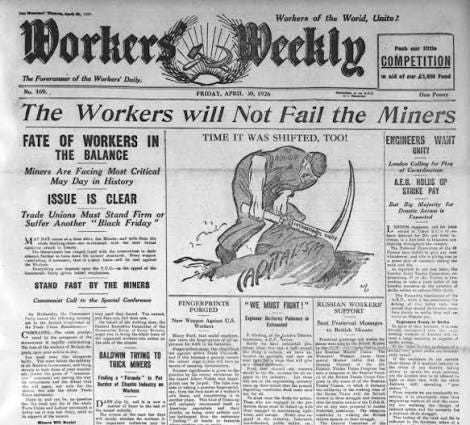
On April 30, they carried out their threat. A year earlier, a decision by other major unions to strike in solidarity with the miners had led to an employer retreat, assisted by government subsidy. This time the government was not putting up the cash. The Trades Union Congress (TUC), spurred on by Ernest Bevin, leader of the transport workers, declared that, unless the employers backed down, all affiliated unions would join the miners in a general strike — the first in British history. On May 3 that strike began. Up to 2.7mn workers downed tools. The trains and buses stopped, the docks went quiet, the furnaces were banked down.
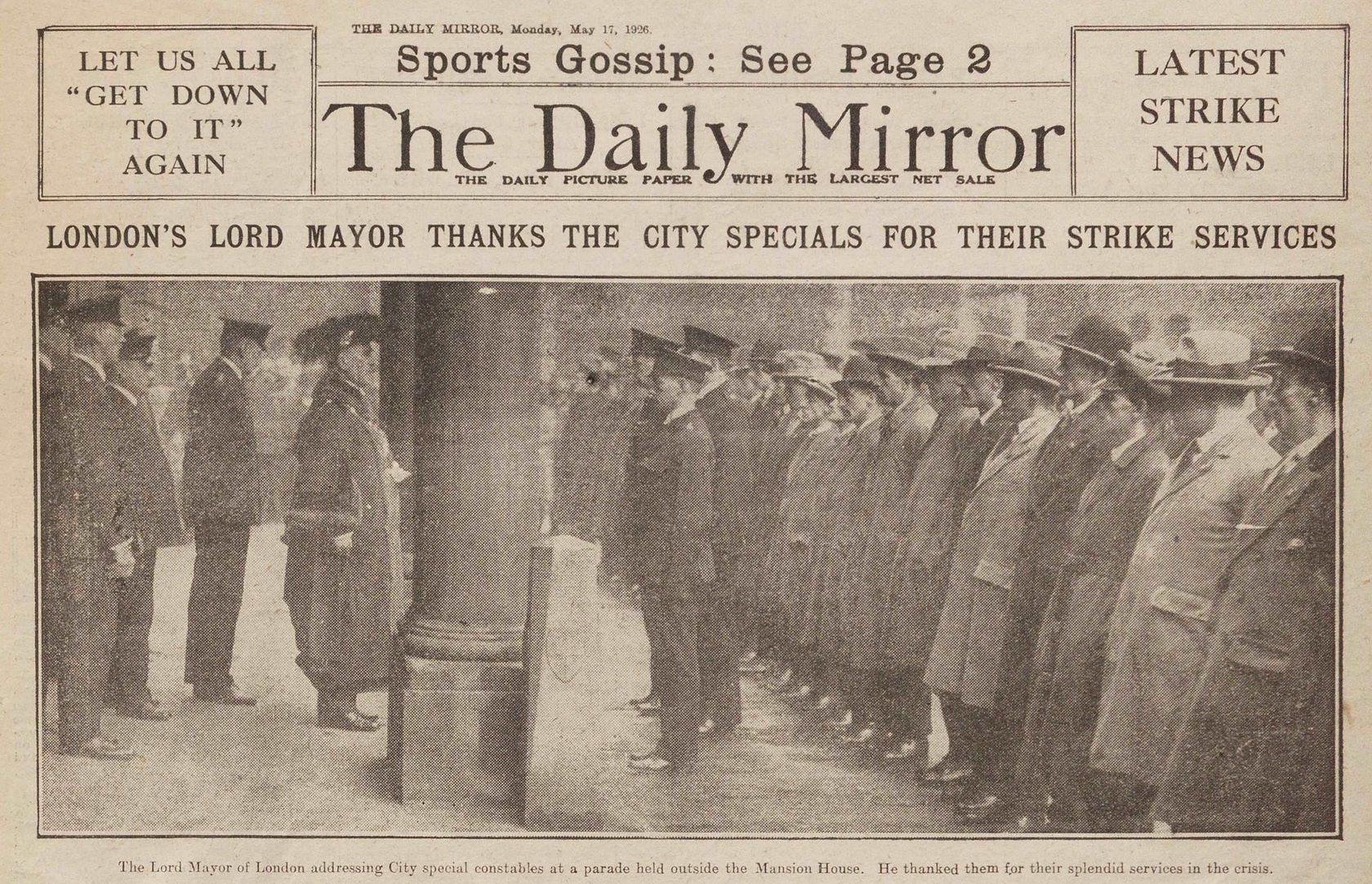
David Torrance opens his The Edge of Revolution with a vivid description of London commuting on the second day of the strike, engaged in what the BBC (then the British Broadcasting Company) described as “The Great Trek”. There were reports of “an old stagecoach, businessmen on horseback and a man in Holborn on a child’s scooter”. Visitors to today’s scooter-ridden London will enjoy the irony here. The strike was remarkably solid but from early on it was apparent that whereas the government was well prepared for it, the TUC wasn’t. On April 30, George V had signed a proclamation declaring a state of emergency. This activated a network of 10 civil commissioners whose job was to safeguard “the essentials of life”. These commissioners called up a small army of volunteers to man vital services and to act as special constables alongside the regular police and military.
By May 4, the London commissioner had recruited 3,000 special constables; a week later it was more than 50,000. In Edinburgh, writes Torrance, half the university’s 4,000 students signed up. In the north-east, Arnot’s formulation had been that “whoever handles and transports food . . . controls food: whoever controls food will find the neutral part of the population rounding to their side. Who feeds the people wins the strike!” In London, armoured cars escorted lorries full of food through the picket lines from the docks to Hyde Park, and the neutral part of the population applauded the effort.
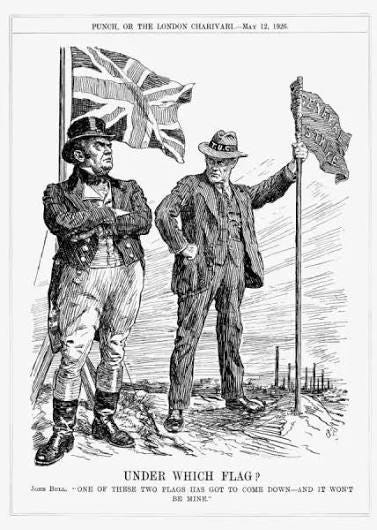
Unsurprisingly, the government’s narrative was that the general strike was an attack on the constitution. Baldwin was at pains to stress his sympathy for working people — his chancellor of the exchequer, Winston Churchill, perhaps less so — at the same time reiterating his determination to preserve order. The battle for public opinion was intense, especially since most newspapers were affected by the strike. Churchill masterminded a state newspaper, the British Gazette (some copies were dropped by air on strike-friendly towns) and the TUC produced the rather more factual The British Worker. But the new kid on the block was the BBC and its radio transmissions. Torrance devotes a fascinating chapter to John Reith’s organisation, which now broadcast to one in five households. At the outset of the strike the BBC had announced that the company “fully realises the gravity of its responsibility . . . And will do its best to discharge it in the most impartial spirit that circumstances permit . . . We will do our best to maintain our tradition of fairness and we ask for fair play in return.” However, when the Archbishop of Canterbury, Randall Thomas Davidson, wanted to broadcast a message of conciliation to the nation, Reith blocked it, as he did the appearance of opposition politicians. This was the result of an understanding with the government, which Reith justified to himself on the basis that if he didn’t comply, hardliners like Churchill might insist on the BBC being taken over. Circumstances had prevented true impartiality.
Someone somewhere might enjoy this post. Do them and me a favour, and share it?
Despite the surprising degree of solidarity among strikers, the TUC had not reckoned on a long stoppage, and unions, paying out support to their members, faced bankruptcy. They sought, in today’s terminology, an “off-ramp”. They found one in the shape of Herbert Samuel, returned from a sojourn in Italy. He set to work on a compromise that Baldwin suggested he might be prepared to accept. On this flimsy basis, the TUC called off its strike, proclaiming partial victory.
But Samuel’s recommendations were destined to sit on the shelf; the strike over, mine owners now imposed their wage cuts. Despite both Mustill and Torrance having the word “revolution” in their titles, the general strike, as recognised even by the British Communist party, never represented a revolutionary moment. On the Labour left it was a glorious defeat, brought about by TUC treachery. For others it was a lesson on the primacy of electoral politics; the strikers had fought the state and the state won. Mustill devotes the end of his book to an aftermath, when employers used the opportunity to push back against past union gains. So in the short and medium term, despite what Schneer describes as “a magnificent attempt by British trade unionists to protect their fellow workers”, the labour movement was vanquished. But Labour wasn’t. It won the following election in 1929 (the first, incidentally, when young women were allowed the vote). And it is hard not to wonder whether, 19 years after the strike, in the shape of the Labour landslide election victory of 1945 — which saw Churchill so resoundingly defeated — we can’t partly see the revenge of the strikers, their supporters and their families. Perhaps we owe the NHS in some small way to the events of 100 years ago.
And what of today? In recalling the general strike, these three historians do something very valuable — they rescue the British industrial working class from what EP Thompson described as “the enormous condescension of posterity”, a cultural condescension that still relegates working people to under-footmen and scullery maids.
The Edge of Revolution: The General Strike That Shook Britain by David Torrance Bloomsbury £20, 320 pages
Nine Days in May: The General Strike of 1926 by Jonathan Schneer OUP £25, 432 pages
Britain’s Revolutionary Summer: The General Strike of 1926 by Edd Mustill Oneworld £16.99, 336 pages
This piece first appeared in the Financial Times. My thanks to the FT for commissioning it. The illustrations are my choice.