Silicon Valley's newest productivity trend is just working more.
If you haven’t heard of 996 yet, it’s a term for a work culture where employees work 12 hours a day, 9am to 9pm for 6 days a week. Originally started out of China, it is one of those rare cultural phenomenons to work itself from East to the West and specifically to AI startups in San Francisco.
What started as provocative tweets from AI startup founders has now been validated by real data. The banking company Ramp came out with a report this week analyzing food delivery expenses startups in San Francisco and confirmed the spike in orders on Saturdays to the office.
Long hours and working weekends is not new to American work culture. Your average investment banking analyst has already gone through 100+ hour work weeks for decades even as deaths from overworking have slipped unnoticed. But AI startups have refined their own idiosyncratic bits of tech culture into their rebrand of 996:
“The culture has shifted,” said Jenny He, founder and general partner at Position Ventures. “A lot of young founders I know don’t really drink or party. They’re heads down working long hours, building brands, and creating content.”…
…Gupta, who has become a poster child of AI boom’s grindcore culture, summarized the current mood among young tech workers in San Francisco as incompatible with the Burner sensibility: “The current vibe is no drinking, no drugs, 9-9-6, lift heavy, run far, marry early, track sleep, eat steak and eggs.”
I’m assuming he means marriage with the startup here. But the message is clear: total life optimization in service of work. Critics are calling it performance theater. Proponents say it’s a self-selection mechanism to find the best talent and be transparent about work culture. And I think it’s a great way to signal to your VCs that you’re taking the money you got from them quite seriously and not actually blowing it on new cars and strippers.
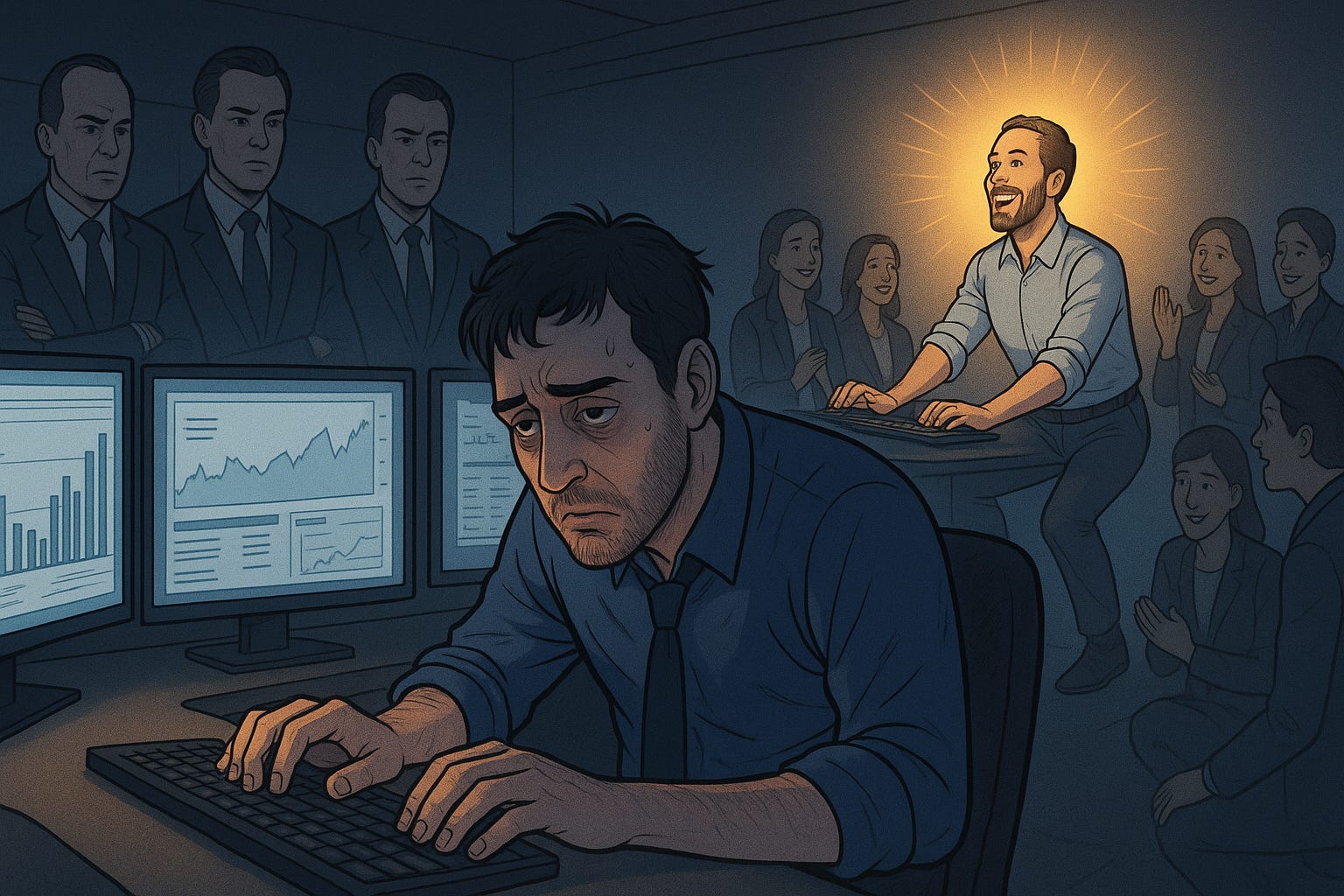
Here’s the thing: venture startup founders live in delusion. They kind of have to in order to actually create billion dollar companies out of nothing. And in that delusion they assume their mission-driven obsession should be universal and that every employee who isn't grinding 996 hours lacks the dedication to win.
But here’s the thing: if you told me someone was taking adderall, chugging cold brew like water, and sleeping <6 hours a night, then I wouldn't doubt they could pull 996 quite easily.
And so the real problem isn’t the hours. The 996 backlash exists because most people imagine they are forced to spend those hours on work that fundamentally doesn't align with who they are. We hate the idea of a boss mandating a life we don't want to live. We don’t like the idea of founders earning 20-40% of the company while asking employees with maybe 0.1% equity to match their commitment level.
I think if we actually found work that matched our natural interests, we wouldn't care about 996. Before we learned to optimize everything for career advancement, we worked on projects purely because they fascinated us. Those childhood obsessions that made no sense to adults? They are the starting points for what truly gravitates us to what we want to be doing in life.
But here's the challenge: how do you rediscover those natural interests when they've been buried under years of career optimization and chemical enhancement?
I’m trying Month to Monk again. It’s my contrarian take on what 996 represents. At it’s core, I’m trying to understanding what the natural rhythms of life actually look like when I strip away all external factors.