Our table at the White House Correspondents’ Dinner last night was near the back of the ballroom, by the entrance.
A small thing, but when we got our seat assignments last week, I was relieved: it meant that we could get in and out of the room easily. For some of us, this dinner is more of an obligation than an adventure.
Then Saturday night arrived. I put on my tuxedo that I still need to get tailored; I walked the 15 blocks from my house to the hotel, passing a bank of protesters yelling “Shame!” I flashed my ticket to someone — presumably a hotel employee — to get on the Washington Hilton’s grounds.
At 8:15 p.m., President Trump made his return to the dinner. Seated near me, I saw Trump officials who have attacked my reporting on social media and in press releases. It promised to be a strange evening.
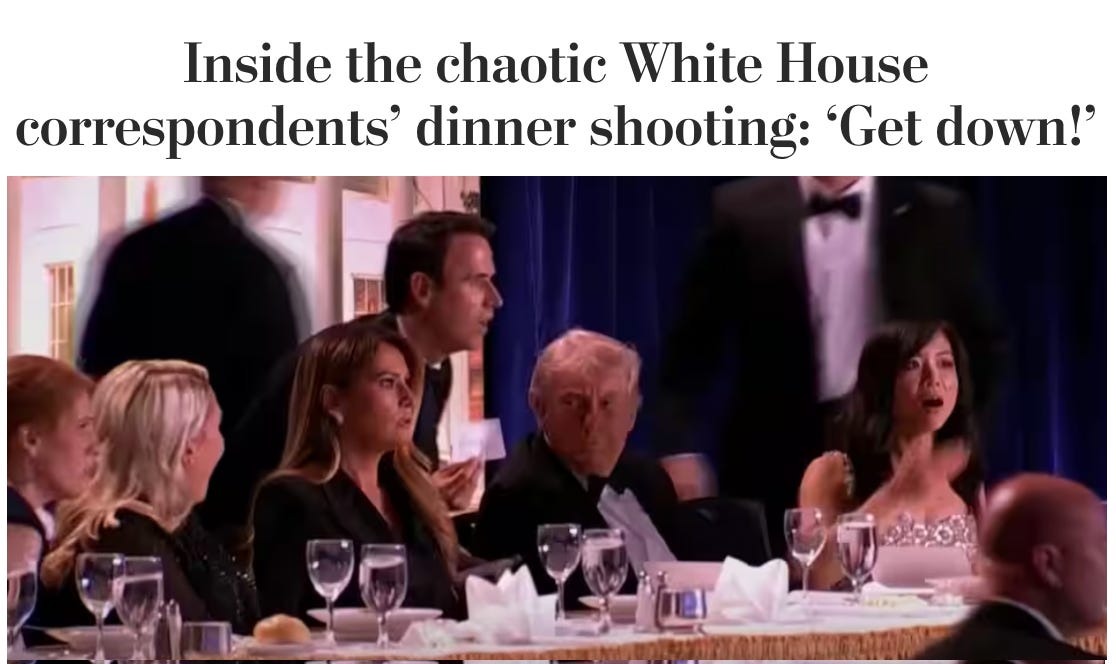
Twenty minutes later, I was talking to the head of Freedom 250 when we heard loud popping sounds behind us. I turned to look and saw a cascade of people falling to the ground, a wave of bodies that quickly reached the stage. For minutes, people huddled under tablecloths, pressed together, asking each other: was that gunshots? Was anyone hurt?
It was a chaotic, eerie scene. At The Washington Post, we worked to reconstruct the evening — taking readers with us from the scattered ballroom floor to President Trump’s remarks in the White House press room two hours later. .
One other thing. I know the Correspondents Dinner has been broadly derided — called decadent, ill-conceived, pick your adjective.
It’s true that some people are just there to party, to enjoy what passes for glitz and glamour in Washington. But I mostly witnessed reporters who were there to celebrate reporting and then, when they were called upon, to actually do it.
I watched Nick Baumann, our editor at The Post, pull out his phone to talk with a colleague as we were pinned on the floor, passing along details that could be used for immediate reporting. Then Nick rallied our team to meet at his house, the newly dubbed Dupont Bureau, handing out story assignments from his kitchen.
I saw colleagues like Cat Zakrzewski, Emily Davies, Natalie Allison, Isaac Arnsdorf and Michael Birnbaum fan out across the ballroom, work sources and head to the White House in pursuit of the story. I saw Jonathan Edwards put his head down to write on what this all meant for Trump’s planned ballroom. I connected with other Post reporters and editors who were watching from home and jumped in to dig for details and round out our reporting.
I don’t want to overdo it. No dinner attendees appeared to have been seriously hurt; the worst injuries appeared to come from the chaos. But on a night dedicated to the ideals of journalism, I saw many many reporters, at The Post and beyond, stepping up to meet the moment. That’s what will stick in my mind, I think.