Course Promo
A 90‑second taste of what the course is about.
Online course archive
"A Beginner's Guide to Irrational Behavior" was an online course I taught through Coursera in 2013, and ran again in 2014. Each time, almost 200,000 people from around the world signed up — and over the years I've kept meeting them. At airports, at conferences, in restaurants and on planes. They tell me the course was useful to them, that it changed how they thought about their own decisions, and they ask me, often, where they can find it now. I wanted there to be an answer.
The course is an introduction to behavioral economics: the study of why human beings — who like to think of themselves as rational creatures — make so many decisions that work against their own interests. About money, about work, about food, about health, about love and risk and time and almost everything else. Across six weeks we look at the systematic ways our intuitions mislead us, the experiments that have made those failures visible, and the practical ways we can design around them.
I taught the course because I think behavioral economics is most useful when you actually use it. This site is here so you can.
Most of the work for this course was done by Aline Grueneisen-Holzwarth. It was really her project and I mostly did what I was told. We are both grateful to Matthew Duckworth for his amazing help in filming and editing the material.
A 90‑second taste of what the course is about.
An overview of the course and the questions it tries to answer.























A closing reflection on what behavioral economics is good for.
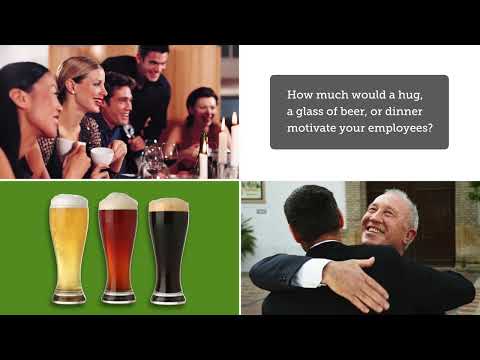
Lalin Anik studies the things, beyond money, that pull human beings toward their work — and the surprising weight of small social rewards. In this talk she draws an unlikely line between Lionel Messi and Salvador Dali to make a single argument: motivation isn't a problem of paying people more, it is a problem of designing for what they already care about. If your own work has started to feel repetitive, or you manage people whose work has, this lecture is a useful set of small, practical tools — most of which cost nothing and many of which are routinely ignored.

Nina Mazar
Nina Mazar's work asks an uncomfortable question: do good deeds make us better, or do they license us to behave a little worse? In a now‑classic study, she and Chen‑Bo Zhong showed that simply being exposed to green products made people more altruistic — but actually purchasing one made them more likely to lie and steal in subsequent tasks. The talk walks through the result and what it implies for everything from corporate social responsibility programs to your own running mental ledger of "I've earned this." Moral self‑image, it turns out, is something we spend down as well as build up.

Peter McGraw
Peter McGraw runs the Humor Research Lab at the University of Colorado Boulder, and has spent years trying to do something most academics will not: take humor seriously as a research problem. His "benign violation" theory proposes that things are funny when they are simultaneously a violation of how things should be and benign in their consequences — too much violation and it's offensive, too little and it's boring. The lecture is part theory and part live demonstration, and along the way it changes how you'll listen to comedy. It also, quietly, says something useful about how to give a memorable presentation.
David Pizarro
David Pizarro's research starts from an evolutionary observation: disgust evolved to keep us away from contaminated food and disease. But the same emotional system, he argues, has been quietly recruited into much more abstract domains — moral judgment, consumer choice, and political belief. Across a series of clever experiments, he shows that small changes in physical disgust (a bad smell in the room, a dirty desk) can shift how harshly people judge unrelated moral acts and even where they fall on the political spectrum. It is one of the more unsettling lectures in the course, and one of the most memorable.
Eli Finkel
Eli Finkel studies romantic relationships, and his core claim in this lecture is bracing: most of us have far less insight into what we actually want in a partner than we believe we do. The whole architecture of online dating assumes that we know our preferences in advance and can match on them; Finkel's research suggests this assumption is mostly wrong. He also shows that the famous gender differences in mate preferences — men caring most about looks, women about earning potential — largely evaporate once people have actually met. A short talk that quietly upends a large industry.
Hedy Kober
Hedy Kober is a clinical neuroscientist at Yale who studies the brain mechanisms of craving and self‑control — particularly in addiction. Her talk takes us inside the neural circuits that make a cigarette, a drink, or a piece of cake feel briefly irresistible, and shows what is happening when self‑regulation works and when it fails. The hopeful part of the research is that the mental moves that successfully damp down craving — particularly cognitive reappraisal — are learnable and trainable. This lecture is a useful complement to Week 5: the same problem, viewed one layer deeper, in the brain itself.

Leslie John
Leslie John studies behavioral economics in service of public health, and the central move of her work is a kind of moral judo: take the very biases that economists usually treat as errors — loss aversion, the overweighting of small probabilities, present bias — and use them deliberately to help people behave more in line with their own goals. Her talk walks through several of these interventions, including incentive‑based programs that have helped people quit smoking, lose weight, and stick with medication regimes. It is one of the better answers to the question, "okay, but what do we actually do with all of this?"

Noah Goldstein
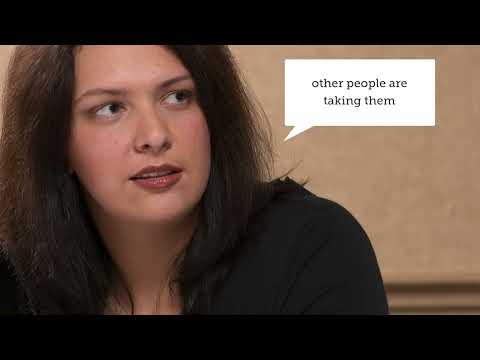
Noah Goldstein is a co‑author of the bestselling Yes! 50 Scientifically Proven Ways to Be Persuasive and a longtime collaborator of Robert Cialdini. In this lecture he walks through one of the most reliable findings in the persuasion literature — that telling people what other people are doing changes their behavior — and one important refinement: it works far better when those "other people" are local. Hotel guests reuse towels more when the sign mentions previous guests in their specific room than when it mentions guests in general. A small talk with a large practical payoff for anyone trying to nudge behavior at scale.
Kathleen Vohs
Kathleen Vohs, one of the most cited social psychologists working today, presents Sexual Economics Theory: a framework that treats heterosexual sexual behavior using basic economic principles of supply, demand, and price. The framing sounds provocative, and parts of it are, but the lecture is a serious empirical exercise — an overview of the theory followed by new experiments testing its predictions about how men and women think, feel, and respond in sexual contexts. Whether or not you ultimately buy the model, the talk is a striking example of how economic reasoning can be turned on a domain that economics has historically declined to enter.
Mike Norton
Mike Norton is a professor at Harvard Business School and the co‑author of Happy Money: The Science of Smarter Spending. His central question is mercenary in the best sense — given that you have a finite amount of money and a finite number of seconds, how do you actually convert them into happiness? His research on prosocial behavior offers two answers that turn out to be more robust than they look: spending money on other people often beats spending it on yourself, and giving away time to other people often makes us feel less stretched for time, not more. A short, practical, surprisingly cheerful lecture.
Peter Ubel
Peter Ubel is a physician and behavioral scientist who studies the decisions people make when they are sick — and the decisions doctors make alongside them. His argument is that the modern medical encounter is precisely engineered to produce bad behavioral economics: information overload, time pressure, high stakes, fear, and an asymmetry of expertise that makes shared decision‑making genuinely hard. Drawing on his book Critical Decisions, Ubel walks through what goes wrong and what better‑designed conversations between doctors and patients might look like. If you have ever felt confused or rushed in a clinic, this lecture explains why — and what to do about it.

Gavan Fitzsimons
Gavan Fitzsimons studies the parts of consumer behavior we are not aware of — the brand cues, primes, environmental nudges, and incidental exposures that shape what we buy long before we ever consciously deliberate. His lecture walks through a series of experiments showing how surprisingly small inputs (a logo glimpsed in passing, a competing brand on the shelf nearby, the music playing in the store) can move purchasing decisions in directions we would never endorse if asked directly. The result is a sharper picture of what choice actually is, and a useful corrective to the still‑popular idea that we shop with our eyes wide open.
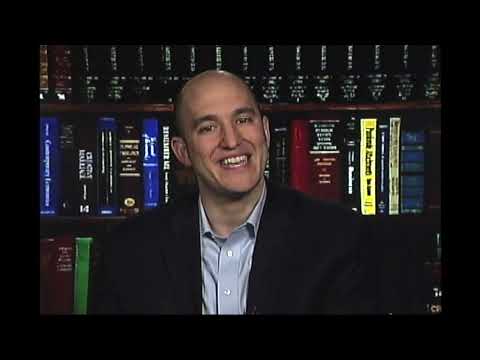
Todd Rogers
Todd Rogers is a Harvard public‑policy professor who has run some of the largest behavioral field experiments ever conducted — many of them on the question of why people do, or do not, show up to vote. The lecture summarizes years of get‑out‑the‑vote research with two recurring themes: small linguistic changes can produce surprisingly large shifts in turnout (asking people whether they will be a voter is more effective than asking whether they will vote), and social pressure — the suggestion that whether you voted is a matter of public record — is one of the most powerful interventions political scientists have ever measured.