Just two days after launch, on April 30, 1970, the Apollo 13 mission ran into serious trouble.
An oxygen tank in the service module exploded because of damaged wiring. Oxygen and electricity were gone. The command module was basically unusable. For NASA, it came down to a very blunt choice: complete the lunar mission or keep the astronauts alive.
They chose the second one.
Against all odds, NASA managed to bring everyone back safely to Earth. Apollo 13 never landed on the moon, but it went down in history as one of the greatest examples of crisis management ever.
What a story, right?
I remember thinking I’d love to watch a movie on this. And turns out, there is a Tom Hanks movie from 1995.
Around the same time, another person wanted to watch that very movie. A young guy named Reed Hastings.
Back then, watching movies at home meant renting a cassette and playing it on a VHS(Video Home System). Blockbuster completely dominated this business in the US. They had around 9,000 stores and were making close to $6 billion in revenue. For most people, renting a movie meant a simple trip to the nearest Blockbuster.
That’s exactly what Hastings did.
The only problem? You had to return the cassette on time. Hastings forgot. Completely. Days passed, then weeks. When he finally went back to return it, the late fee had piled up to $40 a dollar a day.
He paid it, not very happily.
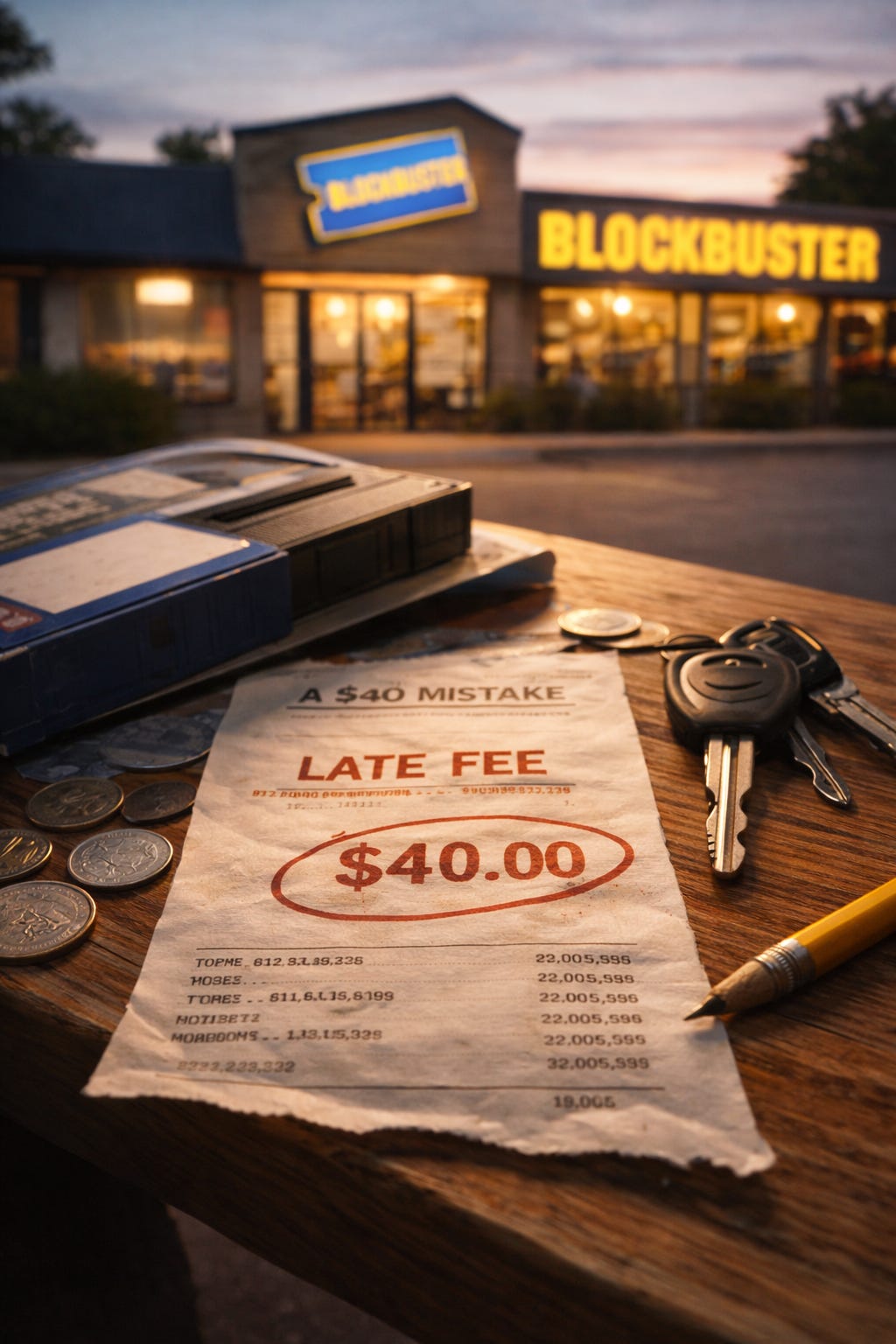
On the drive back, he was with his friend Marc Randolph. Somewhere in that car ride, they started talking about how ridiculous this late-fee system was, and whether there was a better way to rent movies.
That conversation eventually turned into Netflix.
In 1998, they started the company with a $25,000 investment that came from Randolph’s mother. Obviously, they couldn’t open thousands of physical stores like Blockbuster. So they leaned into something different: mailing movies to people.
There was another problem, though. VHS cassettes were big, clunky, and expensive to ship.
And then DVDs showed up.
They were light, easy to handle, and could be mailed for about 32 cents. That solved everything.
Netflix built a subscription model around this. For about $18 a month, you could keep three DVDs at a time. No due dates. No late fees. You returned one, and the next one in your queue showed up. Simple.
Late fees were gone, and people loved it.
But Blockbuster had something Netflix didn’t scale: habit, and nostalgia. People liked walking into stores, browsing shelves, and discovering movies. Kind of like walking through a library. I still get excited doing that.
Three years in, Netflix was bleeding more than $50 million a year.
So the founders tried something bold. They approached Blockbuster with a buyout offer. The pitch was simple: Netflix handles online and mail delivery, Blockbuster brings its massive physical presence. Together, they’d be unbeatable.
Blockbuster’s CEO at the time, John Antioco, brushed it off. Netflix didn’t look like a real threat.
Time passed. Netflix kept growing. They crossed a million users. People clearly liked not paying late fees, ironically, because late fees alone brought Blockbuster about $600 million a year.
Eventually, Blockbuster tried to copy Netflix and launched its own online rental service. But without late fees, their core revenue collapsed. They started losing money fast.
To keep competing online, Blockbuster needed a few hundred million dollars more. Viacom, its parent company, didn’t think it was worth it and spun Blockbuster off as a separate public company.
Desperate to recover, Blockbuster tried one last move. Customers could return a DVD at a store and pick another one for free. Each exchange cost Blockbuster about $2, but they were willing to burn cash to regain market share.
Investors didn’t like that.
Carl Icahn, a well-known Wall Street investor, bought about 10% of Blockbuster. This wasn’t a startup play for him; he wanted returns. Not cash burn.
The final blow came when Blockbuster brought back late fees. Customers hated it. Then came the 2008 financial crisis. In 2010, Blockbuster filed for bankruptcy.
I wanted to share this story because Netflix recently tried to acquire Warner Bros for around $72 billion. Marc Randolph also mentioned that, 29 years ago, they wanted to buy the domain replay.com for Netflix. It cost $50,000 back then, and they decided it was too expensive.
Funny how time works.
When the Warner deal was almost finalized, Paramount made a counteroffer. That’s another story in itself, maybe one for tomorrow.
That’s a wrap for today, and before I say goodbye for today, here’s a song to put you in the mood and the quote I’ve been pondering,
The most valuable feedback usually hurts a lot.
Please don’t forget to share it with your friends, family, and strangers.
Have a Great Day 💖