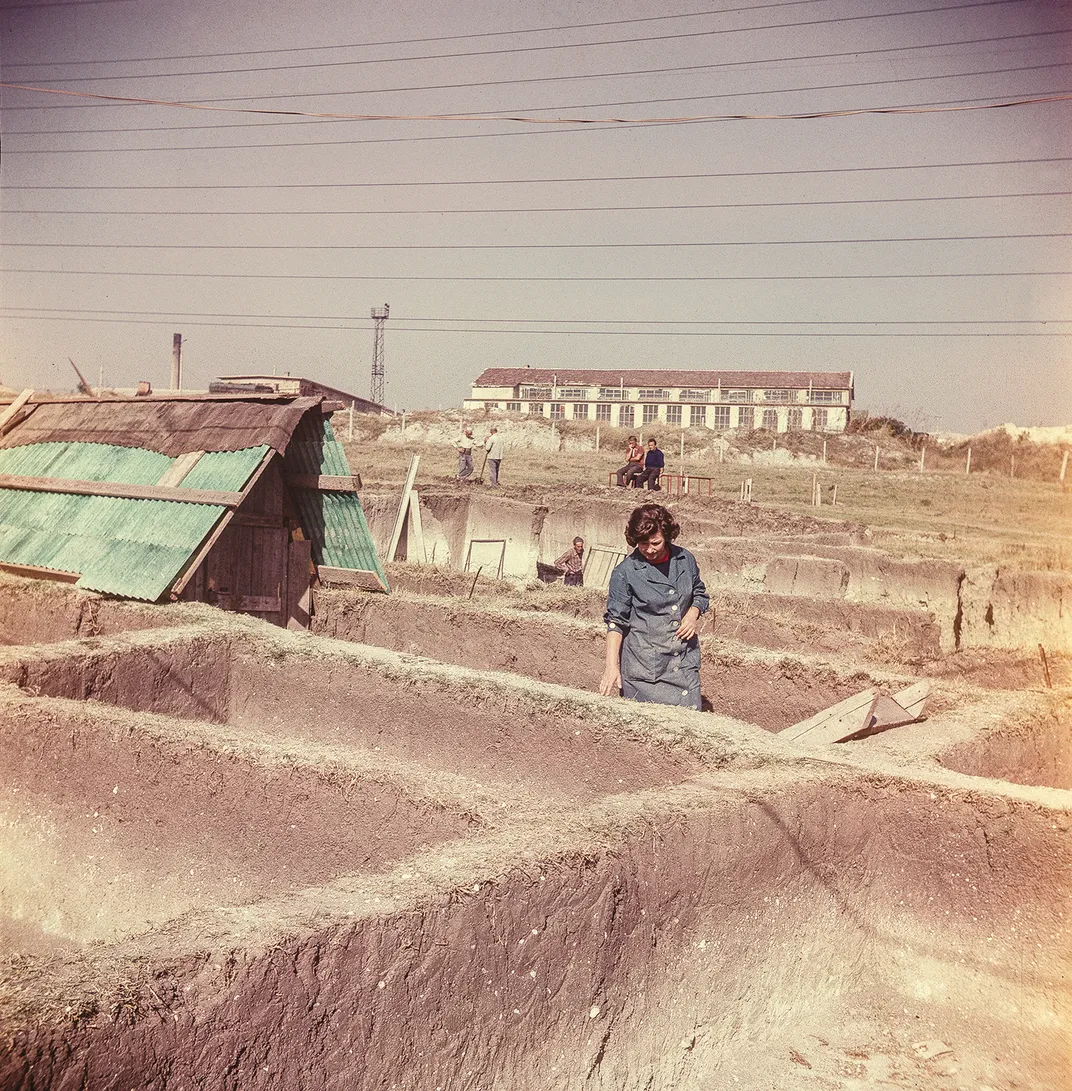
In 1972, a young excavator operator working near Varna noticed something glittering in the dirt. He pulled out a bracelet, gathered more pieces, and passed them on through a retired teacher to the local museum. When archaeologists arrived and saw the objects laid out on a table, Alexander Minchev later recalled, “We took them in that same shoebox straight back to Varna.”
What followed was not a single lucky find but the opening of the Varna Chalcolithic Necropolis, one of the most important prehistoric burial grounds in Europe. As archaeologists followed the trench and began uncovering graves, the pattern became stranger with each dig. Some burials were modest. A few were loaded with gold, prestige objects, and symbols of rank.
That was the core discovery. Varna did not simply yield the oldest worked gold yet found. It also preserved one of the earliest clear records of social hierarchy in prehistoric Europe, showing how wealth, labor, and status were sharply concentrated long before the rise of the better known kingdoms of the ancient world.
The Trench Opened Onto a Cemetery of Extremes
According to Smithsonian Magazine, excavations between 1972 and 1991 uncovered nearly 300 graves, while another account based on the same site history notes 294 burials. The broader picture is the same across the sources: archaeologists were dealing with a large late fifth millennium B.C. cemetery, and a significant section of it still remains unexcavated.
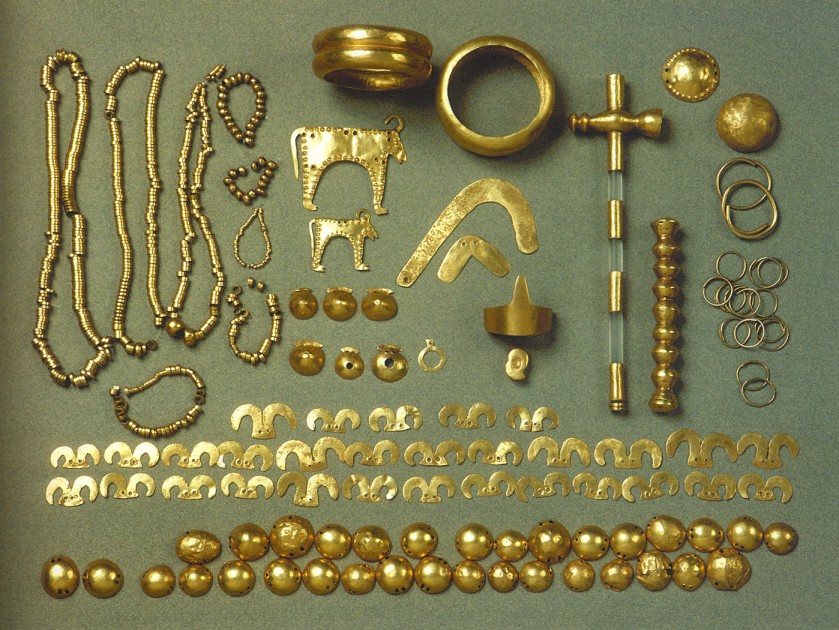
The distribution of wealth is what made the site impossible to ignore. Most graves contained very little, sometimes only a bead, a flint knife, or a bone bracelet. About one in five had small gold items. But just four graves held roughly three quarters of the cemetery’s gold. As Vladimir Slavchev put it, “The cemetery shows big differences between people, some with lots of grave goods, some with very few.”
The richest burial was Grave 43, now one of the defining images of ancient Europe. The man buried there was laid out with gold bangles, necklaces, pendants, pierced gold disks, a polished axe with a gold wrapped handle, another axe beneath it, and a 16 inch flint blade at his side. One account says he was interred with more than 1.5 kilograms of gold.

Inside the Varna museum, much of that discovery is still visible. The collection includes about 11 pounds of the roughly 13 pounds of gold excavated from the cemetery, and the museum displays a reconstruction of Grave 43 using the original placement of the artifacts. The museum itself is at 41 Maria Luisa Boulevard in Varna.
Gold Points to Trade, Control, and Organized Labor
The riches buried at Varna were not only local ornaments. High status graves included Mediterranean Spondylus shell jewelry and obsidian blades from distant volcanic regions. The gold itself likely came from central Bulgaria, pointing to trade routes and resource control that stretched well beyond the cemetery.
Those materials also carried a hidden cost. Mining, transporting, and shaping metal demanded time, skill, and coordination. Svend Hansen explained the attraction of the material in simple terms: “If a metal axe is broken, you can melt it down and produce another axe. Metal is never used up. It can be recycled endlessly.”

That is where Varna stops looking like a treasure story and starts looking like a system. Metalworking was already established in the region by about 4600 B.C., and the concentration of high value objects suggests that access to raw materials and finished goods was controlled by a small group. The graves show not only wealth, but the ability to organize labor and assign roles.
Some of the Most Powerful Graves Had No Bodies
Varna’s strangest burials may be its most revealing. Some were cenotaphs, symbolic graves with no human remains. Grave 36 contained gold scepters, miniature bull figurines, a small crown, and a clay mask placed where a head would have been.
These symbolic graves show that power could be represented even without a body present. Status was being staged through objects, placement, and ritual. That makes the cemetery more than a record of burial customs. It looks like a carefully ordered display of authority.
The site also challenged older interpretations of prehistoric southeastern Europe as small, egalitarian farming communities. Slavchev was blunt about that shift: “It’s clear the society here was male dominated. The richest graves were male; the chiefs were male.”
The Site Is Famous, but Part of It Is Still Buried
Despite its importance, the prehistoric cemetery is unfinished archaeology. Roughly a third of the site may never have been excavated, because work was halted in 1991 so future researchers could return with better methods and so earlier discoveries could be fully published. Parts of the unexamined cemetery now lie under spoil from previous digs in an industrial area near community garden plots.
The society behind the Varna gold also came to an abrupt end around 4000 B.C. Settlements across the lower Danube and western Black Sea basin were abandoned, but the sources do not point to clear evidence of war or massacre. Instead, changing landscapes and rising water levels have been put forward as a likely explanation. Standing above the overgrown site, Slavchev offered one possibility: “Perhaps their fields became swamps. With the changes in climate, maybe people had to change their way of life.”
What remains is a cemetery that still shapes how archaeologists think about ancient gold, early inequality, and the first visible signs of organized power in prehistoric Europe.