What’s the first thing that comes to mind when you think about the United States? For many, it’s likely the word freedom. No matter how challenging things get, Americans take pride in the idea that they live in the “freest country on Earth”. But what if I told you that many countries around the world don’t share that perspective? In fact, the kind of freedom the U.S. promotes doesn’t just fail to appeal to other nations, it can actually be downright horrifying to them.
For many in the West, China is often seen as one of the most unfree and repressive governments in the world. But here’s the irony: when it comes to the people who matter most in this discussion, Chinese themselves, the majority of Chinese actually believe their China is more free than the United States. Now I know that’s a bold claim but stay with me here, because it’s absolutely imperative to know that freedom means different things to different people. Let me explain:
Freedom is not universal. It isn’t some one-size-fits-all idea that you can slap onto every society. Freedom is shaped by whatever oppression people had to break to survive. Let’s take the US for example. The United States achieved its freedom by rebelling against the British crown. Freedom in the United States means being free from government control. It means doing whatever you want, even if the result is a messy, chaotic and divided society.
But China’s story is the complete opposite. China’s pain didn’t come from too much government but from the absence of government altogether. Before the founding of the country in 1949, China endured a century of turmoil with warlords tearing the country apart, foreign colonization, mass starvation, and overall humiliation. As a result, freedom to Chinese people means being free from chaos through order, stability, and a secure, predictable future. That’s why unregulated freedom isn’t seen as liberation in China. The majority of Westerners know very little about China’s history and as a result the majority of Westerners have a massive blind spot that doesn’t allow them to understand the values that are important to Chinese society.
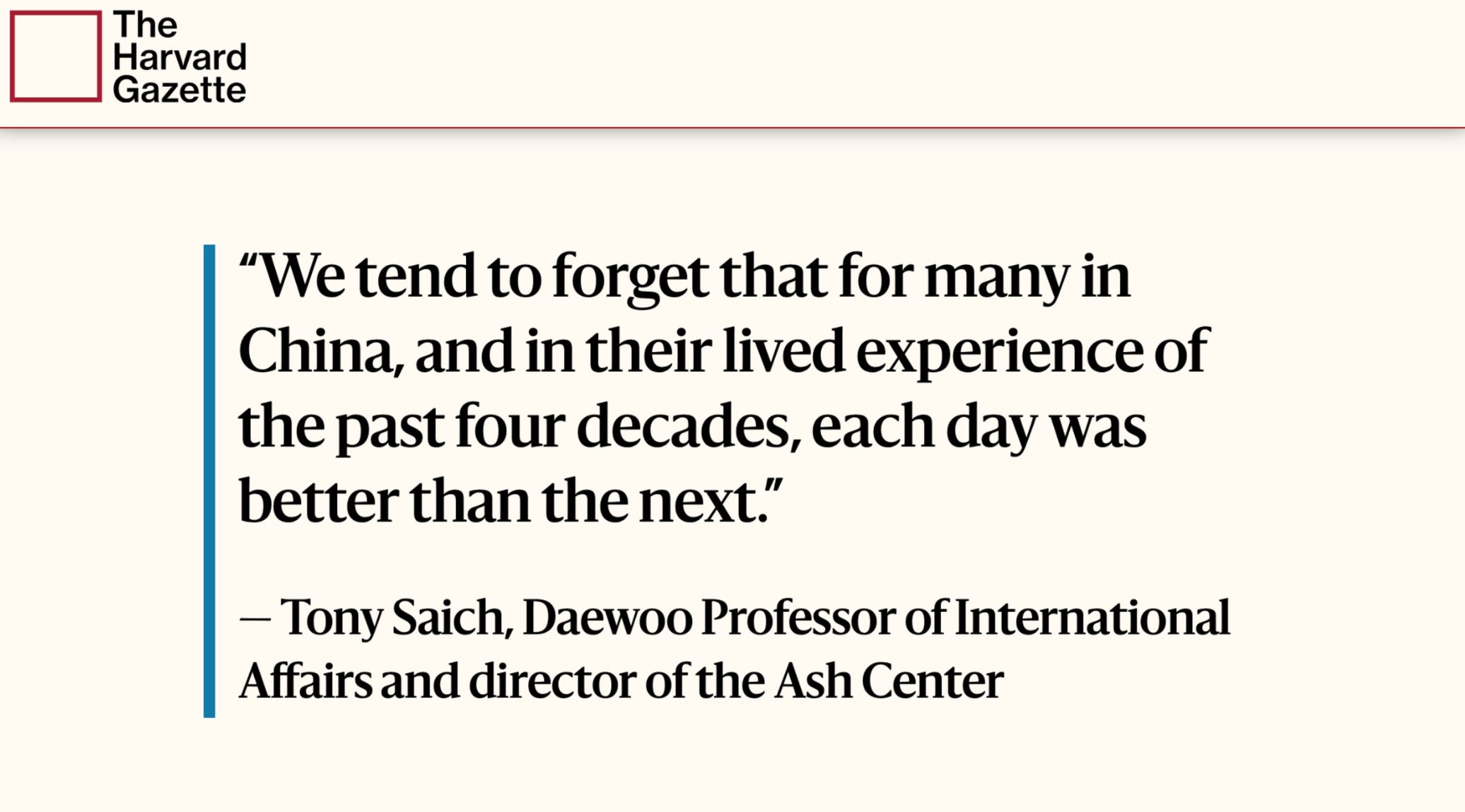
The truth is that different systems work for different countries, and contrary to popular belief, Chinese people are much more satisfied with their system than their Western counterparts. A famous Harvard study polling Chinese people on satisfaction of their government going back nearly two decades showed that year after year, Chinese people's support for their government, both at the national and provincial level, consistently hovers around around 90%. And honestly, when you think about it, it’s not hard to see why. China’s people lives have improved drastically year over year for the past several decades. Ask yourself this question. Do you think people in the United States or Europe would feel the same about their respective country?
Does China have more Freedom than the United States? It’s a question that’s worth exploring further and in today’s video I’m going to give you 5 fascinating lessons I’ve learned about China that is going to make you think hard and we’ll come to a logical conclusion by the end of this piece. Let’s dive in!
Now the first freedom I want to discuss is what I believe is the most basic human right, the freedom of safety. In many cities across the United States, public spaces like city centers or parks are places you probably want to avoid after dark. At the very least, you'd need to be hyper-aware of your surroundings. As a woman, it’s almost certain you wouldn’t feel safe walking alone at night, and leaving your kids unattended would be unthinkable. Unfortunately, in the U.S., many areas have become ground zero for drugs, crime, and homelessness.
But let’s compare that to China, which is widely considered one of the safest countries on Earth. People leave their bikes unlocked for days, their laptops unattended at cafes, and women can stroll around at night without fear. Parents can send their kids off to school without worry. If you’re living in the U.S., this level of safety might not even register to you as a "freedom," because we could never even imagine a society where things like this is even possible.
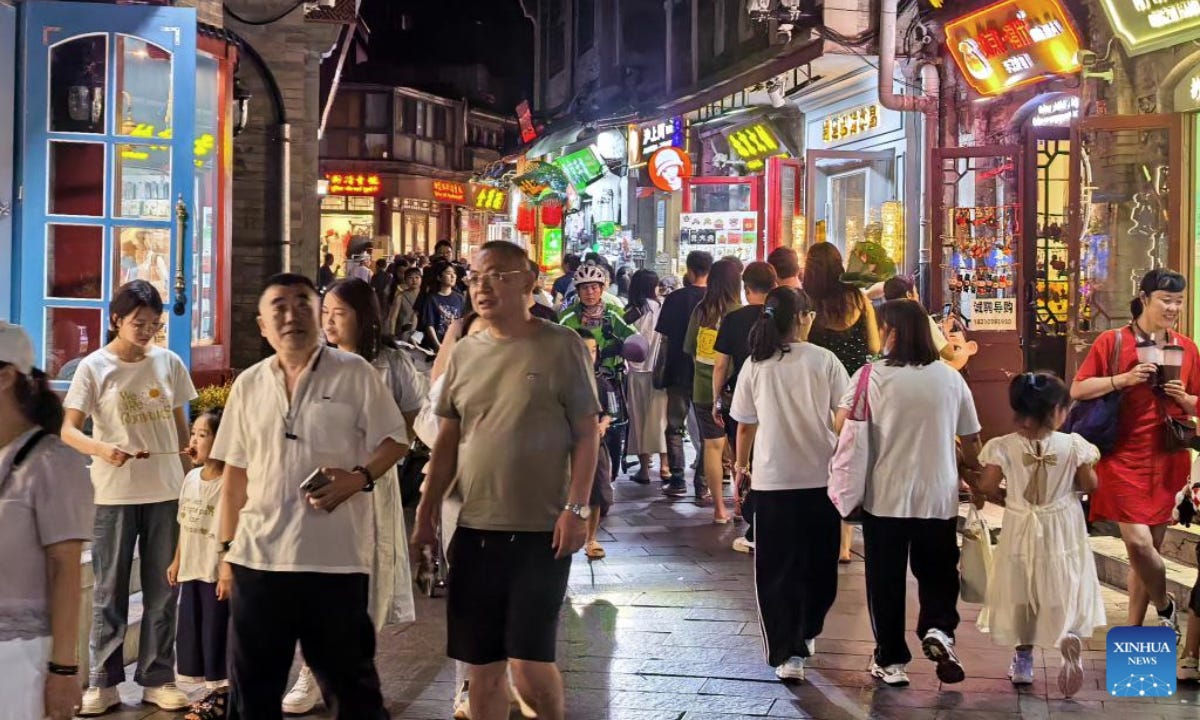
But let’s take it one step further and discuss the second major freedom: the freedom of movement. 15 years ago China set out to build the world’s largest high-speed rail network, stretching over 45,000 kilometers. But we rarely stop to think about what that really means on a human level. The ability to travel across the country so easily is incredibly liberating in so many ways.
During the Chinese Lunar New Year, you can witness the world’s largest human migration every year, as literally hundreds of millions of people travel from big cities back to their hometowns spread throughout the country. Every corner of China is now connected to this extensive network even down to the smallest towns and villages. This kind of connectivity opens up possibilities for travel that, frankly, most people in the U.S. wouldn’t even think possible.
Imagine a trip between two second tier cities in the U.S like Buffalo to Nashville or Cincinnati to Charlotte in the U.S., that’s a logistical nightmare. You’d need expensive plane tickets and a layover, or a very long car ride. This causes people in the U.S to stay much less connected to one another than they would be with easier access. In China, those same distances between medium-sized cities are smooth and seamless, thanks to the high-speed rail.
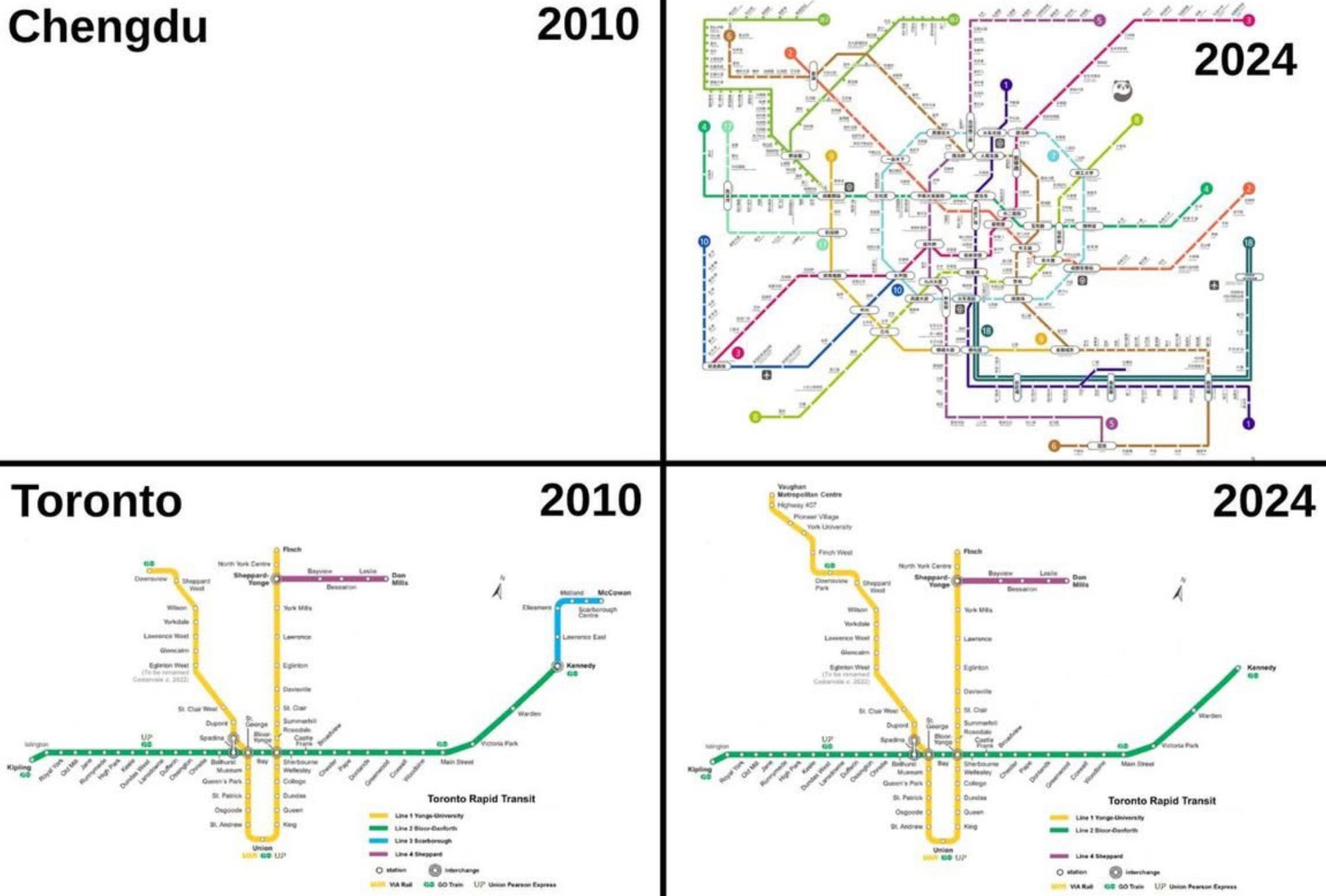
In addition, China has the world's most advanced metro systems built across 47 of the country's largest cities. And to give you some perspective on how fast and efficient the Chinese government is working to serve the people, take a look at this graphic which compares the metro systems in Toronto and Chengdu. In 2010, the Chengdu metro system didn’t even exist but fast forward to today and Chengdu’s metro is one of the top 5 largest and most extensive systems in the world.
The third major freedom that Chinese people enjoy is the freedom to affordable and accessible healthcare, which trust me is one of THE biggest issues affecting life in America today. You see there is a fundamental difference in philosophy between China and the United States. The US stands out for being one of the few countries where healthcare isn’t considered a human right. But it goes beyond healthcare. Did you know there are only two countries in the world who voted against access to food being declared a human right at the United Nations? No surprise for anyone who follows geopolitics that is the US and Israel.
The US doesn’t have a healthcare system but yet a healthcare industry. Large health insurance companies spend massive amounts of money lobbying politicians to maintain a corrupt, profit-driven system. This system leaves millions of Americans vulnerable, where something as simple as a medical diagnosis can financially destroy families. In fact, medical debt is the leading cause of bankruptcy in the U.S. something that literally doesn’t even exist in most other countries around the world.
On the flip side, China is leading the way in medical research and innovation, especially when it comes to using AI in healthcare. Earlier this year, Chinese scientists made a groundbreaking breakthrough announcing a cure for type 1 diabetes. Treatment in China is a fraction of what it would cost in the United States as the goal isn't to make a profit, but to actually cure diseases and serve the people.
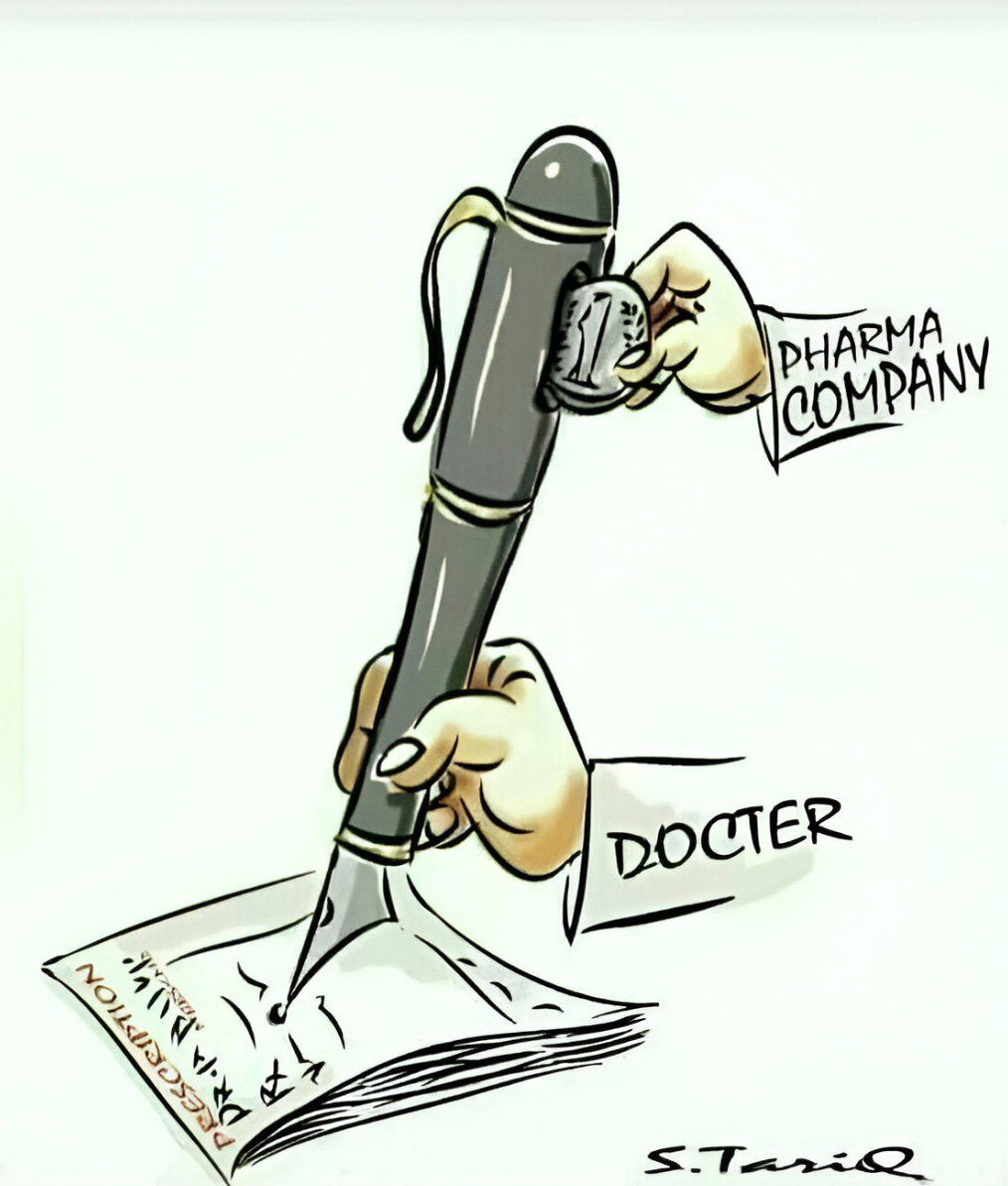
In the U.S., the focus of healthcare is on maximizing profit. Curing patients actually comes second. That's how you end up with dystopian headlines like research report coming from Goldman Sachs, who asked the question: “is curing patients a sustainable business model?” But it gets worse. Because the cost of care is so high, many people don’t go to the doctor until it’s too late, leading to preventable deaths that could’ve been avoided if they could have seen a doctor sooner. On top of that, in the U.S., healthcare is often tied to employment. As a result, many people remain in jobs they find to be miserable just to keep their insurance, since without it they might not be able to afford life-saving treatments. All of this leads to an incredibly unfree and corrupt system.
The fourth major area where China offers more freedom is the freedom to own your own home. For generations, one of the biggest parts of the American Dream was the idea that if you worked hard enough, you could eventually own a home. But today, that dream is practically dead. 5 of the world’s “impossibly unaffordable" cities are located in the United States. For first-time homebuyers, it’s no longer about competing with other individuals, but instead, private equity firms that buy up housing in every major U.S. city. As a result, more and more Americans are being forced to rent, and homeownership, which was once a milestone achievement for many, has become an impossible dream.
The housing situation in the U.S. has gotten so bad that many people have been pushed out of the market entirely. Right now, there are 550,000 homeless Americans, and that number increased by 18% in 2024, setting new records due to the lack of affordable housing.
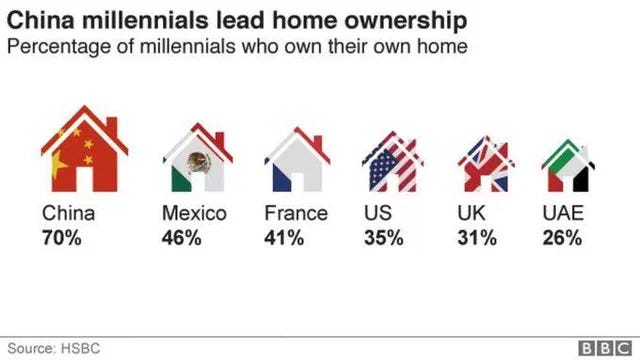
Now, contrast that with China, where homelessness is incredibly rare and the Chinese Dream of owning property is very much alive. Just take a look at this fascinating report from HSBC which highlights 70% of Chinese millennials own their homes, compared to just 35% in the United States. Many American millennials would kill for the chance to own their own home, and they’d be shocked to learn how common it is for their generation in China to buy one.
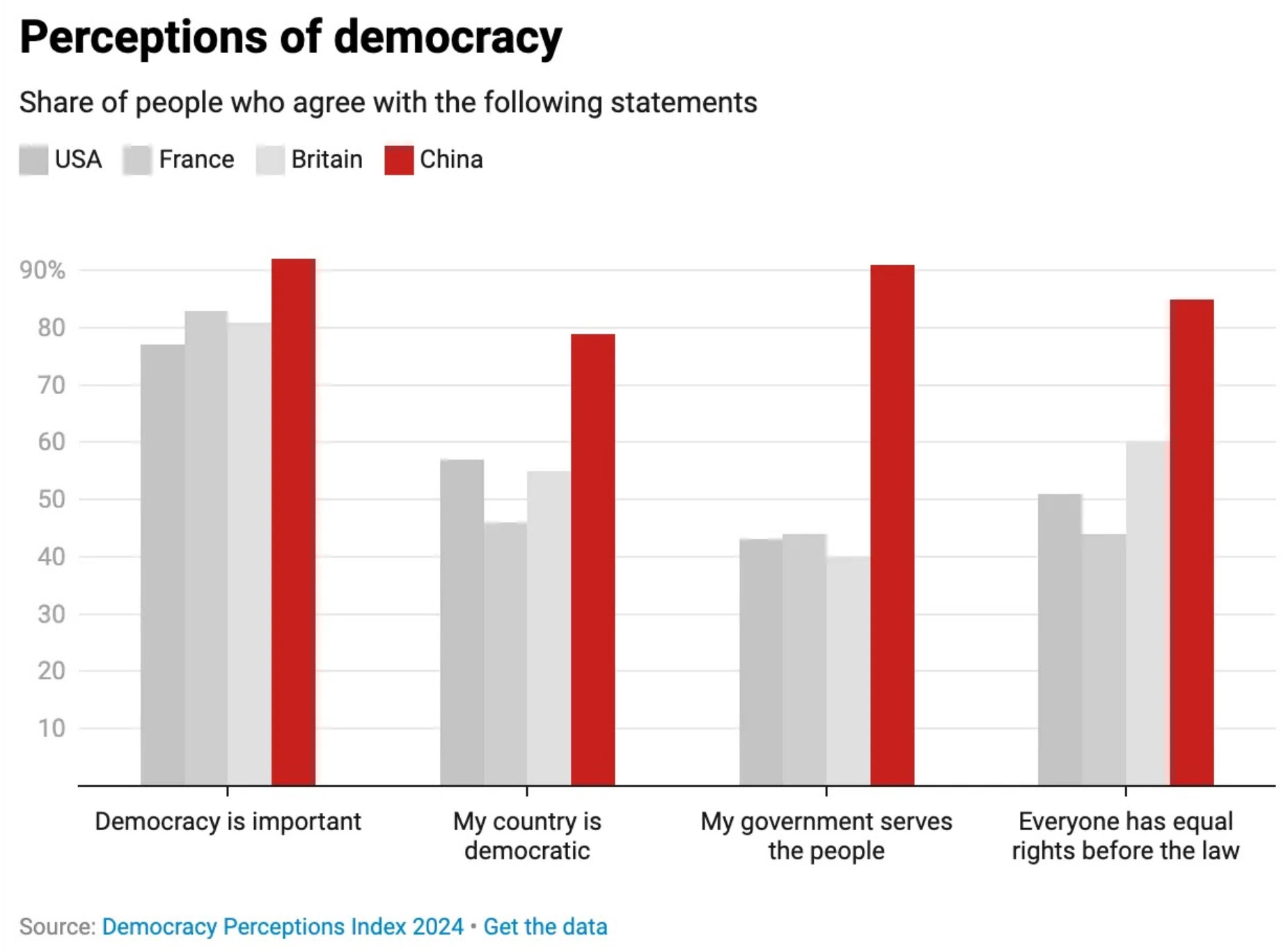
Now for fifth and final point, and this might sound a little crazy, but Chinese people are actually more free when it comes to democracy. According to the 2024 Democracy Perception Index, which is a European-based survey, Chinese polling scored significantly higher across the board on perceptions of democracy compared to countries like the US, France, and Britain. The polling gauged people's agreement with the statements: democracy is important, my country is democratic, My government serves the people, and Everyone has equal rights before the law. In every one of these categories, Chinese responses far outpaced those from Western nations.
Now, this might be a surprise to many in the West, especially since so much of our view of democracy revolves around the idea that voting for a president is the ultimate form of democratic expression. But, this ties back to how I opened today’s video. Freedom means different things to different people. China considers itself a Whole-Process People's Democracy, meaning democracy isn’t just about holding elections every few years, it’s an ongoing, continuous process that focuses on long-term goals like economic development and poverty alleviation.
Rather than the political competition we see in the West where parties who hate each other are constantly battling for re-election. China’s system is centered on the idea that governance should serve the collective good. There’s also a rigorous civil servant system in place, which ensures that politicians are well-qualified and that if they fail to meet their goals, they’ll be replaced by someone else who can do better. All of this means that, in practice, China’s system may actually be much more democratic when it comes to reflecting the will of the people. This doesn’t mean that Western countries should adopt China’s system of governance. The world is too unique and too diverse for only one form of government to exist. In my opinion, every country must find a system that works for them and most importantly serves its citizens.
The common narrative preached today is that Chinese people are oppressed, but if we look at Western surveys, and again this is an important distinction, surveys conducted by independent Western think tanks, the data clearly shows the majority of people in China have a higher level of support for their government than their Western counterparts.
If I were to conclude everything I’ve discussed in today’s video in one simple message it would be this. While many in the West might think of freedom as individual rights or presidential elections, in China, freedom often means stability, security, and the ability to live a life free from fear and chaos. The key takeaway is that freedom isn’t one-size-fits-all, and what might feel liberating in one country can look very different in another and that’s why I always encourage people to stay curious, travel the world, and most importantly talk to local people and understand their needs and wants.
If you’d like to explore this idea further, check out the video version of this article below where I share additional surprising insights!