Yes.
That’s the short version. Like every senior engineer says, it depends.
This post is my attempt to reason about whether staying in San Francisco for a month makes sense if you’re interested in technology, startups, and building things, especially if you’re coming from outside the US. It’s not a travel guide. It’s an honest reflection on what I experienced and what I’d do differently.
I stayed in San Francisco from November 1st to November 27th, just shy of a full month.
I didn’t arrive with much structure. I had signed up for a bunch of events and knew where I was staying. The plan was to figure things out while I was there. I wrote about my first week in a previous post.
Before going further, a few numbers after ~4 weeks:
Events attended: 18
People I talked to enough to exchange LinkedIn: 79
Exchanged WhatsApp (more personal): 19
Still talking to after leaving: 5
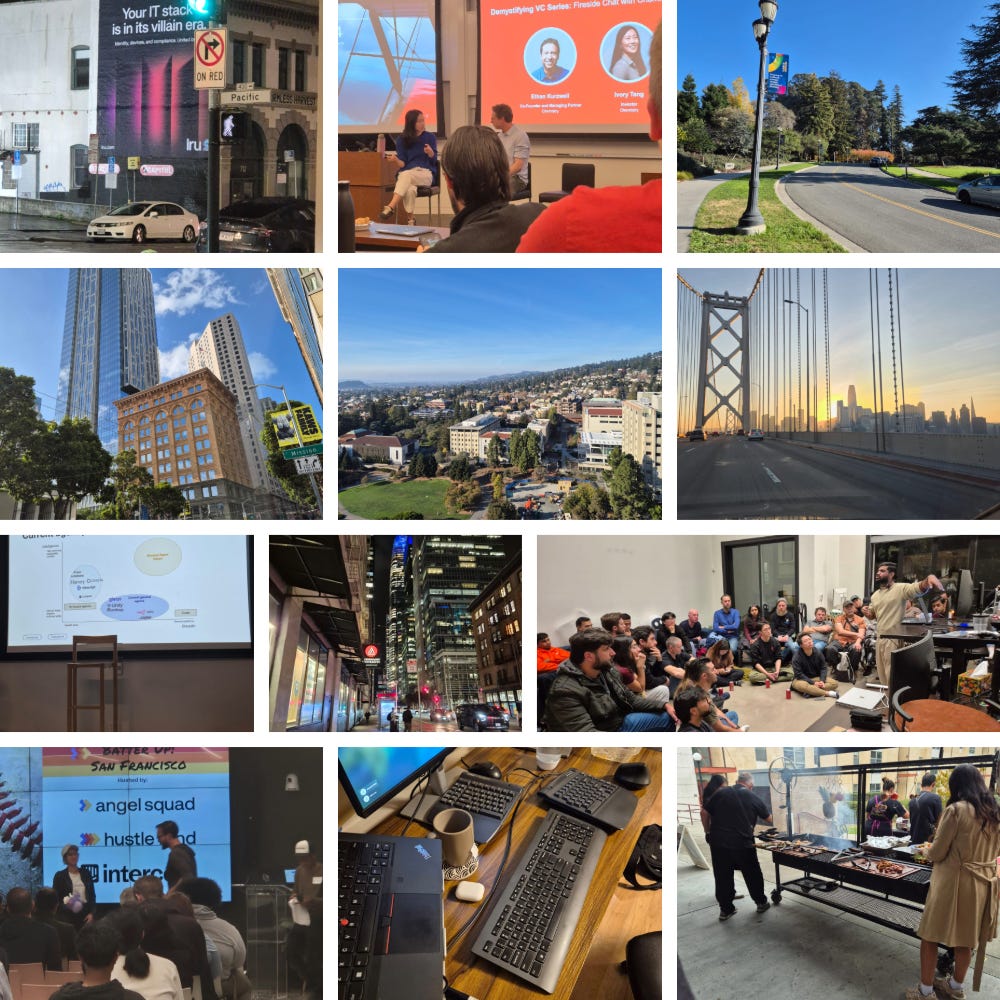
And here are some pictures from my time there.
I went to SF knowing a few things about myself:
I have a higher-than-average social battery
I’m comfortable talking to strangers
I don’t mind unstructured days
That mattered a lot. If you’re shy or uncomfortable with random conversations, this experience would look very different.
The pictures above capture a few highlights:
Random posters about tech and AI everywhere
A Friday night with 30+ people sitting on the floor listening to stories about AI agents in production
A normal Thursday night at Stanford GSB where a well-known VC was casually speaking. A friend told me: “This happens almost every day.”
And of course, the city itself, which is genuinely beautiful
At the time, I was in the process of leaving my job to build my own startup. One of the reasons I wanted to be in SF was to understand how it felt to be there, not just visit.
I was lucky. My company was flexible and, after explaining my plans, they supported me staying for the month while still working. The agreement was that I’d keep normal working hours, which meant dealing with time zones.
My routine looked roughly like this:
Wake up around 4–5am (Brazil is GMT-3, SF is about 5 hours behind)
Work until 1–2pm, usually from home or the hotel
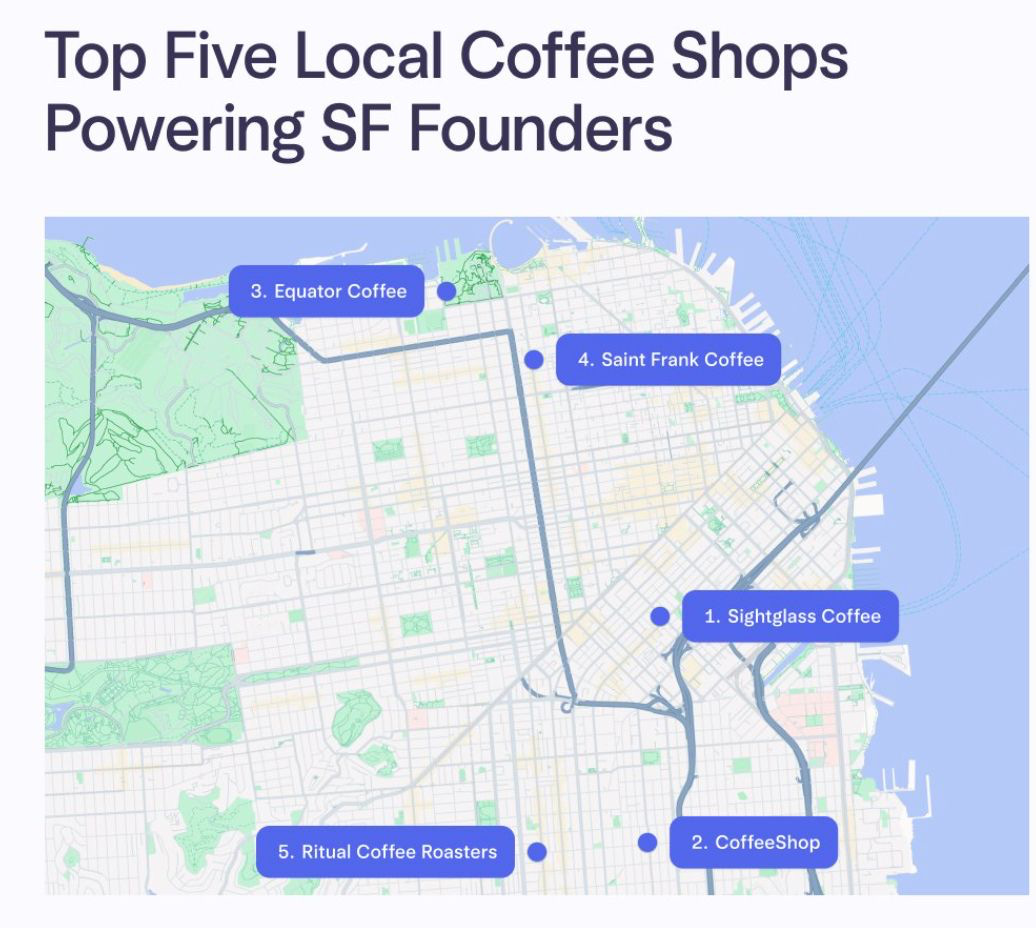
Lunch somewhere nearby, then a coffee shop close to the evening event
Events starting around 6:30pm, ending around 8–9pm
Dinner at events, usually pizza (lots of pizza)
Weekends were different. There are hackathons almost every weekend in SF. I initially thought I’d do one every weekend, then quickly realized that would probably kill me.
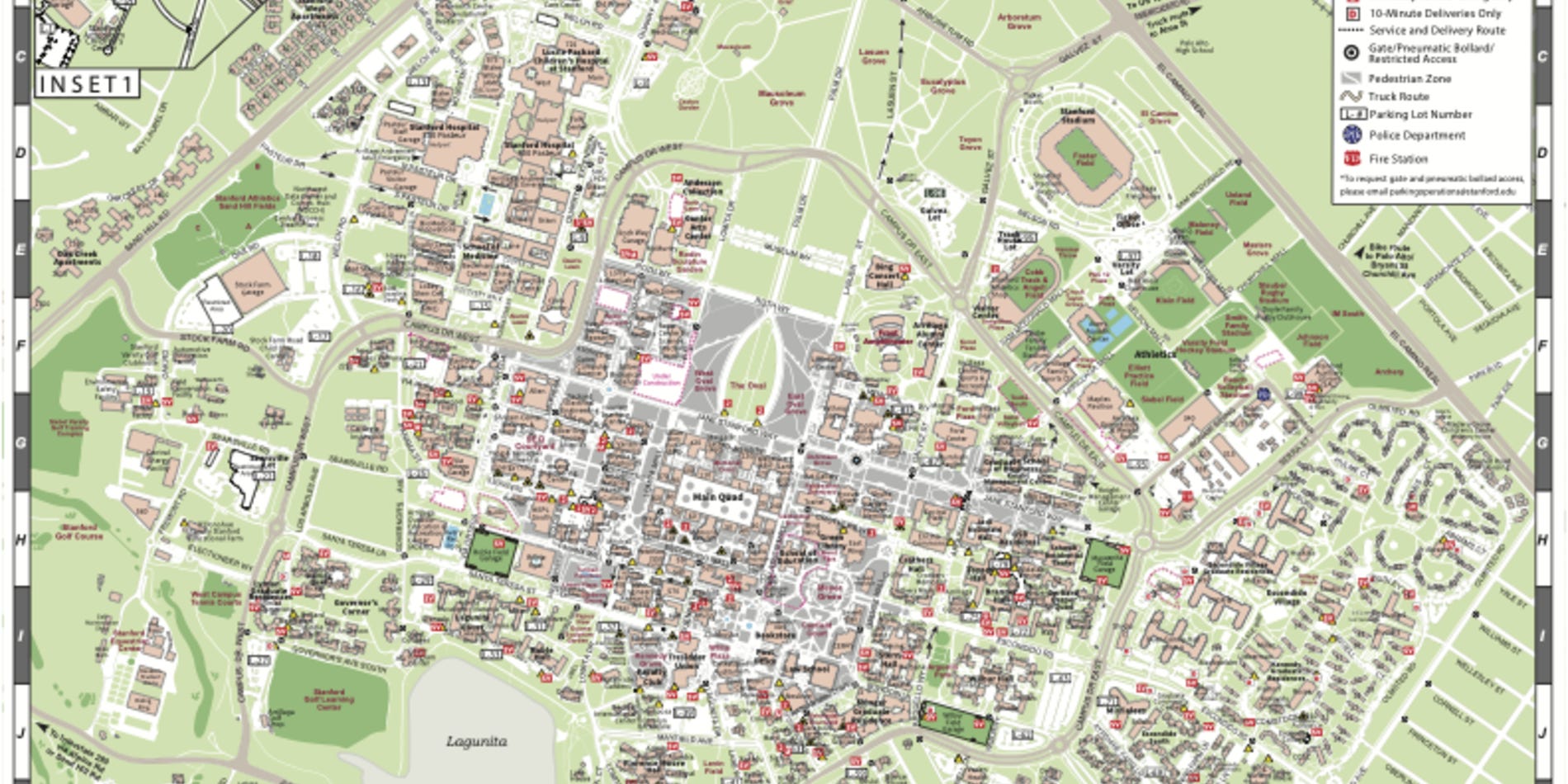
I joined one focused on video generation with AI, which was fun and a good excuse to try tools I hadn’t explored deeply before. I also spent a fair amount of time going down to Palo Alto and Stanford. Caltrain is surprisingly good and the commute wasn’t bad at all.
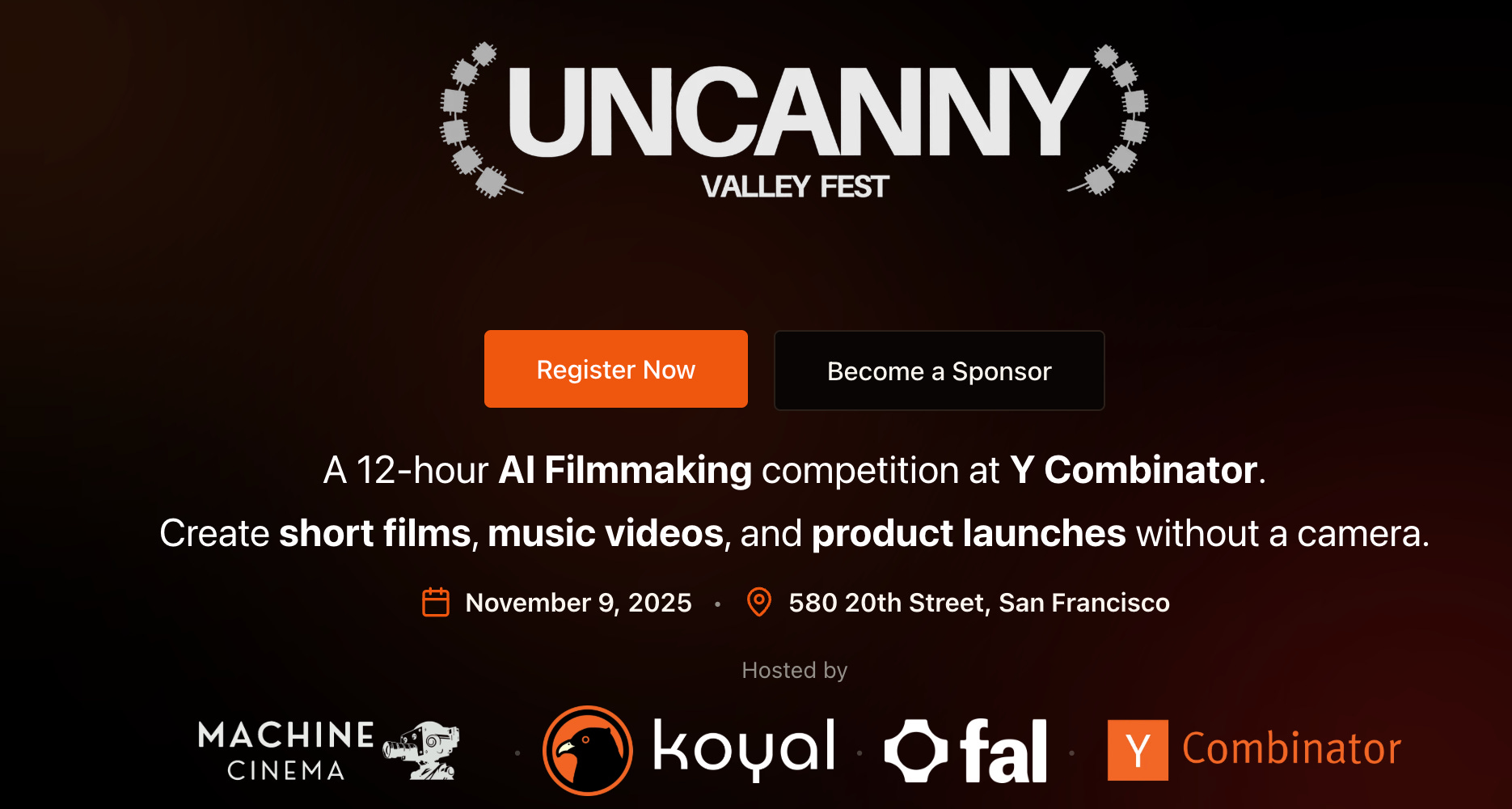
At one point, I spent two hours walking around Stanford trying to find a hackathon I was waitlisted for. I failed to find it and accidentally found another one instead. That’s kind of how SF works.
I like technology, AI, and “cool tech things.” SF has a lot of that. You can easily spend all your time there just talking about what people are building and why.
A few things stood out.
The number of people who told me “I quit my job and came here to build something” was much higher than I expected. This isn’t novel there. It’s normal. In some circles, not building something requires more explanation than building something.
There’s a status game around being a founder, whether people admit it or not.
I met people I wouldn’t normally meet back home:
An MIT professor
A CEO who had taken one company public and sold another
Angel investors and VCs sitting in coffee shops
A high concentration of ambitious, smart, and hungry people, many of whom are intentionally there to build, learn, or take a real career risk
What surprised me most was how approachable everyone was. Strangers talking to strangers isn’t weird there. It’s expected.
Someone gave me the advice: “DM the top 50 Brazilians living in SF and see who replies.” I did it. I spoke to three and met one in person. All were kind and generous with their time.
Outside of tech, SF offers a lot. If you like running, hiking, biking, or racket sports, you’re covered. I enjoy tennis and pickleball, and courts were packed until closing time.
One night, I saw two guys eating burgers with pickleball rackets next to them. I ended up joining them. That kind of thing happens.
AI usage is extreme.
I heard people say anywhere from 50% to 95% of their code is AI-generated, from FAANG engineers to startup founders. This pushed me to trust AI more for larger pieces of work and eventually convinced me to pay for Claude Code (Max plan).Experimentation matters.
Being surrounded by people constantly trying new tools made me do the same. I went to a CodeRabbit event and ended up integrating it into my workflow. Not because it was revolutionary, but because I forced myself to properly try it.Not everyone is building for the right reasons.
Some people are there because it’s the “cool thing” to do right now. It’s obvious once you see it up close.Lime scooters are more expensive than they look.
My best productivity setup is a laptop plus a good monitor above the laptop, not side by side.
This took me longer than expected to internalize.
Narrative matters a lot in SF. Probably more than anywhere else I’ve been.
People have their stories ready. Not in a fake way, but in a well-rehearsed way. They can explain who they are, what they’re doing, and why they’re there in a few sentences. I met someone who was so structured that I joked it felt like talking to ChatGPT.
At first, I answered questions casually:
“I’m thinking about building something.”
“I came for a month to see how things are.”
Those answers were honest, but not compelling.
Over time, I realized that narrative is a compression tool. When there’s so much happening, people need to understand you quickly. Narrative isn’t about lying. It’s about reducing the cost of understanding who you are.
By the time I left, I was much better at this. If you’re going to SF, my advice is simple. Have your pitch ready, even if you’re “just visiting.”
I wouldn’t plan around big conferences like Dreamforce or SaaStr. They’re expensive and, if you’re alone, not necessarily worth it.
I’d pay more attention to holidays. Thanksgiving slowed things down a lot.
I’d force myself to maintain an exercise routine instead of using “no time” as an excuse.
SF is expensive, especially if you’re coming from South America, but there are ways to keep costs down.
For the month:
Housing + flight: ~$2,045
Day-to-day costs: ~$1,360
Total: ~$3,045
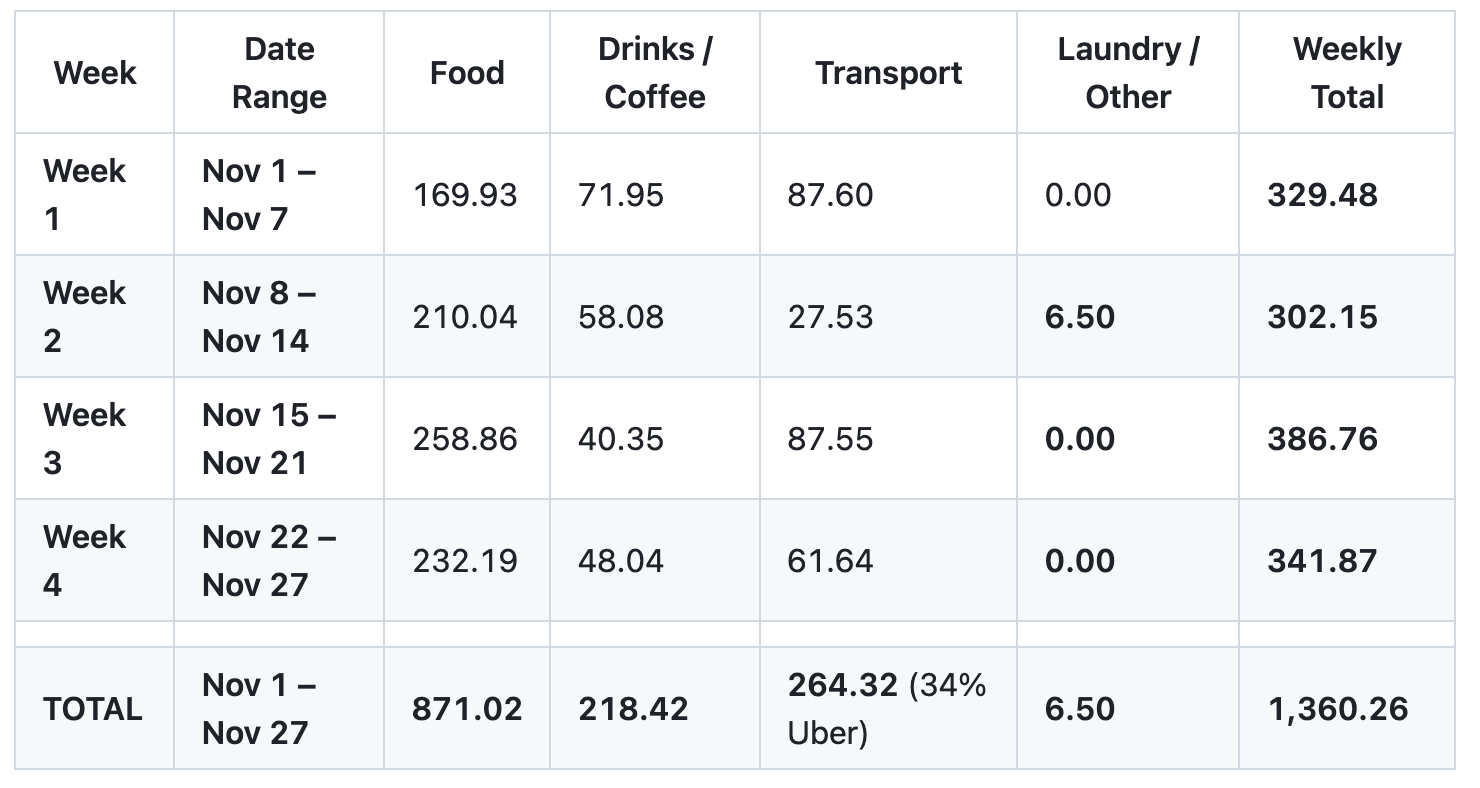
I didn’t eat at fancy places, didn’t cook at all, and relied heavily on event food - which saved money and probably wasn’t great for my health.
These numbers are just for being in SF, not living there long-term.
For me, yes.
I’d do it again, but probably for two weeks instead of a full month, now that I’ve already built some connections. I can also see myself living there eventually.
If you enjoy tech, don’t mind ambiguity, and are comfortable talking to strangers, SF offers a kind of density that’s hard to find elsewhere. If you’re building something, it’s also a great place to showcase it.
And if nothing else, it forces you to think more clearly about the story you’re telling, to others and to yourself.