ℹ️ TL;DR:To lose unwanted fat in a healthy, sustainable, frugal and environmentally-friendly way, follow a whole-food plant-based low-fat diet and perform steady fasted cardio and strength exercises on a daily basis.
Over the last few years I've been making steady progress toward getting in better shape. It's not been a straight path, but I'm pleased to report that I've been able to get very close to my ideal body type several times (body-image issues aside) and am much closer now than I was even a few months ago!
In this article, I'll try and share what worked for me.
BTW, the title is a riff on How to get rich (without getting lucky) by Naval Ravikant, one of my favourite modern writers.
Goal#
Before launching into the tactics, I want to clarify my goal. I didn't actually start out with a clear goal, but rather I developed the goal over time and refined it quite a few times.
My basic goal now is a lean-muscular, moderately "athletic" body.
There are some constraints around this goal:
- Long-term. Not just for a few months. Ideally life-long.
- Healthy. Not involving toxic chemicals or unhealthy extremes.
- Frugal. Spending little or no more money on food than I would otherwise.
- International. I can move to another location while maintaining the diet/lifestyle.
- Environmentally conscious. At least not adding more damage to the natural world than I would otherwise.
As you can imagine, adding these constraints necessarily adds some complexity. However I still found it doable, given some ingenuity and (importantly) persistence!
Motivation#
“Visualize your success and then go after it.”
– Arnold SCHWARZENEGGER
It's important to always have a "north star", "dream", "vision" or whatever you want to call it.
Some thoughts that keep me going:
- I can achieve something difficult that even some great or famous people have struggled with.
- I'll feel "light as a feather" and energized throughout the day, carrying less weight around.
- Looking good, with a body that is pleasant to behold, is a plus, for myself and possibly others.
- I see myself keeping physically fit into my 70s, regardless of what happens to me, health or otherwise. This is a life-long vision.
- Avoiding serious health issues associated with obesity and unfitness, such as cardiovascular issues and cancer, is well worth the effort.
When all else fails, I just imagine having ripped abs while partying on a yacht in Fiji. That usually does it! 😄

These all visions congeal into an image in my mind of a successful, active, fit, mature adult.
I think overall health is critical. I would never go on any regimen – diet, exercise or otherwise – that directly risked my overall health. Keeping overall health in mind is good in and of itself. But it also supports your weight loss goals. You can maintain consistent exercise and diet more easily if you are in good health most of the time.
It's important to celebrate wins – large and small. If you notice your looks or energy levels improving, take a moment to glow with self-pride and celebrate your achievement! Even if there are no visible changes, if you're able stick to your routine for some period of time, celebrate that too. Positive reinforcement of health behaviour is more sustainable than negativity and self-punishment.
Lifestyle system#
When making significant lifestyle changes, it's often helpful to step back and think of your lifestyle as a system. In a systems approach, you develop a network or web of goals. These goals are connected to eachother, and thus reinforce eachother.
For a simple example: you could move home to a location that is at least 15 minutes walk from the nearest public transport or park your car 15 at a location that is minutes walk from your home. Then you are forced to walk at least 30 minutes per day - from and to your transportation. This small change in habits automatically generates an additional 30 minutes per day of exercise.
The effect is amplified when you combine elements that are beneficial on their own and mutually reinforcing. For example, you could begin doing all your shopping at a supermarket that's 15 minutes from your home. Thus you set up a pattern of eating healthier (your supermarket is more likely to have healthy food like fruits and vegetables) and walking for 30 minutes daily.
For more information, you can check out books on systems thinking such as:
Mind-state#
“Meditation practice is also a kind of food because it nourishes us. Consider the practice offered by the Buddha to be a kind of food. Any practice must be a kind of food. Walking is like a delicious food. Eating is a delicious food, sitting is a delicious food, and working meditation is also delicious food.”
– Thich NHAT HANH • How to Eat
I practice a few minutes of daily mindfulness meditation, which helps to reduce anxiety and reduce mental blocks. During this I take some time to wish strength, health and wellness, both for those I know, and for myself. I try to cultivate a spirit of "non-grasping" generally. I try to notice when I'm mentally reaching toward something, whether it's food or rest. Simply noticing this helps me to slow down and go back to a more relaxed, reflective frame of mind, putting me more in the drivers seat and in control of my actions.
There are some other mental tricks I use to manage anxiety, such as focusing on next actions and the future, while deliberately moderating expectations and reducing thoughts about the past.
Understanding and harnessing the effort-reward cycle I also find important. For example, I try to do my morning exercise before having my first shower or drinking my first coffee. This helps motivate me to do the exercise (effort) in order to get the reward (shower, coffee). I use a similar cycle for my afternoon/evening exercise. First I exercise (effort) then I enjoy dinner/supper (reward). These cycles can show up in all kinds of little parts of life, so I try to make best use of them whenever possible.
“The best moments in our lives are not the passive, receptive, relaxing times...the best moments usually occur when a person's body or mind is stretched to it's limited in voluntary effort to accomplish something difficult and worthwhile.”
– Mihaly CSIKSZENTMIHALYI • Flow: The Psychology of Optimal Experience
Flow activities can help you active and energized and reduce unnecessary eating.
When one feels tired, it may seem that food and rest are needed. But counter-intuitively, I've found that's often not the case. In fact, more activity seems to generate more energy. Note that the activity need not be intense or stressful. I've had the best experiences with moderate activities – a steady walk or hike, slow body weight exercises, a lazy afternoon swim or even chores around the house like cleaning and cooking.
Monitoring#
Any long-term endeavour should have appropriate monitoring.
I've given up on measuring body weight or mucking around with measuring tape.
A quick look in the mirror on a regular basis seems the surest measure!
And the best way to avoid making excuses.
There is one other kind of monitoring I consider crucial: blood tests. These can be obtained relatively inexpensively (at least in Australia, the UK, etc). You take the results to your GP/doctor and they tell you if you have any deficiencies. In my case, there were minor calcium and iron deficiencies, which I remedied by supplements.
Monitoring aside, I think it's best to focus on behaviour change as a goal, rather than a particular body type, size, etc. Your bodily appearance can fluctuate a lot, especially over short periods like a few days or a week. Even if your goal is to look a certain way, it can be difficult to get to that goal if you cannot sustain effort over long periods such as months. So it's better to focus on achieving long-term behaviour change – such as eating the right foods and right portions, doing the right kinds and quantities of exercise, etc.
Carefully observe your progress in developing better habits and celebrate your wins in the area of behaviour change. Persist in this, regardless of what your body looks like on any given day. Over time, you will move closer to your ideal bodily appearance and feeling, as long as you're performing the right actions and doing so consistently.
Routine#
“We are what we repeatedly do. ... Excellence, then, is not an act but a habit.”
– Aristotle
“Don't Make Me Think”
– Steven KRUG
“Each evening, there is a tiny moment—usually around 5:15 p.m. that shapes the rest of my night. ... the ritual is changing into my workout clothes. If I change clothes, I know the workout will happen. Everything that follows—driving to the gym, deciding which exercises to do, stepping under the bar—is easy once I’ve taken the first step.Don't Make Me Think”
– James CLEAR • Atomic Habits
One thing that has helped me the most in my health and fitness pursuits is simply maintaining a consistent daily routine. Making a habit of daily exercise and healthy eating ensures consistent and steady progress toward my goal. Strong habits tend to be self-reinforcing. Once you get accustomed to taking that regular morning walk or that afternoon workout, it becomes automatic and a way of life.
My routine has become a kind of "sensible default", which I can execute almost mindlessly, without stressing and lapsing. It enables me to accomplish all my tasks, including exercise, work tasks and life admin, as easily and directly as possible, without hesitation or doubt.
This has actually been good for my mental health too. I'm less anxious when I don't have to constantly worry about what my day will look like. Of course, I do sometimes change my routine as circumstance dictate. But I try to do so in a relaxed, contemplative frame of mind, not in the heat of the moment.
I've been able to maintain my routine pretty consistently throughout international travel, changing work hours and various ups and downs of life.
One trick is to make the routine flexible and focus primarily on activities, rather than timing. So if I miss a morning workout, it's Ok, not the end of the world. I just need to do that workout in the evening instead. So the times are flexible, while the activities remain solid.
I also have certain routines in the evening that help me to wind down, relax and avoid unplanned snacking. These include dimming the lights to create a cosy atmosphere, according to the famous Scandinavian Hygge effect. Even on travel this can be done quite effectively with a portable USB lamp and/or tweaking my laptop display configuration. I also like to floss and brush my teeth, which gives me a fresh taste that helps to avoid any temptation to eat.
Exercise#
Exercise is a critical part of my routine. Exercise builds and maintains muscle tone, sustains health (including mental) and energy levels and reduces appetite / food cravings.
There's a fantastic cumulative effect with exercise: as you lose fat and gain muscle, the exercise gets easier and you feel less hungry, which make it easier to exercise more, etc. The challenge, of course, is to maintain consistency and not slack off.
All the exercises I'm about to list are:
- Reasonably environmentally friendly do not by nature involve any damage to the environment
- Can be done in practically any major city or town, at any time of day
- Are healthy and low impact on your body, unlikely to cause serious injuries when done long term, assuming they're done with reasonable care
I try to do at least one session of both walking and strength training every day, and some swimming and HIIT every week.
Keeping the exercises simple and safe increases the likelihood of doing them consistently, which I think is critical to getting most of the benefits of exercise.
Walking
Yes, simply walking.
The real beauty of walking, apart from being minimal and easy to do almost anywhere on travels, is how it can be combined with other activities. With smartphone in hand, I can tune in to a fantastic array of audio material: audiobooks, podcasts, online courses and great music.
I can also combine it with travelling to appointments, shopping, remote meetings, connecting with nature (bush-walking) and just general exploration of the world. 🙂 It's wonderful to become immersed in my environment and visiting familiar streets and parks feels similar to visiting old friends.
During walking, I try to focus on posture, keeping a tall, straight upper back. Posture issues are a growing concern these days, not just for IT/tech workers who often have to face forward to use laptops, but also now for the general public, who are often consuming content heads-down on mobile devices.
You can add novelty to walks by taking different routes, varying your pace and stride, noticing and engaging with strangers from time to time and combining various activities with your walks like picking up packages or sight-seeing.
I aim for 30 minutes to 1 hour of walking every day.
There is some research showing that exercise at a moderate pace (60% max heart rate) is optimal for fat burning.
Strength training
Here's a list of the specific strength exercises I do.
I like to do body weight exercises, also known as callisthenics. These include:
- Pull-ups and muscle-ups on the bar. Forward and reverse grip. Several sets, each as much as I can while keeping form.
- Push-ups. Lateral and tilted up or down. On the bars or the floor.
- Dips. On the bar or between two chairs.
- Ab crunches. While resting on the bar or hanging off the bar, or lying on the floor with a weight.
- Step-ups onto a low bar, large stair step, rock, or even bedside.
- Military presses with weight or resistance band.
- Bicep curls with with weight or resistance band.
- Some other body-weight exercises like planking, squats and lunges.
Some other points:
- Core strength. Try to incorporate core / ab training into as many exercises as possible. Abs are involved in many full-body exercises, so by focusing a little on your abs, you get a kind of bonus "2 in 1" effect. While doing pull-ups, push-ups, band rows, etc. you can "feel into" your abs and make sure they're coming along for the ride.
- Quality over quantity. In each workout, I try to prioritise overall quality. First priority is safety – none of the movements should cause severe pain or injury. Next, I want to strain the muscles enough to feel satisfied that it was a thorough workout. This involves a kind of "good pain" or burning feeling, where you know that your muscle was tested. This doesn't necessarily have to involve training to complete failure.
- Variation. I try to make each workout a little different and unique so that each muscle group is being adequately challenged. This could mean varying the grip, intensity, number of reps, order of reps or many other possible variables.
In case you didn't notice, many of these can be done either with or without the gym! I can just use body weight, furniture or outdoor facilities. This makes the exercise routine easy to maintain while travelling and resilient to unexpected changes in the my day plan.
Strength-training builds muscle, which aids weight loss in multiple ways:
- Speeds up metabolism, aiding digestion and fat loss
- Improves general stamina for cardio
- Good for general health - heart, lungs, etc.
I aim for 3-5 strength training sets every day.
HIIT
I've recently been trying high-intensity interval training. Here I do body-weight cardio exercises at a high intensity, with 20 second breaks, for a period of 5-10 minutes.
HIIT seems to generally accelerate my progress. Plus, I've seen plenty of studies showing its benefit for overall health.
The real beauty of HIIT is its simplicity, minimalism and time efficiency. No equipment is needed, just a little floor-space and discipline! And one can almost always spare 5-10 minutes out of a 16-hour waking day. These factors make it simple to maintain HIIT during travel or changes to my day plan.
My HIIT routine varies, but typically consists of:
- Burpees
- Squat-jumps
- Star-jumps
- Push-ups
- Back squeeze while lying on chest
- Jogging on the spot
I found HIIT to be the toughest exercise to begin, yet the easiest to complete once started. Funny that!
YouTube videos like this one are a helpful aid: Intense 15 Minute BURPEE ONLY HIIT Workout for Serious Results!.
I use HIIT as a replacement for walking, aiming for 1 HIIT session every few days. I also try to incorporate high intensity work into some of my strength training sets and swimming laps.
Swimming
I like to do laps at the local pool. Maybe pool-swimming is not 100% good on the environmental scale, so I might someday switch to ocean or lake swimming. Swimming is a great all-round cardio workout and very safe and low-impact, as well as being good for flexibility and posture. And being in the water is fun!
I aim for one session per week.
Standing
I've been trying to stand for more hours of the day. Studies have shown that spending more time standing is good for overall fitness and posture and can burn more fat. Most modern offices have standing desks.
At home it's easy to turn almost any surface into a standing desk using a sturdy cardboard box or a crate or two. Even better, you can combine the standing with moving around and taking mini-breaks from work to do small chores such as cleaning up, vacuuming, etc. So you get two-in-one: fitness and a cleaner home!
I aim for at least 4 hours of standing per day.
Managing pain
It's important to get any localised or persistent pain treated. After experiencing some upper back pain, I personally found it helpful to visit a physiotherapist for a few sessions, over which they provided training on specific exercises and postures I could practice, to treat the issue.
To be sure, there can be some unavoidable physical pain involved in regular exercise. Feeling fatigued, occasional muscle aches, the odd heel spur. Assuming full care is taken to avoid injury, workouts can just feel tough sometimes.
“What upsets people is not things themselves but their judgements about the things. ... So when we are thwarted or upset or distressed, let us never blame someone else but rather ourselves, that is, our own judgements.”
– EPICTETUS • Handbook (Encheiridion), 5
“Start by doing what's necessary; then do what's possible; and suddenly you are doing the impossible.”
– St Francis of ASSISI
I don't have any one sure answer to "solve" inherent pain in exercise, but more like a set of small "mind hacks" that help me to manage pain and stay the course.
- Exercise even when I don’t want to. Especially when I don't want to, so as to reinforce the habit.
- Meditation, mindful breathing. Deep inhalations, breathing into the pain, being with my body.
- Effort-reward cycle. Making the effort with the knowledge that I'll feel better at the end. (And yes, 99% of the time I do feel better!)
- Awareness of body. Especially the effect of heat/cold, caffeine, sleep. When drowsy or lethargic, I remind myself of external factors to avoid excusing myself from putting in work.
- Mental imagery. I like to use my imagination to create pleasant and comforting imagery so that I feel relaxed and happy throughout the painful episode. For example, when working out in the cold, I might put on some jazz music and imagine being in an Italian restaurant. Or when it's intensely hot, I might imagine being on an island in the Mediterranean, enjoying an ocean view from a luxury hotel. Persisting through tough times with imagination can unlock "coping" parts of your mind that you never knew existed!
- Stoicism. The stoic philosophy tells us that our minds often make things worse than they really are. I found this helpful when applied to exercise. My mind makes up a story about how difficult 10 push-ups will be. In reality, after the first 3 or so, I'm already on a roll. Effort is often not as difficult as it seems at first.
Enjoying the weather
I've found weather isn't usually a reason not to exercise. Actually, with the right mindset, I find the weather more of an incentive.
When it's hot and sunny, I immerse myself in the intensity of the heat and sunshine (with generous application of sunscreen, of course).
When its cold and wet, I savour the calming and relaxing feeling of the coolness and rain (under the comfort of a sturdy umbrella).
When it's humid and cloudy... well... I tell myself to toughen up! 😄 (Recalling Stoic quotes can help.)
Suitable clothing and gear really helps here.
- When it's hot, I wear minimal clothes, light materials and clothing styles that free up my body, like shorts and singlets.
- When it's cooler, I wear clothes that conserve heat while keeping my body flexible, like close-fitting long-sleeve wool shirts and tight pants.
- When it's rainy, I wear a comfortable rain jacket, pack an umbrella and wrap my backpack in a waterproof bag cover to keep my valuables dry. I also waterproof my boots with beeswax and maybe some proofing spray.
- I like to wear good quality, comfortable shoes, typically hiking boots.
With the right clothing, equipment and preparation, working out in any weather – from sunny to rainy – is no problem at all.
Music
Music can be a great motivator during HIIT and intense strength training. I like to listen to music with a strong rhythm and high dynamic range. Some favourites include music from the Ozora Psytrance festival, smooth jazzy tracks of Dimitri from Paris and classic 70s Brazilian samba mixes.
I like to keep a playlist of exercise tracks on my YouTube app, always ready to go as soon as I commence a work out.
Diet#
After much research and experimentation, I've settled on a whole food, plant-based and low fat diet. This diet consists of mostly fresh fruit, vegetables and whole grains, with some added spices and low fat seasoning (vinegar). For beverages, I consume water, black coffee and various teas.
After an adjustment period I've come to thoroughly enjoy this diet. It's high in nutrients, cost effective, filling and I find it delicious!
I also take a few supplements occasionally as recommended by my doctor, such as iron. And I've experimented with various medicinal herbs and spices such as Ashwagandha, Hibiscus tea and Flaxseed powder.
Meals
Meals I prepare regularly:
- Fruit. Fresh apples, pears, citrus, watermelon. Also frozen berries with a ¼ cup of oatmeal and some cocoa powder – this combo I find especially refreshing in hot weather and/or just after an intense workout. High in Vitamin C, healthy carbs and antioxidants.
- Veggies. Steamed in a pot. Broccoli, cauliflower, kale, brussels sprouts, etc. With some added capsicum, red onions, button mushrooms or whatever else I feel like. Sprinkled with balsamic vinegar, herbs & spices and a ½ cup of yeast flakes. Veggies are high in vitamins and minerals, fibre and antioxidants.
- Rice, roots and beans. Cooked brown rice. Various tubers such as potatoes, sweet potatoes, carrots, turnips, beetroot and more. Also almost every bean and legume dish known to humans, from lentil curry to cuban black beans. These all make for very delicious and filling lunches and dinners and tick all the protein boxes.
These meals can be prepared in ~15-30 minutes at a time and I'm rarely spending more than an hour per day in the kitchen. (Though I enjoy cooking anyway!)
Most of these ingredients are cheap, available, healthy, reasonably environmentally friendly, simple to store and cook.
- Cost: Mostly cheap and can be purchased in bulk or found in aisles. The fresh fruit and veggies can be purchased frozen to save cost and studies show that in frozen form they are just as nutritious as refrigerated, and possibly even more nutritious!
- Availability: Thanks to the wonders of modern globalised trade, I've found most of these are available in most major cities and metro areas in much of the developed world. I do donate to food banks and other initiatives, with the hope that we will eliminate hunger and malnourishment for all people.
- Health: Nutritious, whole food, no added sugar, high-fibre, high in anti-oxidants, low in toxins. Fruit and vegetables also have a high water content, keeping you hydrated.
- Environment: I minimise use of animal products. This results in a low environmental impact.
- Organic: Using the money saved from minimising meat consumption, I can afford to buy some organic fruit and vegetables. These can be both healthier and less impactful on the environment, due to lower use of pesticides.
- Storage: Most of the stuff can just be kept in a cupboard. I'll usually pick up the veggies the same day I eat them, but they keep pretty well in the fridge if I decide to do a weekly shop. Frozen veggies can, of course, be kept in the freezer indefinitely (and apparently may be more nutritious than fresh!). An additional advantage of plant foods is that they tend to spoil less and don't produce harmful bacteria when not cooled (say, when the power goes out, the fridge fails or you just forget to put them in the fridge).
Drinks
I drink water, black coffee and various teas. For all of these I don't add any sugar, milk or anything else.
Drinks should generally be zero-sugar and zero-fat, in my opinion. Liquids are the worst way to get carbs - they're typically over-processed, resulting in insulin spikes. And you don't get to feel full and satisfied, because you're consuming them so fast.
Portion control
I control and measure my food ingredients. This gives me a lot of control over what and how much I consume, which helps me to find a healthy balance of nutrients and keep fat intake low.
I don't use anything too sophisticated, just simple measuring rules, such as the following:
- 3x ¼ cups of rice
- Palm-full of pasta
- Punnet of berries
- Piece of citrus fruit, bread roll, dried fruit
- Quarter of potato, onion
- Measuring cup scoop of oats
- Tablespoon of lemon/lime juice, vinegar
I have implements to help with these:
- Measuring cup - ¼ cup size
- Measuring spoon - ½ tablespoon size
- Measuring spoon - 1 teaspoon size
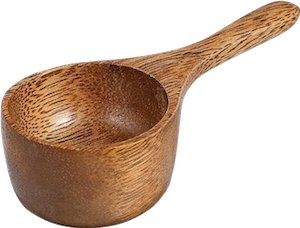 | 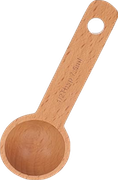 |  |
When preparing any meal, I simply follow the same predictable routine, with the same quantities. For example, only 3 ¼-sized cups of rice per day. I've made a habit of repeatedly using these simple measurements when preparing meals. This way, I don't have to think much about the quantities. I just follow the routine "blindly" and rely on "force of habit" to override and overwhelm any possible urge to add too much or too little. This consistency has helped me overcome temptation to overeat or under-eat. It took some time to build up the habit, but now it's pretty solid.
By measuring ingredients in a standardised, repeatable, "unthinking" way, I can "lock in" a certain quantity of food per day. This allows me fine-grained control over nutrient balance and macro intake (maximising carbs and protein, minimising fat). This way I can sustain the diet long-term in a controlled way and avoid the dreaded "yo-yo dieting", where extremes of under-eating and over-eating lead to stress and missed goals. It's also easier from a financial perspective – I can budget for a certain amount of food in the weekly shop.
While measurement is a useful tool for portion control, I would prefer not to lean too heavily on it as a motivational mechanism. To sustain healthy eating patterns over the long run, I think firm routines and mindfulness are most reliable.
With this careful diet plan in place, I only need to store the necessary ingredients in my home. So I have no unhealthy foods lying around to be accidentally snacked on. This makes it easy to stick to my diet and, to paraphrase Rico Mariani, "fall into the pit of success".
Maximising food volume
“People who eat the most vegetables and fruits tend to have the healthiest body weight and gain less weight through their adult years. Eating lots of low-CD [calorie-density] vegetables and fruits instead of other foods can help you shed pounds and keep them off.”
– Barbara ROLLS • The Ultimate Volumetrics Diet
Popularised by Barbara Rolls, volume eating is a tool that can be utilised to help with weight-loss. It allows you to eat more food and feel fuller without consuming excessive fat or protein. The trick is to select foods that are more bulky and filling. These are typically plant-based foods such as leafy green vegetables, fresh fruits, whole grains and beans. Many of these foods are very healthy anyway, so you get other health benefits beside fat loss from consuming them.
With my current diet, I found I can eat in quantities that are completely filling while still keeping fat very low.
Minimising dietary fat
“Other than in the experimental situation of gross carbohydrate overfeeding, conversion of carbohydrate to stored lipid does not occur to any appreciable extent in humans.”
– Essentials of Human Nutrition • Jim MANN, Arthur TRUSWELL
When we talk about weight loss, we usually mean fat loss. We are probably not interested in losing muscle tone or bone density.
The body can easily store dietary fat as bodily fat ("adipose tissue"), as it is already in the form fat ("lipid"). By contrast, the body has more difficulty converting other kinds of macronutrients – carbohydrates and protein – into fat for storage. So consuming less fat and more carbohydrates and protein in the diet results in less fat gain overall. Yes, this is even true when calories are held constant!
The process of converting sugars into fats is a process called "de novo lipogenesis". According to various studies (such as this one: De novo lipogenesis in humans: metabolic and regulatory aspects), only a relatively small portion of the energy absorbed from carbohydrates is stored as fat on the body. Most circulates in the bloodstream ("glycogen") and is expended for bodily processes (including digestion), expended in normal daily activity, released as body heat ("thermic effect of food") or stored in the liver.
In my personal experience, I found that I could consume a far higher caloric content while still losing weight, if I strictly limited my daily fat intake. It's not necessary or possible to completely eliminate fat from the diet – even fruits and vegetables contain small amounts. But by following a whole-food plant-based diet and avoiding or limiting fattier foods such as avocados, nuts and seeds, fat content can more easily be reduced. The small amount that is taken in can be more readily burned off during moderate intensity fasted exercise such as a morning walk.
Avoiding added sugar
“Stay strong. Get off the sugar train. Get off the addiction. Stop eating sugar.” – Discipline Equals Freedom • Jocko WILLINK
Many perfectly healthy foods contain sugar, including fruits, vegetables and wholegrains.
The problem isn't sugar or carbohydrates per-se. It is the processed sugar that is added to the food that's the problem as well as alcohol in any form.
The problem is that added sugar affects the human brain in ways that cause addiction. This addiction manifests in hunger, cravings, high appetite.
The key to avoiding sugar addiction is to eliminate added sugar from your diet, relying instead only on the naturally occurring sugars in whole foods, including fruits, vegetables, nuts, beans and grains such as brown rice and pasta.
Other benefits to avoiding sugar include reduced likelihood of diabetes, less tooth and gum issues and more stable energy levels.
Enjoying food
I try to eat a bit slower and more mindfully. Famous spiritualist Thích Nhất Hạnh wrote a whole book on this topic: How to Eat, which I've started reading. Some studies show that if we take 20 minutes or more to finish a meal, we'll feel more satisfied. Using small cutlery for eating, like a smaller fork or chopsticks, can help you to slow down and appreciate each bite more.
I like to eat while involved in some relaxing, social and/or moderately stimulating activity. Typically while in an online meetup, interacting in an online chat or forum, with friends and family, and/or watching or listening to something educational such as history or nature documentary.
One thing I noticed since childhood is that the layout of the food can really make eating an absolute joy! For example, I like to add small "sides" to my dishes that really pack a flavour and spice punch. I can combine different parts of the plate as I eat, creating a rich, varied experience. I noticed this kind of "mix-and-match" mode of eating is prominent in the more traditional world cuisines, no doubt for good reason.
- South Indian cuisine - thali
- Vietnamese cuisine - fresh spring rolls
- Spanish cuisine - tapas
- Mexican and Cuban cuisine - fresh salsas, black beans and rice
So with my regular diet, I take inspiration from this technique of having small side portions, but adapt it to my own nutrient profile.
Fasting
I like to do most of my exercise first thing in the morning, when I'm feeling lightest and most alert. So I generally for most of the morning (except for water, coffee and maybe a small light snack).
I do most of my eating in the early to late afternoon. According to some studies, fat loss is greater when following this timing pattern. This may be due to the body being more active during the day and thus burning more fat.
Avoiding unnecessary eating
Sometimes I feel hunger pangs for no obvious reason. At those times I try to run through a mental checklist and this usually sorts me out.
- Am I feeling stressed? Maybe I need a brief meditation or even just a few minutes of simple box-breathing. This is usually not a problem while out, at work or elsewhere.
- Am I uncomfortable? Maybe I just need to put on a coat or jacket, turn on the air conditioning briefly or go to the toilet.
- Am I hydrated? Thirst and hunger can be easily confused. I always carry a water bottle with me so I can hydrate regularly.
- Am I tired? This is more tricky during the day, but in the evening I can usually go to bed earlier if I need a bit more sleep.
I've found that 9/10 times, it's not that I'm genuinely hungry, but that I'm using food as a distraction to cope with some other issue. If I can quickly find the root-cause and address it, I have no need of food.
Humans need to eat, but we don't need to eat that much, and certainly not as much as is pushed on us by the capitalist/consumerist system. If we feel hungry outside of mealtimes, it's likely for some other reason, not a genuine need for food.
Finally, some little habits that give me a motivational boost sometimes:
- Simply wait for 20 minutes, most cravings will pass
- Look forward to tonight's or tomorrow's activities, including eating
Herbs and supplements
Certain herbs and herbal teas can help burn fat and/or reduce appetite. For example, there is some evidence that drinking hibiscus tea reduces body fat. Some moderate Flaxseed consumption has also been shown to reduce body fat.
I'm not very big on supplements, due to the cost, complexity and dubious health benefits. I do take one vitamin D tablet per day if I'm not getting out in the sun much. I take regular blood tests and if the doctor recommends supplementation to remedy any deficiency, I'll make sure to fit that it.
Conclusion#
I hope you found some utility and inspiration in this article!
Maintaining fitness and health is best treated as a long-term game in my opinion. The changes should be gradual, cumulative and sustainable.
In my experience, the surest way to lose unwanted fat is to minimise dietary fat and maintain exercise over a long period of time, sticking to healthy daily routines and trying to make them as enjoyable as possible.
The toughest aspect is to persist over long periods of time, which is why I emphasize simplicity, convenience, health, motivation and enjoyment! But I found Stoicism to be a great help when times do get tough.
Optimizing my exercise and diet has been a fun and fascinating (though sometimes challenging) journey. I see it as a kind of infinite game, something I can always get better/smarter at and that enriches my life.
Further viewing#
- Food and Health on Coursera
- The Miraculous Healing Power of Food • Anthony LIM
- Miche, PhD
- Simon Hill
- Physicians Committee
Further reading#
- Eat, Drink, and Be Healthy • Walter WILLETT
- NutritionFacts.org • Michael GREGER
- Food - What the Heck Should I Eat • Mark HYMAN
- Losing weight mega-thread on MrMoneyMustache.com
- Essentials of Human Nutrition • Jim MANN, Arthur TRUSWELL
- The Ultimate Volumetrics Diet • Barbara ROLLS
Tools#
Some tools to help you on your diet and fitness journey.
- Callisthenics Parks - free outdoor gyms, all over the world
- Free Outdoor Fitness - free outdoor gyms in Australia and New Zealand