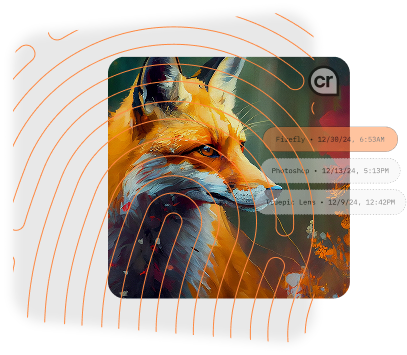
An evolution in understanding online content
The volume of content produced and consumed around the world is skyrocketing—with over 400 quintillion bytes a day. Plus, 90% of that data was created in the last two years and future growth rate will continue to accelerate.
Critically evaluating digital content is an essential 21st century skill, a new type of digital literacy.
Creating deceptive
content is easy
Almost anyone can create realistic photos, videos, audio files, and documents with easy-to-use tools and a few clicks. While there will continue to be bad actors who seek to label synthetic content as authentic, our goal is to provide good actors with a way to demonstrate the authenticity of their content.
Identifying the
origin of content
is now even easier
Almost anyone can create realistic photos, videos, audio files, and documents with easy-to-use tools and a few clicks. While there will continue to be bad actors who seek to label synthetic content as authentic, our goal is to provide good actors with a way to demonstrate the authenticity of their content.
It all starts
with the pin
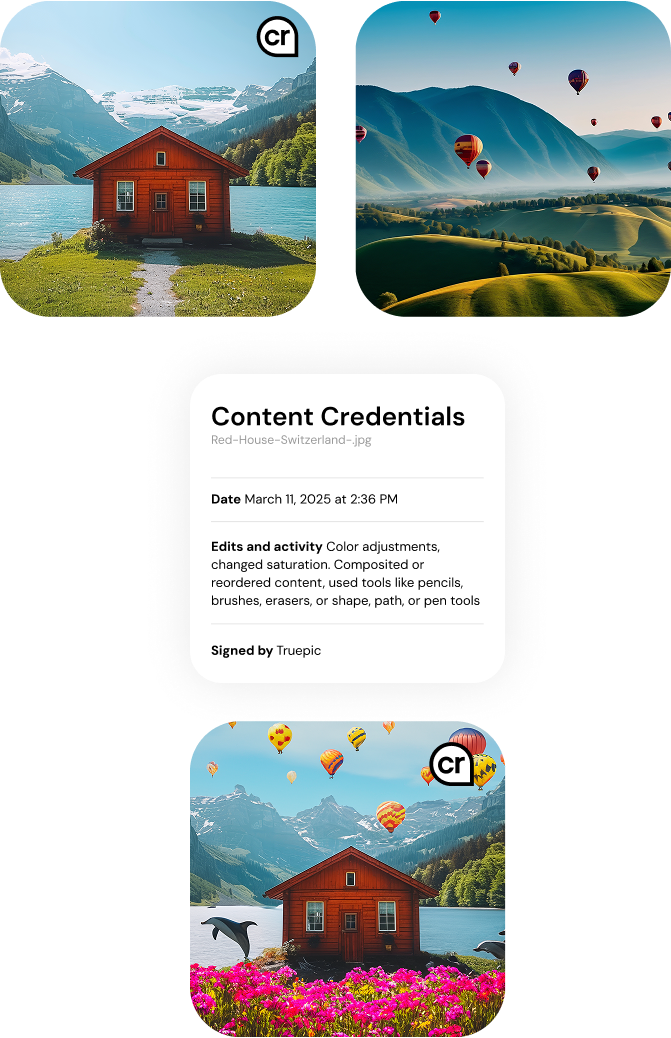
The Content Credentials pin signals that the content contains information about its provenance. This visual representation previews an interactive component that reveals key information. Determine the method of creation and see a record of editing history.
How it's implemented today
Content Credentials in action

Who’s behind
Content Credentials?
One group
The Content Credentials specification is a project hosted by the Coalition for Content Provenance and Authenticity (C2PA).
500+ Companies
It’s grown to a collaboration with hundreds of companies led by Microsoft, Adobe, Intel, BBC, Truepic, Sony, Publicis Groupe, OpenAI, Google, Meta, and Amazon.