By Jerry A. Coyne
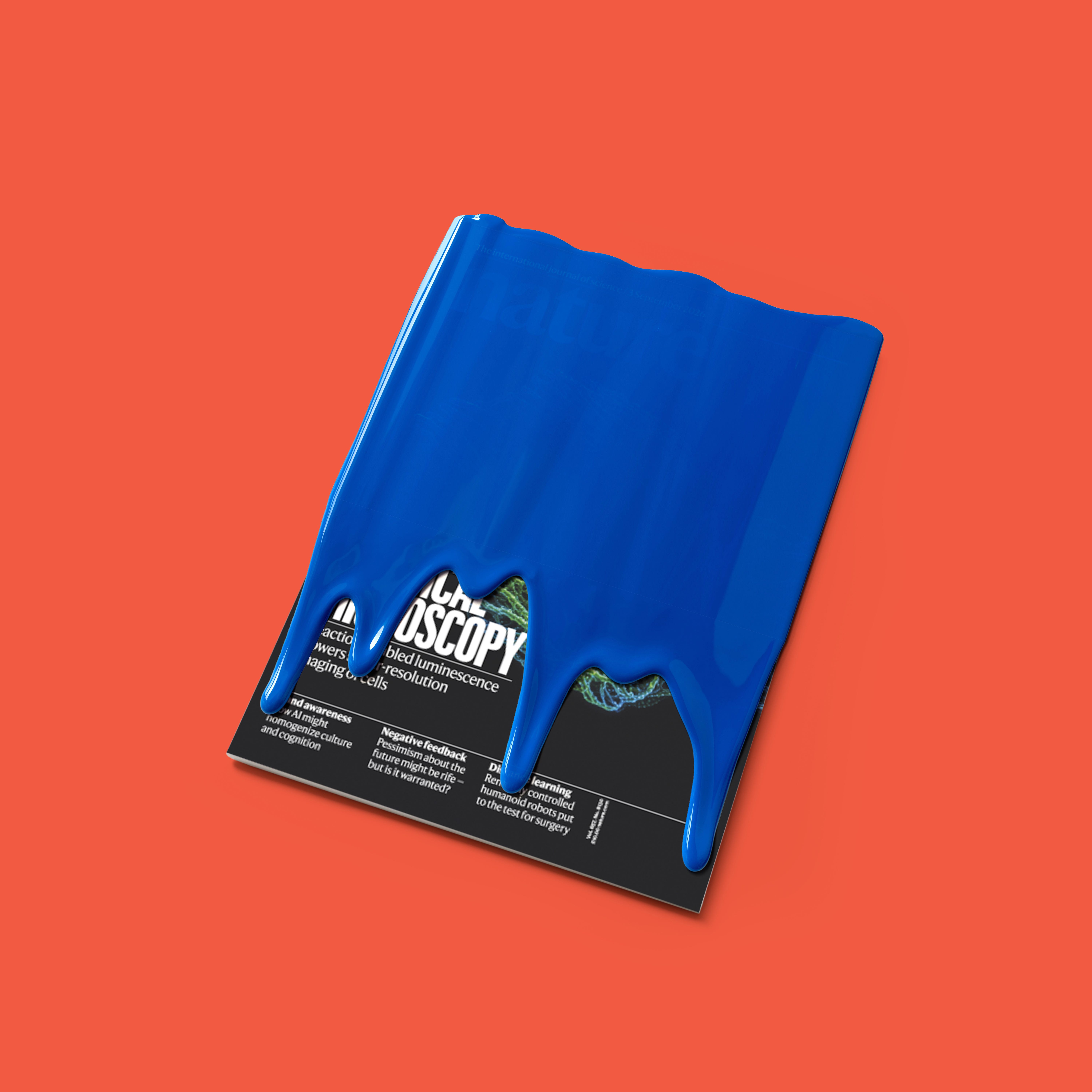
One of the more distressing changes in science is its infection by politics and ideology, a change visible in what I call “journal creep.” Until recently, the primary function of scientific journals was to disseminate research. Now, however, many journals have adopted an additional mission: promoting ideological, moral, or political positions. This newer mission, which endangers not only the reputation but also the practice of science, is seen clearly in a recent editorial in one of the world’s most prestigious scientific journals, Nature.
The Nature editorial centers on the tragic story of Jason Arday, a sociologist who at 37 became the youngest Black full professor ever appointed at the University of Cambridge. In July, it was revealed that Arday had plagiarized significant portions of his Ph.D. thesis at Liverpool John Moores University. This in turn prompted extensive investigations by the press. What they found was not pretty: more evidence of plagiarism, falsified research, fabricated claims on his curriculum vitae, and, most striking, a breathtaking record of biographical fabulism.
Arday claimed he appeared on TV shows he was not on, ran multiple marathons he did not run, and had extreme autism that has not been substantiated. (Arday said he did not speak until he was 11 and couldn’t read or write until he was 18.) Arday also said he received racist threats that couldn’t be verified and suffered multiple bouts of cancer (also not verified). The Times of London reported that Arday stole another researcher’s data (as well as quotes that the researcher obtained in interviews), publishing them as his own. If true, this is wholesale academic fraud.
In response to the growing attention to Arday, Cambridge announced that it was launching an investigation. Arday resigned the same day. Nine days later, on August 14, he was found dead in his flat, an apparent suicide.
Nature’s editorial is titled “The Death of Jason Arday Must Prompt Deep Reflection.” Unfortunately, the reflection Nature demands does not involve asking how someone with such a thin academic record and a history of exaggeration and lying managed to secure such a prestigious position. Rather, Nature is concerned with assigning blame for Arday’s downfall and death, and the blame falls on everyone but Arday himself.
Most at fault, says Nature, was “persistent media attention” largely fostered by racism. Cambridge also deserves blame both for participating in the “systemic racism in academia” that supposedly made Arday’s life intolerable, and for announcing that they would investigate him, which, says Nature, was a violation of “confidentiality.” But all Cambridge announced was that it was investigating Arday’s “academic qualifications and honorary appointments” as well as allegations of “academic misconduct”— nothing more. Since the media was already intensively focused on Arday, announcing an investigation without giving details doesn’t seem out of line. American universities do it all the time, saying things like: “We are not commenting pending an investigation of these accusations.”
Oddly absent from Nature’s editorial is any serious acknowledgement of Arday’s apparent fabulism, plagiarism, errors, and lies. Nor is there any attempt to grapple with the fact that Arday’s decision to publish a memoir with a major commercial publisher further drew the media’s spotlight.
It’s tragic that Arday killed himself. But the frenzy to blame every person and institution for Arday’s death save Arday himself is bizarre. That Nature should join this frenzy lays bare the extent to which even the most prestigious journals have prioritized political sloganeering over truth seeking.
Disparaging merit in favor of equity, shifting research funding towards progressive topics, misrepresenting science by skewing citations towards researchers having approved backgrounds, censoring papers, controlling language, and distorting accepted science so that it conforms to certain narratives while proscribing research on topics considered taboo — such symptoms of ideological pollution are present in journals across the sciences. Here are three examples, all involving Nature journals.
In 2023, a group of climate scientists published a paper in Nature making the strong claim that the increase of wildfires in California resulted almost entirely from anthropogenic climate change — a claim instantly picked up by the media. But right after publication, Patrick T. Brown, the paper’s first author, confessed that he deliberately ignored other causes of wildfires because climate change was the narrative that Nature preferred and it would therefore enhance the odds that his paper would be accepted. As Brown wrote:
I knew not to try to quantify key aspects other than climate change in my research because it would dilute the story that prestigious journals like Nature and its rival, Science, want to tell.
This matters because it is critically important for scientists to be published in high-profile journals; in many ways, they are the gatekeepers for career success in academia. And the editors of these journals have made it abundantly clear, both by what they publish and what they reject, that they want climate papers that support certain preapproved narratives — even when those narratives come at the expense of broader knowledge for society.
When journals hew to ideological positions in this way, it impedes the emergence of scientific truth.
In 2022, Nature Human Behavior published a manifesto asserting that “Although academic freedom is fundamental, it is not unbounded.” The bounds of that freedom should exclude “content that undermines — or could reasonably be perceived to undermine — the rights and dignities of an individual or human group on the basis of socially constructed or socially relevant human groupings.”
As Jesse Singal commented:
There isn’t much concern here about the truth of a claim; rather, the focus is almost entirely on subjective questions like what constitutes “indirect disparagement” or whether or not a perspective is ‘singular’ or ‘privileged.’” ... the goal will be to exert greater influence on the types of knowledge that are allowed to be produced.”
Finally, there’s the effect of politicization on the perceived credibility of science. In 2008, Nature began endorsing candidates for president, beginning with Barack Obama (this endorsement was repeated in 2012), and continuing with Hillary Clinton in 2016, Joe Biden in 2020, and Kamala Harris in 2024.
Whatever you think of those politicians, the decision to endorse presidential candidates has been corrosive to Nature’s reputation for scientific objectivity. We know this because of a study published in, of all places, Nature Human Behavior showing that readers informed about the journal’s endorsement of Biden lost trust not only in the journal but in science more generally.
A scientific journal, like a university, should remain ideologically and politically neutral, with the possible exception of matters that directly affect the mission of the journal itself. Pinning blame for the death of Jason Arday on the press and on the University of Cambridge, and flippantly characterizing science as ridden with “structural racism,” are not issues within the remit of Nature. Although Arday was the author of his own tragedy, Nature asks all of us to search our souls for traces of the racism that, they claim, make us coauthors:
It is incumbent on all of us in the media and academia to reflect on our roles and responsibilities. Both research and media organizations have an obligation to communicate information fairly and accurately — and to avoid causing harm to the people they employ or report on. We can and must learn from this tragedy.
Sadly, Nature has learned the wrong lessons.
Jerry A. Coyne is professor emeritus of ecology and evolution at the University of Chicago. He is the author of Why Evolution is True and Faith Versus Fact: Why Science and Religion Are Incompatible.