A few days ago, Zhang Xiaojun, a well-known host of a Chinese tech video podcast, interviewed Liao Heng, a Huawei Fellow and the company’s Chief Scientist for semiconductors. This was a rare chance to peek into Huawei’s most secretive division.
After being hit by U.S. sanctions in 2017, Huawei poured massive resources into R&D, aiming to develop its own high-end chips and AI servers. The full interview runs for four and a half hours and is definitely worth watching, but given the length, I’ve picked out some key highlights here. The spoken content has been lightly edited for clarity and readability.
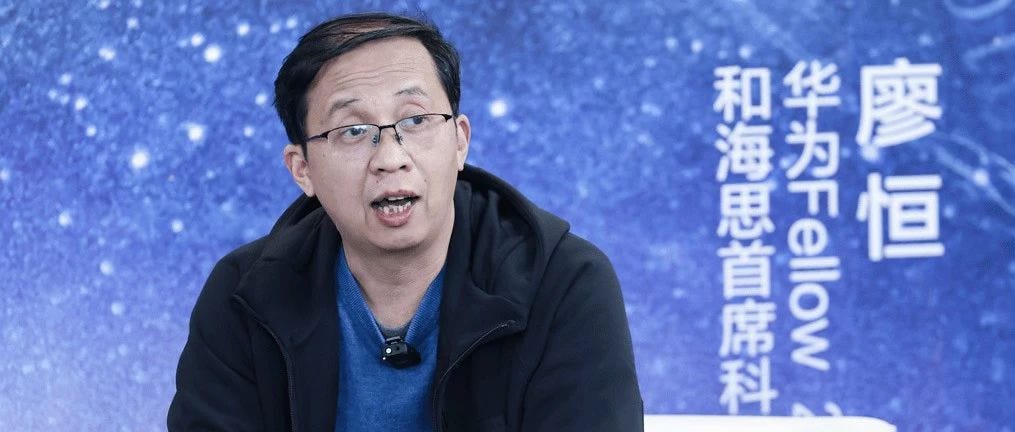
In this discussion, Liao delves into the current state and future of China's chip industry, emphasizing the critical importance of autonomous innovation. The conversation highlights the shift toward independent intellectual property and system-level breakthroughs—such as data center architectures and super-node technologies—while navigating irreversible technological trends. It also explores how open ecosystems and open-source culture can drive progress, alongside insights from Huawei's Ascend chip development. Ultimately, the dialogue underscores a strategic balance between self-reliance and international cooperation, focusing on practicality, economic viability, and energy efficiency in the face of global competition.
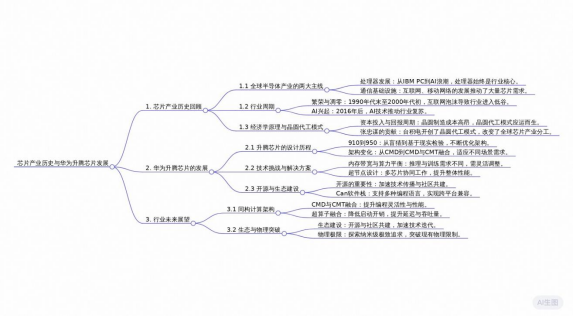
Q: When designing the Ascend 910 and 950 chips, how did your mindset differ? Especially before and after the threat of supply disruption.
LIAO: Changes in one’s state of mind are difficult to accurately describe in words—just like Dong Cunrui’s mindset when facing the explosive charge or the combat mentality of the soldiers at Shangganling. When confronted with difficulties, we’re more inclined to focus on solving the problem itself rather than dwelling excessively on our personal emotions.
Q: Could you, from a broader perspective, divide the past three to four decades of the semiconductor industry history into several major eras and briefly outline the central theme of each era?
LIAO: The semiconductor industry’s past 30 years can be divided into two intertwined main threads. One thread is the processor (CPU), which gradually entered the desktop office and enterprise server sectors starting in the 1980s and, driven by the digitalization process, has now reached the AI wave. The other thread is chips related to communication infrastructure, which have evolved alongside the internet—from a state of no connectivity to the era of the Internet of Everything.
Q: Has the semiconductor industry gone through a cycle from extreme prosperity to decline, and if so, why does this cyclical pattern occur?
LIAO: Yes, after experiencing an extremely frenzied period of growth at a certain stage, the semiconductor industry entered a downturn lasting roughly 10 to 15 years—particularly between 2005 and 2015, when venture capitalists virtually ceased investing in chip companies, viewing the sector as a sunset industry. However, the industry subsequently rebounded thanks to the boom in mobile internet and AI, and in recent years has once again entered a phase of rapid growth.
Q: Why has the semiconductor industry experienced a downturn lasting more than a decade following the internet era?
LIAO: This is mainly due to the fact that companies that previously achieved tremendous success in certain fields have established near-monopolistic advantages, giving them enhanced control over supply chains and greater pricing power. This not only narrows the profit margins for suppliers but also dominates demand and technological development trends, thereby having a negative impact on innovation and stifling opportunities for new innovative forces to put their ideas into practice.
Q: When you think of Google, do you see it as a search company or an advertising company, given that most of its revenue comes from search-related ads? '
LIAO: Yes, Google is indeed a company primarily driven by search technology and its advertising business—especially since the vast majority of its revenue is closely tied to search-related ads.
Q: Companies in the tech industry often find it difficult to reinvent themselves and continuously innovate once they’ve established a monopoly position. What’s your take on this?
LIAO: This is a challenge commonly faced across the tech industry. After many companies achieve their first major breakthrough and establish a competitive edge, it becomes extremely difficult for them to generate disruptive innovation again in new areas. What’s remarkable about the world is that often, it’s not the companies with the most resources that end up being the most successful—just as students from the most privileged family backgrounds don’t necessarily go on to make the greatest professional contributions.
Q: When you entered Tsinghua’s Junior Class in 1987, what were the subjects you studied in the Department of Computer Science?
LIAO: At that time, the computer science curriculum was primarily hands-on. During the transition from using Apple II computers to IBM PCs, the emphasis was on practical operation and the development of hands-on skills—for example, designing and building hardware prototypes.
Q: At the time, did universities take on a role similar to R&D because companies had weaker R&D capabilities?
LIAO: Yes, at that time, due to the relatively weak scientific research and R&D capabilities of Chinese enterprises, universities and research institutes took on this part of the R&D tasks, including major projects such as “Two Bombs and One Satellite.”
Q: What were the main attempts and practices you undertook during your time in school?
LIAO: During my time in school, my friends and I tried developing numerous product prototypes—including laser printers, DVD players, and electronic dictionaries—filling certain gaps in the market at the time, as companies’ R&D capabilities were relatively weak.
Q: When you were in school, did you lean more toward the hardware or software side?
LIAO: At the starting point, my background was primarily in programming competitions, but I also have experience in hardware competitions and a strong interest in that area. Therefore, when it comes to career choices, I’m more inclined toward the hardware field.
Q: How did TSMC’s foundry model come about, and why was it better suited to the era at the time?
LIAO: The wafer foundry model pioneered by TSMC is based on economic principles. Given the enormous capital expenditures and long R&D cycles associated with process technologies, design companies cannot afford such large-scale investments. Therefore, sharing infrastructure has become a more advantageous business model—and it is precisely through this approach that TSMC has transformed the global chip industry’s division of labor.
Q: When did you realize that you might end up working in the chip and semiconductor industry all your life?
LIAO: During my time at Tsinghua, I had a strong desire to explore the underlying technologies of chips. Compared to application development, which involves rapid iteration, I’m more inclined to engage in chip R&D—a field that requires patience and long-term commitment.
Q: What motivated you to go to MIT at the time?
LIAO: At the time, I had two motivations for going to MIT. First, I felt that if I didn’t go to MIT and experience the status and atmosphere of a tech leader, I might end up feeling regretful—just like some outstanding classmates who, even after achieving great success, still wanted to go to MIT to challenge themselves. Second, during my entrepreneurial journey, although the products I developed featured innovative ideas, none of them had actually made it to the market. This left me puzzled, and I hoped that by going to MIT, I could identify the critical missing links in the process of bringing products to market.
Q: What issues did your studies and practical experiences at MIT make you aware of?
LIAO: During my time at MIT, I gradually came to realize that even a seemingly simple design like an electric kettle requires rigorous safety testing and market usability assessments. A product not only needs clever ideas but also must undergo stringent process validation and optimization before it can be widely accepted and used by the public. For example, the development of self-driving technology is a lengthy process that takes seven years—from the prototype stage all the way to its launch and sale to the very first consumer.
Q: What new insights do you have regarding team building and the management of ordinary staff members?
LIAO: After working for one year, I realized that organizing a product development team isn’t just about bringing together a group of brilliant individuals. Rather, it requires recruiting ordinary employees—selected through an average educational background screening—who are responsible and committed, and enabling them to perform their tasks effectively and collaborate with one another. While conflicts may arise among members of a team composed entirely of geniuses, a team made up of ordinary people who share a common goal and possess a strong sense of responsibility is far more likely to successfully complete the task at hand.
Q: When you went to Princeton in the U.S. as a postdoc in 1996, what was your first impression of America?
LIAO: The first time I went to the U.S., I was deeply impressed— it felt like a dreamland, especially after visiting Stanford in 1987, when I realized just how advanced American technology was. But when I returned to Princeton in 1996 as a postdoc, as an adult, I felt a profound sense of not belonging. After all, Princeton was a hub for America’s elite class, and at that time, I didn’t belong to that circle. So I decided to leave quickly.
Q: Did you consider returning home at the time?
LIAO: At the time, due to some mistaken perceptions, I didn’t consider returning to China. But looking back now, that was a foolish way of thinking. In fact, even if you don’t have any particularly outstanding advantages, as long as you’re positive, proactive, and responsible, you can still do very well in China. After all, China has made rapid progress over the past 30 years, providing a much better environment for personal growth and development.
Q: After feeling less suited for Princeton at the time, how did you go about choosing where to work?
LIAO: At the time, I didn’t have many options—basically, I’d go wherever I was needed. Back then, being able to bring 1,000 U.S. dollars to the U.S. was already considered relatively affluent. Many of my classmates even had less startup capital yet still dared to go to the U.S. So at that time, we faced a lot of practical challenges—first and foremost, we had to make sure we could survive.
Q: When did you join PMC-Sierra, a company that happened to be at the very cusp of the first wave of the internet boom?
LIAO: Yes, I joined PMC-Sierra in 1997, at a time when the company had just undergone a restructuring—merging a large corporation with a Silicon Valley firm. My joining wasn’t a deliberate choice on my part; rather, they were the ones who selected me. At the time, though, it was indeed a small company, never exceeding 2,000 employees even at its peak. However, thanks to being perfectly positioned during the first wave of the internet boom—and focusing on critical components for internet backbone infrastructure—the company achieved tremendous success during that wave, eventually climbing to become Canada’s largest publicly traded company by market capitalization.
Q: How did the dot-com bubble burst?
LIAO: Around the year 2000, the internet bubble began to burst. At the time, people believed the internet could transform everything, leading to massive investments in the internet sector—including excessive expansion of infrastructure. However, it soon became clear that these investments could not recoup their costs. There was an overcapacity in fiber-optic network construction, and market demand failed to grow as expected, ultimately triggering the bursting of the bubble.
Q: After experiencing the industry’s downturn, why didn’t you ever consider changing jobs or switching careers?
LIAO: I’m reluctant to easily abandon my colleagues and team, yet I’m also exploring new product directions—this way, the team will have the opportunity to create new products and open up new revenue streams.
Q: Did you later find a new direction and transition into the IT industry?
LIAO: Later, we entered the IT industry and began working in the hard-drive storage sector. Our client base shifted from telecom companies to IT giants such as HP, IBM, and DELL. This transition gave me the opportunity to learn about the characteristics of the traditional IT industry as well as the industry changes brought about by the rise of large-scale internet companies (hyper-scale).
Q: During the semiconductor industry’s sunset period, when you left PMC and joined Huawei, what kind of cyclical changes was the company going through at the time?
LIAO: When I left PMC and joined Huawei, I happened to be experiencing the long twilight period of the semiconductor industry—a time when capital markets lost confidence in the semiconductor sector, industry profits plummeted, and restructuring and mergers & acquisitions became increasingly frequent. Although I felt fear and pressure during this period, it also provided me with a wealth of observational and reflective experience, laying a solid foundation for my later career.
Q: In the early stages of the Ascend chip project, why weren’t you optimistic about developing chips aimed at training, and why did you believe they wouldn’t sell?
LIAO: At the time, I foresaw that China still had a significant gap compared to the U.S. in terms of algorithm and technology innovation. Chinese internet companies had not yet begun training models on their own, and market demand remained unclear. Meanwhile, while data center products might offer greater revenue, profit, and scale than edge products, based on my assessment and expectations at the time, I believed that data center products would find it difficult to achieve success.
Q: What is the ultimate development status of the Ascend chip?
LIAO: The generative architecture we’ve launched covers order volumes ranging from one U.S. dollar to 100 million U.S. dollars, enabling a wide range of applications. The smallest product is the Clip earphone, while the largest is a training cluster comprising hundreds of thousands of GPUs. Although initially I wasn’t very optimistic about data center products, in reality, data center products have far surpassed edge products in terms of revenue, profitability, and scale.
Q: Were some of the choices you mentioned earlier based on pessimistic expectations?
LIAO: Yes, some of my previous choices were indeed made based on pessimistic expectations. But after going through some difficulties, I’ve learned to look at issues from a broader perspective and realized that some of my earlier judgments were wrong on a macro level.
Q: When will Moore’s Law start to slow down? What are the underlying reasons for this?
LIAO: The slowdown of Moore’s Law is an objective fact, regardless of whether or not there is an impact from the tech war. Moore’s Law primarily manifests itself in three aspects: economics, performance, and energy efficiency. As process nodes shrink, the improvements in both economic benefits and performance gradually slow down—especially after 7nm and even 16nm, where economic benefits have essentially stalled, while energy efficiency still sees some incremental improvement. The gap between China and TSMC in terms of energy efficiency is particularly striking.
Q: For China’s semiconductor industry, does an ample power supply mean there’s no need to worry excessively about energy efficiency issues?
LIAO: Although China has an ample power supply, that doesn’t mean energy efficiency issues can be ignored. Even though electricity costs for data centers in China are relatively low, when pursuing high-performance computing, it’s still essential to pay attention to and optimize energy efficiency costs. However, as for computing power demand and energy supply, China currently has sufficient safeguards, so there’s no need to overly worry about the direct impact of Moore’s Law slowing down.
Q: What is the core issue behind Moore’s Law and Tau’s Law?
LIAO: The core issue lies in how human engineers can apply Edison-style innovative thinking to solve problems—specifically, by identifying effective solutions and ensuring that these solutions are economically viable, reproducible, and reliable.
Q: Can the innovative capabilities of TSMC or NVIDIA be replicated?
LIAO: They do not share the same prerequisites and environment, so their innovative capabilities cannot be simply replicated.
Q: Could you, from a tour guide’s perspective, take everyone on a horizontal overview of the entire chip industry chain and explain the concept of the 18-layer pagoda?
LIAO: The chip industry chain can be likened to an 18-layer pagoda structure, with each layer representing different technologies and stages—from the application layer to the physical layer—involving complex processes such as collaborative optimization and the coordination between algorithms and hardware infrastructure.
Q: In chip design, what are the differences and significance of various computing units (such as vector computing power and cube computing power)?
LIAO: Different computing power units represent different specifications of a chip’s ability to perform matrix operations internally—for example, 8-to-1 and 32-to-1. This means that when utilizing computing power, models need to flexibly adjust their approach based on the abundance or scarcity of spatial resources, in order to achieve efficient computation.
Q: How do DeepMind’s V1 or V3, R1 models embody the design principles of sparse parameter activation and model compression?
LIAO: Through careful design, DeepMind chose to compute only a subset of parameters—specifically, just one-thirty-second—to participate in the computation, thereby saving 32 times the computational power and cache. This demonstrates DeepMind’s awareness and thoughtful consideration of both model complexity and computational resource utilization.
Q: When facing a difficult situation, how can you break down and make concrete what seems like an unsolvable problem?
LIAO: When faced with a situation where you’re being pressured, you should break down the broad, seemingly unsolvable problem into numerous more specific sub-problems, and then tackle them one by one. By continuously breaking down and refining your approach, you’ll eventually identify your own strengths and find ways to leverage them while minimizing your weaknesses.
Q: Which specific levels does the 18-story pagoda refer to?
LIAO: The 18-layer pagoda encompasses everything from the top-level application layer (such as WeChat and Alipay) down to the bottom-level physical and chemical layers, as well as multiple intermediate layers including device design, process manufacturing, chip design, programming languages, and algorithms. Each layer represents different technologies and challenges encountered in the chip development process.
Q: In Huawei, why are cross-layer experts relatively scarce?
LIAO: The scarcity of cross-level experts stems from the fact that they not only need deep understanding and extensive experience in a particular specialized field but also must possess the ability to tackle problems across different levels. It’s akin to being able to function both as a sharp needle for digging holes and as a cutting blade at the same time—a kind of comprehensive capability that is uncommon across most professional fields. For example, in AI algorithm research, perhaps only a very small number of individuals, such as Liang Feng, can profoundly grasp and break through specific technical challenges. This cross-level insight and innovative mindset are truly invaluable.
Q: What are China’s strengths and weaknesses in the 18-layer technology system?
LIAO: China’s strengths are primarily evident in the application layer—digital applications such as mobile payments are far more convenient here than in other countries. From chip design all the way down to the application layer, China boasts an ample and distinctly advantageous talent pool, especially in the field of algorithms. Globally, roughly 70% of the world’s top algorithmic talent comes from China. Chip design occupies a pivotal, central position within these 18 layers, and the development of technologies in both the upper and lower layers directly influences it.
Q: From your return to China in 2016 to 2019, how did your understanding of the entire chip industry change?
LIAO: In the early days after returning to China in 2016, I didn’t believe that China had the capability to match the world’s advanced level in the chip industry. But after joining HiSilicon, my perspective shifted completely. I came to realize that my Chinese peers possess industrial capabilities far beyond what I had expected—especially their remarkable dedication and problem-solving abilities when confronted with difficulties, which far outstrip those of their competitors who are blindly overconfident.
Q: How would you describe the past decade in terms of Ascend 10’s development journey?
LIAO: The past decade can be described as a period of challenging yet hopeful struggle. From 910 to 950, both the environmental context and design objectives underwent significant changes—from initial confusion to growing clarity, and then to facing intense pressure from formidable competitors. Throughout this journey, the entire team adjusted its mindset and response strategies accordingly, consistently focusing on delivering high-quality products, meeting customer needs, and seeking breakthroughs even in the face of adversity.
Q: What was Huawei’s initial internal reaction to the supply disruption incident?
LIAO: When the supply disruption occurred, although General He had written a letter in advance, once the disruption actually began, everyone’s reactions varied. As a leader, your primary task might be to soothe the team’s emotions, alleviate their fears, and inspire their competitive spirit and enthusiasm for overcoming difficulties—turning the challenge into an opportunity and guiding the team to tackle each obstacle one by one.
Q: Has the team atmosphere changed during difficult times? And which phase constitutes the most challenging period?
LIAO: The team’s atmosphere has indeed changed, but overall, things are still manageable. During the most challenging period, only about 10% or 5% of the team quickly started looking for new opportunities, while the remaining 80% to 90%, especially the core members, showed varying degrees of enthusiasm in tackling problems and chose to focus on finding solutions rather than dwelling on the problems themselves. It’s difficult to pinpoint exactly which year was the toughest; each phase had its own set of challenges, though the intensity differed from one stage to another. One particularly tough low point occurred when everyone feared that it might be impossible to produce chips in the coming months, putting the business’s closed-loop system at risk of breaking down. Fortunately, thanks to the exceptionally resilient leadership, the situation was handled effectively, keeping most of the difficulties contained within a relatively small scope.
Q: How does Huawei ensure uninterrupted supply during 5G network construction?
LIAO: During the construction of 5G networks, Huawei has never experienced any supply disruptions, nor has it caused the entire telecommunications infrastructure construction to come to a standstill or be significantly delayed. This is the result of the tireless efforts of countless individuals—efforts that involved potentially redesigning and replacing up to tens of thousands of individual circuit boards and rapidly establishing mass-production capabilities.
Q: How was the name “Sheng Teng” (Ascend) decided upon?
LIAO: The name “Sheng Teng” is derived from the phrase “the sun rises and the moon remains constant,” symbolizing hopes for a bright and promising future.
Q: What are the architectural changes and evolutions across each generation of chips (such as 910, 950, etc.)?
LIAO: Each generation of chip architecture evolution is based on several key insights, including the significant model and large-model breakthroughs achieved by algorithmic peers during periods of stagnation, as well as advancements in certain open-source models. Moreover, China’s efforts in open-sourcing a series of models—particularly in non-linguistic domains—and the real-world performance feedback from closed-loop systems for autonomous driving and mobile phone businesses have all enriched the design rationale. For instance, by the time we reached the 950 generation, the reference evaluation criteria for design had become even more comprehensive and refined.
Q: What engineering challenges are encountered during the deployment of reasoning systems, and how have chip requirements changed as a result?
LIAO: During the deployment of the inference system, we found that memory bandwidth is far more critical than expected. Moreover, the inference system has varying demands for different types of chips, which necessitates more precise consideration and optimization during the design phase. At the same time, tight-coupling collaborative working capability is crucial to the success of the 950; in actual business deployments, this capability needs continuous refinement to adapt to diverse data granularity requirements.
Q: What’s your view on the long-term ratio of demand between inference chips and training chips?
LIAO: The demand for inference chips will exceed that for training chips, because inference is a revenue-generating process, whereas training is an investment aimed at building capability. The economic comparison between the two determines their relative proportions. This trend is already evident in current products, such as the introduction of two types of inference chips—those with high bandwidth and those that are relatively cost-effective.
Q: What is a heterogeneous computing architecture, and how does a new type of homogeneous computing architecture differ from a traditional homogeneous architecture?
LIAO: A heterogeneous computing architecture refers to a design in which different types of processors—such as CPUs, GPUs, and NPUs—employ distinct instruction sets and architectural designs. In contrast, a homogeneous computing architecture means that all processors use the same instruction set and architectural design. The new homogeneous computing architecture is, in fact, an extension and improvement upon the traditional homogeneous architecture, aimed at addressing the consistency issues between instruction sets and architectures and better accommodating the needs of various application scenarios.
Q: In the 950 generation, what problems did the new isomorphic technology address? What are the more pressing issues today?
LIAO: The new isomorphic technology resolves the debate over processor computation modes—3D and 3T—eliminating the need to argue about whether to adopt a specific mode in different scenarios. Instead, it seamlessly integrates computation modes based on actual conditions to achieve higher efficiency. Currently, more critical issues include how to build supernodes to provide sufficient memory bandwidth, how to achieve extreme integration during computation, and how to reduce synchronization overhead between multiple cores or chips.
Q: What are the new challenges facing modern model development?
LIAO: The new challenge lies in the fact that, when pursuing low latency, the traditional single-operator invocation approach can no longer meet the requirements, because each invocation incurs startup overhead and data-transfer overhead. Therefore, it is necessary to reduce these overheads through mega co or operator fusion.
Q: In what ways are the developments in AI algorithm design and processor architecture reflected?
LIAO: The change lies in the shift from building models by stacking basic operators using tools like PyTorch to adopting more advanced programming approaches and integrating computations, as well as placing higher demands on processor design to better support complex computational processes and rapid programming modifications.
Q: What is the significance of open source for the Ascend team?
LIAO: Open source helps overcome the challenges in communicating complex technical systems, allowing everyone to directly access the code and design ideas, thereby improving work efficiency and fostering collaborative community development and progress. Q: Was open-sourcing a difficult decision for the Ascend team?
LIAO: Open source isn’t a difficult decision, because it can greatly enhance communication efficiency and facilitate the sharing of ideas, eliminating communication bottlenecks and enabling both developers and customers to understand and adopt the technology system more quickly.
Q: Compared to its early days, is the story of Inspur becoming more or less like NVIDIA’s current development trajectory?
LIAO: Initially, the two are similar, but as they evolve, they gradually reveal differences in terms of system-level integration, granularity of processing, and deployment methods, becoming increasingly focused on the efficiency and adaptability of large models.
Q: In its pursuit of maximizing density at the chassis level, is NVIDIA facing any challenges? Can the density of a single chassis really be increased indefinitely, and is it even necessary to do so?
LIAO: I believe there are indeed some underlying issues. From the perspective of a single chip, the current HBM shortage facing the AI industry stems from an explosive surge in demand, leading to the increasing use of high-bandwidth HBM. Further examination reveals that 2.5D scaling has an inherent upper limit: as the side length N of the computing die (assumed to be square) grows, both computational power and bandwidth, as well as interconnect and power consumption, all increase proportionally with N squared. However, the ratio of memory bandwidth consumed relative to the surrounding HBM, IO, and power supply resources rises rapidly with N, creating an irreconcilable contradiction. Once physical limits are reached, catastrophic consequences—such as an “avalanche”—may occur. Indeed, even a single chassis cannot be scaled indefinitely. As the number of chips increases, power consumption, interconnect bandwidth, and cooling requirements will all grow exponentially. For example, if a chassis’s power consumption were to jump from 100,000 watts to one million watts in just a few years, this would quickly become a serious problem. Moreover, as chip stacking density increases, the inter-chip interconnect distances shrink, leading to higher latency and other overheads. At the same time, this poses significant challenges to wiring costs and signal transmission distances.
Q: How large could this physical boundary be?
LIAO: The boundary could be four radicals, each measuring 800 square units, or it could be six or eight radicals. This depends on the capacity limits of the underlying manufacturing chain. However, it’s clear that the physical gap based on N-squared cannot be resolved through architectural adjustments, and in the future, this may limit the continued doubling of performance per chip.
Q: In chip design, how can we strike a balance and avoid pushing physical limits everywhere? Will we pursue larger single-chip sizes in the process?
LIAO: When designing chips, we focus our efforts on areas where we excel and where value is highest, rather than trying to push physical limits everywhere. For example, in terms of transmission rates, PCB capacity shortages, and physical-layer technologies, we strike a balance to ensure that each generation of products can be delivered to customers on time and with the required quality, while also minimizing the risk of failure. We don’t endlessly increase the density of individual cabinets, because space costs are low—only about 2,000 RMB per square meter—and through optical interconnect technology, we can arrange chips across larger spaces, thereby enabling the construction of large-scale data centers.
Q: In the chip industry, what is the actual magnitude of the generational gap?
LIAO: The actual magnitude of the generational gap remains to be confirmed by the latest mobile phone and related analysis reports to be released in the second half of this year. Miniaturization technology is not the only path forward; stacking technology, when applied at both the chip and system levels, could potentially narrow the generational gap. Meanwhile, the competitive edge of AI chips lies more in their aggregate bandwidth and the memory that matches it, rather than solely relying on advancements in logic specifications. Q: After the research team has finalized the model, how many times greater is the workload for the initial production-level training phase compared to that of the inference system?
LIAO: The workload at this stage is roughly three times that of the inference system, because in addition to all the inference operators used, it also needs to handle more complex reverse operators.
Q: By continuously experimenting and refining their code, can the research team anticipate breakthroughs in addressing the challenges of reasoning and training? What conditions are necessary to achieve such breakthroughs in research? LIAO: Yes, with continuous effort and innovation, an advanced research team can certainly achieve breakthroughs in reasoning—breakthroughs that are fundamentally foreseeable—and it’s entirely possible to realize breakthroughs in training within the near future. Such breakthrough research will require more advanced compilation platforms for support, as researchers have already begun adopting higher-level programming languages in their development efforts, thereby reducing their reliance on specific hardware.
Q: Up to now, what original and innovative contributions have you made in your work?
LIAO: The innovation lies primarily in the chip itself. We are committed to not simply copying others’ work—even if that means facing significant ecosystem gaps and challenges such as changing user habits. However, we believe it is essential to build differentiated advantages and pursue independent design and innovation.
Q: What exactly is the price to pay for not copying homework?
LIAO: The costs of not copying homework include the significant initial effort required for ecosystem development, the flexibility needed to adapt to diverse user needs, and the risk of falling into a technological system that becomes incapable of further evolution.
Q: What can we look forward to in the next-generation chips (such as 950DT, 960, 970, etc.)?
LIAO: In the coming generations, chips will continue to double in performance annually. At the system level, we’ll explore designs featuring smaller building blocks that are either more highly integrated or more flexible, as well as leveraging all-optical interconnects to achieve more efficient combination and scalability.
Q: Has China forged its own path in the chip industry?
LIAO: As can be seen from the financial report data, China has not only achieved technological breakthroughs in the chip sector but has also managed to turn a profit and achieve closed-loop operations economically, thus forging a path with Chinese characteristics.
Q: What is the current actual level of China’s computing power?
LIAO: Based on some secondary data, it is estimated that the scale of data centers currently deployed in China is roughly one-fifth to one-seventh that of the United States. However, with technological advancements and changes in industrial layout, this situation is expected to improve.
Q: Can the supply volume be increased?
LIAO: We are working hard to increase our supply volume, and we expect improvements this year. However, we cannot disclose the specific extent of the improvement at this time.
Q: When did you realize the company had already gotten through its toughest days?
LIAO: When I started receiving more and more internal criticism, I realized that I had already gotten through the hardest days—because during the toughest times, no one usually offers any criticism at all.
Q: Do you feel wronged when faced with internal challenges?
LIAO: Although there may be feelings of resistance at the time, looking back, one realizes that this is an inevitable part of life’s journey, so there’s really no need to feel overly aggrieved.
Q: Over the past decade, what kind of development has China experienced in the chip industry, and how have you felt about it?
LIAO: The past decade has been a period of rapid capability growth for China’s chip industry. For most types of chips that the U.S. can produce, China is now capable of independently designing and manufacturing them. Not only have our own teams developed strong capabilities, but the entire industry—including Huawei—has also become highly proficient. Many companies are now able to develop complex System-on-Chips (SOCs) such as those for autonomous driving, embodied intelligence, and Wi-Fi. Competence in this field has become relatively widespread and is no longer scarce. Meanwhile, the average age of professionals working in China is 20 years younger than their counterparts in Silicon Valley—a fact that symbolizes both hope and explosive potential.
Q: Faced with the influx of numerous companies into the chip industry, how do you view this competition?
LIAO: I’m not particularly worried about this kind of competition; in fact, I think competition is healthy. I hope these professionals are highly capable, and I’m not afraid of them at all.
Q: During the process of enduring hardship, have there been any so-called near-death experiences?
LIAO: Personally, I haven’t experienced a near-death moment myself. However, to give an example, the Kirin chip faced a crisis during its development—but in the end, it was saved by determined individuals.
Q: How do the organizational and cultural designs of hard-core industries (such as chip design) differ from those of more soft-core enterprises? Do you have any unique cultural characteristics?
LIAO: There are significant differences in organizational and cultural design. Although I’m not someone who manages large-scale organizations, from a personal perspective, to be a chip engineer or architect, one must have hands-on experience in chip development. This involves going through lengthy processes such as module-level design and subsystem design, and gaining a deep understanding of the physical layer—skills that cannot be fully acquired through formal education. Moreover, team members need to have a broad outlook: they should not only focus on their own tasks but also pay attention to the technologies at higher and lower levels, continuously improving themselves through ongoing learning and communication.
Q: For candidates without chip development experience, what do you value most?
LIAO: First and foremost, we place great emphasis on shared values and teamwork skills to ensure that everyone can get along well with one another. Second, we value the ability to continuously learn and adapt to new environments, a willingness to invest the time and effort required for chip development, and the capacity for cross-disciplinary communication and collaboration. Q: Will you engage in exorbitant bidding to poach talent? LIAO: We don’t have the ability to snatch top talent at exorbitant prices, nor do we align with Huawei’s culture of striving hard.
Q: Are domestic resources limited, especially in terms of a significant gap in computing power resources?
LIAO: In fact, the computing power resources available in China’s academic community are abundant—far exceeding those overseas—and are backed by powerful computing capabilities at the level of national laboratories. As for the business sector, as long as a team is valuable, it can usually secure the computing resources it needs; computing power is not currently the primary bottleneck.
Q: Is computing power currently a bottleneck for large-scale models?
LIAO: Computing power is not the primary bottleneck—some outstanding teams have achieved remarkable breakthroughs with relatively limited computing resources. Building a complete data center requires not only AI-related hardware such as CPUs, GPUs, and NPUs, but also infrastructure components like memory, SSDs, network cards, and switches. China possesses independent innovation capabilities in all these areas and is striving to build interconnected systems that meet world-class standards.
Q: In the development of the chip industry, what do you think is the biggest shortcoming?
LIAO: Our biggest shortcoming lies in the software ecosystem. Although we continue to make steady efforts to improve our hardware specifications, once deployment scales up, a key challenge becomes how to attract more people to participate and contribute to the development of the new hardware platform.
Q: What’s your view on whether the chip industry might enter a period of decline in the future, as application-layer players could lead to a monopolistic structure similar to that seen with U.S. tech giants?
LIAO: It’s possible for such a situation to arise, but from a long-term perspective, several factors are continually challenging this assumption of monopoly. For example, AI technology has yet to reach a saturation point, meaning the leading edge is not firmly established. Moreover, ambitious individuals tend to favor inclusivity and are less inclined to rely solely on technological superiority for short-term gains. Additionally, policies in countries like China, as well as the availability of talent and the pursuit of diversity, could also help break the dominance of a single monopolistic player.
Q: What’s your view on whether AI technology can quickly overcome the challenges of the physical world?
LIAO: For physical AI to achieve a major breakthrough and bridge the gap from zero to one, it may require significant model breakthroughs in the next few moments or over the next two to three years. Once AI enters the physical world, due to factors such as diversity, it will be difficult for any single system to achieve monopoly—take the automotive industry, for example, which has a history of over a century yet still boasts numerous brands and intense competition. This provides ample room for the further development of AI technology.
Q: Will the global chip industry landscape change over the next five to ten years?
LIAO: First, the impact of the U.S.-China tech and trade wars will persist, potentially leading to a fragmentation of the chip industry worldwide, with each region seeking to develop its own complete manufacturing capabilities. Second, currently there is no clearly dominant monopolist; given the rapid pace of technological advancement, it will be difficult to establish a stable monopolistic structure in the short term.
Q: What are your expectations and outlook for model companies or AI application companies?
LIAO: Large-scale enterprises are not necessarily at an absolute advantage in emerging fields such as AI. The existing strengths of industry giants may pose challenges to their performance in the AI sector, while startups, with their innovation and vision, can also achieve breakthroughs. For businesses, whether they can successfully implement AI services depends on their own capacity for innovation and the founder’s vision for the future.
Q: In the tropic chatbot created by OpenAI, is its business model related to programming entry points?
LIAO: Yes, the primary source of revenue for the Tropic chatbot comes from API calls. Whether to control access via programming interfaces (such as IDEs like VS Code) or to offer only API services is a question that needs to be discussed.
Q: Has there ever been an example in history of intense competition based on some kind of fantasy?
LIAO: In the early days of the internet, the competition between Microsoft’s Internet Explorer and Netscape Navigator serves as a prime example. However, in the end, the market landscape shifted, and new industry leaders such as Alibaba, Taobao, Alipay, and WeChat emerged on different tracks—none of them having initially won the original competition.
Q: What are the barriers AI faces at the application layer?
LIAO: A significant hurdle AI faces at the application level is its lack of ability to understand personal context. Even if AI possesses powerful capabilities, if it cannot integrate into users’ daily life and work scenarios, it may end up being merely a tool for issuing instructions rather than a truly intelligent assistant.
Q: What kind of entry points might be needed in the future for the AI application layer?
LIAO: In the future, we may need a super app as an entry point that can seamlessly integrate with users’ social and work apps, providing a comprehensive understanding of users’ contextual information to deliver better services. However, this could also infringe upon individuals’ privacy boundaries.
Q: Within the Huawei ecosystem, is chip R&D facing the dilemma of innovators?
LIAO: Huawei HiSilicon is no newcomer; the challenge it faces lies in defining its future vision and gaining recognition—both internally within the organization and externally. Especially when confronted with significant difficulties, it needs to find solutions and overcome critical thresholds.
Q: Regarding the NPO (Near-Panel Optics) solution in optical communication technology, why is it preferable to place the optical module next to the chip rather than inside the chip itself? Is it necessary to integrate the optical module directly into the chip in order to address laser failure issues?
LIAO: Placing the optical module next to the chip can significantly shorten the transmission distance of electrical signals, thereby reducing signal loss and the risk of failures caused by physical connections. Meanwhile, positioning the laser inside the chip would increase the risk of refractive index changes and device failure due to the high-temperature environment. However, by placing the laser inside the chip and adopting a redundant design, we can lower the failure rate. It’s not necessary to place the optical module externally—although some people opt for this arrangement to facilitate replacement—but to ensure optimal performance and minimize failure rates, it’s more appropriate to integrate the laser inside the chip and design a redundant structure that allows the remaining laser to continue functioning even if one fails.
Q: You just mentioned an important decision—namely, not placing the light source outside. Could you elaborate on the reasoning behind this choice?
LIAO: When using a single light source to supply 72 optical channels, the energy required would be 72 times greater. This could lead to a localized hot spot—where high power is concentrated on a single point and then split into multiple channels. Such a point would fail due to overheating. Since materials, adhesives, or dust can degrade when heated, the original optical communication equipment could end up functioning as a cutting machine instead. Therefore, to prevent this issue, I tend to rely on intuitive choices—even if they haven’t been experimentally verified. Based on the potential risks involved, I choose to avoid them.
Q: Has your passion for the chip industry remained as strong over the years?
LIAO: My passion stems more from my awareness of technological advancements and societal needs. In our daily lives, we see demand for computing power, self-driving cars, and other such technologies everywhere—demands that are driving the development of the chip industry. At the same time, there’s also a negative driving force: when individuals fail to make outstanding contributions, they may resort to harmful behaviors.
Q: Is your mission personal or corporate?
LIAO: Huawei’s mission remains the same—to bring digital life to everyone, every enterprise, and every society. My personal mission is to leave behind as much as possible of something positive and constructive within the limited time I have, rather than engaging in destructive activities.
Q: Where exactly are the city and valley you mentioned—the Silicon Valley—and how does AJ’s vision differ from Wall Street’s vision?
LIAO: Silicon Valley might be located in places like Wudaokou, Qiantan in Shanghai, or Binjiang—areas that boast a vibrant AI research environment. Compared to Silicon Valley, China has a more abundant supply of talent and is currently farther from the monopolistic center, enjoying a period of active intellectual exchange and robust development.
Q: What profound impacts might the emergence of China’s open-source culture have?
LIAO: I hope the open-source culture can last a bit longer, because open-source efforts aren’t necessarily sustainable. If left to the founders’ discretion, they might endure even longer. The open-source cultures fostered by China’s model companies and chip companies could have far-reaching impacts that surpass current expectations.
Q: Could you recommend a few books that offer valuable insights and lessons for the fields of science and engineering?
LIAO: I recommend “The Idea Factory” (IDF factory), which chronicles the history of Bell Labs and highlights the work conducted between 1940 and 1945—work that remains highly relevant and instructive today. Another book I’d suggest is “The Innovator’s Dilemma,” ideal for business leaders seeking to understand how success can inadvertently become an obstacle to future innovation. Lastly, I’d recommend “The Work of Rules” to young people, helping them grasp the complexities of interactions in the workplace and the process of reaching consensus.
AI chip architecture expert and core pioneer of Huawei’s Ascend AI chips. With over 20 years of experience in chip design and R&D management, including nearly two decades at top-tier overseas semiconductor firms, Liao Heng has led the development of Huawei’s complete hardware-software foundation—from chip architecture and CANN underlying software to cluster interconnects. He possesses a full-stack technical vision bridging academic research and industrial application, with deep expertise in complex system architecture evolution and cross-domain hardware-software co-design.
Tsinghua University, Department of Computer Science (Youth Class)
Completed a combined Bachelor’s, Master’s, and Doctoral program. Admitted at age 14, earned Ph.D. in 1996. Built a solid theoretical foundation in computer science and artificial intelligence.Princeton University, Department of Electrical Engineering
Postdoctoral Researcher (1996–1997). Conducted cutting-edge research in electrical engineering and chip design, laying the academic groundwork for subsequent industrial R&D.
Huawei HiSilicon | Chief Architect, Ascend Series
2016 – PresentSpearheaded the architectural evolution of Ascend AI chips, including Ascend 910 and Ascend 950, driving the technical iteration from single-chip to cluster-level AI computing systems.
Established a comprehensive, fully self-controlled hardware-software foundation spanning chip architecture, CANN underlying software, and cluster interconnects.
Enabled the large-scale industrial deployment of Ascend AI chips, establishing them as a core technical benchmark in China’s AI chip sector.
PMC-Sierra (Renowned Canadian Storage Chip Company) | Senior Architect → Company Fellow → VP of R&D
1997 – 2008Advanced through the ranks over nearly two decades, building deep expertise in overseas chip design and engineering.
Led the architecture design and development of multiple storage chips, accumulating extensive experience in chip engineering and R&D team management.
As Company Fellow, contributed to defining the company’s technology roadmap and drove the commercialization of storage chips in data centers and communication equipment.
AI Chip Architecture Expert | Core Pioneer of Ascend | Full-Stack Technical Foundation Builder | Overseas Chip R&D Veteran | Academic-Industrial Bridge