When the motor car was in its infancy, engineers and designers experimented with all sorts of technologies and ideas to see which would work best. Through years of experimentation – and sometimes blatant copying – most manufacturers eventually settled on a commonly accepted template for building a car.
As new technologies were developed and tested, this template would change to accommodate them. In some cases, manufacturers would head off on their own, trying out exotic, untested designs. For example, Mazda has repeatedly tried to perfect the rotary engine design, and Porsche has spent decades taming its rear-engined sports cars.

BMW
- Founded
- 1916
- Founder
- Karl Rapp
- Headquarters
- Munich, Germany
- Owned By
- Publicly Traded
- Current CEO
- Oliver Zipse


Find more vehicles in our marketplace
And while some others have tried to copy them, they soon return to the safe waters of the accepted "template". In some instances, a company may choose a design – say the inline-six engine – and stick with it, despite few rivals going the same route. But in the fullness of time, their choice is proven to be the right one.
In recent years, this is exactly what has happened, with auto manufacturers from around the world finally choosing to embrace the inline-six engine like never before. Why is it happening, and are BMW executives saying "I told you so" at every board meeting? We decided to find out.
All vehicle data is from reputable sources. Pricing excludes destination charges and tax unless otherwise specified.
UPDATE: 2026/02/19 16:31 EST BY GERHARD HORN
Update
This feature was updated with a relevant comparison between the Ram 1500 equipped with a Hurricane Inline-Six and the naturally aspirated 5.7-liter V8 that became an optional extra in 2025.
Why Are Manufacturers Bringing Back The Inline-Six?

The number of cylinders an engine has – and the way they are configured – has a big impact on the character and performance of a vehicle. There have been all sorts of engine layouts over the years, and in most cases, manufacturers seem to agree on how they should be arranged. It's pretty much universally agreed that anything up to four cylinders should go in a line. In comparison, eight cylinders or more are best configured in a V.
A horizontally opposed flat or "boxer" layout is used by manufacturers like Subaru and Porsche to good effect, but they are the exception to the rule. VW has also experimented with all sorts of strange solutions, like the VR6 and W12, but neither has been adopted by rival manufacturers.

The Most Powerful Inline 6 Engines Ever Made
No horsing around, these ten cars with straight sixes really delivered on the horsepower front.
In the case of the six-cylinder engine, things have been less clear-cut. Straight-sixes have been around since 1903, while the V6 first saw the light of day in 1950 in the Lancia Aurelia. By the 1980s and 90s, the V6 was the powerplant of choice for most major manufacturers. The inline-six was still around; notable examples included Nissan's RB and Toyota's JZ engine series, as well as the 4.0-liter inline-six in the Cherokee and Wrangler.
Ford's F-Series trucks still had inline-sixes, too. But this was the era where even Mercedes was preparing to ditch its inline-six range in favor of a V layout. So, apart from BMW, the majority of high-volume models were moving to a V6.


Pros And Cons Of Inline-6 Engines
Simplicity makes the inline-6 one of the most well-loved engine configurations in the automotive world. But what are the drawbacks?
Mechanical Superiority
In pure mechanical terms, the inline-six is a superior engine to a V6. Firstly, it is inherently much smoother, requiring no balancer shafts. It is also less mechanically complex, requiring just one cylinder head and fewer camshafts than a V6. Maintenance is also easier thanks to the extra space on either side of the block, which also allows for more efficient packaging of turbochargers.
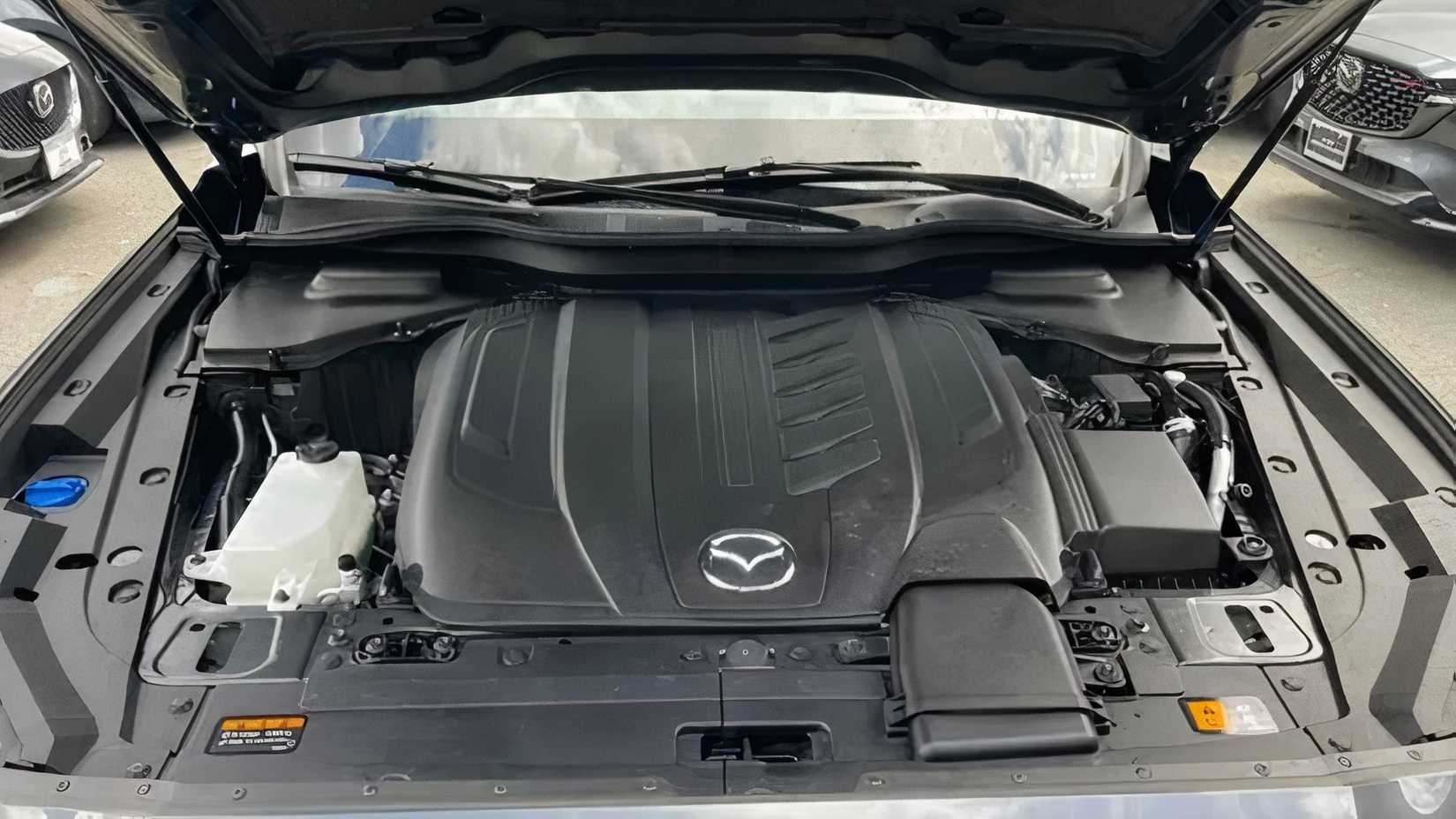
Inline-sixes also tend to have more low-end torque as their balanced design allows for a longer stroke, which promotes low-rev performance. In general, they are also more efficient than a V6 as there are fewer energy losses through vibration and less internal friction from the simpler design. They are also easier to turn into a modular layout, allowing for four and three-cylinder variants based on the same basic block design.

Thanks to these benefits, Mazda, Stellantis, and Jaguar Land Rover are all now moving to straight-six layouts. The latest Dodge Charger Six-Pack may not have quite the sound of the old V8, but with 540 hp on tap, it is hardly a slouch, and it's way more efficient. Even Mercedes is returning to the fold, with a range of mild-hybrid inline-six motors that have gradually replaced its V6 range since 2017.


- Base Trim Engine
- 3L AMG I6 Hybrid
- Base Trim Transmission
- 9-speed automatic
- Base Trim Drivetrain
- All-Wheel Drive
- Base Trim Horsepower
- 429 HP @6100 RPM
- Base Trim Torque
- 413 lb.-ft. @ 1800 RPM
- Base Trim Fuel Economy (city/highway/combined)
- 18/23/20 MPG
- Base Trim Battery Type
- Lead acid battery
Infotainment & Features
8 /10
BMW has never strayed from this layout, and its B58 and S58 inline-sixes are among the most advanced and powerful on the market. But surely there must be some redeeming feature of the V6 for it to have been so popular for so long?
The Most Powerful Inline 6 Engines Ever Made
No horsing around, these ten cars with straight sixes really delivered on the horsepower front.
They Perform Better Than V8s
Though we all love the rumble of a V8 engine, there's no denying that a turbocharged inline-six does a better job. That's not an opinion, but a fact verified by our testing equipment. In the table below, you can see all the engine options available for the 2026 Ram 1500. It's quite a spread, ranging from a base NA V6 all the way to the High Output Hurricane motor.
|
2026 Ram 1500 Engine Options |
||
|---|---|---|
|
Engines |
Horsepower |
Torque |
|
3.6-liter Pentastar V6 |
305 hp |
271 lb-ft |
|
5.7-liter Hemi V8 |
395 hp |
410 lb-ft |
|
3.0-liter Hurricane I6 (SO) |
420 hp |
469 lb-ft |
|
3.0-liter Hurricane I6 (HO) |
540 hp |
521 lb-ft |
Now let's take a look at the 0-60 mph times we've recorded in Ram models over the last year or so:
- 2026 Ram 1500 Limited Crew Cab 4x4 (Hemi V8): 6.39 seconds
- 2025 Ram 2500 HD Laramie HD 4x4 (Cummins): 6.28 seconds
- 2025 Ram 1500 Big Horn Crew Cab 4x4 (Hurricane SO): 5.2 seconds
- 2025 Ram 1500 Tungsten Crew Cab 4x4 (Hurricane HO): 4.7 seconds
To make matters worse, Ram actually charges you more for the V8 engine than the Standard Output Hurricane engine, which, as you can see above, is quicker to 60 mph. In short, you really have to love the V8 engine to opt for it. We do get the appeal, however. A car is an emotional purchase, and that's where the Hurricane falls slightly short. But, logically speaking, the inline-six is miles ahead.
|
Engine |
Pentastar V6 |
Hurricane SO |
Hemi V8 |
Hurricane HO |
|
Tradesman |
Standard |
$1,695 |
$2,895 |
Not Available |
|
Express |
Standard |
$1,695 |
$2,895 |
Not Available |
|
Warlock |
Standard |
$1,695 |
$2,895 |
Not Available |
|
Big Horn |
Standard |
$1,695 |
$2,895 |
Not Available |
|
Laramie |
Not Available |
Standard |
$2,895 |
Not Available |
|
Rebel |
Not Available |
Standard |
$2,895 |
Not Available |
V6 versus Inline-Six

V6 engines certainly have their strengths. General Motors built several for its brands over the years, and Nissan used this layout for its world-beating GT-R sports car. Ford developed a 660-hp 3.5-liter twin-turbo V6 for its GT supercar, and Ferrari has even fitted a V6 to some of its current models, including the 1,184-hp F80 hybrid hypercar.
Clearly, they are capable of producing plenty of power in some very demanding applications. Depending on where it is mounted in the engine bay, a V6 can contribute to a lower center of gravity, and the shorter crankshaft is less prone to flexing under heavy load or at very high revs. But a V6's benefits aren't necessarily performance-based.

Packaging Benefits
Its main benefit is that it's more compact than an inline layout, which allows it to be used both longitudinally and transversely. This means it can be fitted to front-wheel drive (FWD) platforms, as well as rear-wheel drive (RWD) and all-wheel drive (AWD) vehicles. Inline-sixes are almost always mounted longitudinally (aside from just a handful of exceptions), and so are best suited for RWD and AWD applications.
This is the primary reason that the V6 was adopted by so many manufacturers. But as new platforms to accommodate the longitudinal inline-six are developed – and every bit of technical advantage is necessary to meet strict emissions regulations – this configuration is making a comeback.

Pros And Cons Of V6 Engines
Six-cylinder engines are all the rage these days - here's why the V6 configuration is the one to go for.
Is The Inline-Six Back For Good?

Manufacturers tend to converge on similar technological solutions as they mature and displace older tech. This is why almost every car is turbocharged, downsized, and has complex electronic systems. The inline-six's longitudinal layout may have prevented it from being the default choice in the past, but its inherent benefits outweigh the packaging constraints, and we may see more manufacturers either developing their own inline-six motors or licensing existing tech.

Unfortunately, this resurgence in interest in the inline-six layout is most likely going to be a blip on the radar of the automobile, as EVs are eventually going to make even the most efficient internal combustion engines obsolete. However, with the shifting regulatory landscape causing uncertainty among manufacturers, it may be around for a little while yet.
For now, we get to enjoy a new generation of powerful, efficient, and smooth engines in Jeeps, Mazdas, Mercedes-Benzes, Land Rovers, and, of course, BMWs for the foreseeable future.
Sources: BMW, Mazda, Mercedes, Stellantis