In 1988, a motley crew of University of Wisconsin-Madison students and dropouts created the satirical newspaper The Onion — arguably, one of Madison’s greatest exports. In the decades since, monied interests tried to cash in on The Onion’s success, nearly killing the comedy in the process.
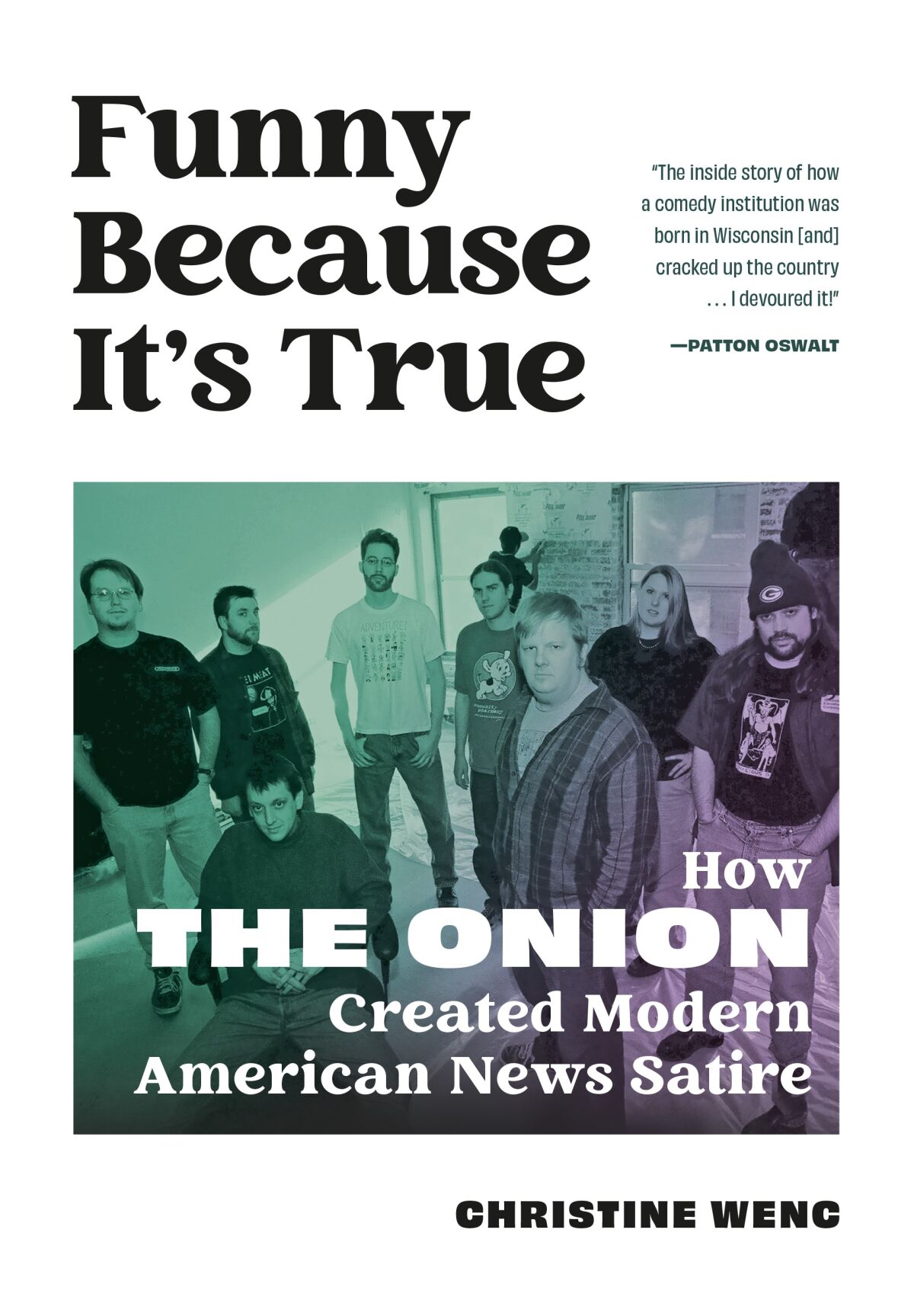
But according to a new book, the joke’s on its old corporate overlords: The Onion has regained its independence and is as subversive as ever. Out March 18 from Running Press, “Funny Because It’s True: How The Onion Created Modern American News Satire” by original Onion staff member Christine Wenc details the remarkable history of a comedy institution.
Wenc will be in conversation with Wisconsin Public Radio’s Steve Paulson at a book launch on Tuesday, March 18, at Arts + Literature Laboratory, where Wenc has worked as a volunteer. The event is free, hosted by the Wisconsin Book Festival.
For her rollicking history of “America’s Finest News Source,” Wenc interviewed scores of past and present Onion staffers on both the editorial and business sides. She herself was a member of the original staff, serving as the newspaper’s copy editor from 1988 to 1990.
“It's an important part of American culture,” she said. “And it was part of me, too.”
The genesis of the book came in 2017 after Wenc had returned to Madison after more than 20 years on the East Coast. (She now works as a grant editor at UW-Madison.)
“On one particularly insane news day, I was just like, ‘God, I wonder what The Onion people think of all this,’” she said. “Everybody was having these super intense conversations about bad fake news, like on Fox News, designed to create chaos and make everyone paranoid and hostile.
“The Onion is like good fake news,” she added. “It’s satire. It's trying to make the world a better place.”
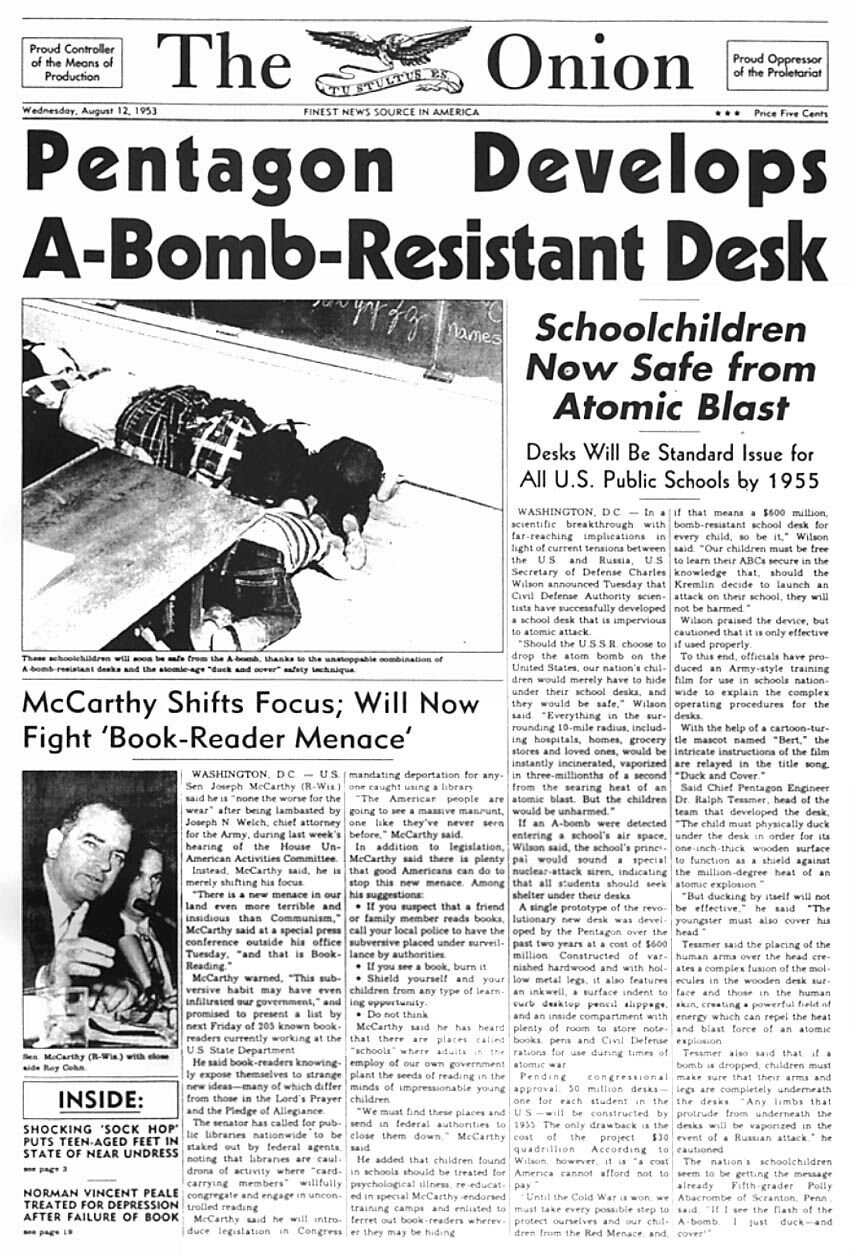
The Onion released "Our Dumb Century" in 1999.
CAP TIMES ARCHIVEGood fake news
Originally a coupon delivery system that hoovered up local advertising dollars, The Onion became a must-read free weekly on several U.S. college campuses in the 1990s. By applying AP style to its absurd stories, The Onion skewered mainstream media and taught media literacy. And because its satire was so consistently on the mark, The Onion became a pipeline for its writers from this scrappy alt weekly to late night TV and Hollywood.
But The Onion became, in recent years, something it long abhorred and ridiculed: a media company forced to sell its soul for clicks and ever-higher valuation by a series of clueless corporate owners.
By 2014, Wenc writes, “The Onion was a multiplatform media brand, a business whose primary goal was not to speak truth to power or write timeless literary satire.” The goal instead, she writes, was “to prep itself for sale and make more money for people who were already wealthy after the staff salaries were paid.”
Wenc’s book covers The Onion’s pre-internet and proto-Photoshop days, when The Onion was run by “outcasts and misfits and weirdos” in Madison. She follows its relocation to New York City and the brilliant and cathartic issue it published just days after 9/11. She goes through the media upheaval of the early 2000s — an attempt by staff to organize a management buyout, the mass resignation of editorial staff over closure of the NYC office and move to Chicago, and finally, the hard-fought unionization of Onion workers.
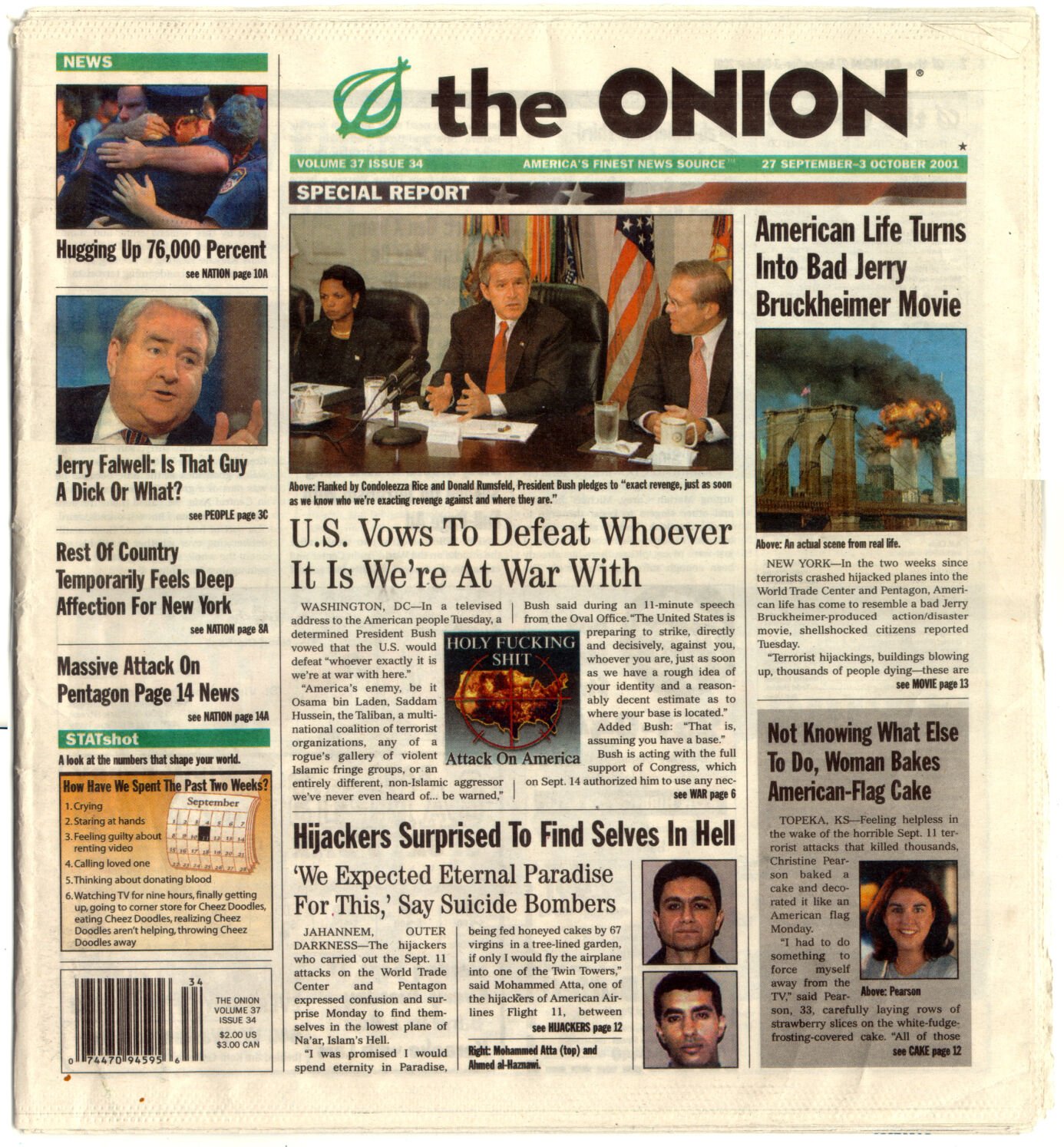
In "Funy Because It's True," author Christine Wenc follows The Onion's relocation to New York City and the brilliant and cathartic issue it published just days after 9/11.
CAP TIMES ARCHIVEThe 2003 sale of The Onion to wealthy New York investor David Schafer changed the independent small business into “an investment in somebody's portfolio,” Wenc said. In 2015, Univision bought a 40% stake in The Onion and merged it with a group of disparate websites that included Gizmodo, Deadspin and Jezebel.
A 2016 bid by Elon Musk did not happen, although Musk was one of several interested parties at the time, Wenc writes. (Onion Editor-in Chief Chad Nackers said Musk did poach seven Onion staffers to produce another satiric publication titled Thud, which lasted two years before Musk stopped funding it in 2019.) That The Onion — rather than Twitter — could have become X, is wild to imagine.
In 2019, the entire Gizmodo Media Group was sold to private-equity firm Great Hill Partners, marking the start of a particularly dark chapter for The Onion.
“From 2019 on, we were becoming a content factory,” Nackers said. “If you’re a private equity company, you just want the ad money. But you can’t treat The Onion like some other website that puts out 100 articles a day.”
According to Wenc, The Onion started publishing stories paid for by the brands mentioned in them (called “sponsored content”) and creating branded content for publication elsewhere. Meanwhile, Onion Network News videos and the spinoff website Clickhole were increasingly skewering broadcast TV tropes and hyperbolic internet aggregators, respectively.
Empathy for the underdog
Wenc writes about the inevitable replacement of her Generation X writing colleagues by more ambitious Gen Z scribes. When pressure from business interests intensified, Wenc said it was the younger writers who “worked their asses off to maintain The Onion’s editorial integrity.”
While some former Onion staffers told Wenc that the publication’s agenda wasn’t overtly political (it’s meant to entertain, after all), several former Onion editors said the satire was consistently animated by liberal-progressive empathy for the underdog, much like that of The Daily Show and The Colbert Report, both of which hired writers from The Onion.
Last November, The Onion garnered headlines nationwide by making a brash political move. It placed the winning bid (at least initially) to buy, through bankruptcy proceedings, Alex Jones’ far-right conspiracy media empire InfoWars. While ongoing legal wrangling may prevent the sale, Onion officials still hope to take ownership of InfoWars and turn it into a parody of itself.

Christine Wenc is the author of "Funny Because It’s True: How The Onion Created Modern American News Satire," out March 18 from Running Press.
COURTESY OF CHRISTINE WENCNackers said that even if the sale falls through, The Onion’s attempt to buy InfoWars “served its purpose. It was a moment of joy for a lot of people.” The bid suggests that The Onion’s new owners understand how this fake news organization can continue to challenge what’s rotten on the media landscape.
In early 2024, The Onion was freed from its ownership by Great Hill Partners. The new benefactors proved they were long-time fans by naming The Onion’s parent company Global Tetrahedon, LLC, after a recurring joke in “Our Dumb Century,” the best-selling book The Onion produced in 1999.
Engendering even more goodwill, the new regime (led by Twilio tech company executive Jeff Lawson with former NBC digital disinformation reporter Ben Collins serving as The Onion’s CEO) returned The Onion to print last August. After more than 12 years of being online only, a monthly print edition is now available to subscribers.
Sticking with satire
While Nackers feels optimistic about The Onion’s future under the new regime, Wenc remains circumspect. “I’ll reserve a bit of my Gen X cynicism," she writes, while hoping “Global Tetrahedron remembers where The Onion came from. And whose interests it serves.”
In the final pages of her book, Wenc argues that The Onion’s brand of satire is still valuable as a means of culture jamming.
She assures readers that the “good fake news” perfected by The Onion since 1988 is not responsible for the “bad fake news,” or right-wing propaganda, that is so pervasive today.
“The Onion’s best satire has always been based in both emotional honesty and clearly stated, well-researched facts — in other words, the truth,” Wenc writes. “Its writing staff has now given us decades of brilliant, compassionate, blunt and hilarious critical thinking about news, the media and human nature — and a lot of fun and silliness too.”