A while ago, I wrote about my journey to find Lord Cornwallis’s surrender sword.
You know how rabbit holes work. You’re a history teacher, you chase one tiny detail, one loose thread, and suddenly you’re corresponding with a stranger in Gloucestershire trying to track down the sword connected to the surrender at Yorktown.
Not just any sword. The sword.
The ceremonial sword tied to the British surrender in 1781. The moment the largest British army in North America laid down its arms. The symbolic end of a war that changed the world.
And ceremonies matter.
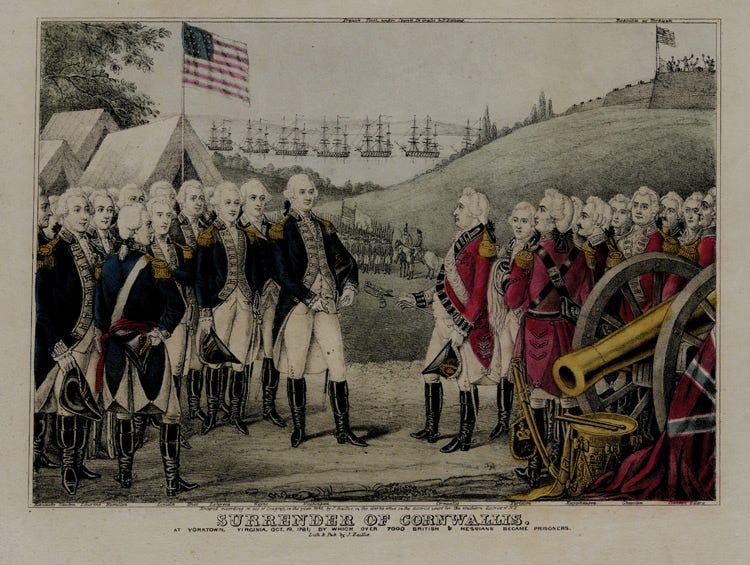
At Yorktown, Lord Cornwallis claimed illness and refused to attend the surrender ceremony himself, sending Gen. Charles O’Hara in his place. That decision was seen, even then, as a slight. O’Hara first attempted to surrender the sword to the French commander, the Comte de Rochambeau, who politely redirected him to George Washington. Washington, understanding exactly what Cornwallis was doing, refused to personally accept it because Cornwallis himself was not present. Instead, Washington directed O’Hara to surrender the sword to Maj. Gen. Benjamin Lincoln.
Which, honestly, was a little bit of poetic history.
Lincoln had been forced to surrender Charleston to the British in 1780, one of the greatest American defeats of the war. A year later, at Yorktown, he stood there to receive the British surrender in return.
Sgt. Joseph Plumb Martin later remembered the British marching out “with bayonets fixed, drums beating, and faces lengthening,” while the American and French troops watched them pass between the lines. It was, he wrote, “a noble sight to us.”
And then there’s this little ding dong for your Liberty Bell.
Charles O’Hara, the poor guy stuck doing Cornwallis’s awkward errand, later found himself surrendering again during the Siege of Toulon in 1793. This time, he handed his sword to a 24-year-old French artillery officer named Napoleon Bonaparte.
History has a sense of humor.
Even stranger? After two years as a prisoner of war in France, O’Hara was eventually exchanged for Rochambeau’s son. The same Rochambeau who had pointed him toward Washington at Yorktown.
History teachers love this stuff because it reminds you the past isn’t made of statues. It’s made of people bumping into each other over and over again across decades and continents.
So about twelve years ago, I started trying to track down the sword itself. Why? My students asked me “Hey, Coach, what ever happened to the Cornwallis’s sword?”
I didn’t know. I asked the White House, I assumed it was above a mantle there. They said no.
I asked the National Park Service. I asked museums.
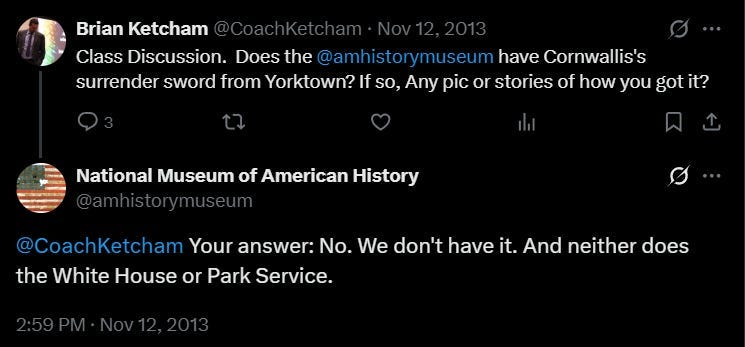
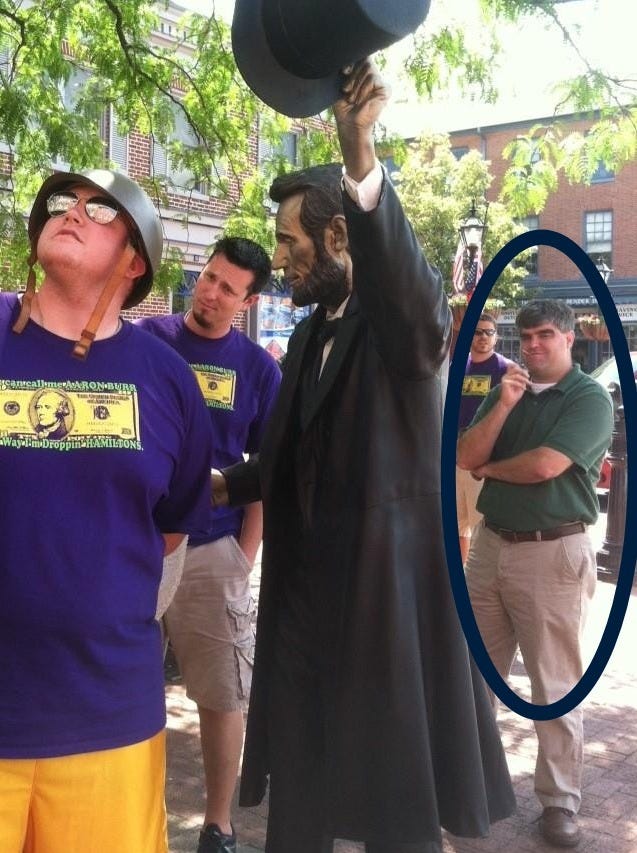
I asked Mr. Hess. I contacted people connected to the Cornwallis family through bloodlines, marriage lines, and what can only be described as historical genealogy telephone.
Eventually, someone in India told me the most likely explanation was that Cornwallis had been buried with the sword when he died there in 1805.

Buried with it. In India. I actually called during class once and asked if they’d ever consider opening the tomb to check.
They declined. Politely.
So I figured that was that. Another mystery added to the pile.
Then this morning, I got a text from my friend and noted Ghost Expert Tim Krepp.
The text:
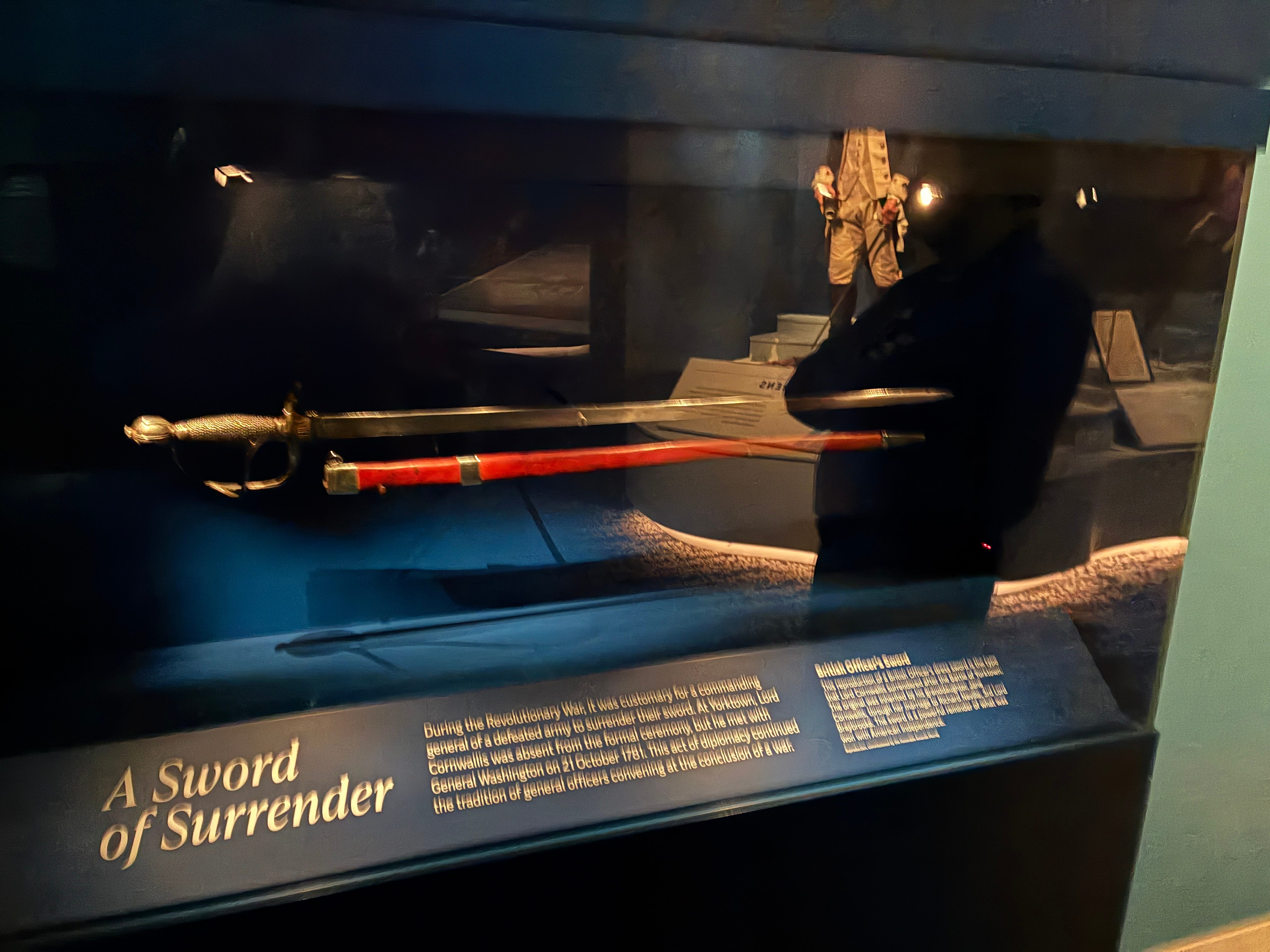
Just a photo. The sword. Well, this is a replica, the original just went back a week ago or so, but here is the original.
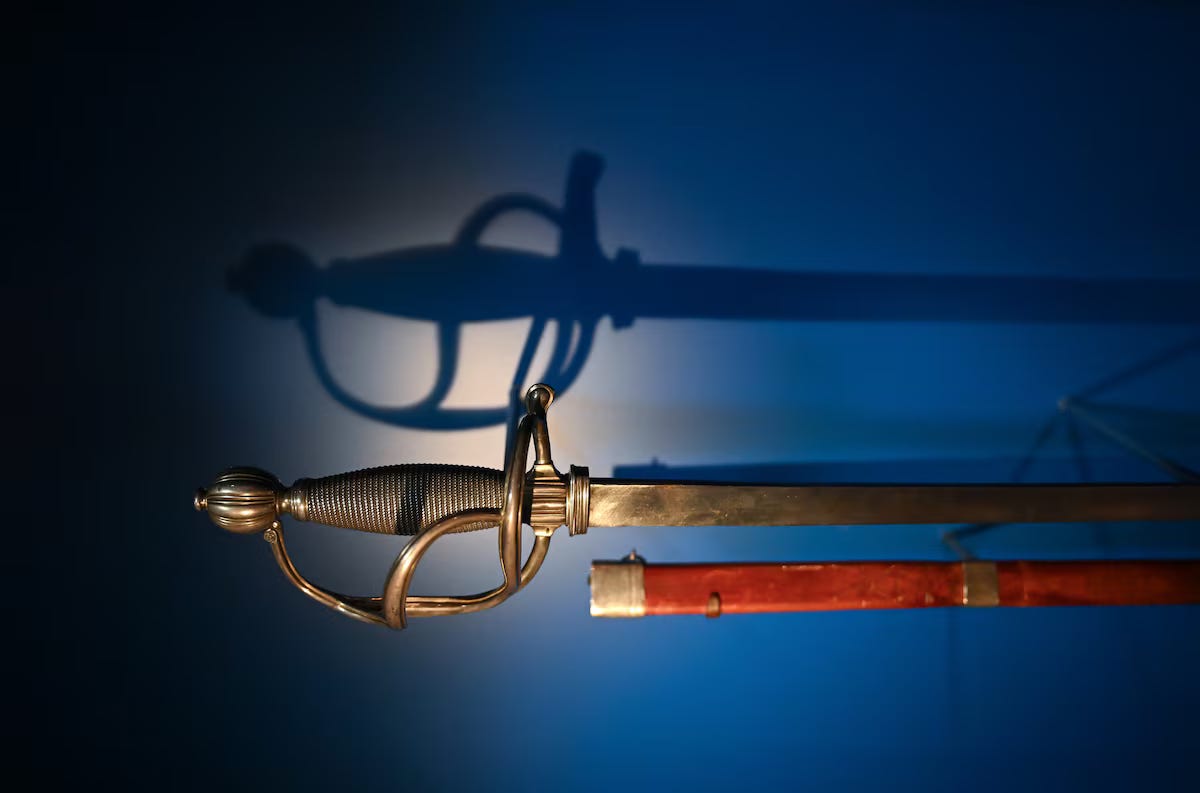
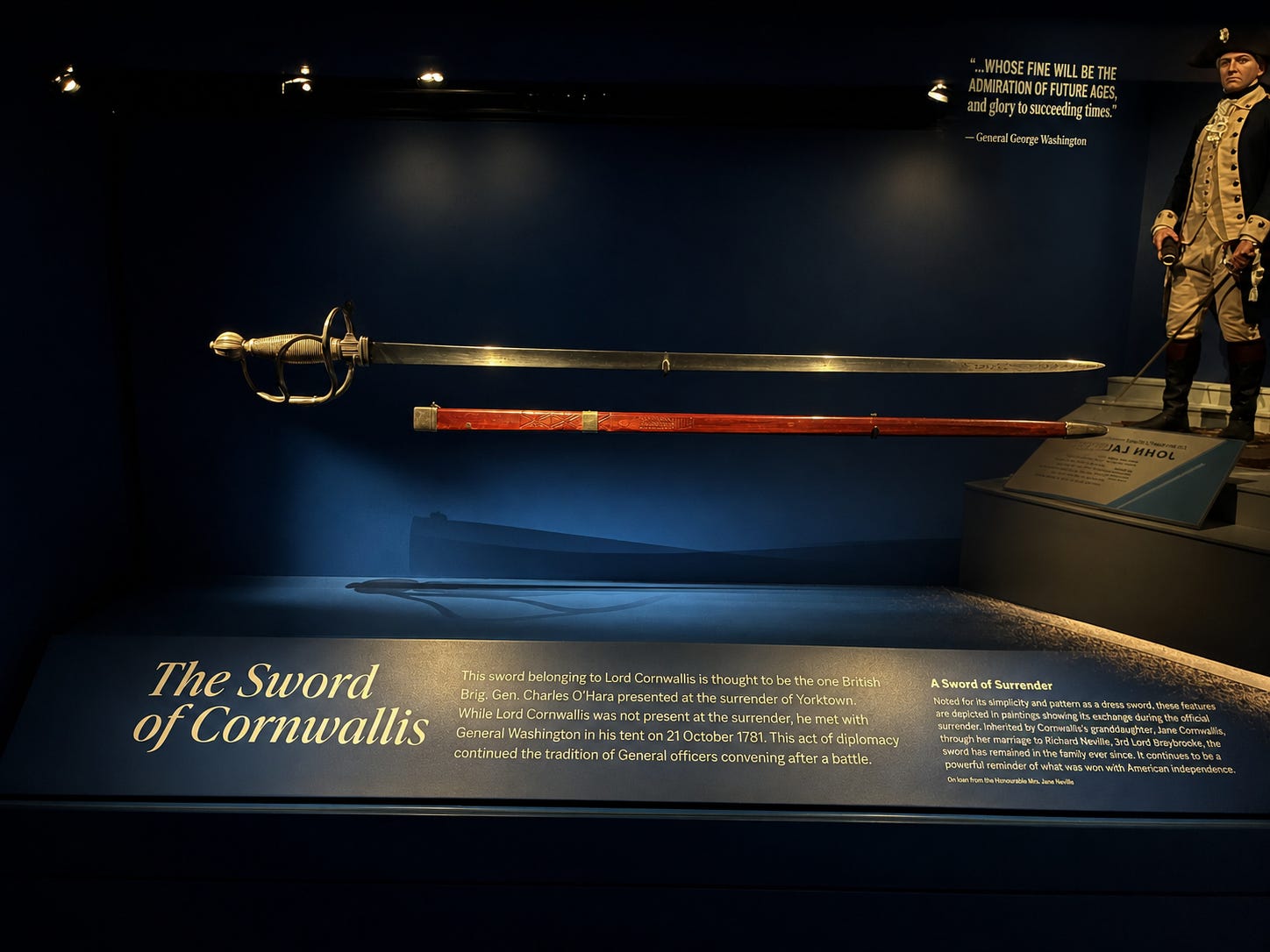
Tim had helped me on this quest years ago, and there it was sitting in a display case at the National Museum of the United States Army at Fort Belvoir, Virginia. The sword currently on loan there is believed to be the Yorktown surrender sword itself, loaned by Cornwallis’s descendants from June 2025 through May 2026.
And honestly? The best part isn’t that it’s fancy. It isn’t.
Museum historians describe it as a simple British officer’s sword. Nothing ornate. Nothing jeweled. Just a standard English dress sword from the period. One historian said that in paintings of the surrender, the sword shown is plain and practical and that matches this one exactly.
The Countess who owns it said it spent years sitting in her father’s dressing room next to umbrellas on a coat stand. That detail absolutely kills me. Because history is rarely preserved the way we imagine it.
The objects we place behind glass today were once just things sitting in someone’s house. Things people walked past every day. A sword leaning in the corner. A baseball tossed in a garage. A photograph tucked in a drawer.
And maybe that’s the best part of all of this. Twelve years ago, a bunch of students asked me a question in class: “What ever happened to the surrender sword?”
And like a lot of history questions, I didn’t have a great answer.
I had theories. Stories. Rabbit holes. Dead ends. A possible tomb in India. But no real answer.
Life moved on. Those students graduated. Became adults. Probably forgot all about the weird tangent their history teacher went on one semester about Cornwallis and Yorktown and a missing sword.
But I never completely let it go.
And every now and then, if you’re lucky, the past taps you on the shoulder twelve years later through a text message from a friend and reminds you:
If you stay curious long enough, you finally get to bring your students the answer.