Executive Summary
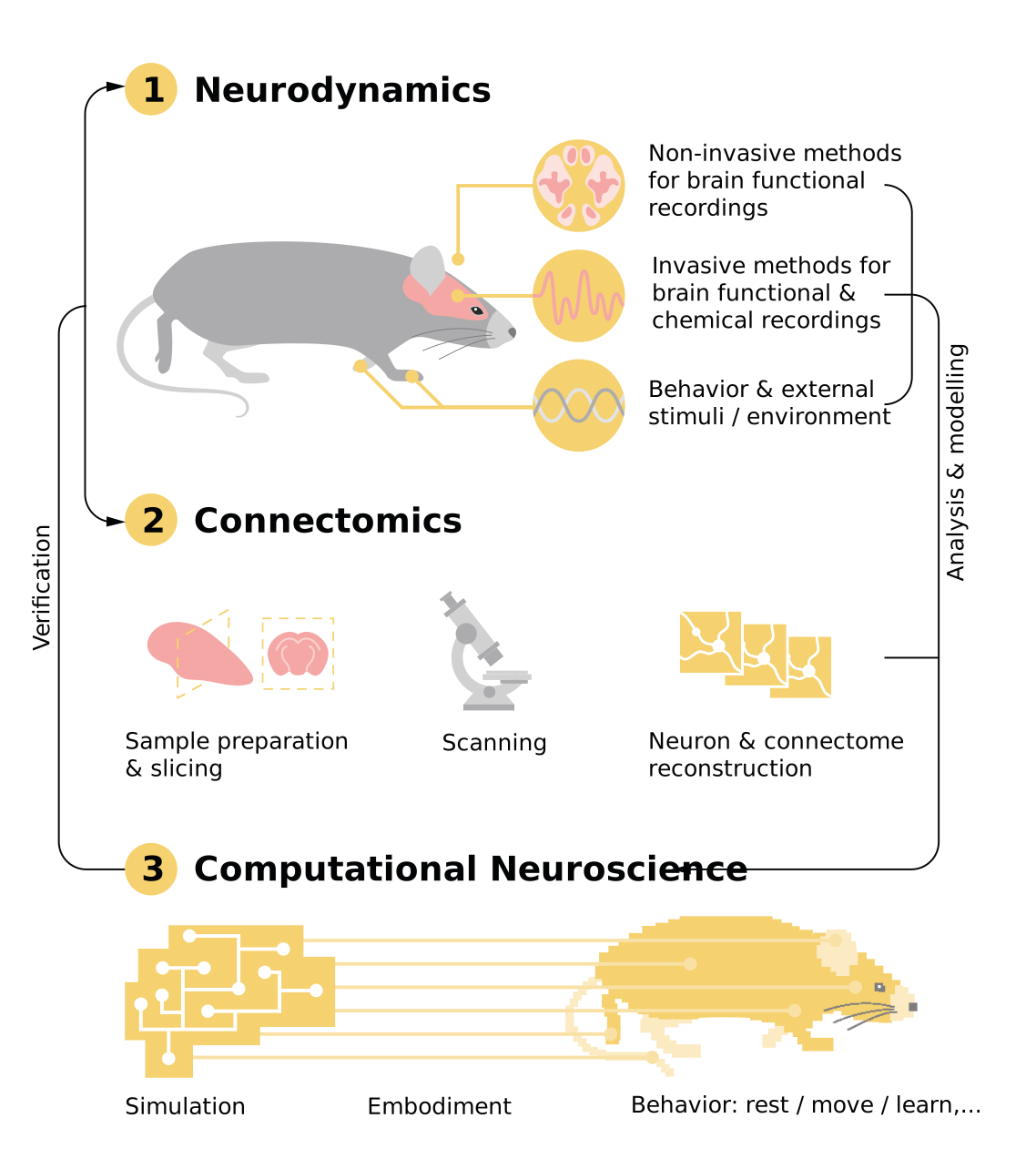
Accurate brain emulations would occupy a unique position in science: combining the experimental control of computational models with the biological fidelity needed to study how neural activity gives rise to cognition, disease, and perhaps consciousness.
Building a brain emulation requires three core capabilities: 1) recording brain activity, 2) reconstructing brain wiring, and 3) digitally modelling brains with respective data. In this report, we explain how all three capabilities have advanced substantially over the past two decades, to the point where neuroscientists are collecting enough data to emulate the brains of sub-million neuron organisms, such as zebrafish larvae and fruit flies.
Technical Overview
Neural Dynamics — Recording Brain Activity
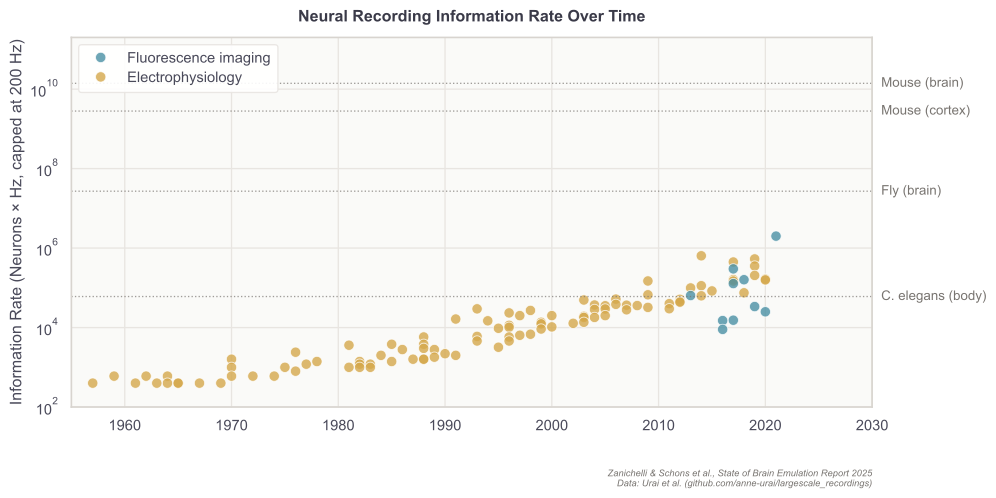
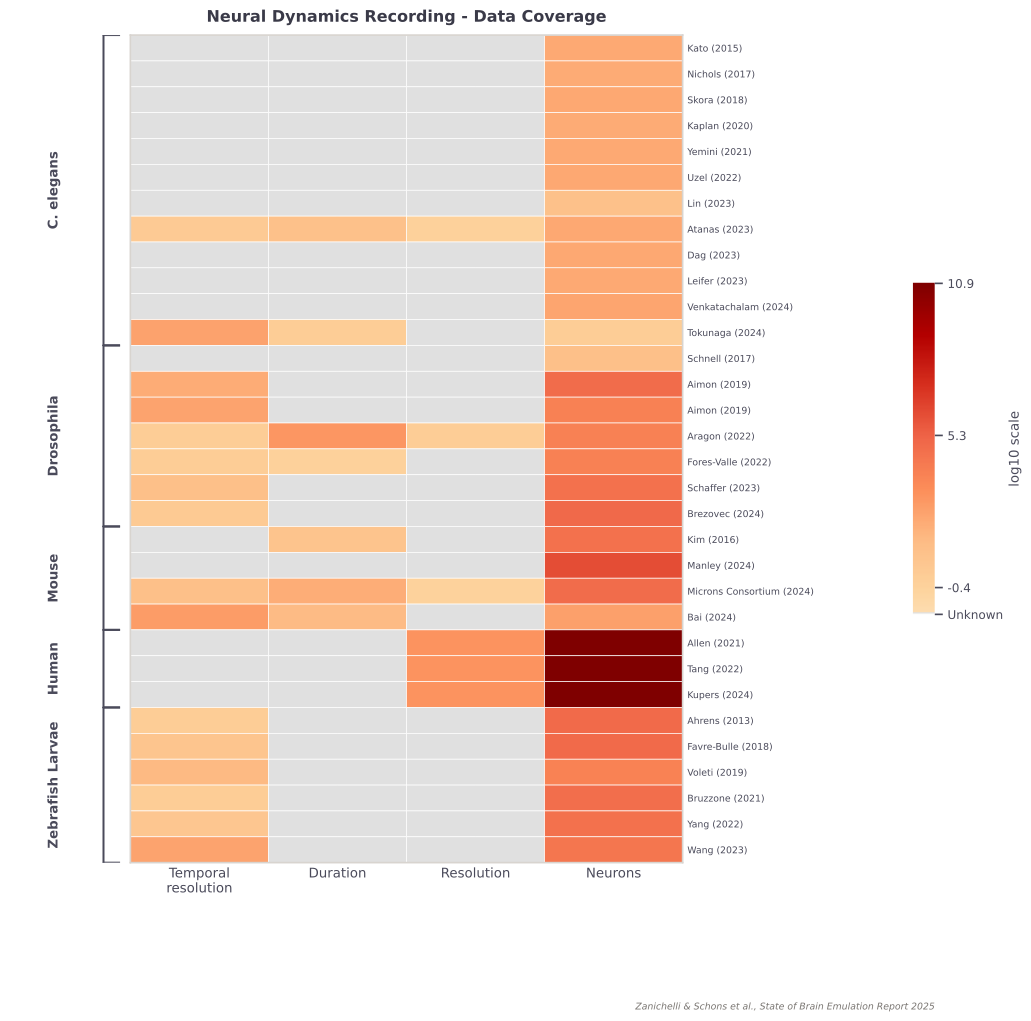
Despite impressive progress in neuron recording capabilities, neuroscience has not yet achieved whole-brain recording (≥ 95% of neurons and brain volume) at single-neuron resolution in any organism. The closest achievements include larval zebrafish with approximately 80% brain coverage and C. elegans with roughly 50% of nervous system neurons recorded at single-cell resolution.
Even these figures come with substantial limitations: temporal resolution is typically well below neuronal firing rates (often 1-30 Hz for calcium imaging), recording durations remain short (minutes to hours), and the need for head-fixation severely constrains behavior repertoires.
Connectomics — Reconstructing Brain Wiring
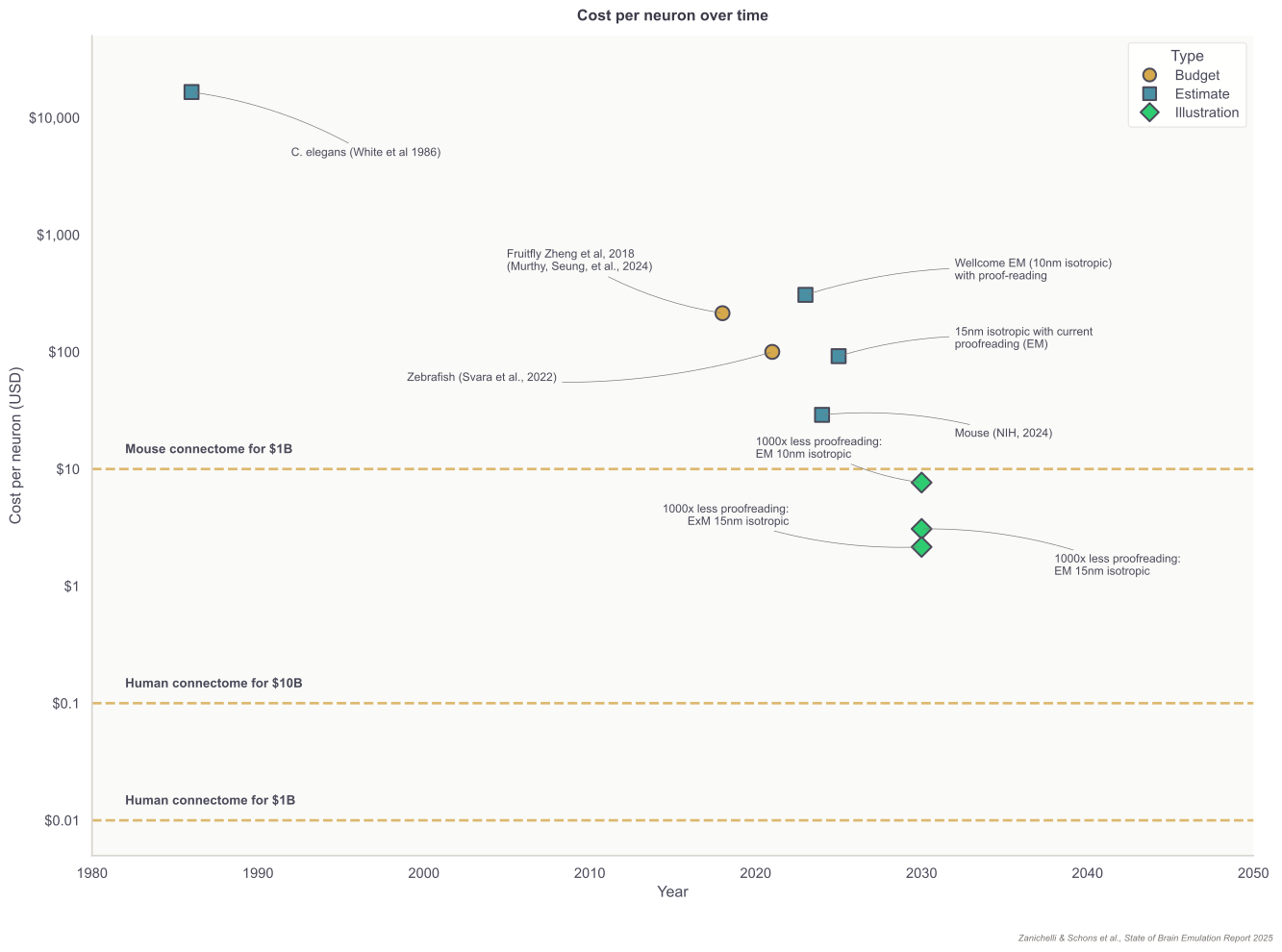
Complete connectomes at synaptic resolution currently exist only for small organisms. C. elegans has multiple whole-nervous-system reconstructions from individual specimens, with approximately ten datasets available. Adult Drosophila has fully proofread connectomes for both the male central nervous system and the female brain.
For larger organisms, progress remains at the proof-of-concept stage. In mice, the largest densely reconstructed volume is a cubic millimeter of visual cortex, containing approximately 120,000 neurons and 523 million automatically detected synapses.
Computational Neuroscience — Modelling Brains Faithfully
Meaningful progress toward whole-brain emulation is currently confined to small organisms where comprehensive datasets are becoming available. In C. elegans, multi-scale, closed-loop simulations now reproduce basic behaviors by integrating neural dynamics, body mechanics, and environmental interaction.
For Drosophila, the adult connectome has enabled models spanning the entire brain, successfully predicting neural responses and circuit functions for behaviors like feeding and grooming.
Part 1: Foundations
Dimensions of Brain Representations
Connectivity Cell types Plasticity Neuromodulation Temporal resolution Behavior Learning Neurons Accuracy Personality Distribution
What this section covers
The section establishes the key distinction between simulation (matching outputs) and emulation (reproducing the causal machinery), and defines what we consider the minimum threshold for a model to qualify as an emulation at all.
Part 2: State of Brain Emulation across Organisms
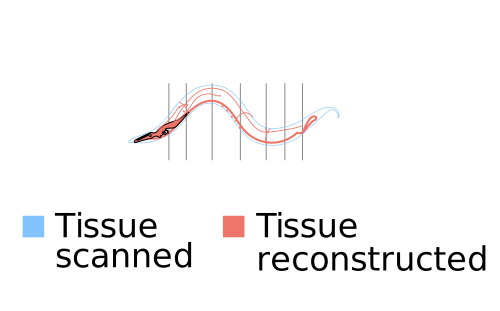 C. elegans
~300 neurons
C. elegans
~300 neurons
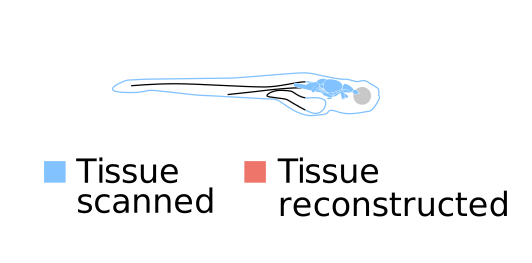 Zebrafish
~100K neurons
Zebrafish
~100K neurons
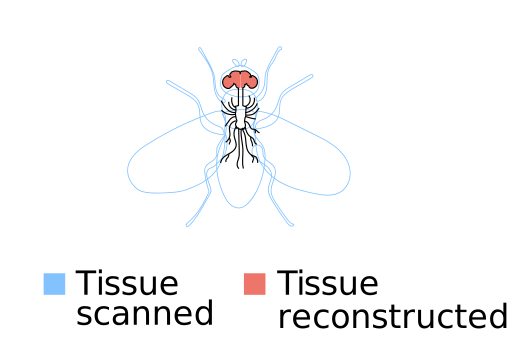 Fruit Fly
~140K neurons
Fruit Fly
~140K neurons
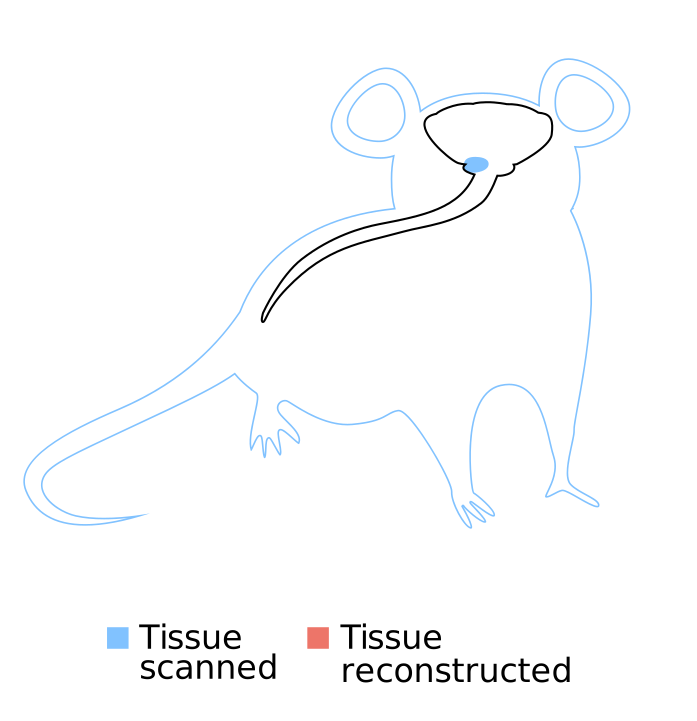 Mouse
~70M neurons
Mouse
~70M neurons
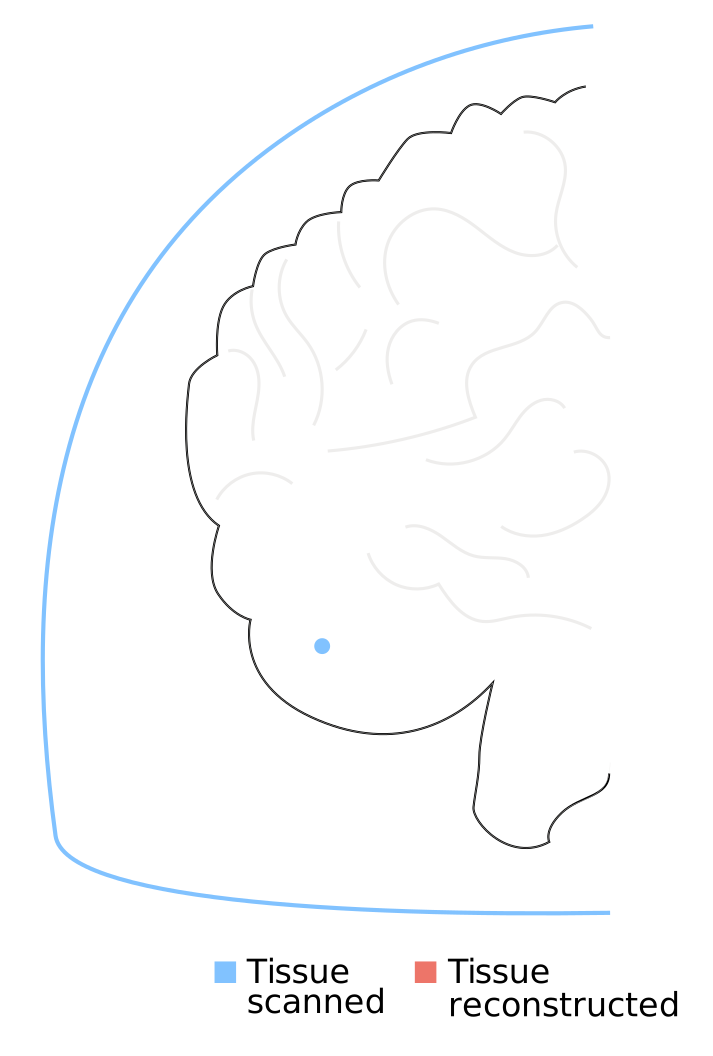 Human
~86B neurons
Human
~86B neurons
What this section covers
A systematic tour through five model organisms, from the 300-neuron worm to the 86-billion-neuron human brain. For each, we assess the current state of neural recording, connectomics, and computational modeling, then identify the key gaps blocking progress toward faithful emulation.
Part 3: Methods for Brain Emulation
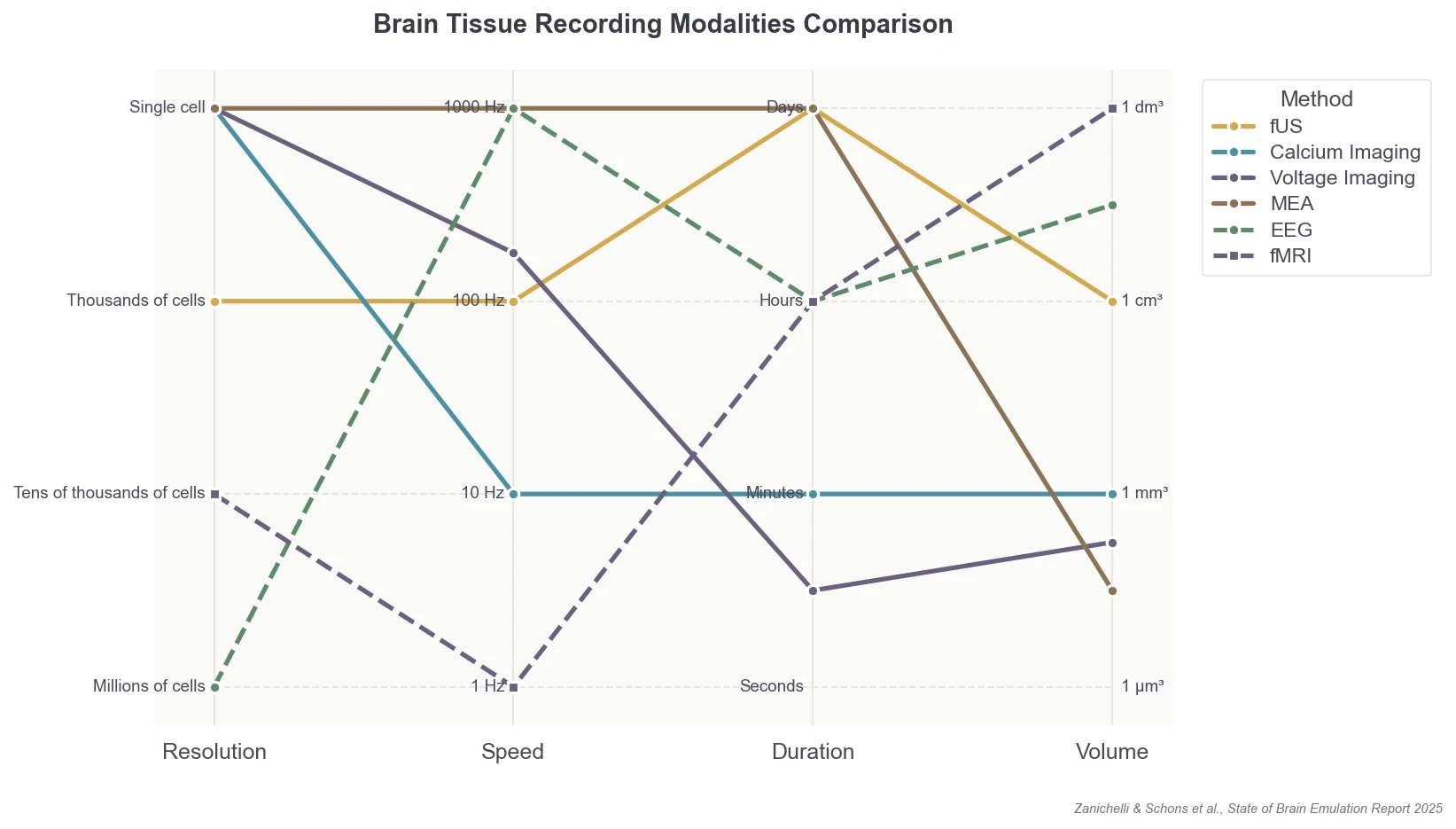
What this section covers
A technical deep-dive into the three pillars of brain emulation: recording neural activity (from patch clamps to calcium imaging), reconstructing structure (electron microscopy, expansion microscopy, barcoding), and simulating it all in silico (neuron models, synapse dynamics, hardware requirements). We cover what each method can and cannot do, what it costs, and where the bottlenecks lie.
Part 4: Appendix
What this section covers
You can find all of the data the report was built upon on our website. Explore our complete bibliography, figure library with downloadable graphics, and public data repository.