Starting a new job...again!
I accepted my OpenAI job offer in December 2025 and joined on January 20, 2026. I wasn’t looking to leave Snap, my previous company, but a great opportunity came my way that I could not resist. I joined OpenAI as a Member of Technical Staff on the Identity team as an iOS engineer. Now that my first month has flown by, I wanted to pause and share my thoughts, observations, and early lessons about working at a fast-paced AI lab.
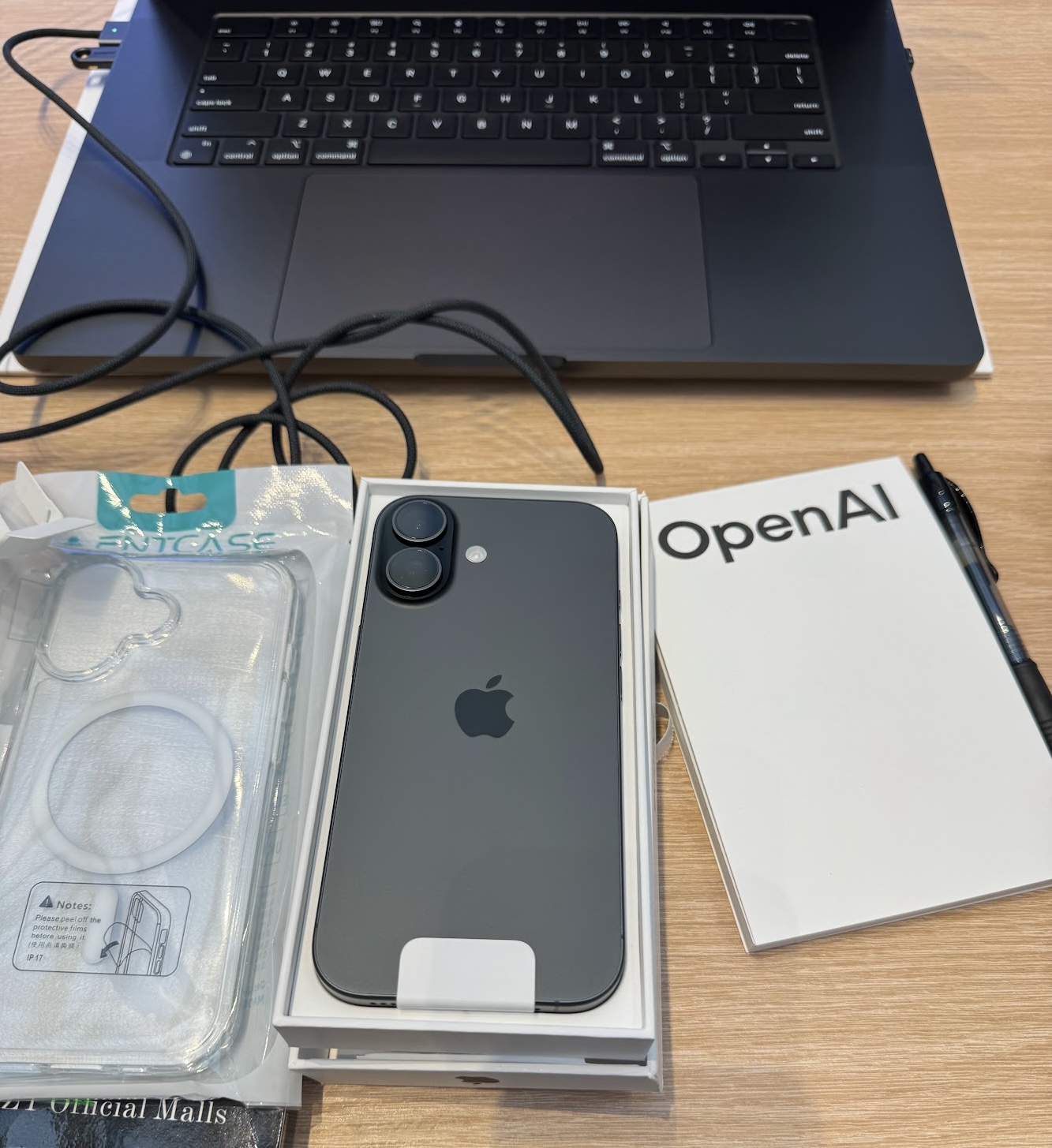
The people and their characteristics
As I onboarded, I intentionally spent a lot of time meeting teammates, fellow iOS engineers, and others within my broader organization. What stood out to me, beyond how friendly everyone was, was that many people had either founded their own company before or worked at a very small startup.
The founder-mode energy was off the charts, more so than at any other company I’ve been at. As someone who has taken that leap of faith myself, I know how challenging, rewarding, and demanding that role can be, along with the skills it builds regardless of the outcome. That founder experience brings a lot to the table:
- Pure excitement and joy for being in the space
- A ship-then-iterate mentality
- Agency and ownership to drive problems to completion
- Technical depth and a full-stack perspective
One other important people fact: OpenAI is the most positive company I’ve been at so far. The people I work with are talented and energized to come to work each day, which is a beautiful thing when you’re surrounded by smart people who uplift and energize you.
The work, the balance, and the life
I work across the iOS apps, but primarily on ChatGPT, given its large customer base. I had heard mixed stories about work-life balance, weekend work, and so on, so I was slightly nervous to see how things would actually play out. Interviewing is always different from doing the day-to-day job.
The good news is that my team has a strong work-life balance bar. I’d say I’ve worked around 45–50 hours a week, which is more than at some other places I’ve been, but it’s exciting, fulfilling, and meaningful work.
One thing I’ve learned in my career is that you can’t have it all: people, product, pay, meaningful work, work-life balance, you name it. Some things are better, some are worse, and every company has its trade-offs. I think the downside at OpenAI is that if you say yes to everything, you can easily sign yourself up for too much. There is a lot to do and not that many people to do it. You have to be thoughtful about how much you can reasonably take on, which is something I’ve learned pretty quickly here!
The bumps, bruises, and painful bits
Not everything is sunshine and rainbows; OpenAI is no exception. In an extremely competitive market and as the company shifts from small to ~medium sized, there are clear growing pains and organizational changes that come with the transition period. In my month so far, there have been significant pivots, some expected, some unexpected. There are lots of prioritized projects, almost too many, so you have to be careful what you sign up for and commit to. In the age of AI, code reviews become a bottleneck and the pressure to ship fast is real: so ensuring we ship high quality products while moving fast is a clear challenge, especially as the headcount and lines of code scale up. Some of these challenges are newer and some have been felt for the past 6 months as I talk to others, but we are making progress to make things better and sometimes the solution is not the original one we had planned for, so there is a lot of meaningful learnings along the way. We all do our part to make things better, as much as we can control.
How AI plays a key role
I was a big fan of Claude Code when it came out in May 2025. I dove headfirst into using AI to write a lot of my code and haven’t looked back. OpenAI is no different: Codex is a fantastic tool that is powerful, intelligent, and genuinely capable. It solves problems creatively.
My day-to-day work quite literally involves doing multiple things at once. I juggle at least 2–3 problems a day, trying to make progress on all of them through Codex. It’s often the first line of generation for me. I still have to do a fair amount of cleanup on the code it produces, but it’s already much better, and GPT-5.4 is a huge step up.
For someone who isn’t as excited about AI tools, or isn’t thrilled to use tools like Claude Code or Codex, I imagine it would be a bit challenging to be in an environment where using them is expected, specially when the people around you are using them heavily. Personally, I’ve really enjoyed being around others who are passionate about coding and AI tools and found myself right at home learning how to best wield coding agents and automations.
The leverage I get from coding agents is incredible, and I’m still learning week over week what works well and what doesn’t. At this point, it is my prototyper and multitasker, while my job is increasingly about connecting the pieces through high-level planning, prompting, and refinement.
Looking forward to the future
One month flew by. I’ve met so many talented people, and I’m looking forward to the next few years here. I didn’t expect to change jobs and end up at OpenAI, but looking back, I think it was well worth the effort of interviewing because of the work, the people, the scale, and the day-to-day learning I get to do, which is incredibly valuable to me.
Every day presents new challenges and obstacles, and there is so much opportunity on my team to build amazing experiences and modernize our foundation that it feels like I’ll be happy doing this for quite some time!