So I was trying to write reviews of a bunch of hit indie games I played recently. Then I got overwhelmed by the pointlessness of video game reviews these days and had to take a long nap.
And, I mean, pro reviews are pointless, right? If a game has a big enough budget or following and isn’t actively on fire, it gets a 9. If it is a competently made but low-budget indie, like mine, it gets a 7. If you read the actual review (nobody does), it’s a collection of facts about the game you could easily get from watching the trailer. Throw in a couple of comments from the reviewer about whether they like this genre or not, mix in 3 or 4 ham-handed political comments, and you got a review! Hit send!
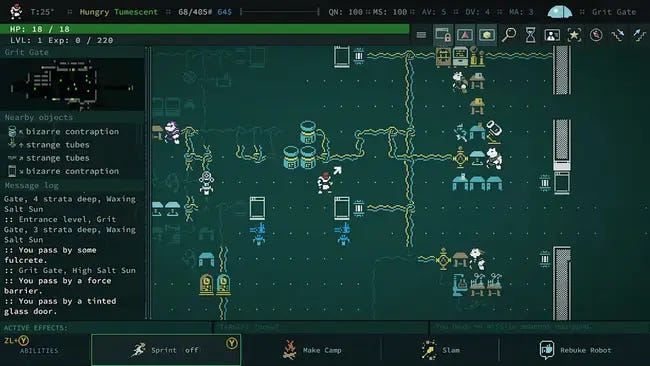
But the pointlessness of the whole exercise came crashing in on me when I tried to play Caves of Qud.
What Is That?
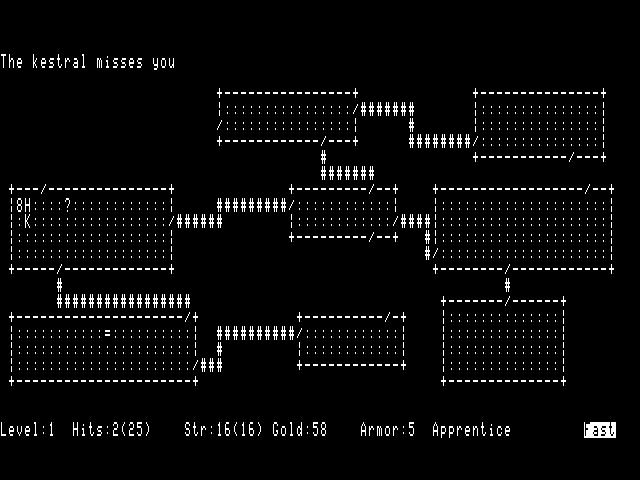
Wayyyy back in the day (1990, give or take a few years) all the hot RPG action was on your college’s mainframe computer. Really complex games where you play a lone hero wandering the world, with everything rendered as ASCII characters. (You were always an ‘@’. If you see a ‘c’, run for your life!)
Rogue. Nethack. Omega. Moria. I played them all.
Anyway, Caves of Qud (pronounced ‘kahhwooooood’) brings that experience to a modern audience, with a patina of super abstract story and a trailer that promises a constant string of cool, wacky events. (You can turn into a door! And get slammed and die! Whoah!)
But it’s a big hit RPG, and I kept hearing about it. It won a Hugo (an annual science fiction award) based on its storytelling. The reviews were ECSTATIC. Like, look at this Eurogamer review, which drives the reviewer so hard into aggressive poetry that he neglects to say much about what playing the game is actually LIKE.
So I felt obligated to try it.
How My Caves of Qud Experience Went
This will sound a bit snarky, and I hate being snarky about the work of other indie devs. And I really was looking forward to trying this game. A genre I love plus weird storytelling, perfect for my mood. But this is how it went.
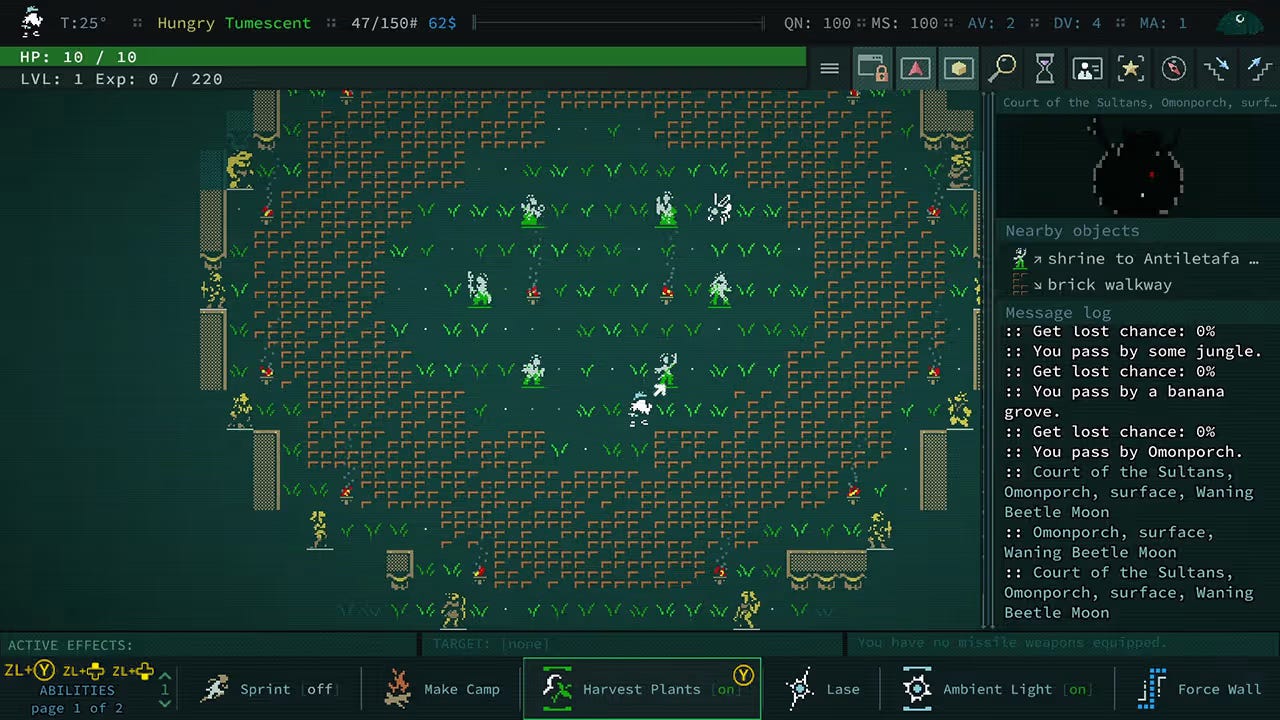
After supplementing the punishingly inadequate tutorial with a ton of googling, I wandered the world and followed the story. I didn’t find any of the promised wackiness. I just killed monsters, sold their stuff, occasionally found a magical whatsit to complete a quest, and repeat.
Actually, something kind of wacky happened. At some point I got a disease that spreads across my body and keeps me from equipping items in one slot after another. After a bunch of effort, I got the book that tells me how to cure it. A long, involved process that involves a ton of seemingly common items I never found. It was just kind of aggravating.
Sometimes the world simulations were clearly interacting with each other in unexpected ways, like in this nasty dungeon called Golgotha that had wall guns and conveyor belts. But the graphics were too abstract and went by too quickly for me to ever understand what was happening. In a game which sells how comprehensive and surprising its system is, legibility is very important.
I sensed that there was an effort to create a huge, active, deep world here, but it kept bouncing off of me. The interface, the crude presentation, the abstract, almost pointillistic bits of storytelling, the repetitive gameplay, I just couldn’t get it to gel.
I’m 10 hours in, and I’ll give it some more time. Not much more. I suspect getting the wackiness involves doing a lot of replays and investing a ton of time for digging. Making games designed to devour time is, as I have written a lot lately, a legitimate artistic and professional path. I just don’t have that time to be devoured.
Game Rating: “Wait. There’s a way to train my character?” / 10
But This Isn’t a Negative Review
Everything I just wrote may sound like criticism, but it’s not. This is a features list! Everything I said that might have sounded like a sick burn convinced at least one person to buy the game.
I wasn’t being critical! I just described the perfect game for many people. A LOT of people have bought this game! Did I get frustrated by the game? Darn right, I did! But people are lining up around the block to drop $30 ($10 more than I charge) to get that sort of frustration.
(Though, based on the worrying low percentage of people who have obtained the early achievements, I fear a lot of players are not getting their money’s worth and thinking it’s their fault.)
Video games are massively diverse, far more than movies, and games fans have wildly divergent tastes. Reviewers can’t say whether a game is objectively ‘good’ or ‘bad’, because one man’s meat is another man’s poison. I think I described the first 10 hours of this experience pretty accurately, and now you know if you want it or not.
So if you review this game, there’s no need for a number score. No need for a reviewer’s opinion. All you need is a features list. Everything didn’t work for me will thrill Caves of Qud’s target audience.
Why Reviews Used To Work
Way back before the Internet gobbled up the media environment, skin and bones and hair and all, there were lots of famous professional movie reviewers. Ebert. Siskel. Kael. Maltin. Reed. If you read a few, you soon found the one whose tastes lined up with yours. Then you got advice from that one.
There were career video game reviewers too. (Like Scorpia, the one-time Queen of RPG Reviews. Yahtzee at Second Wind, like or hate him, is a reliable, consistent voice, even if he hates almost every single game.)
For reviews to be useful, the reviewer you like simply has to be consistent. To get value from a review of Caves of Qud, you have to have faith that your chosen reviewer reacts to that sort of game the way you do. Video games are just too varied, and the games get just to OUT THERE, for any other approach to work.
If a reviewer spends 250 hours getting driven to the heights of ecstasy by Caves of Qud, I’m certainly happy for him, but his game recommendations may not be a good fit for my life.
Anyway, now all pro reviews are written by a random scramble of overworked drones , none of whom have time to properly play games or establish identities. Mix in AI assistance and publisher pressure, and ... Game reviews only exist to give us a number to argue over.
Or You Can Just Read Steam Reviews
Every indie dev at some point gets supermad about Steam reviews. However, 99 times out of 100, skimming the reviews on the game’s front page will tell you everything you need to know.
Can There Be More Professional Game Reviewers Again?
It’s hard to see how. That takes money, and we’ve all been trained to not pay money for reviews. I used to actually subscribe to game magazines, with actual dollars! I haven’t done it in a long time.
So whose fault is it that game reviews are pointless now? It’s mine. And probably yours.
Want to actually buy a game? Watch the trailer. Look ok? Get it on Steam and refund it if the first hour doesn’t grab you.
Because I am super old, I wish there was another way, but that milk has been spilt.
Spiderweb Software has been creating turn-based, indie, old-school fantasy role-playing games since 1994. They are low-budget, but they’re full of good stories and fun.
This newsletter is free, but paying me to subscribe guilts me into writing more. If you would like to support us, you could also buy our newest game, Avernum 4: Greed and Glory, and leaving us a nice review. Steam reviews are the reviews that really count.