Download for offline reading (PDF)
In the dominant climate narrative, the citizen is cast as both villain and redeemer. We are told the fate of the planet hinges on our choices — what we consume, whether we recycle diligently, or if we drive electric cars. Governments and corporations alike assure us that these small, daily decisions are how we “do our part.” And when environmental collapse continues to accelerate, the unspoken message is clear: we haven’t done enough. The burden lies with us.
Yet the irony is that this illusion works only because people genuinely care. Millions recycle, adjust their diets, and search for greener options — not out of cynicism, but out of hope. The willingness exists. What’s missing are the levers of real power.
But this framing is a distortion — comforting only to those who profit from keeping the system unchanged. By leaning on people’s genuine concern, governments and corporations disguise their own responsibility. Most individuals lack the tools, access, or political authority to drive change at the necessary scale. This is no accident. Responsibility is rhetorically assigned downward precisely because meaningful power is structurally concentrated upward.
We are offered consumer options, not systemic levers. What is sold as empowerment is merely permission to participate — not the capacity to intervene in the system that defines the terms of participation. The choices feel real — the power isn’t. Meanwhile, the engines of collapse — industrial agriculture, mass deforestation, fossil fuel extraction, global supply chains, and the logic of planned obsolescence — continue largely unchallenged. Often, they are even subsidized. It’s like paying an arsonist to run the fire department — and applauding when they hand out smoke detectors.
What now passes for climate action is increasingly shaped not by ecological necessity, but by business opportunity. Corporate marketing rebrands consumption as sustainability. Governments invest not in public infrastructure or ecological restoration, but in incentivizing new versions of the same consumer behavior that created the crisis in the first place. Solar panels, heat pumps, electric vehicles — these are not solutions in themselves. They are products. Their purpose is not to reduce ecological pressure, but to preserve economic growth beneath a green veneer. The sales pitch is simple: buy one more product and save the planet — a proposition as convenient as it is profitable. It’s like a Black Friday sale — except this time, the discount is on survival.
Those who question this logic are often branded as climate skeptics — even when they accept the science. The problem isn’t denial. It’s disillusionment with a system that confuses performance for progress — a climate theater of gestures and green marketing, staged to look like salvation.
This essay is not a rejection of environmental responsibility. It is a rejection of the idea that you — the average person — are primarily responsible for solving a crisis engineered far above your head. It challenges the appearance of action: the comforting belief that progress is being made, when in truth, the architecture of waste, growth, and ecological disregard remains firmly intact.
What follows is not cynicism. It is clarity. Because before real solutions can emerge, we must first see through the illusion.
In the prevailing narrative of climate action, consumerism is not the enemy — it’s the solution. Citizens are urged to replace rather than repair, upgrade rather than maintain, and join the green transition by purchasing new and improved versions of what they already own. The fossil-fueled car is to be swapped for an electric vehicle, the gas boiler for a heat pump, the aging refrigerator for an A+++ energy-efficient model. In this framework, environmental conscience is no longer measured by how little we consume, but by how correctly we consume.
This is the central contradiction of green consumerism: it promises ecological salvation through continued economic growth, even though that same growth depends on expanding production, resource extraction, and consumption. The very industries that profited from creating the crisis now offer to sell us its solution. Auto manufacturers, appliance companies, tech giants — all rebranded as climate allies, so long as we keep buying. Nowhere in this logic is there any serious challenge to the scale, speed, or disposability of modern consumption itself.
The contradiction comes into sharp focus with the poster child of the green transition: the electric car. Yes, EVs emit less CO₂ over their lifetime than gasoline vehicles. That matters — but only at the level of the individual machine.
If every gas-powered car is simply replaced one-for-one with an EV, the larger system remains untouched: sprawling suburbs, car-centric infrastructure, and dependence on private vehicles. What looks like a clean break is, in reality, only a technological substitution presented as transformation: the underlying system of long commutes, car-dependent cities, and compulsory private vehicle ownership remains unchanged.
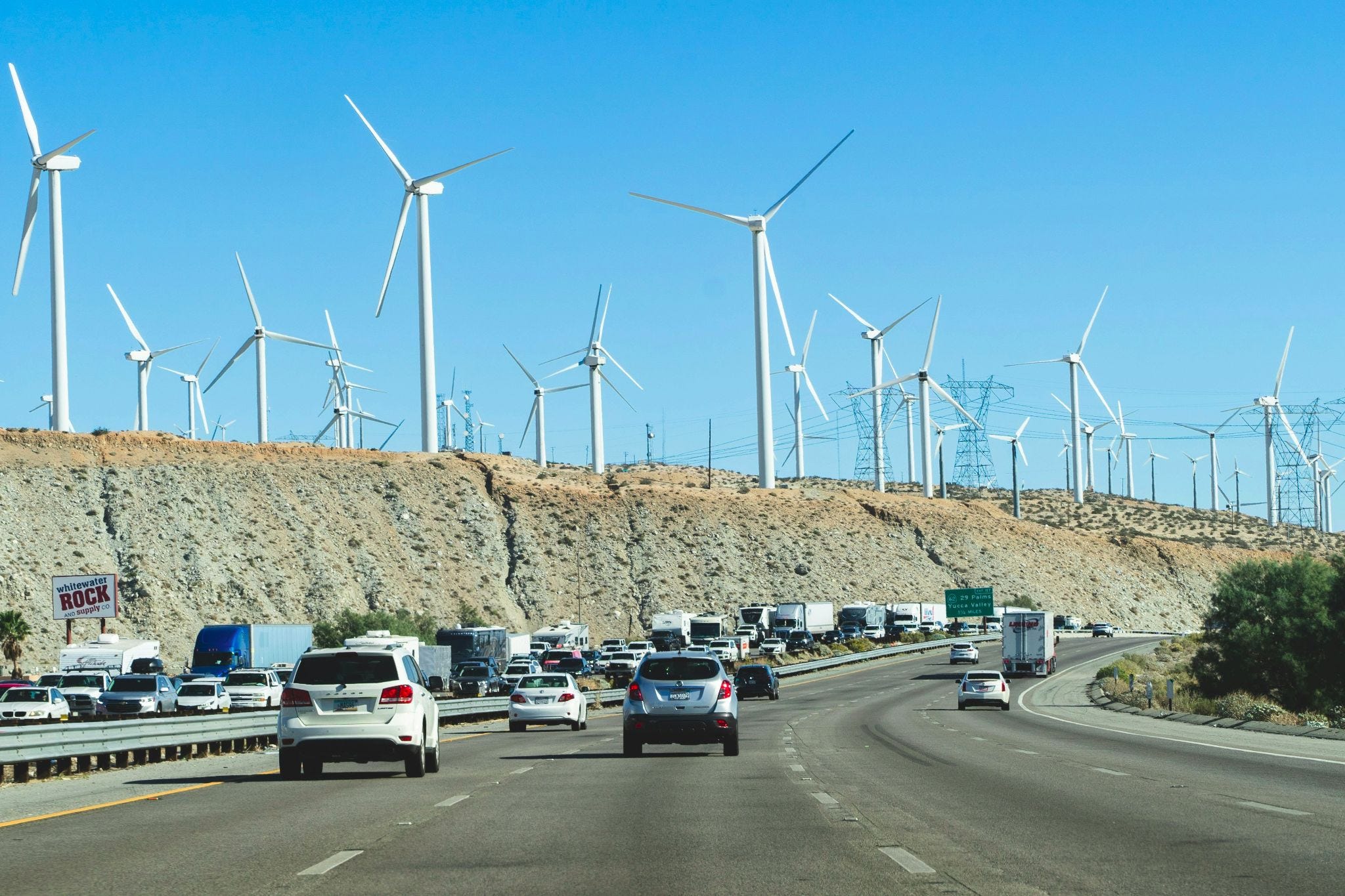
And behind every EV lies a vast global supply chain — lithium, cobalt, copper, rare earth metals — extracted under exploitative conditions, refined with coal, and shipped across oceans. That is the material cost.
The energy cost is separate. The electricity that powers these vehicles isn’t magically clean either. Unlike a combustion engine that burns fuel locally, an EV plugs into a grid still dominated by fossil fuels: coal, crude oil, and biomass — officially “renewable,” though burning forests is hardly carbon neutral. The tailpipe disappears, but the smokestacks remain; emissions are not eliminated but structurally displaced from the vehicle to the power plant. This isn’t a post-carbon revolution; it’s the old industrial model, repackaged in green.
The same logic applies to countless “eco-friendly” upgrades. Energy-efficient appliances still require raw materials, energy-intensive manufacturing, and global shipping. Solar panels and heat pumps — essential tools for a low-carbon future — are marketed not as public infrastructure, but as lifestyle accessories. These designer climate goods, priced like luxury upgrades, remain accessible mostly to the economically comfortable. Meanwhile, the system that produces, sells, and discards these machines — often within just a few years — remains untouched because frequent replacement sustains profits and economic growth far more reliably than durability or repair. The products change — the underlying logic doesn’t: growth, turnover, obsolescence.
What makes green consumerism especially insidious is that it masquerades as empowerment. The citizen is no longer merely a polluter; they are now a “climate hero” with a credit card. Salvation is offered not through collective change, but conveniently billed in monthly installments. Yet this heroism has boundaries. You may choose brand A or brand B — an ethical indulgence either way.
What you are not invited to do is ask deeper questions: why public transport is neglected, why products are unrepairable, or why industries face no obligation to build for durability and modularity. Because meaningful power is available only through purchasing, the marketplace ends up defining the limits of your agency.
In this system, your job isn’t to consume less — it’s to consume differently, and to feel virtuous while doing it. Responsibility shifts from systems to individuals. The real winners are not the climate, but the producers. Green consumerism keeps demand high, protects GDP, and because it delivers profit without altering existing institutions, it also removes any economic or political incentive to pursue structural change.
To reject this framework is not to reject renewable energy or green technology. It is to reject the delusion that consumer behavior, in isolation, can deliver ecological stability, because the largest drivers of ecological damage are embedded in production systems, infrastructure, and policy rather than in individual purchasing choices. Without a fundamental redesign of production, transportation, urban planning, and resource management, the promise of green consumerism is not a solution — it’s a diversion. It flatters our desire to do good while distracting us from the deeper changes that matter.
Even when we consume “better,” the system ensures our products remain disposable, short-lived, and profit-driven. The slogans may change, the products may change, but the logic never does. The framing remains intact. Until that design is confronted, products will continue to be built for rapid replacement, which means that every so-called “green choice” is ultimately destined to end in the same place: the landfill.
If green consumerism promises salvation through better purchases, the reality is that those purchases are designed to fail. Modern industrial society doesn’t just tolerate waste — it requires it, because continuous consumption and rapid product turnover are what keep profits and GDP growth rising. The entire architecture of production is built on the assumption that goods will be used briefly, discarded easily, and replaced frequently. From smartphones sealed with glue instead of screws to washing machines engineered for profitability rather than durability — with lifespans that conveniently align with warranty limits — the logic isn’t accidental; it’s strategic. Shortening product lifespans guarantees repeat purchases. Waste is not the result of poor design. It is the design logic.
Products are deliberately made difficult — or impossible — to repair. Documentation is withheld, spare parts are proprietary, and software serves as a gatekeeper to block independent fixes. Devices are increasingly built as sealed units — a design that streamlines automated production and lowers costs, while also restricting access to components and software. Repair becomes impractical and replacement becomes the only realistic option. This constraint is then reinforced through proprietary parts, software locks, and intellectual property law. The consumer remains trapped in a system of planned obsolescence, disguised as technological progress.
Personal electronics become obsolete not because they fail, but because software bloat steadily raises hardware demands. Perfectly functional devices are abandoned once operating systems stop updating. The hardware still works. What fails is support: without security patches or app compatibility, it becomes unusable. Users are then forced to discard functional devices and buy new ones. Obsolescence isn’t just in the product — it’s in the code.
What makes all this more troubling is that it’s entirely avoidable. We already know how to build durable, repairable, modular goods. Open hardware standards could enable compatibility. Parts could be interchangeable. Devices could be built for longevity, with modular upgrades and backward compatibility. But that would slow the consumption cycle. And in a growth-addicted economy, slower consumption threatens revenue, shareholder returns, and GDP growth, which is why such durability is treated as unacceptable.
The car industry offers another clear case. Between brands — and often even between models within the same brand — parts are deliberately incompatible. Headlights, mirrors, and dashboards might be defended as stylistic choices, but what about the catalytic converter, the air filter, or the wiper fluid reservoir? None of these affect a car’s “look,” yet they are still designed to be non-interchangeable. Even basic mechanical parts — window lift motors, fuel pumps, dynamos, starter motors — are locked into proprietary designs. Not for technical reasons, but to ensure dependence. Standardization would empower users, mechanics, and independent repair shops. Incompatibility locks the consumer into a brand-controlled ecosystem, because once parts work only within one brand, the buyer is forced to return to the same manufacturer for every repair or replacement.
Then there’s the absurdity of the smartphone accessory market. Stores are flooded with cases in every imaginable color, material, and pattern — far more than demand could ever justify. Each new phone shape renders all previous cases useless. Unlike clothes or furniture, they can’t be repurposed; last year’s case has no second life. It is a landfill by design.
And the overproduction is staggering. Pollution is generated not only for items briefly used and discarded, but also for millions that will never be used at all, because manufacturing causes emissions and toxic byproducts regardless of whether the products are ever sold. Smartphone cases epitomize the most cynical form of planned obsolescence: manufacturing waste disguised as consumer choice.
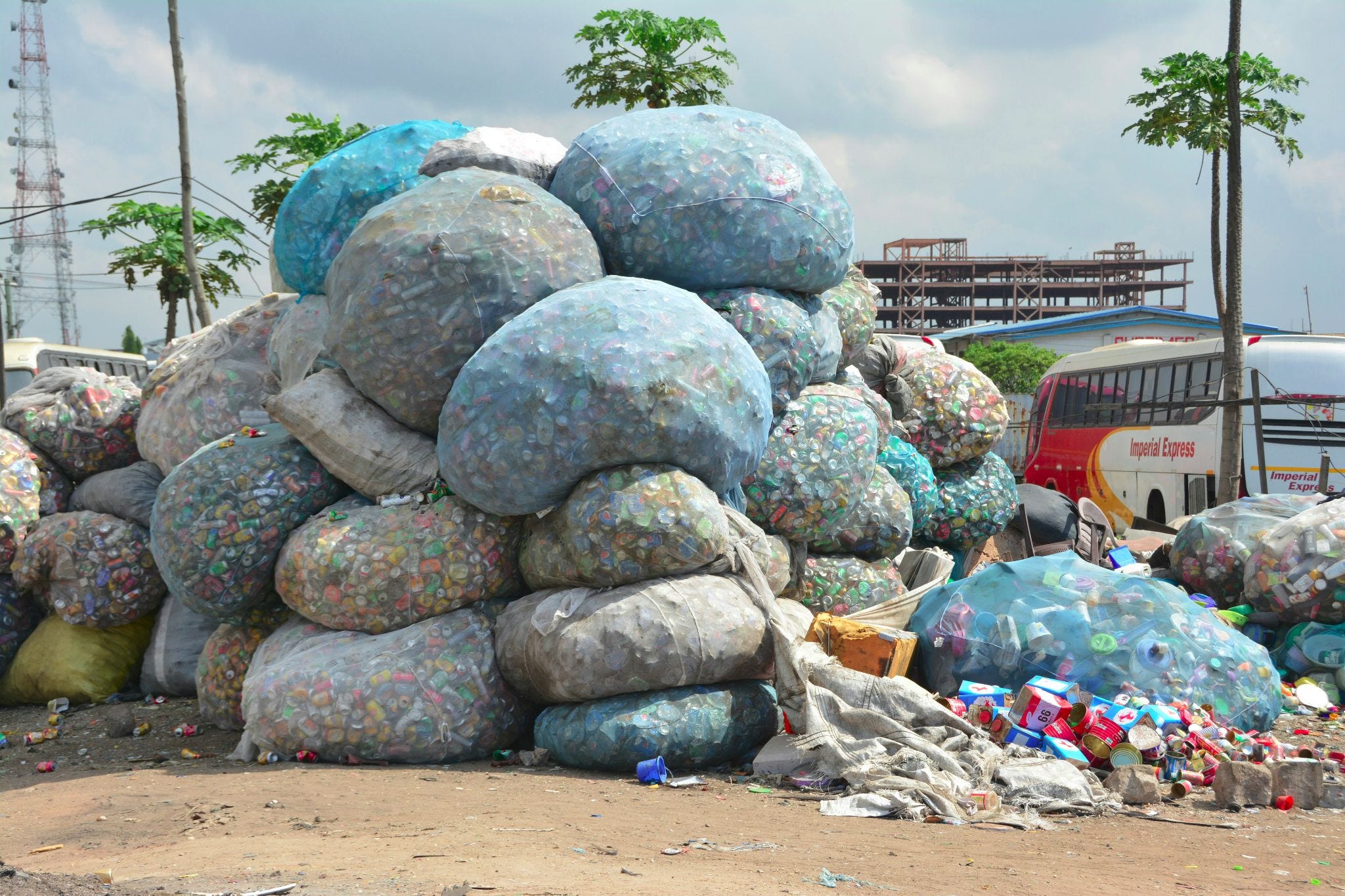
And the waste doesn’t stop where the consumer sees it. Mountains of discarded electronics, plastics, and textiles are exported to the Global South, where they poison workers, leach toxins into the soil and water, and burden communities that never saw the “benefits” of consumption in the first place. Waste is not just built into the system — it is displaced, hidden, and dumped on those least able to resist, because poorer countries often lack the political and economic power to refuse waste imports or enforce strict environmental protections.
Even aesthetics are instrumentalized. Kitchens are gutted not because they’re broken, but because they’re no longer “in style.” Furniture is sold not as durable infrastructure, but as disposable fashion. Sofas are tossed when trends shift. Waste is no longer a shame — it’s a spectacle of status. The same logic applies to appliances: repairing an old dishwasher may be cheaper and less wasteful, but it is rarely as satisfying as buying a new model with sleek design and glowing lights. Functionality matters less than novelty. The market doesn’t just sell utility — it sells the feeling of renewal. By attaching status and identity to newness, it ensures that even consumers often prefer replacement to repair. Waste becomes culture — normalized, aestheticized, and hidden from sight by export, burial, or incineration.
The cosmetics industry offers another case. Where once a single soap or cream sufficed, there are now specialized lotions and gels for every body part — face, hands, feet, and everything in between. Brands divide the market by gender, age, and even species: products for men, women, children, babies, and pets. Yet behind the marketing, the formulas are often near-identical — just bottled in pink for women, blue for men, with a tweak in scent. Instead of one shower gel for the household, we now have five — one for each person, and maybe the dog too. What looks like choice is duplication: nearly identical products are multiplied across categories, which increases production and packaging volumes without delivering real functional value.
The fashion industry is perhaps the clearest case where waste isn’t incidental, but fundamental. What used to be seasonal cycles are now weekly churns of micro-trends, driven by fast-fashion giants like Zara and Shein. Clothes are discarded not because they’re worn out, but because social pressure renders them obsolete. Scarcity tactics, influencer marketing, and trend fatigue manufacture desire where none existed, creating a constant sense that existing clothes are inadequate and must be replaced. Even “eco-collections,” branded as sustainable, ride the same treadmill of psychological obsolescence. Their sustainability pitch isn’t about durability or reuse — it’s about consuming more, only with a greener label. Fashion proves what many industries conceal: waste isn’t a byproduct, it’s the operating principle.
And fashion’s logic has spread. Phones, cars, kitchens, bathrooms, even homes are redesigned and replaced not because they fail, but because they fall out of style. Solar panels are sold as lifestyle badges. PVC windows become status markers. What used to be infrastructure is now marketed as fashion — short-lived, aestheticized, and disposable.
Governments, for their part, rarely confront this logic — and when they do, they tend to shield producers, not consumers. Regulations could require minimum lifespans, mandate serviceability, enforce parts availability, and outlaw planned obsolescence. Instead, trade laws, patents, and corporate lobbying protect the status quo by preventing standardization, restricting independent repair, and discouraging long product lifespans. Consumers are told to “shop smart,” while industries remain free to design for failure.
This is why personal choices, however sincere, so often feel futile. The system is engineered to override them. Even the most conscientious buyer remains trapped in a material economy designed to generate waste at scale. The logic of planned failure isn’t just institutionalized — it’s internalized: advertising, product design, and social norms train us to expect replacement, not repair; novelty, not longevity, which makes the cycle self-reinforcing.
If climate policy fails to confront this logic head-on, then the green transition will be little more than a branding exercise, because changing materials or energy sources without changing the production-for-waste model leaves total resource extraction and disposal largely unchanged. The materials may change, the energy sources may shift. But the core behavior will remain: extract, produce, discard. In a truly sustainable system, waste would be seen as a failure. In ours, it’s treated as a feature.
To sustain this model politically and economically, failure must be normalized, measured, and managed — not eliminated. And so the system evolves tools that reward formal compliance over real-world outcomes, allowing dysfunction to persist while appearing controlled.
One of the least examined failures of contemporary climate policy is not technological but structural. Beneath emissions charts, efficiency labels, and sustainability pledges lies a design philosophy that rewards compliance with regulatory metrics rather than reliable performance in ordinary life. On paper, systems perform flawlessly. In practice, they often fail. This gap is not accidental, and it cannot be detected at the level of targets or pledges. It reveals itself only where policy, design, and daily use collide.
Across a wide range of contemporary technologies, modern consumer products are increasingly engineered not to function robustly in the real world, but to perform well under regulatory test conditions. Their primary success criterion is no longer whether they reliably serve human needs, but whether they satisfy abstract metrics defined by certification regimes, because those metrics determine market access, legal approval, and public reputation. The shift is subtle, but its consequences are profound.
In theory, environmental regulation exists to align private incentives with the public good. In practice, many standards measure proxy variables rather than outcomes. Efficiency is assessed per cycle under laboratory conditions using standardized inputs, controlled environments, and idealized patterns of use — each cycle evaluated in isolation rather than as part of a cumulative process — conditions that resemble daily life about as much as a wind tunnel resembles rush hour.
In many sectors, the same manufacturers subject to regulation also participate in designing the test procedures themselves through industry committees and lobbying. This arrangement enables them to shape standards toward what is technically easy to pass rather than what works best in reality, because it is passing the test — not performing well in everyday use — that determines legal approval, labeling, and market access. As a result, products are optimized for regulatory legibility rather than real-world resilience. They work in laboratory scenarios because they are engineered for those scenarios — not for everyday use. They comply with every regulation procedurally — and increasingly fail the expectations of the people who use them.
Because design is centered on test behavior, machines become fragile systems. They work only when users behave like trained technicians: carefully following prescribed inputs, calibrations, operating modes, and maintenance routines. When these conditions are not met — as they rarely are — the product technically “functions,” yet fails its purpose. The problem is not the existence of standards themselves — which are necessary — but that current standards reward performance under controlled testing rather than reliable outcomes in ordinary use.
A clear example is found in modern washing machines that leave gray streaks or shadow-like stains on freshly washed clothing. The machine passes diagnostic testing and satisfies efficiency criteria, yet residues of detergent, oils, and loosened dirt are insufficiently rinsed away because of ultra-low water volumes. Because the residues are not carried out of the drum, they remain suspended in wash water and attach back to fabric during rinsing — a process known as redeposition. The cycle is officially “eco-efficient,” while the practical result is dirty laundry and repeated rewashing. In practice, a label signalling environmental virtue can directly produce additional water and energy use.
The burden of failure is quietly transferred to the user — not as an accident, but as a legally protected outcome. Consumer protection rarely addresses this gap, because warranties and compliance documents typically guarantee conformity to laboratory standards, not operational reliability in the messy conditions of everyday life, thereby legally embedding the priority of test results over real outcomes.
The specifics of the failure are incidental; the structure is not. In each case, systems are optimized to satisfy regulatory metrics rather than functional outcomes, agency is shifted downward, and inefficiency is normalized so long as compliance is formally preserved.
This design philosophy introduces a moral inversion at the operational core of green consumerism. Environmental responsibility is no longer embedded in robust systems, but outsourced to individual behavior: failure is attributed to users not following operating procedures rather than to technologies that cannot tolerate normal use. When a supposedly “eco-friendly” appliance performs poorly, the explanation is rarely structural; it is framed as misuse, ignorance, or non-compliance.
This logic assumes a level of time, attention, numerical literacy, and motivation that does not reflect how people actually live. Many everyday systems are treated as sites of optimization rather than as background utilities — despite the fact that they function best when they fade into the background. Expecting households to engage with such systems as if they were laboratory instruments is not environmental stewardship; it is institutional wishful thinking embedded in policy.
A similar pattern appears with modern dishwashers that leave drinking glasses permanently cloudy or “frosted.” This is not dirt but glass corrosion produced when highly alkaline detergents, very soft water, and long “eco” cycles interact. Avoiding the problem requires knowledge of local water hardness, correct programming of the internal softener, and calibrated detergent and rinse-aid dosing — expectations few households can realistically meet. The appliance remains compliant with efficiency standards while everyday use results in destroyed glassware and premature replacement, so compliance directly accelerates the need to buy new goods.
Ironically, these outcomes are often environmentally counterproductive. Clothes are rewashed, dishes rerun, and glasses discarded. Water and energy use increase rather than decrease, while the product retains its green label because the label measures compliance with laboratory metrics rather than real-world consequences, removing any regulatory penalty for failure in actual use.
This dynamic fits within what can be called green capitalism. In this system, environmental policy is structured so that climate action must remain compatible with existing markets, profit expectations, and growth objectives.
Because actions are selected according to what can be sold, subsidized, or branded — rather than by what most effectively reduces total resource use — the emphasis shifts toward visible gestures of environmental concern while deeper structural drivers remain untouched. Efficiency labels, smart interfaces, and eco-modes provide a sense of progress without challenging growth imperatives, supply chains, or industrial-scale consumption. In such a framework, what matters is not whether total resource use actually declines, but whether action is seen to be taken.
The result is a form of environmental theater — procedural, regulated, and disconnected from lived outcomes.
Nowhere is this clearer than in modern vehicles. The Dieselgate scandal revealed cars that were clean in laboratories but polluted heavily on the road, switching behavior depending on whether they detected a test cycle. Even without illegal cheating, the same logic persists legally: fuel-economy and range figures are optimized for standardized drive cycles that resemble few real driving conditions. Electric vehicles often deliver substantially lower range in winter, at highway speeds, or when heating and cooling are used, yet remain fully “compliant.” This gap persists partly because testing is concentrated before products reach the market. After certification, systematic, large-scale monitoring of real-world performance is rare or fragmented, and even when discrepancies are found they often carry no regulatory consequences. As a result, manufacturers are rewarded for passing tests, not for ensuring practical functionality under everyday conditions.
In this framework, success is defined by compliance rather than effectiveness. Products become more complex, less durable, and more cognitively demanding, yet are celebrated as progress because they align with policy metrics and certification regimes. Lost is a concept once central to technological development: the reduction of human burden. Tools once receded into the background by being reliable and forgiving; now many demand constant attention and calibration.
Because many modern “green” technologies demand constant attention, they introduce friction into daily life, create uncertainty, and erode user confidence. When systems repeatedly fail in small ways, people internalize blame and feel incompetent. They disengage emotionally, because the narrative tells them the failure is theirs rather than the system’s. This is not a trivial cost; it represents a quiet erosion of quality of life in the name of abstract goals. A sustainable society cannot be built on tools that exhaust the people expected to use them.
The climate crisis is real, but not every response to it is meaningful. When solutions prioritize metrics over outcomes, compliance over purpose, and symbolism over robustness, they become self-defeating, producing the inefficiency, frustration, and waste they are meant to prevent. More troublingly, they normalize institutions that are optimized for measurement rather than service. The deeper question is not whether these technologies are “green enough,” but what kind of world they are training us to accept — one in which complexity increases, responsibility is individualized, and systemic failures are reframed as personal shortcomings.
A genuinely sustainable future would reverse this trajectory: systems designed to absorb human variability, tools that function without technical expertise, and policies based on real-world impact rather than laboratory perfection. Until then, much of what passes for climate action will remain what it increasingly resembles: the illusion of progress, meticulously certified and procedurally complete.
Once effectiveness is replaced by compliance, the system no longer needs to solve problems — it only needs to document effort. From there, waste ceases to be a failure and becomes an administratively managed output: processed visibly, measured symbolically, and redeemed rhetorically. This logic finds its clearest expression in recycling.
Recycling, more than any other practice, embodies the delusion that waste management can be mistaken for virtue. It promises redemption without changing the production systems that generate that waste in the first place. The simple act of sorting trash — placing plastic, paper, and glass into color-coded bins — creates the comforting impression that we’re participating in a circular economy. For a brief moment, the kitchen looks like the front line of planetary salvation — until you remember the bin is often little more than a waiting room for the landfill.
Children are taught to recycle before they’re taught how products are made. Corporations print green arrows on packaging to signal environmental commitment. Governments measure success in tons of “recyclables collected,” not in tons actually reprocessed. Yet behind the cheerful slogans and ritualistic sorting lies a hard truth: most recycling is not a solution but a symbolic practice, because it changes how waste is managed at the end of the chain without altering how much waste is produced in the first place.
Nowhere is this clearer than in plastics. Of all the plastic ever produced, less than 10% has been recycled globally. The rest has been landfilled, incinerated, or dumped into the environment. And this isn’t just the result of sloppy consumer habits. It is also a technical and economic dead end: mixed plastics are difficult to separate, expensive to process, and the resulting material is low-value and cannot compete with new plastic made from fossil fuels.
Different polymers — polyethylene, polypropylene, PET, polystyrene — have incompatible melting points and chemical properties. Add dyes, laminates, adhesives, and food residue, and what emerges isn’t a resource but a contaminated waste stream.
Even when plastics are recovered, they’re usually downcycled into lower-quality goods — bottles become fleece, packaging becomes carpet — none of which can be recycled again. What’s sold as “circularity” is often just a final detour before landfill or incineration — recycling as a form of hospice care for plastic — extending material use just long enough to delay final disposal. Each round of downcycling degrades material quality until it can no longer be reused.
The Netherlands, like many wealthy nations, long sustained the façade of circularity by exporting plastic waste — mainly to China, Malaysia, and other Southeast Asian countries. Recycling at home, toxicity abroad. This was enabled by unequal global trade relationships in which wealthier countries export contaminated waste to poorer ones that lack the bargaining power or infrastructure to refuse it. Once out of sight, the illusion remained intact. But in 2018, China’s National Sword policy banned contaminated plastic imports, exposing the limits of the system. Countries like the Netherlands were left with mountains of unrecyclable trash. Much of it is now incinerated under the greenwashed label of “waste-to-energy.” Yet burning plastic emits greenhouse gases and toxic chemicals.
Meanwhile, there is no legal requirement for manufacturers to design recyclable products. Packaging is chosen for cost, aesthetics, and shelf appeal — not reuse. Multilayer composites are nearly impossible to separate. Labels are vague, inconsistent, and often misleading. Recycling facilities are left to clean up an impossible mess: processing materials that were never meant to be recycled in the first place. The failure isn’t theirs. It’s designed upstream, because producers face no obligation or penalty for placing unrecyclable goods on the market, while recyclers are expected to solve an engineering problem made effectively impossible after the fact.
While plastics are the most visible case, other industries have perfected the same trick. Fast-fashion brands now market “eco-collections” made from recycled polyester or organic cotton, even as they continue their frantic churn of weekly collections, planned obsolescence, and disposable garments. Recycled fibers degrade in quality, becoming harder to reuse a second time. The industry’s circularity promise is self-defeating: recycled content is used to justify producing even more garments, thereby increasing total material throughput rather than reducing it. More production, more turnover, more waste — only with a green label. This is not sustainability. It’s marketing, dressed up as virtue.
Electronics tell the same story. Valuable metals could, in theory, be recovered — yet products are glued shut, patents restrict dismantling, and global e-waste recycling rates remain abysmal, largely because devices are intentionally difficult to disassemble and the recovered materials are worth less than the cost of extraction. Construction and demolition create vast waste streams that could be reused, but are more often buried. Even food waste, which could be composted or digested into energy, is still mostly thrown away. Recycling is sold as a universal solution, but remains marginal, fragmented, and largely ineffective.
And worse: the displacement of responsibility is globalized. Europe bans single-use straws and cutlery while exporting over a million tons of plastic waste abroad — often contaminated, mislabeled, or unrecyclable. Countries like Turkey, Malaysia, and Indonesia become the dumping grounds for Europe’s packaging, where plastic is burned in open pits or swept into rivers. The circle closes in Europe. The smoke rises elsewhere, because exporting waste allows wealthy countries to meet domestic recycling targets while shifting environmental damage beyond their borders.
Yes, more advanced technologies exist — chemical recycling, AI sorting. But they remain costly, energy-intensive, and unprofitable under current rules, so private firms have little incentive to deploy them at scale without strong public investment or regulation. And because governments treat waste management as a business opportunity rather than a public necessity, policy is designed to attract private investment rather than to guarantee outcomes, which means anything unprofitable is simply ignored. So we are left with rituals: rinse your yogurt cup, sort your plastics, put faith in the recycling bin — gestures that cannot compensate for products never designed to be recycled and mountains of plastic dumped in rivers halfway across the world.
This is the true function of recycling. It doesn’t close the loop of production. It closes the loop of accountability. Recycling provides governments and corporations with visible rituals that signal responsibility while leaving production systems unchanged. It allows governments to appear proactive, corporations to seem responsible, and citizens to feel virtuous. It sustains the comforting story that the system can be sustainable — if only we manage the waste more efficiently.
But as long as products are designed for disposal, and recycling remains marginal by design, the promise of a circular economy is hollow. Recycling doesn’t solve the problem of waste — it conceals it, by allowing society to focus on end-of-pipe management while ignoring product design, overproduction, and single-use consumption. It doesn’t close the loop of material production. It closes the loop of guilt.
And while citizens obsess over bins and arrows, another environmental crisis accelerates in parallel — largely ignored. To see how distraction itself became environmental policy, we must look at the relationship between two crises that will define our future.
Recycling is not the only delusion — it is merely the most familiar one. Even the way we frame the environmental crisis itself has become a diversion. At the center of today’s discourse lie two fundamentally different crises — often conflated, but demanding fundamentally different responses.
One is global, statistical, and delayed: the gradual warming of the planet caused by greenhouse gas emissions.
The other is local, visible, and immediate: the direct destruction of ecosystems through deforestation, industrial pollution, soil erosion, ocean collapse, and biodiversity loss.
Both are urgent — but only one has captured the full attention of governments, corporations, and media: climate change. It dominates because it can be translated into measurable indicators and market instruments in a way that direct ecological destruction cannot. The other — ecological destruction at the point of impact — is largely ignored, sidelined, or even incentivized. This selective concern is no accident. It is strategic.
Climate change lends itself to abstraction because its risks can be expressed numerically: it can be modeled, debated, and traded in spreadsheets. It fits comfortably into market-based frameworks: carbon credits, emissions trading, green energy portfolios, and “sustainable” investment funds. The crisis is translated into metrics — “carbon efficiency,” “net-zero pledges” — that allow production and consumption to continue largely unchanged, as long as emissions per unit decline on paper.
Ecological destruction, by contrast, resists this packaging. Forests are burned, rivers poisoned, soils sterilized, coral reefs bleached, species erased. These are not theoretical shifts in atmospheric chemistry — they are material acts of destruction against the biosphere. They cannot be sold as credits or disguised as offsets. There is no mass-market solution for poisoned groundwater or collapsing pollinator populations. And so, they magically vanished from the agenda — problem solved, at least on paper. Preventing deforestation, soil loss, or species collapse would require directly restricting extraction and consumption rather than merely optimizing them.
This is why carbon offsets have become the crown jewel of distraction. They allow corporations to continue polluting, provided they buy credits for hypothetical mitigation elsewhere — planting trees, funding renewables, preserving forests — thereby converting ongoing emissions into a financial transaction rather than a material reduction. Yet investigation after investigation shows many offsets are meaningless. Credits often do not correspond to real reductions in emissions. Trees are cut down, forests “saved” that were never under threat, and emissions double-counted. Some projects even involve land grabs, displacing Indigenous or rural communities to create “carbon farms,” because it is politically easier to enclose distant land than to reduce emissions at the source. Offsets function less as a climate strategy than as a moral indulgence: a way to buy the feeling of absolution without changing underlying behavior. Just as the medieval Church sold absolution for sins, the green economy sells absolution for pollution. The indulgence has been updated. The logic hasn’t.

Take the Amazon rainforest — often called the “lungs of the Earth.” Its deforestation contributes to climate change, yes — but it also causes the irreversible loss of biodiversity, Indigenous cultures, and irreplaceable ecosystems. And yet, global outrage over the Amazon pales in comparison to the policy enthusiasm for EV subsidies or appliance efficiency ratings. Protecting the Amazon would mean confronting agribusiness, mining, and logging — and telling sovereign nations that some kinds of growth are unacceptable. That conversation is avoided because confronting those industries would directly conflict with powerful economic interests and short-term national growth strategies.
Brazil is not unique. The same shield of sovereignty protects destruction elsewhere. Indonesia defends palm-oil-driven deforestation that blankets Southeast Asia in choking haze. Industrial agriculture in the U.S. Midwest sends fertilizer runoff into the Mississippi River, fueling vast marine dead zones in the Gulf of Mexico. Upstream dams on the Nile and Mekong reshape ecosystems far downstream. Oil extraction in Russia accelerates permafrost melt, with consequences for the entire planet.
Even within climate policy itself, the same pattern holds. Symbolic, consumer-led actions are celebrated over structural change because they create the appearance of progress without challenging the industries and infrastructures that drive emissions and destruction. Citizens are encouraged to buy EVs, install smart thermostats, and choose carbon-neutral vacation packages. Meanwhile, governments avoid regulating aviation, refuse to expand public transport, and continue subsidizing industrial meat and dairy. Airlines now offer tofu instead of beef at 35,000 feet — as climate action. The optics are powerful — the arithmetic, absurd. Menu changes barely affect total emissions while flight volumes and route networks continue to expand. The planet burns — but at least the in-flight menu is labeled sustainable. This is carbon theater: menus redesigned so the system doesn’t have to be.
The same reductionism pervades climate accounting more broadly. Forests are valued as carbon sinks, not living systems. Oceans are discussed only for their capacity to absorb CO₂, not for the ecosystems collapsing within them. Coral reefs, insect populations, and soil biomes vanish silently — unseen and uncounted. Because they cannot be monetized or traded on financial markets, they are rarely prioritized in policy.
History is littered with the consequences of ignoring ecological collapse. The Dust Bowl of the 1930s turned vast swaths of the U.S. plains into sterile deserts. The Aral Sea, once the world’s fourth-largest lake, is now a toxic wasteland. Newfoundland’s cod fishery collapsed in 1992 and never recovered. Brazil’s Atlantic Forest, one of the richest ecosystems on Earth, has been almost entirely erased. These were not statistical anomalies; they were material catastrophes — permanent losses no technology or policy can reverse.
Even “green” technologies follow this pattern. Solar panels, wind turbines, and EV batteries are hailed as solutions — but when they reach the end of their lives, they often become hazardous waste. Much of it is exported to countries without the infrastructure to process it safely. Europe praises itself for leading the energy transition, while others inherit the toxic leftovers. The feel-good arithmetic of carbon accounting stops at Europe’s borders, because emissions and toxic waste generated abroad to support European consumption do not appear in European climate ledgers.
The result is a kind of policy myopia: institutions optimize what is easy to measure — carbon metrics — and neglect what is harder to quantify — living ecosystems. Technocratic climate metrics dominate, while the messier truths of ecological collapse are buried beneath spreadsheets and pledges. The danger isn’t that we focus on climate change — it’s that we focus on it to the exclusion of everything else. Worse, we allow its “solutions” to be co-opted by the very systems that caused the crisis, as corporations repurpose climate policy to protect investment, expand markets, and avoid structural limits on extraction and consumption.
If this narrowing continues, environmentalism itself risks becoming an exercise in carbon bookkeeping — blind to destruction happening in plain sight. And once blindness becomes policy, its consequences extend far beyond the environment. What follows is a questions of sovereignty, responsibility, and global inequality, because the costs of ecological destruction are pushed onto regions and peoples with the least power to resist them.
The narrowing of environmental vision to carbon metrics is compounded by another paradox: the planet’s ecosystems know no borders, yet politics insists they do. Earth is ecologically interconnected but politically fragmented. This mismatch between ecological reality and political sovereignty may be among the most dangerous — and least addressed — dilemma of our time. Decisions taken within one country can irreversibly damage systems on which many other countries depend, without those affected having any formal power to intervene. Borders divide land, sea, and sky into jurisdictions. The atmosphere, oceans, and biosphere remain indivisible. And so, nations make sovereign decisions with globally destructive consequences, while the rest of the world is powerless to intervene.
Take the Amazon. Brazil, home to over half of this critical ecosystem, claims full sovereignty over its forest. That sovereignty permits logging, agriculture, mining, and infrastructure that fragment and degrade one of the most vital carbon sinks and biodiversity reserves on the planet. National authority allows these activities to proceed even when their consequences extend far beyond national borders. When challenged, Brazilian leaders invoke their right to manage their own territory — as if the climate and ecological services provided by the Amazon meaningfully stop at Brazil’s borders.
In each case, localized economic activity drives global ecological collapse. Yet international law offers little more than diplomatic pressure or voluntary agreements, because existing treaties rely on national consent and impose almost no binding sanctions for environmental harm that crosses borders. There is no court with binding authority, no enforcement mechanism to stop a government from degrading a shared planetary system. Sovereignty becomes a shield behind which large-scale ecological harm is protected, since external actors lack the legal authority to halt environmentally destructive actions taken within another country’s territory.
And yet, sovereignty is far less sacred when it collides with geopolitical or economic power, because powerful states reserve the capacity to override other nations’ autonomy when strategic or commercial interests are at stake. The United States has invaded countries, overthrown governments, and imposed sanctions in the name of oil supplies, corporate profits, and military strategy. NATO justified intervention in Libya. The U.S. declared a “preemptive war” in Iraq. But when a state permits deforestation that destabilizes the global climate? Or dumps toxic waste into rivers that flow across borders? The world remains politely silent. Such environmental harms threaten the global commons but do not directly obstruct the immediate geopolitical or commercial interests of powerful actors. Sovereignty is treated as inviolable when it protects capital — and negotiable when it obstructs it. Apparently, the atmosphere is expected to conform to those distinctions as well.
There is one realm where sovereignty’s immunity reaches its peak: the military. No sector consumes more fossil fuels or produces more emissions, yet none is held to account under climate treaties. The Kyoto Protocol carved out an exemption for military activity, and most nations still hide it from carbon ledgers. A diesel car is condemned for its footprint; a tank division leveling a city is not, because military emissions are exempted or underreported in climate agreements and national inventories, keeping them outside official scrutiny. Bombing raids, naval fleets, missile tests — all invisible to the metrics of sustainability. The world’s most destructive enterprises remain paradoxically “carbon neutral,” not because they are clean, but because their pollution is simply uncounted. Sovereignty, it seems, protects not just borders, but systemic exemption itself.
Meanwhile, the true stewards of many ecosystems — indigenous communities — are marginalized, criminalized, or violently displaced to make way for extractive industries backed by national governments. Their land-use practices do not align with extractive economic models backed by states and corporations, and they lack the political power to defend their governance systems. These communities have lived in balance with nature for generations, practicing a de facto global responsibility rooted in reciprocity. Yet they have no seat at the table where “development” is defined. Their sovereignty is ignored. Only state sovereignty — and only when aligned with extractive capital — is respected. In the hierarchy of enforceable rights, oil companies outrank nations, and nations outrank the people who actually protect the land.
In a sane world, ecological responsibility would transcend national borders. The protection of forests, watersheds, and climate-critical biomes would be treated as a matter of global security — as urgent as nuclear non-proliferation — creating binding obligations that limit national actions when those actions endanger shared planetary systems. Just as the world agrees that certain weapons pose a universal threat, so too should it agree that mass deforestation, river poisoning, and biodiversity collapse pose global dangers. But doing so would require reimagining sovereignty — not as a license to exploit, but as a duty to preserve.
We do not live in that world. We live in a system where the right to destroy is absolute, and the duty to protect is optional. Where the sovereignty to pollute, extract, and deforest is sacrosanct — but the collective right to a livable planet has no legal standing. Until that changes, international climate policy will remain fundamentally compromised — forceful in rhetoric, powerless in reality — because it relies on voluntary national commitments without the authority to restrain sovereign actions that damage global ecosystems.
This imbalance is not an oversight. It is the design: international rules protect national control over resources while systematically allowing environmental costs to be externalized to other regions and transferred to future generations. We have built a system where prosperity depends on exporting harm. What we call sustainability at home often begins with exploitation abroad.
Sovereignty doesn’t just shield ecological destruction. It enables something more insidious: the relocation of environmental costs onto others. What is branded as “green” in Europe or North America often rests on ecological devastation elsewhere. This is not coincidence. It is the continuation of a colonial logic. Production is structured so that benefits and profits accrue in the North while costs and damages are systematically transferred to the South. In this logic the Global North consumes comfort while the Global South absorbs the waste, the pollution, and the displacement.
The pattern is familiar. In the colonial era, raw materials were extracted in the South, refined and consumed in the North, and profits concentrated there. Today, the cycle repeats with a green veneer, because global supply chains still reward the lowest labor costs and weakest environmental protections, making it profitable to externalize ecological damage to poorer countries. Resources flow northward, damage and waste flow south. The geography of exploitation hasn’t changed — only the language justifying it.
The textile industry illustrates this clearly. While European brands market “eco-collections” made from recycled fabrics, production is outsourced to countries like Bangladesh or Ethiopia, where rivers run black with industrial dye and surrounding communities suffer chronic health effects. And textiles are not alone. In India, pharmaceutical subcontractors dump antibiotics and toxic byproducts into waterways around Hyderabad — causing not only local ecological collapse, but contributing to global threats like antimicrobial resistance. These industries don’t thrive because they are clean. They thrive because the dirt is kept elsewhere. This allows companies to advertise sustainability to consumers while avoiding the costs of preventing pollution where production actually occurs.
The global tire industry follows the same script. Rubber plantations in Indonesia are tied to deforestation and land grabs, displacing communities and destroying ecosystems. Meanwhile, in Europe, obvious reuse strategies — retreaded tires, reconditioned electronics, secondhand clothing — are stigmatized as inferior, pushed aside in favor of the new, which sustains demand for virgin materials and keeps the extraction-and-disposal cycle profitable. The result is perverse: ecosystems are destroyed abroad to sustain demand for virgin resources, while perfectly usable goods at home are incinerated or discarded. The same logic applies across industries: extract abroad, discard at home, maximize turnover everywhere. Constant replacement drives revenue more effectively than durability or repair in both North and South.
Even renewable technologies replicate this colonial dynamic, because their environmental burdens are shifted to the countries where raw materials are mined and where end-of-life waste is dumped, while their benefits are counted where the technologies are used. Solar panels, turbine blades, and EV batteries are hailed as clean solutions in Europe. Yet when they reach end-of-life, they’re often exported to Africa under the guise of reuse. Many arrive broken or obsolete. Panels containing cadmium and lead are dismantled in open-air scrapyards. Batteries leak acid into soil and water. Plastics are burned off to recover the metals embedded within. What counts as climate progress in European carbon accounting translates into toxic exposure for someone else.
Plastics expose the colonial logic with brutal clarity. Europe cleans up its image by banning straws and cutlery, yet continues exporting mountains of plastic waste to Turkey, Malaysia, and Indonesia. These shipments are rarely recyclable — contaminated, mislabeled, or deliberately offloaded to countries with weaker infrastructure, because exporting them is cheaper than building domestic systems capable of actually processing the waste. The result is open burning, toxic smoke, and poisoned rivers. For Europeans, recycling bins preserve the illusion of integrity — clean streets at home, contamination abroad. Order at home: chaos abroad. This isn’t recycling — it’s the outsourcing of environmental responsibility. It allows Northern societies to preserve a self-image of environmental responsibility while the real damage is rendered invisible by distance. Not circularity, but displacement dressed as virtue — greenwashing operating at a continental scale. Another deception, only outsourced.
Carbon offset schemes are yet another form of environmental colonialism. Forests in Africa or South America are designated as carbon sinks to compensate for emissions in the North, while local communities lose access to ancestral lands. Here, sovereignty is inverted. The North treats Southern territories as tools for its climate accounting, overriding local rights when those rights conflict with the demand for offset credits. When Brazil invokes sovereignty to justify deforestation, the world shrugs. But when Northern governments need carbon credits, Indigenous sovereignty is suddenly irrelevant. Entire regions are transformed into carbon farms to sustain consumption levels elsewhere — the planet’s most fertile ecosystems repurposed as accounting landfills for Northern emissions.
Taken together, these cases reveal an uncomfortable truth: much of what passes for sustainability in the Global North is not global responsibility — it’s environmental colonialism. A system that secures prosperity in one part of the world by exporting harm to another, using trade rules, debt dependence, and unequal enforcement to concentrate ecological costs in poorer regions. Until this dynamic is confronted, sustainability will remain a geography of convenience — a moral cover for exploitation dressed in the language of green virtue.
And the displacement serves another purpose: it ensures that the solutions we truly need — but which offer no quick profit — are dismissed before they can take root. Displacement is not just a strategy. It also functions as a distraction, because as long as environmental damage happens out of sight and outside political constituencies in the North, pressure for systemic change at home never fully materializes.
The colonial logic described earlier is only half the story. The other half explains why even well-understood, technically viable solutions remain politically absent. While some environmental burdens are exported abroad, others are simply dismissed — not because they are unnecessary or ineffective, but because they fail the test of profitability. In a market-centered policy framework, what does not generate returns is rarely implemented, regardless of necessity.
Curiously, this logic doesn’t apply elsewhere in public life. The Dutch didn’t build the Delta Works — a massive sea defense system — to turn a profit. China didn’t construct the Great Wall to boost GDP. The United States doesn’t spend over $800 billion annually on its military for shareholder value. Health care systems, fire departments, public schools — these exist not because they’re profitable. They exist because they are necessary. Yet when it comes to environmental protection, we suddenly revert to the logic of the quarterly report, applying market criteria to what is fundamentally a public survival function, and treating environmental safety not as a basic requirement but as an optional investment that must justify itself in financial terms.
Chemical recycling, standardized product design for repair and reuse, and large-scale public transportation all face the same barrier: they are technically viable, but fail the test of short-term profitability or political convenience. Even when the solutions exist, they are rejected not because they don’t work, but because they don’t deliver returns fast enough to satisfy investors or short political cycles.
Sustainability is not effortless. It requires work, just as cleaning your home requires effort, while making a mess is both easy and often enjoyable. The same applies to the environment: consuming and discarding is effortless, but repairing, recycling properly, and building for durability take effort and investment. Yet this is precisely why we fund other public necessities — sewage systems, fire departments, public health, even the military. These are not expected to pay for themselves, because some functions are too important to be left to profit. Real recycling, the kind that converts plastics back into raw polymers, is technically possible but unprofitable. Like sewage treatment, it doesn’t pay. That is precisely why it must be publicly funded. Without collective financing, these systems are never built, and without it, we drown in waste.
This is a structural failure. It assumes that the economy is the highest organizing principle, and therefore subordinates environmental protection to profitability. In reality, economies ultimately depend on functioning ecosystems, leading to the expectation that environmental solutions must serve the economy — not the other way around. But the biosphere doesn’t answer to markets. It runs on physical laws, not financial ones. If the oceans acidify, if pollinators vanish, if freshwater systems collapse — no amount of capital can rebuild what is lost. The economy is a subsystem of the environment, not its master.
And yet our institutions often behave as if profitability were a moral compass, using financial return as the primary criterion for deciding which technologies are developed and which policies are pursued. If something can’t be monetized, it is treated as irrelevant. If it creates jobs, while destroying ecosystems, it is celebrated. If it saves lives but threatens profits, it is shelved. We have created a value system in which necessity is secondary to profitability, even in the face of existential risk.
Earlier chapters examined how environmental failure is produced; this one examines why even effective remedies are systematically excluded.
Take product design. Durable, long-lasting goods aren’t science fiction — they’ve been demonstrated countless times. For decades, personal computers showed how modularity can work: hard drives, graphics cards, and sound cards could be swapped freely because components followed open standards. But these products disrupt the model of rapid replacement. They’re technically feasible — but economically disruptive under current market incentives. Long-lived and repairable products reduce sales volume, so industries ensure they remain rare through institutional mechanisms: safety regulations tilted toward manufacturers, patents that block standardization, and sustained lobbying against ‘right-to-repair’ laws. It isn’t technology that prevents a dishwasher from lasting 25 years or a phone from being modular. It’s an economic culture that treats longevity as a threat.
Energy systems reveal the same distortion, but at a larger and more consequential scale. For much of the 20th century, electricity was generated collectively: large plants supplied a grid, and citizens paid for access. Today, under the banner of “sustainability,” responsibility has been fragmented and privatized. Households are urged to install solar panels, heat pumps, and batteries — effectively becoming micro-producers and risk-bearers, transferring financial risk, maintenance burden, and volatility from utilities and states onto individual citizens. While climate responsibility and financial risk are privatized, profits and revenue stability are not. In the Netherlands, subsidies have been rolled back, net metering curtailed, and some homes are even charged for feeding excess power back into the grid. The burden of transition shifts downward, while profits continue flowing upward.
Informal markets sometimes succeed where official policy fails, revealing how sustainability emerges when it aligns with necessity rather than profitability. Cars written off in Germany or the Netherlands — often still repairable — are sold cheaply to Eastern Europe, fixed locally, and returned to the road. Driven by cost rather than environmental intent, this practice extends product lifespans and reduces manufacturing demand. The tire industry shows the same paradox in institutional form. In Germany, refurbished tires that meet strict TÜV and DEKRA safety standards are widely available, yet many institutions — including police departments — refuse them in favor of brand-new products. As a consequence, tires that could have been safely retreaded are incinerated, while demand for virgin rubber continues to drive deforestation abroad. The solution exists, but because it conflicts with prevailing revenue models and procurement norms, culture and capital conspire to sideline it through institutional rules that favor continual purchases from large manufacturers over reuse. In both cases, this dynamic reveals how technically viable and environmentally superior options are systematically excluded when they conflict with institutionalized revenue and procurement structures. What regulation overlooks, informal practice achieves by accident: sustainability without profitability — and therefore without permission.
Transportation reveals the failure at scale. For what households spend annually on cars, nations like the Netherlands could build world-class public transit: fast, affordable, reliable, nationwide. It would cut emissions, reduce traffic, lower noise, and improve daily life. But it would also reduce car sales, fuel consumption, insurance premiums, and road construction contracts. And so it remains underfunded. The sectors that would lose revenue — automakers, fuel companies, road builders, insurers — wield more political influence than the dispersed public that would benefit from transit. In political terms, convenience for millions proves less strategic than protecting revenue streams tied to car sales, fuel consumption, and road construction.
History already provides examples of effective environmental regulation. The recovery of the ozone layer following the Montreal Protocol, and the global phase-out of leaded gasoline, demonstrate that binding rules can work when governments choose to enforce them.
But these successes are instructive precisely because of their limits. In both cases, the problem was narrowly defined, upstream, and concentrated among a small number of producers. Crucially, the solution required little to no change in everyday consumption, infrastructure, or patterns of economic growth. Removing lead from fuel did not require driving less or redesigning cities. Replacing ozone-depleting substances did not challenge consumerism, throughput, or the logic of disposability. Substitutes were available, costs were modest, and daily life continued largely unchanged.
These were not transformations of the economic system, but corrections within it. Their success did not come from political courage alone, but from structural compatibility. Regulation became feasible because it preserved economic continuity and left the growth model intact. The lesson is not that environmental crises resolve themselves once the science is settled, but that decisive regulation tends to arrive when it does not threaten the foundations of growth itself.
None of this implies that all progress is illusory, or that change never occurs. Emissions have declined in parts of Europe; renewable energy has become cheaper and more widespread; specific regulatory interventions have succeeded where political alignment allowed them to. These developments matter. But they also share a defining characteristic: they advance within boundaries that leave the underlying growth logic intact. Where reductions can be achieved through efficiency, technological substitution, or the geographic displacement of environmental costs — rather than through limits on production or consumption — they are permitted and even celebrated. Where solutions threaten throughput, sales volume, or entrenched revenue streams, they stall or remain local exceptions. Progress is real, but it is conditional. The misrepresentation does not lie in claiming that nothing works; it lies in presenting what works under constraint as evidence that the constraint itself is being overcome.
At this point, political feasibility is usually invoked as a limiting condition — incrementalism presented as inevitability, markets treated as the only scalable instruments, and radical departures dismissed as destabilizing. This may even be true, but acknowledging constraint as a political reality is not the same as mistaking it for a solution to the underlying problem. There is a difference between acting within limits and redefining those limits as adequate. That may explain the shape of current climate responses — but it does not change their substance. This is how constraint becomes illusion: not by denying limits, but by rebranding them as sufficient, and by presenting the management of decline as transformation.
If the current path is the only one politically available, then it should be described honestly: not as a plan to avert ecological collapse, but as a strategy to manage it without disrupting the structures that cause it. Calling this realism does not make it sufficient. It merely makes the trade-offs visible.
Once constraint is mistaken for adequacy, the debate shifts from preventing collapse to managing it.
It’s not that we lack solutions. It’s that the best solutions are economically inconvenient. In a system where the market defines what is “realistic,” political and media narratives label anything that disrupts profit flows as utopian, unworkable, or anti-growth, regardless of technical feasibility.
But survival is not a business model, and a livable future is not a product line. The role of public institutions is not to guarantee returns — it is to protect what cannot be rebuilt: water, soil, air, ecosystems, climate stability. If that requires investing in unprofitable solutions, so be it. The cost of inaction is not just financial — it is civilizational.
We must stop asking whether necessary actions are profitable — and start asking whether profitable actions are necessary. Until that logic is inverted at the level of incentives and institutions, policymakers and firms will continue choosing short-term margins over long-term survival — profit over planet — growth over life, because existing incentive structures reward immediate returns and penalize investments whose benefits unfold across decades.
When survival itself is deemed unprofitable, the answer is the alternative we rarely dare to name. It is the possibility of reorganizing society around sufficiency, durability, and collective infrastructure instead of endless consumption. The knowledge exists. The resources exist. What blocks the path is not feasibility — but political and economic taboo. This alternative would reduce consumption, slow sales, and weaken the very profit-driven growth model on which current economic power depends.
Take transportation in the Netherlands — often held up as a model of efficient planning and sustainable mobility — where, as in much of the developed world, vast sums are poured into private car ownership: vehicles, insurance, fuel, parking, road expansion, maintenance. The costs are staggering — for households, cities, and the planet. And yet, this model is treated as natural and inevitable.
But what if those same resources were redirected into collective mobility — nationwide, high-frequency public transit, bike highways, clean trams, walkable neighborhoods? What if waiting more than three minutes for a train felt unusual? What if travel became faster, safer, cheaper, and cleaner than driving? The engineering exists. The funding exists. The silence does not come from ignorance. What stands in the way is not technology but vested interests: automakers, oil firms, insurers, and real estate developers. Policy, shaped through lobbying, marketing, and regulatory capture preserves a car-dependent system that guarantees continuous demand for vehicles, roads, fuel, and insurance. The private car is not merely transport. It is the cornerstone of consumerism. To dismantle it — even in favor of something better — is considered unthinkable.
And yet, where this alternative has been built, the results speak for themselves. In Paris, roughly a third of households own a car; in New York City, only 45% — far below the U.S. average. In Hong Kong, where transit is unmatched, car ownership drops to around 10%. These aren’t cultural quirks. They are causal demonstrations that when efficient, reliable transit exists, the supposed “need” for private cars largely disappears because daily mobility is better served by collective systems. Apparently, this remains too radical a concept for car-dependent economies: mobility without a showroom.
The same logic governs product design. Durable, modular, repairable goods are trivial to make. A refrigerator can last 30 years. A laptop can be built from standardized, upgradable parts. But users are locked out — by proprietary screws, encrypted firmware, and inaccessible parts. The problem was never technology. It was always economics. Durable, repairable products slow the replacement cycle, reduce sales volume, and undermine business models built on continual turnover. And so, users are trained to upgrade, replace, and discard — never to repair.
Energy systems follow the same script. Instead of collective infrastructure, we get the myth of energy independence — costly upgrades disguised as empowerment. The freedom being sold is simply the freedom to pay more — a form of “liberation” defined by accounting logic. Responsibility is privatized — profits are not: households absorb the costs and risks of equipment, maintenance, and fluctuating prices, while utilities and manufacturers retain stable revenue streams.
Yet glimpses of the alternative still surface — often unintentionally. Refurbished tires, safe and reliable, extend lifespan and reduce rubber demand. Informal repair cultures quietly prolong the life of goods that Western systems deem obsolete. These practices are rarely labeled “sustainable,” yet they reveal what official policy avoids: longevity instead of turnover, reuse instead of replacement. They reduce demand for new production and therefore threaten industries whose profits depend on continuous sales growth.
The reason this alternative remains unspoken is simple: it would work too well under ecological constraints. It would cut resource use and consumer spending in ways that would shrink the revenues of sectors whose influence shapes political and media discourse. It would reduce demand, shrink waste, and undermine entire industries built on selling more of the same. It would shift power away from corporations and toward citizens. And it would expose the farce at the heart of the green economy: that sustainability has been redefined — not as living within limits, but as consuming within brand guidelines.
Yet economic suppression alone does not explain why sufficiency is so often experienced as deprivation rather than relief, even when it would materially improve daily life.
One of the deeper obstacles is psychological. Modern consumer societies have trained people to derive emotional satisfaction from excess rather than sufficiency. Consumption is no longer evaluated by function — whether a car reliably transports someone from A to B, a home provides shelter, or a coat protects against the cold — but by layers of added gratification: design, status, sensory stimulation, entertainment, comfort. These features are not incidental; they are how attachment is cultivated.
History offers many examples of systems that were widely understood to be unjust, yet fiercely defended because they delivered comfort, status, or economic advantage to those inside them. The resistance was not rooted in ignorance, but in the difficulty of relinquishing a way of life built on normalized harm. Consumer culture operates through a similar dynamic: people may recognize the damage in the abstract, yet resist change because the system has tied identity and pleasure to overconsumption — stabilizing institutions that depend on continued demand.
But sufficiency is not a sacrifice. It is liberation, because it replaces constant purchasing pressure with stability — a trade-off that consumer culture systematically obscures. It reduces time spent earning to replace broken goods, and shifts social value from ownership to quality of life. Cities without cars are quieter, safer, healthier. Durable goods free households from endless replacement cycles. Shared infrastructure lowers cost, reduces stress, cuts waste. Less consumption can mean more leisure, stronger communities, and lives lived at a more human pace. To consume less but live better is not only possible — it is desirable.
Governments do not promote this path because it would mean building infrastructure around people, not markets. It would reduce the number of transactions that generate tax revenue and weakening industries that currently fund political campaigns and shape policy agendas. Corporations resist it because it would mean fewer transactions, longer product cycles, and empowered users. And many consumers struggle to imagine it — conditioned to equate change with new purchases, because decades of advertising and consumer culture have linked identity and status to acquisition, teaching us to interpret every improvement in life as a new product to buy. So we go through the motions — recycling, adjusting thermostats, buying greener labels — engaging in actions that feel meaningful precisely because they leave the underlying system intact. But the truth remains: the real alternative is systemic — and the system is not broken. It is working exactly as designed: to maximize consumption, accelerate turnover, and convert human needs into continual revenue streams.
Until we name this alternative openly and unapologetically, we remain trapped in false choices: the electric car or the hybrid, the bamboo kitchen or the plastic one, the green label or the gray.
The alternative is simple:
Consume less. Build better. Share more.
Design systems that serve people, not profits.
Whether we choose to embrace or ignore this reality will shape not just the trajectory of sustainability, but the future of civilization itself — because continued growth in material throughput on a finite planet inevitably collides with ecological limits.
We are not failing to act on climate change because we lack solutions. We are failing because we have wrapped the truth in symbolic action, profit, and denial. Instead of real transformation, we have settled for climate theater — rituals of responsibility without structural change, gestures of sustainability without sacrifice, and policies designed to protect growth rather than the planet.
The citizen is cast as the protagonist in this story. Reduce your footprint. Shop smarter. Choose the greener product. Meanwhile, the systems generating the crisis remain untouched: the architecture of waste, the incentives for ecological harm, the design of unrepairable goods, the infrastructure built for cars, and the industries profiting from destruction. We are told we can save the world by consuming differently, when what is needed is to consume less — and to build differently altogether.
This essay does not argue against environmental responsibility. It argues against a rigged narrative — one that burdens individuals while insulating corporations, states, and industries from meaningful accountability. It has tried to expose how much of what passes for “climate action” today is not action at all, but the illusion of action — meticulously calibrated to protect business opportunity, not planetary boundaries.
That narrative is maintained through symbolic gestures. The EU bans plastic straws, yet continues to ship contaminated waste to Turkey and Southeast Asia. Airlines switch to meatless meals while expanding flight routes and burning millions of tons of jet fuel. Oil companies and luxury brands proclaim themselves “carbon neutral” through offsets that protect forests never under threat — or that displace Indigenous communities in the Global South. These are not solutions. They are performative acts designed to soothe guilt while leaving the logic of endless consumption fully intact. In truth, they are acts of greenwashing — the deliberate repackaging of delay as progress.
Even within environmental movements, the logic persists. Passion is real, but priorities are often shaped by visibility and optics rather than ecological necessity. Too often, we fight symbolic battles while avoiding harder truths — sometimes even opposing viable solutions because they clash with popular narratives or political branding.
What we need now is a different kind of climate realism. One that understands that ecological collapse cannot be solved by consumer behavior, that profitability is not a moral prerequisite for action, and that technological substitution cannot stand in for systemic change. Realism means recognizing that forests are not carbon assets but living systems; that recycling is not circularity unless production itself is redesigned; that public infrastructure is not a burden but a path beyond isolated ownership; that what is necessary will not always be profitable — and what is profitable must no longer be allowed.
We already grasp this in daily life. Cleaning is harder than making a mess, yet it’s the only way to keep a home livable. Sewage treatment, firefighting, and public health aren’t profitable either, but we fund them because they are necessary. Environmental care belongs in the same category — collective hygiene for civilization. Ignore it, and decay spreads. Fund it, and survival is possible.
This realism sees that many of the most effective responses — durability, repairability, public transit, ecological protection — already exist. They remain marginal not because they’re flawed, but because they disrupt the machinery of growth. And so they are ignored, ridiculed, or quietly buried. Naming the alternative — openly and unapologetically — is the first step toward making it real: a society beyond consumerism, beyond growth for its own sake, beyond environmental spectacle masquerading as strategy.
Above all, realism means refusing the theater. It means rejecting the belief that banning straws, changing menu items, or buying indulgence-like offsets are meaningful responses to systemic collapse. These measures are not wrong in themselves — but when presented as substitutes for change, they become barriers to it. They keep us circling within the same logic that created the problem. Even the weapons that incinerate cities escape the climate ledger; not every kind of fire, it seems, is treated as global warming.
We are not powerless. But we are misdirected. The first act of resistance is to see clearly; the second is to refuse participation in the lie. And from there, to begin demanding — not just cleaner products or greener labels — but structural transformation that matches the scale of the crisis.
The climate crisis is not merely environmental or technological. It is a test of truth, of governance, of courage. And until we are ready to face it without self-deception, no solution — no matter how green — will ever be enough.
Better than nothing? That’s a low bar for survival. Switching from one disposable gadget to another isn’t progress — it’s prolonging the same addiction under a greener label. A chain-smoker who switches to “organic cigarettes” isn’t on the path to health — they’re just inhaling the lie more comfortably.
Yes — if you measure only the tailpipe. If you measure the mines, the coal-fired smelters, the shipping lanes, the power plants, and the junkyards, the miracle looks a lot less miraculous. Declaring victory because the smoke comes from a different chimney is like congratulating yourself for moving garbage from the kitchen into the living room.
This excuse pretends the problem is human beings instead of design. A washing machine that only works when the user behaves like a lab technician is not “efficient” — it’s a science experiment disguised as an appliance. Standards reward performance under controlled test conditions, so machines are optimized for the test, not for real life. Blaming users simply hides the fact that the device fails its actual purpose: working reliably in normal households.
Recycling helps — if by “help” you mean keeping citizens busy while the system continues uninterrupted. It’s civic busywork with color-coded bins: good for soothing guilt, irrelevant for stopping waste. The fact that we still debate whether rinsing a yogurt cup saves the planet tells you everything about how low the bar has been set.
Good for whom? For households that can afford them, yes — it trims the bill. But as climate strategy? Not so much. The panels are mined, smelted, shipped, and eventually dumped like everything else. Subsidies vanish once the marketing glow fades, and citizens are left holding the costs while utilities keep the profits. Calling that a climate solution is like praising bottled water because it saves you from fixing the tap.
Some do. But if medieval indulgences sometimes funded cathedrals, would that make the practice less absurd? Offsets follow the same logic: pay for absolution, keep the sin. If we believed them sincerely, we’d still be selling slips of paper for entry into heaven.
Progress for whom? The planet doesn’t care about quarterly earnings. Bees don’t pollinate faster because GDP goes up. Try feeding a poisoned river with profit margins — it won’t recover.
Sacrifice? Only if you think breathing clean air, living in quieter cities, and not drowning in junk is a punishment. Sufficiency doesn’t mean going without — it means finally having enough. If sufficiency is sacrifice, then maybe addiction is freedom.
Of course it matters — just not in the way it’s been sold to you. Turning off your lights while corporations torch rainforests is like bringing a squirt gun to a house fire. It’s not meaningless — it’s just insultingly misdirected.
That’s what people said about proprietary software, too. Then Linux appeared — not by asking permission, not by outspending incumbents, but by organizing access, sharing knowledge, and meeting real needs without rent extraction. It didn’t defeat institutions by force; it made them optional.
Strange how that logic only applies to saving the planet. Governments regulate everything when they want to: where you can smoke, when you can retire, how fast you can drive, even the shape of cucumbers in EU markets. But when it comes to corporate pollution, the story changes: “Oh no, sorry, that’s untouchable.” The truth is we dictate business all the time — just never in ways that threaten profit.