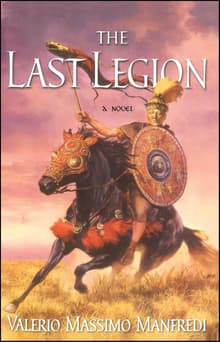
Manfredi is a genius at whisking you back in time to the era of his stories, and this tale is probably the best example.
I found myself gripped by the opening: the dwindling Empire is riddled with invading tribes, and all seems lost. Just as the Roman boy emperor Romulus Augustulus and his generals hatch a plan to raise a new legion and turn the tide, the army of Odoacer swoops in across the capital and ends the Western Roman Empire forever.
What a start! I was left dazed, seeing the ashes of the Empire swirling around me in my mind’s eye. From there, I was with the small cadre of survivors who set out on the most incredible adventure that would prove foundational to the next phase of history – the Dark Ages!
Valerio Massimo Manfredi's The Last Legion opens on the day that the Western Roman Empire collapses finally in 470AD, as the Last Emperor of Rome is encamped and protected by the Nova Invicta Legion. All is lost in the space of a few minutes as a horde of Barbarians sweep through the camp in the fog, kill the Imperial family and take the young Emperor captive. The Roman Empire is in ruins . . .
But all is not lost. From the dust of battlefields emerges a small team of invincible warriors - The Last Legion. Their task is to…
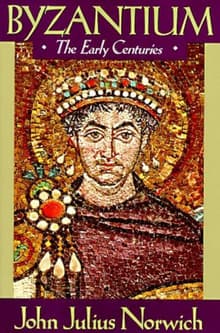
This account of history gives wings to the late Roman Empire and Byzantium.
Don’t expect: a dry list of dates and details of each event that happened in sequence. Do expect: to be unable to sleep as you read Norwich’s graphic descriptions of some of the most hair-raising twists of the Byzantine court.
I kept turning the pages all night, and during the day I couldn’t wait to get back to bed in the evening and delve back into that world. It’s enthralling and educational all at once!
'He is brilliant ... He writes like the most cultivated modern diplomat attached by a freak of time to the Byzantine court, with intimate knowledge, tactful judgement and a consciousness of the surviving monuments' Independent
In this exciting narrative history, John Julius Norwich, one of most accomplished popular historians, reveals the beginning of Byzantium. He tells of the five formative centuries of an empire that would enthral the western world for more than eleven hundred years.
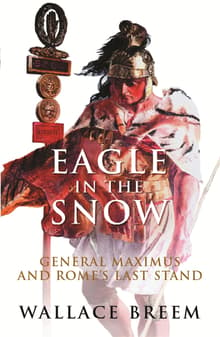
The end of the Empire has had me gripped since I was a boy.
Eagle in the Snow catapults you right into the dying state and right to its edge. I found myself walking the imperial borders in snowbound Germania, wondering if and when the Roman world was about to collapse beneath my feet.
It is one of those novels that leaves you feeling like you’ve lived another life, and that feeling has stayed with me ever since. A magical piece of historical fiction.
A novel about General Maximus, one of the inspirations behind Ridley Scott's massively successful film GLADIATOR.
'Behind me I left my youth, my middle age, my wife and my happiness. I was a general now and I had only defeat or victory to look forward to. There was no middle way any longer, and I did not care.'
In the year AD 406 Rome was on the defensive everywhere, and a single Roman legion stood desperate guard on the Empire's Rhine frontier. Maximus, the legion's commander, is urged to proclaim himself emperor, but he stands by his concept of duty…
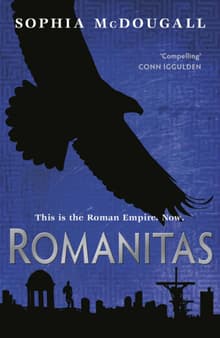
What if Rome never fell? That was enough to sell me this book, and into a vastly changed, modern-day Roman state I ventured.
The story tugs and tests your expectations – for much of the Roman world has become, by necessity, similar to our own, governed by technology, bureaucracy, and dominated by worldwide trade. But at its kernel, the age-old facets of imperial Rome remain – Praetorian Guards, devious intrigue… and crucifixion!
In a parallel modern world, the Roman Empire stretches from India in the East to the Great Wall of Terranova in the West. A runaway slave girl with a strange gift sets out to rescue her brother and seize her freedom, while the young heir to the Imperial throne discovers a plot against his life. For all three, the only way to survive may shake the Empire to its roots.
A fast-moving, compelling story, brilliantly imagined - CONN IGGULDEN
[A] hugely imaginative debut - DAILY MIRROR
A thoroughly good read ... vividly imagined ... elegant, lively writing - SUNDAY TELEGRAPH
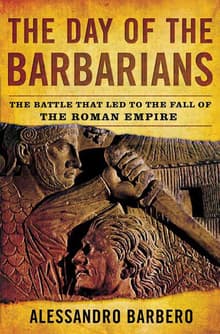
Rome fell to the barbarians. Did it? I have always enjoyed examining this and other suggested reasons for the empire’s fall, and have never quite been able to pinpoint any one cause.
In this book, the aptly named Barbero dissects the reality of what we mean by ‘barbarian’, and paints a rich picture of time and geography to chart out the emergence, movement, and net effect on imperial Rome of tribes like the Visigoths, the Vandals, the Franks, the Alans, the Huns, and many, many more.
I found that the investigation raised more questions than answers, and that only made the puzzle of Rome’s fall even more intriguing.
On August 9, ad 378, outside Adrianople in the Roman province of Thrace, the Roman Empire began to fall. Two years earlier, an unexpected flood of refugees from the tribe known as the Goths had arrived at the Empire's eastern border, seeking admittance. In the David-and-Goliath struggle that ensued, the barbarians eventually inflicted upon the Roman Army the most disastrous defeat they had suffered since Hannibal's victory over them almost 600 years earlier. Although the Empire did not actually fall for another century, this battle signalled nothing less than the end of the ancient world and the opening of the…