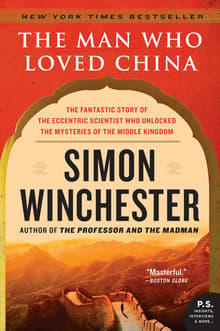
I loved the story of Joseph Needham, an eccentric English scientist who fell in love first with a Chinese woman and then with China itself.
I could relate to the passion he felt for learning about a completely different culture, immersing himself in the language, and pursuing countless friendships with Chinese people.
Although I had known that Chinese artisans developed some of the world’s greatest inventions (paper, woodblock printing, gunpowder, and the mariner’s compass), Needham discovered and cataloged dozens of others in many thick scholarly volumes, showing the world the greatness of the ancient Chinese culture.
In sumptuous and illuminating detail, Simon Winchester, the bestselling author of The Professor and the Madman ("Elegant and scrupulous"—New York Times Book Review) and Krakatoa ("A mesmerizing page-turner"—Time) brings to life the extraordinary story of Joseph Needham, the brilliant Cambridge scientist who unlocked the most closely held secrets of China, long the world's most technologically advanced country.
No cloistered don, this tall, married Englishman was a freethinking intellectual, who practiced nudism and was devoted to a quirky brand of folk dancing. In 1937, while working as a biochemist at Cambridge University, he instantly fell in love with a visiting Chinese…
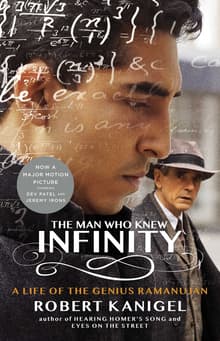
I was amazed at how a complete outsider, Srinivasa Ramanujan, who grew up in relative poverty, could rise to the highest levels of the British academic world through the sheer force of his intellectual genius.
How could this self-taught mathematical prodigy, elected a Fellow of the Royal Society, one of the youngest to win that honor and only the second Indian, make such extraordinary contributions to several areas of mathematics? How lucky for humanity that he was discovered and, though sickly, brought to England!
How many more contributions could he have made had he not died at age 32? How many undiscovered geniuses, hidden in remote corners of the world, have never realized their extraordinary potential?
NOW A MAJOR MOTION PICTURE STARRING JEREMY IRONS AND DEV PATEL!
A moving and enlightening look at the unbelievable true story of how gifted prodigy Ramanujan stunned the scholars of Cambridge University and revolutionized mathematics.
In 1913, a young unschooled Indian clerk wrote a letter to G H Hardy, begging the preeminent English mathematician's opinion on several ideas he had about numbers. Realizing the letter was the work of a genius, Hardy arranged for Srinivasa Ramanujan to come to England.
Thus began one of the most improbable and productive collaborations ever chronicled. With a passion for rich and…
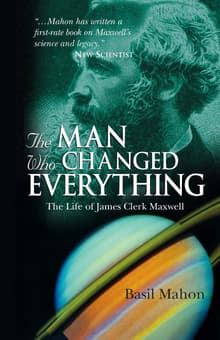
The ability of brilliant scientists in recent centuries to grasp the inner workings of nature fascinates me.
William Gilbert understood magnetism, Isaac Newton formulated a theory of light, and Benjamin Franklin comprehended the unitary nature of electricity. I admire the man who put it all together, James Clerk Maxwell. He was kind, a bit awkward, creative, a devoted husband and teacher, and deeply religious, like many people I know.
Extraordinarily curious from a young age, Maxwell discerned that electric current pervades all things, moving at the speed of light and constantly generating magnetic fields. And this was only the most powerful of his many discoveries.
Einstein declared that “one scientific epoch ended and another began with James Clerk Maxwell.”
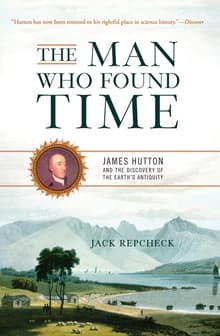
Before I read this book, I had not even heard of James Hutton.
It turns out he was a learned amateur scientist, lawyer, doctor, entrepreneur, and farmer in Scotland who demonstrated before anyone else that the Earth is far older than imagined. I liked the fact that Hutton was lively, energetic, eccentric, and cheerful, with an infectious positive disposition. It must have been a real treat to know him.
His keen observations of the Scottish landscape enabled him to formulate a theory of geological evolution, positing that the Earth is continuously forming and reforming through the action of subterranean heat and pressure and ceaseless erosion. I was amazed to learn that Hutton lacked the great renown of Galileo and Darwin because he wrote obscure prose!
There are three men whose life's work helped free science from the strait-jacket of religion. Two of the three,Nicolaus Copernicus and Charles Darwin,are widely heralded for their breakthroughs. The third, James Hutton, is comparatively unknown, yet he profoundly changed our understanding of the earth, its age, and its dynamic forces. A Scottish gentleman farmer, Hutton's observations on his small tract of land led him to a theory that directly contradicted biblical claims that the Earth was only 6,000 years old. This expertly crafted narrative tells the story not only of Hutton, but also of Scotland and the Scottish Enlightenment, including…
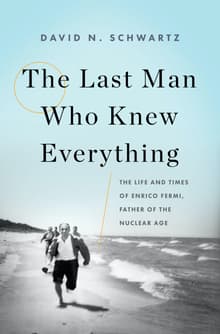
I wanted to read this book to learn how Enrico Fermi could be the “last man who knew everything.”
It turns out he didn’t know “everything” about “everything,” but rather knew nearly everything in physics. Especially noteworthy was Fermi’s genius for both theoretical and applied physics. It was he, after all, who planned and carried out the first successful atomic chain reaction in a squash court at the University of Chicago and co-invented the nuclear reactor.
I loved learning about a relatively shy boy and a late bloomer (albeit with a photographic memory!) who became a brilliant, extremely supportive teacher and a scientist, about whom more positive things were said after his death than about any other twentieth-century scientist.
In 1942, a team at the University of Chicago achieved what no one had before: a nuclear chain reaction. At the forefront of this breakthrough stood Enrico Fermi. Straddling the ages of classical physics and quantum mechanics, equally at ease with theory and experiment, Fermi truly was the last man who knew everything-at least about physics. But he was also a complex figure who was a part of both the Italian Fascist Party and the Manhattan Project, and a less-than-ideal father and husband who nevertheless remained one of history's greatest mentors. Based on new archival material and exclusive interviews, The…