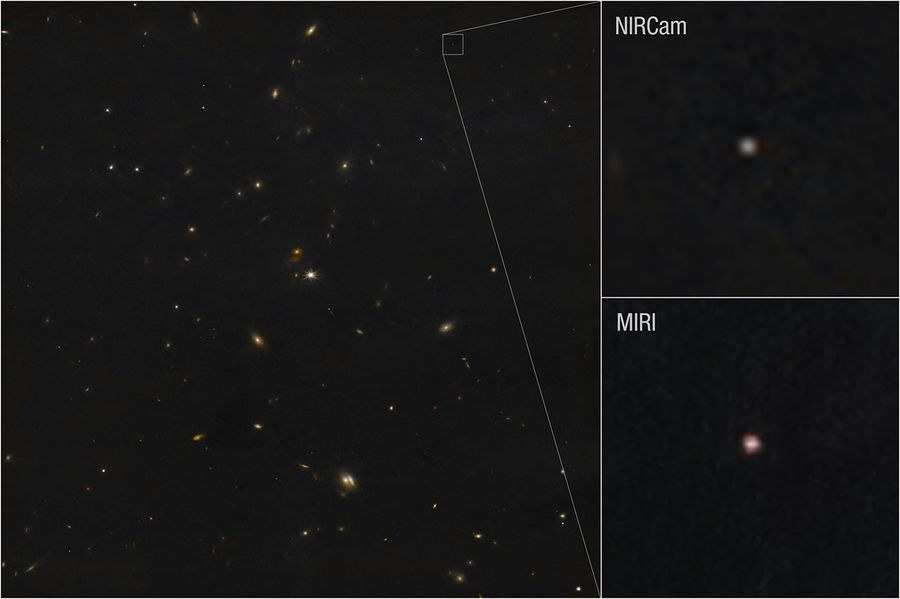
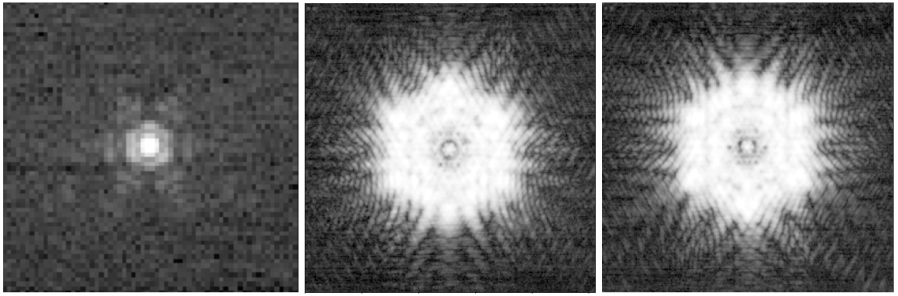
Editor’s Note: This post highlights data from Webb science in progress, which has not yet been through the peer-review process. These results were reported as part of NASA’s role in the International Asteroid Warning Network. NASA’s James Webb Space Telescope recently made new observations of the asteroid 2024 YR4, which we already knew poses no […]
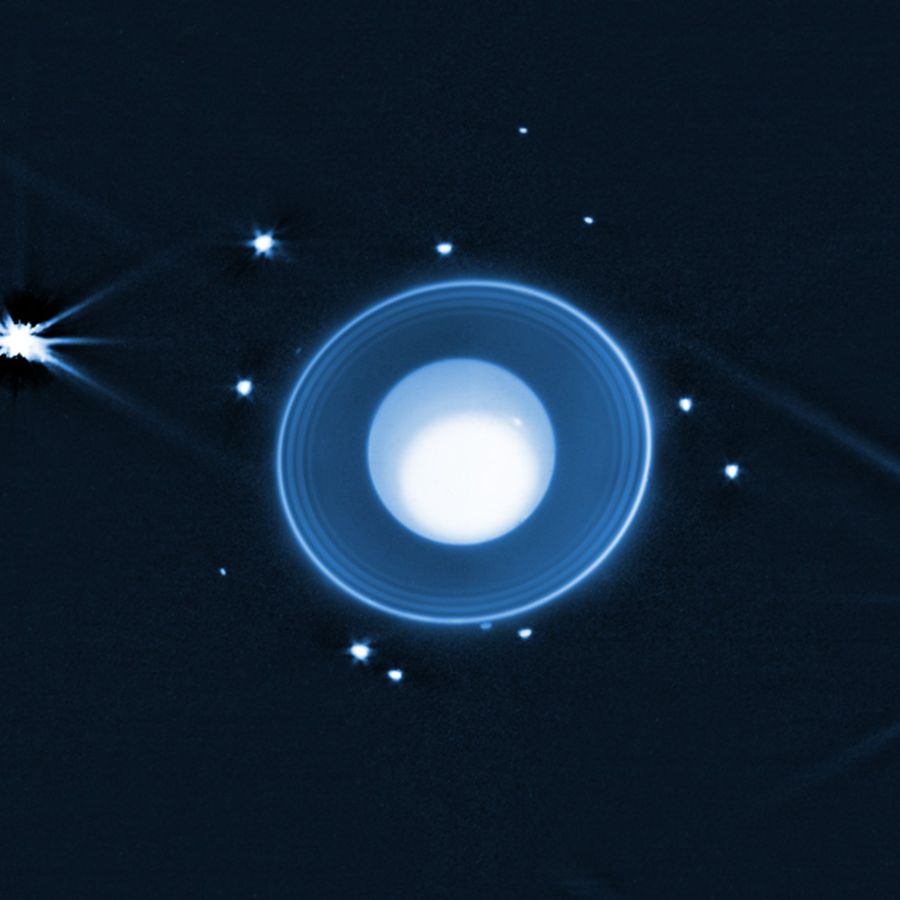
Editor’s Note: This post highlights data from Webb science in progress, which has not yet been through the peer-review process. Using NASA’s James Webb Space Telescope, a team led by the Southwest Research Institute (SwRI) has identified a previously unknown moon orbiting Uranus, expanding the planet’s known satellite family to 29. The detection was made […]
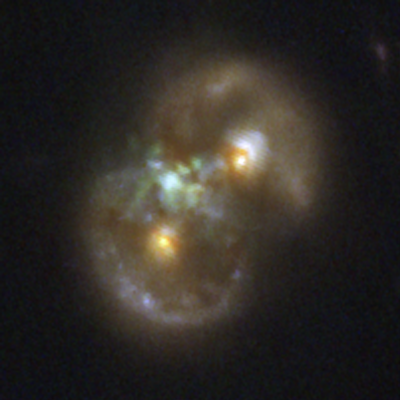
Editor’s Note: This post highlights a combination of peer-reviewed results and data from Webb science in progress, which has not yet been through the peer-review process. As data from NASA’s James Webb Space Telescope becomes public, researchers hunt its archives for unnoticed cosmic oddities. While examining images from the COSMOS-Web survey, two researchers, Pieter van […]
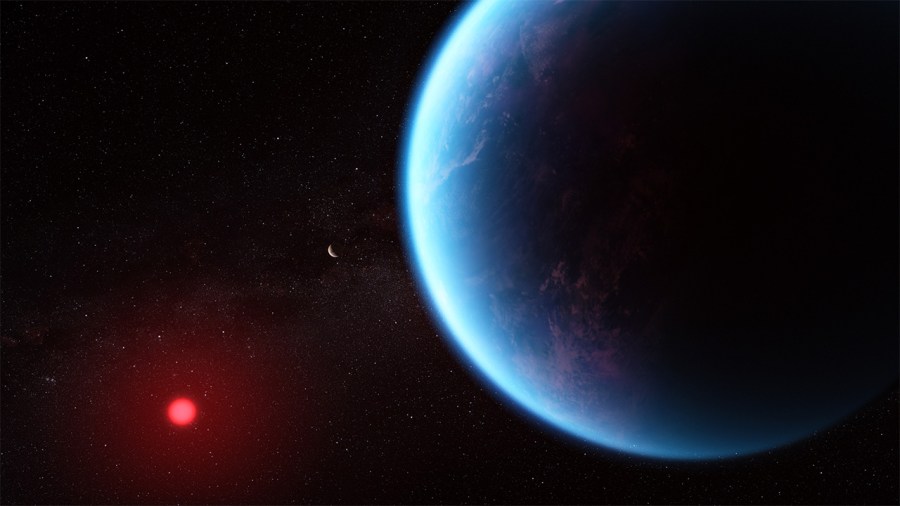
This artist’s concept shows what exoplanet K2-18 b could look like based on science data. K2-18 b, an exoplanet 8.6 times as massive as Earth, orbits the cool dwarf star K2-18 in the habitable zone and lies 120 light-years from Earth. Illustration: NASA, CSA, ESA, J. Olmsted (STScI), Science: N. Madhusudhan (Cambridge University) NASA’s James …
Editor’s Note: This post highlights data from Webb science in progress, which has not yet been through the peer-review process. These results were reported as part of NASA’s role in the International Asteroid Warning Network. NASA’s James Webb Space Telescope recently turned its watchful eye toward asteroid 2024 YR4, which we now know poses no significant …
Trans-Neptunian objects (TNOs) are icy bodies ranging in size from Pluto and Eris (dwarf planets with diameters of about 1,500 miles) down to tens of miles (Arrokoth) and even smaller. TNOs are on orbits comparable in size, or even much larger than, that of Neptune. The existence of TNOs was postulated by Kenneth Edgeworth, and …
NASA’s James Webb Space Telescope is the largest and most powerful telescope ever launched to space. Its mirror is composed of 18 individual segments that have been aligned so accurately, that they effectively work as a single giant (21.6-foot, or 6.5-meter) reflector. The process of adjusting each of these separately functioning hexagonal mirror segments requires …
Editor’s Note: This post highlights data from Webb science in progress, which has not yet been through the peer-review process. Measuring the Hubble constant, the rate at which the universe is expanding, is an active area of research among astronomers around the world who analyze data from both ground- and space- based observatories. NASA’s James Webb …
Exoplanets are common in our galaxy, and some even orbit in the so-called habitable zone of their star. NASA’s James Webb Space Telescope has been busy observing a few of these small, potentially habitable planets, and astronomers are now hard at work analyzing Webb data. We invite Drs. Knicole Colón and Christopher Stark, two Webb …