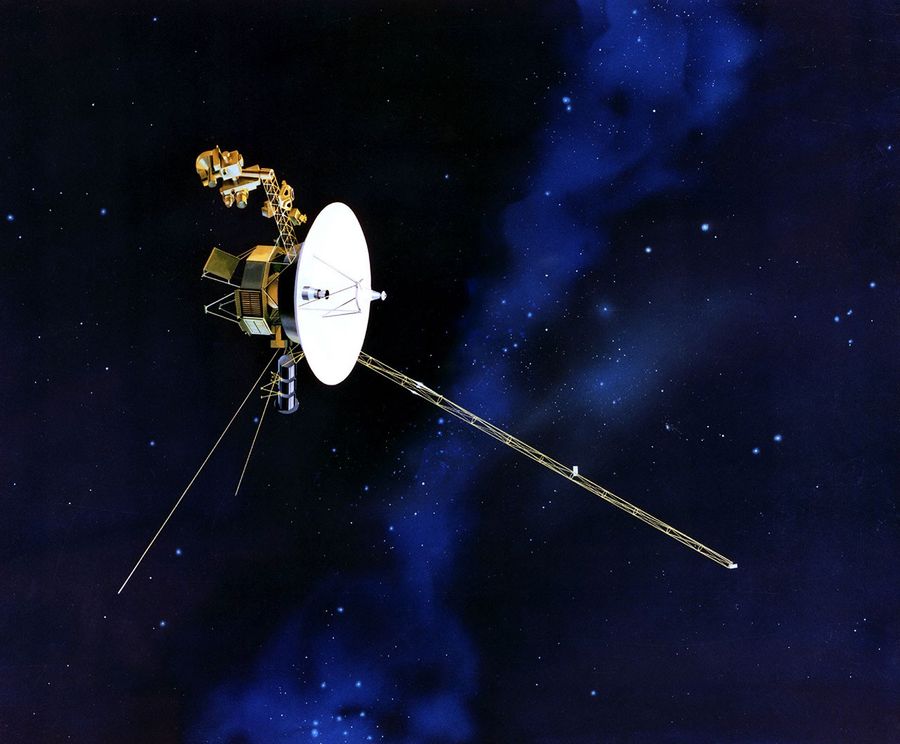
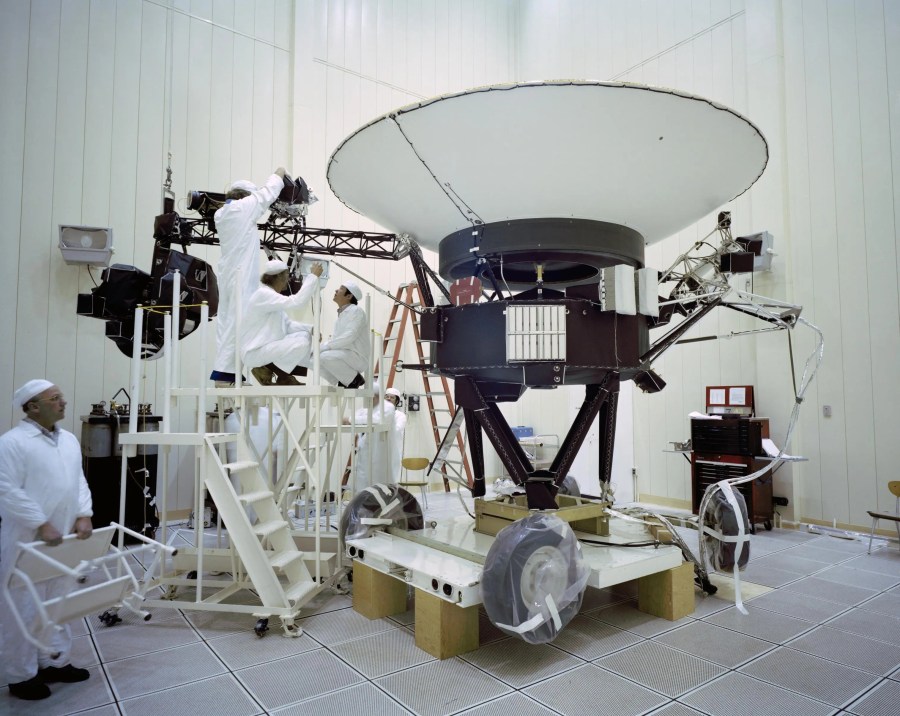
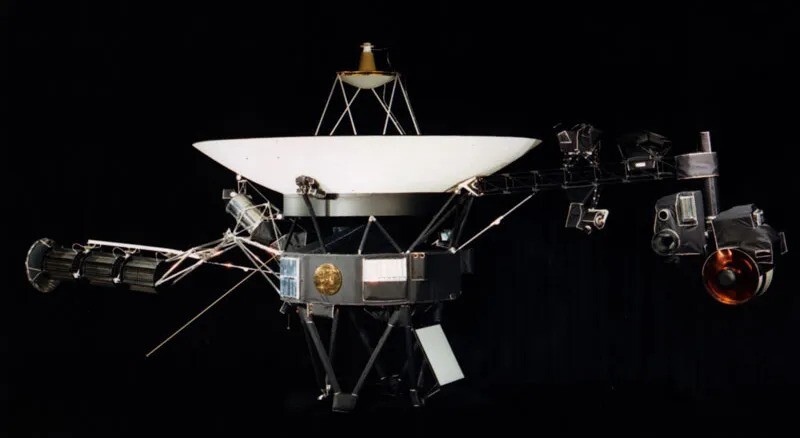
On April 17, engineers at NASA’s Jet Propulsion Laboratory (JPL) in Southern California sent commands to shut down an instrument aboard Voyager 1 called the Low-energy Charged Particles experiment, or LECP. The nuclear-powered spacecraft is running low on power, and turning off the LECP is considered the best way to keep humanity’s first interstellar explorer […]
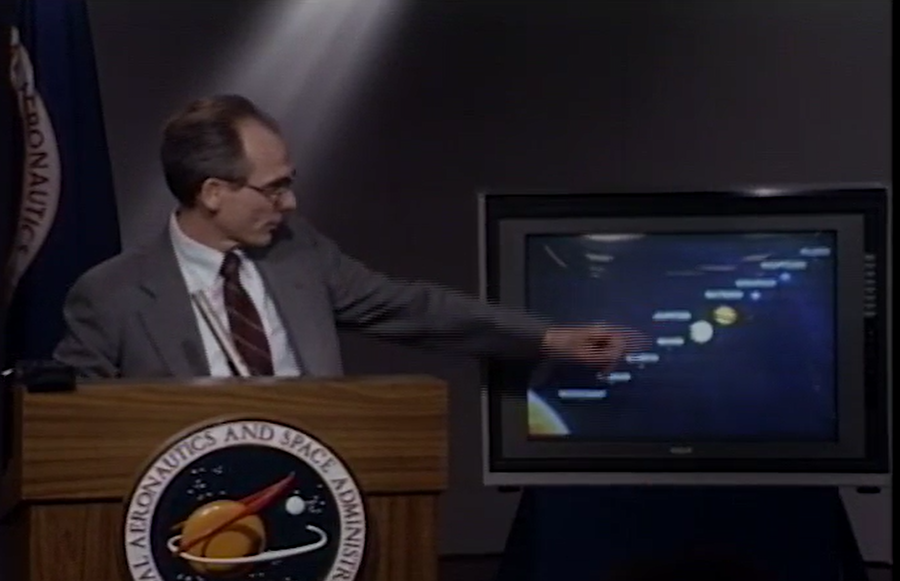
In archival footage of a historic NASA news conference, the mission reveals history-making images of six planets in our solar system, including a tiny speck called Earth. This week marks 48 years since the Sept. 5, 1977, launch of NASA’s Voyager 1 spacecraft from Cape Canaveral, Florida, to study Jupiter and Saturn up close. Nearly […]
The mission team wanted to fix the thrusters, deemed unusable decades ago, before the radio antenna that sends commands to the probe went offline for upgrades.
Mission engineers at NASA’s Jet Propulsion Laboratory in Southern California turned off the cosmic ray subsystem experiment aboard Voyager 1 on Feb. 25 and will shut off Voyager 2’s low-energy charged particle instrument on March 24.
On Oct. 24, NASA reconnected with the Voyager 1 spacecraft after a brief pause in communications. The spacecraft recently turned off one of its two radio transmitters, and the team is now working to determine what caused the issue.
Mission engineers at NASA have turned off the plasma science instrument aboard the Voyager 2 spacecraft due to the probe’s gradually shrinking electrical power supply.
Engineers working on NASA’s Voyager 1 probe have successfully mitigated an issue with the spacecraft’s thrusters, which keep the distant explorer pointed at Earth so that it can receive commands, send engineering data, and provide the unique science data it is gathering.