Because of the increased capability of AI models, more vulnerabilities are being found in computer systems throughout the world, like this vulnerability in PHP, a web technology that drives perhaps 70% of websites, or this Linux vulnerability, which could allow attackers to take control of servers remotely. Recently, Binance, a crypto exchange, was hacked by North Korea for $6.3B. Major US banks are seeing outages. By extrapolating current cyberattacks and their recent growth rates, we can easily conceive of scenarios where computer systems start failing and become compromised throughout society, to terrible effects: Cyberarmageddon.
How have we arrived here? Why haven’t we just simply built secure software? For one, for a long time, we didn’t have the software tools needed to accomplish this, and the programming languages themselves and their functions were prone to baking in vulnerabilities. But more generally, there are really stark tradeoffs between security and growth; the organizations that become the largest often do so at the expense of security. In the previous equilibrium, this was rational and rewarded by the market.
Consider, for example, Slack, the popular communications platform. It is built on top of Electron, which is itself built on top of Chromium and NodeJs. The core idea behind these technologies is that by reusing code from the popular Chrome browser and its way of interpreting JavaScript, the most widespread language on the web, one needs to use only a single language to design an application. Previously, companies needed to use several different languages for the frontend (what the user sees) and the backend (the business logic on a company’s servers), whereas by reusing JavaScript on both ends, one could write everything in only one language, and therefore have fewer programmers and retrain them more easily. Further, because Chrome works across many types of devices, this helps Slack by allowing it to produce only one app that can be used across Windows, Mac and Linux. Using this stack of technologies, Slack was able to launch faster, develop more features, and gain market share.
This approach to software design became hugely popular. But such platforms rely on a hack on top of a hack on top of a hack: Slack bundles the whole browser just to draw some text on a screen, and attackers can therefore attempt to execute arbitrary JavaScript on Slack since it is, underneath a thin veneer, a whole browser. JavaScript itself is also not a great or particularly well-designed language; it was famously designed in 10 days and has seen a variety of spectacular exploits. In this state of play, Anthropic and OpenAI both use Slack, and Anthropic’s Slack was recently breached.
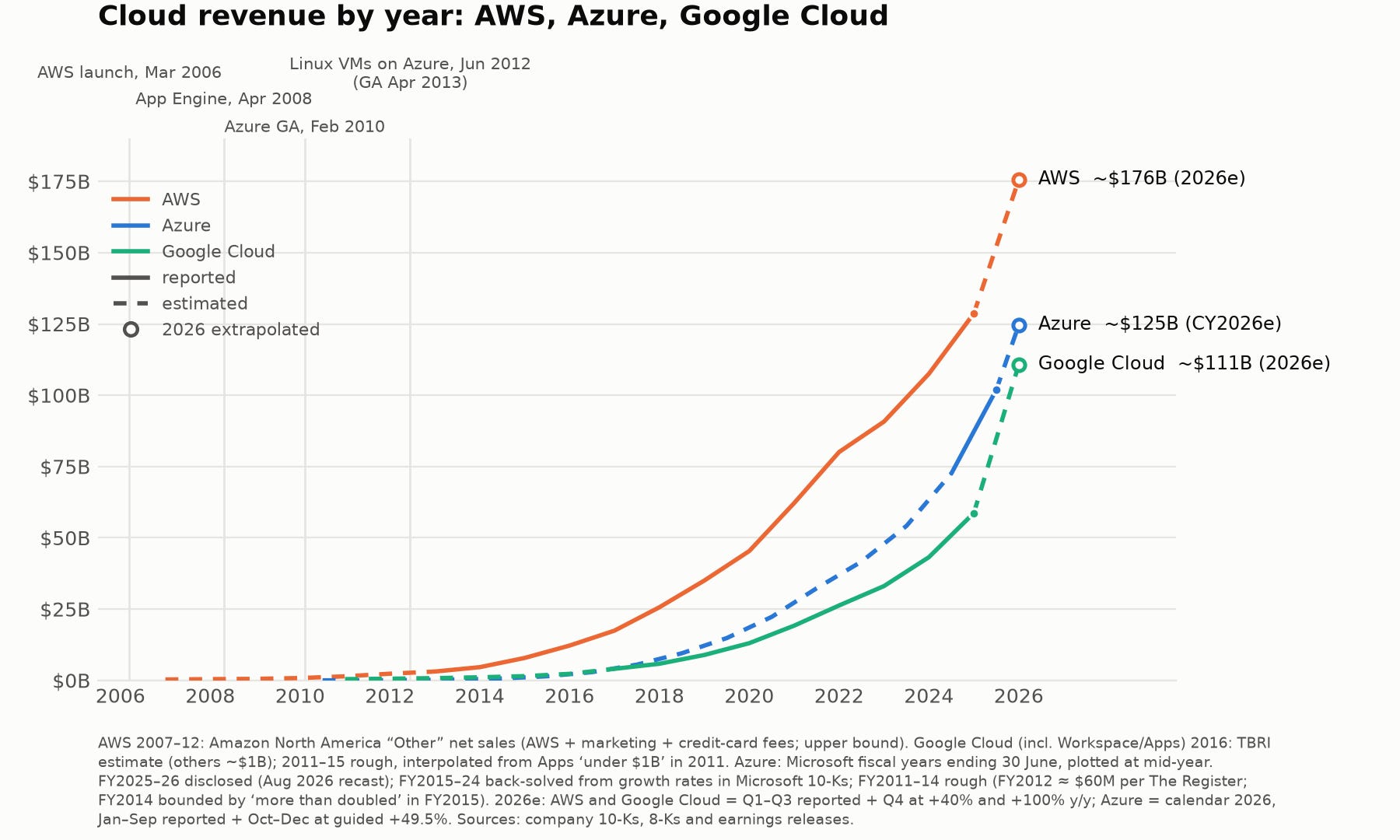
Or consider Azure, Microsoft’s cloud platform. A few decades ago, Microsoft made a strong bet on Azure, growing it massively, and adopted Linux across Azure rather than continuing to prioritize its Windows operating system. But Azure’s fast growth came at a cost, namely, less emphasis on security, and shaky foundations. As a result, Azure has seen a variety of vulnerabilities and container escapes. Congressional hearings back in 2024 talked about Microsoft’s “Cascade of Security Failures.” Back then, the threat model was nation-state actors, but cyberattack capabilities have since increased and diffused such that many can now find the vulnerabilities that, before, only China or Russia could.
Meanwhile, Linux itself, the most widespread, flexible and popular server operating system, is also seeing vulnerabilities in its ecosystem, in ssh (the software used to access a server remotely), privilege escalations, and in the software used to install more software. Because of Linux’s customizability, not all of these vulnerabilities affect every deployment, but these are scary enough that one of our authors, who used to host many projects and many servers online, has simply shut them down while figuring out what to do next.

GrapheneOS@GrapheneOS
@bilskirnir3124 @thsottiaux Linux was created as a rejection of robust software architecture and tools. It's a monolithic kernel with no internal isolation written as memory unsafe code. A typo in an obscure driver for unused functionality can easily create a fully privileged code execution vulnerability.
9:30 PM · Nov 15, 2026 · 312K Views
75 Replies · 190 Reposts · 3.68K Likes
Above via @GrapheneOS. The observation is correct. And unlike Android, regular Linux doesn’t have app isolation by default, and attempts to add it after the fact end up being cumbersome to use.
The takeaway from this historical detour is that the fundamentals on which modern software is built are not secure. And replacing them at scale would be expensive.
Cyberattacks and cyber risks don’t exist in a vacuum. The online world is simply one of the domains in which geopolitical conflict and competition, and crime, take place. But as much of the world’s economies, governments and militaries increasingly rely on information technologies, and as AI capabilities are surging, cyber risks are similarly surging.
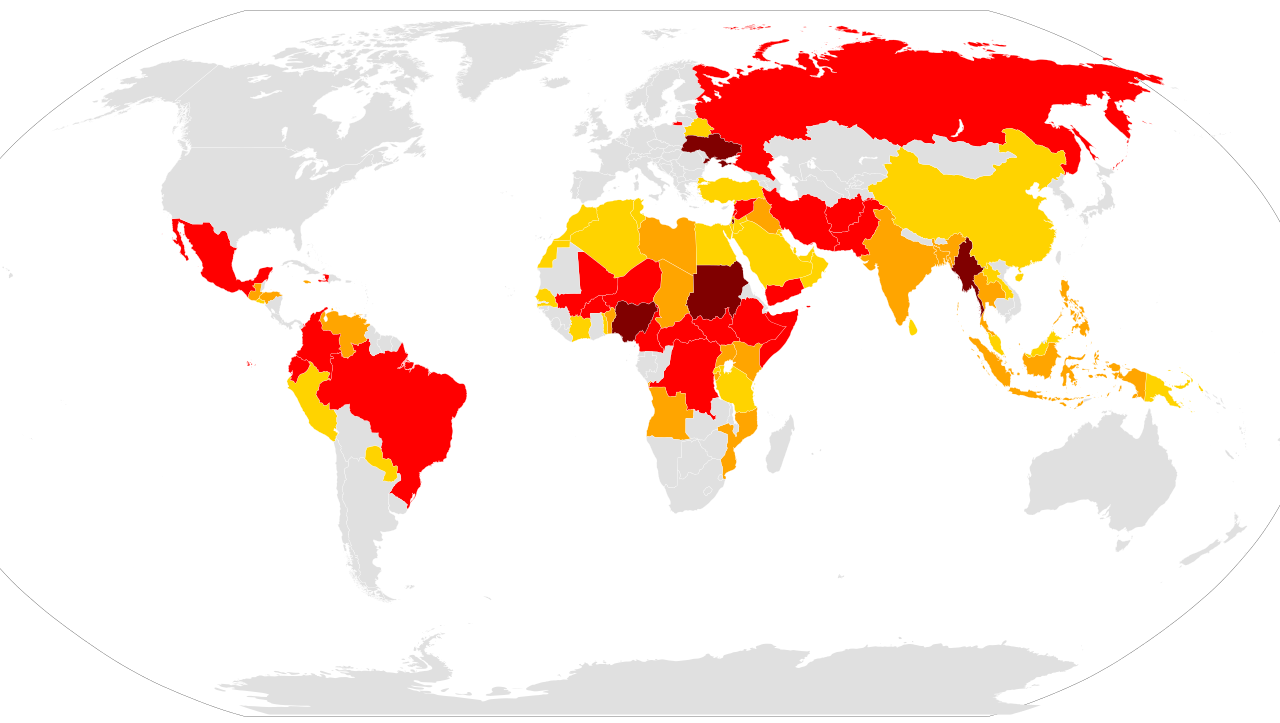
Throughout the war on Ukraine, we have observed a pattern of European ineffectiveness at conceptualizing and reacting to Russian sabotage operations and salami-slicing strategies: Russia is adept at using the high activation energy of a Western response to take many small (but increasingly larger) wins. The West categorizes cyberattacks and attributes them to thinly deniable state-backed “advanced persistent threat” groups with whimsical names like “Liminal Panda” and “Salt Typhoon” for Chinese groups, or “Fancy Bear” and “Cozy Bear” for Russian groups. But the West isn’t able to deter or contain cyber threats from Russia and elsewhere, preferring instead to continue to believe that it isn’t in a binary (yes/no) “state of war” even as its critical infrastructure gets penetrated, as Russia seeks to weaken Europe’s support for Ukraine, European social and economic cohesion, and ultimately, NATO.
More recently, Iran has entered the fray more actively: France recently attributed a spate of recent cyberattacks across its supermarket refrigerators and freezers to Iran, and we have seen other, similarly disruptive attacks throughout Europe over the past couple of weeks that may also have been carried out by Iran-linked actors1. In the US, Department of Homeland Security officials have stated that Iran and Iran-linked cybercriminals have targeted critical infrastructure since the start of the Iran war, although they have also stated that recent disruptions to air travel, email communications and bank infrastructure in the US have not been caused by Iran-linked cyberattacks. But the ability of the US to deter Iran specifically is somewhat limited, since the country is already being attacked and bombed, and the nuclear taboo places further escalation out of bounds.
And North Korea, under heavy sanctions and officially shut out of much of the world economy, is also actively conducting cyberattacks, primarily for economic gain. North Korea was behind the recent $6.3B Binance cyberattack and a smaller, 18-month, AI-enabled phishing scheme in which $400M in cryptocurrency was stolen from nearly a thousand victims using fake video calls.
Chinese actors are also attacking and lurking in critical infrastructure and a wide variety of other targets worldwide. While Chinese attacks tend not to cause outages that make headlines, China’s attacks have been relentless over decades, and the threat of greater harm in the event of overt conflict with China remains.
With Russia destabilizing Europe, Iran joining the fray, North Korea opportunistically hacking Western financial accounts, China attacking a wide range of targets more quietly, and all four of these countries collaborating quite actively to support Russia’s and Iran’s war efforts, it might be worth conceptualizing the current state of play in geopolitics as some fraction of a world war2.
Meanwhile, because of the rapidly rising cyber risks posed by Russia, Iran, North Korea and China, together with cyber criminals, patches and updates to software and equipment have been hastily deployed, resulting in many of the outages we have been seeing in the news, as defenders struggle to stay ahead of attackers. And AI systems have also made it possible and tempting to update old systems more quickly than ever before. But the old versions were stable, and they had empirically withstood the test of time. Now, big, complicated systems are getting updated in a rush, often by people who don’t know what they are doing. So, ironically, it is likely that new, rushed updates have caused most to nearly all of the recent outages that have provoked so much worry, triggering short and far less harmful versions of the very outages they are trying to prevent.

Non-state actors, particularly criminals, are also a source of concern, although we might think that they would not be sources of the largest risks, since criminals would be motivated by profit rather than aiming to cause chaos, and terrorists would have fewer resources than states. Nonetheless, existing crime syndicates have surprising amounts of manpower, sophistication, muscle, and abilities to reinvest profits into expanding schemes, and their reach is also being augmented by AI advances. More broadly, open-weight models and harnesses democratize nation-state capabilities, such as finding sandbox-escape zero days or orchestrating larger campaigns. We could imagine scenarios where this democratization leads to large-scale harm through a thousand cuts, where the cumulative impact of a school of piranhas adds up. So far, however, this is not our impression3.
We don’t know the extent to which these vulnerabilities will stack and affect our lives, and we will find out the outcome through large-scale empirics. But we have enough preliminary knowledge to outline what some bad scenarios might look like.
One bad scenario looks like a jenga tower collapsing. Visiting a website comes with the chance that malicious code will escape the browser and take over your computer, hiding itself as an innocuous service. Users are wary of updating their software because the very software they use to download updates could be compromised, and the security layers of the internet that allow you to validate who you are speaking with have themselves been broken.
When thinking about the most worrying vulnerabilities, our attention tends to linger on very abstract components. The software that computers use to talk to other computers (e.g., ssh). The programming languages that are used to develop programs (PHP, go, nodejs). Software used to install other software (apt). The platform that controls the servers that host the programs that serve the users (Azure). Because of the level of generality and abstraction of these components, vulnerabilities in them affect many users. Indeed, the widespread utility and adoption of all of these components is why tech companies have become so large and so powerful and why tech has become a point of leverage in so many people’s lives. Before the recent wave of outages, two of the most worrying incidents in the last few years, affecting SolarWinds and CrowdStrike, were in very abstract monitoring tech.
But if those abstract tools themselves become compromised, on a large scale, and companies try to fix those mistakes but can’t because their own systems are also degraded and compromised, then this could cause widespread chaos and end up affecting large swaths of end users. Now imagine bring down not just French supermarkets, but every service at that level of vulnerability: logistics services, retailers, airlines, messaging services, brokers, hospitals, refiners, banks, universities, and so on, across many sectors of the economy.
If we simply extrapolate4 from past attacks based on the current, increased level of diffusion of cyberattack capabilities, we arrive at a pretty scary picture. Pictured above are the cyber incidents tracked in our weekly brief. We don’t track all cyber incidents comprehensively; instead, we track some of the most notable incidents that meet a threshold of importance. It is easy to imagine that the number and frequency of such incidents might continue to go up, with sandbox escapes becoming more frequent, $100M hacks becoming $1B hacks, and $1B hacks becoming $10B hacks.
We can also consider more speculative threat models. For example, we could see highly targeted attacks carried out using cheap models that continuously probe specific targets. We could see more personalized ransomware campaigns. After initially penetrating a server, an attacker could proceed by downloading an AI model that observes system behavior and camouflages and defends itself against defenders. More speculatively still, a model that is too dangerous to release could be stolen or replicated, AIs might build backdoors in essential infrastructure where they then replicate like viruses, and other AIs could cause even more mayhem.
While more speculative pathways to danger are bitterly contested in the halls of public opinion, it is easy to imagine that the numbers of cyber incidents will continue to increase, because their number and severity have already gone up. But whatever the specific cyber risks turn out to be, it may be easier for those worried about AI risks in general to coordinate to prevent enhanced and more numerous cyberattacks first, and for those not as worried about AI risks to at least concede the dangers of cyberattacks in particular.
In the good scenarios, companies notice vulnerabilities and fix their whole stack before it is too late. Already Discord, another messaging platform similar to Slack, has switched from Electron to native Rust; other large companies could follow in their wake. Replacing older software with secure versions could end up being costly but straightforward rather than ruinously expensive. Geopolitical adversaries could reach a new detente, think tanks could propagate new doctrines of mutually assured destruction by AI as a backbone of this detente (MAD becomes MADDER: mutually assured disruption by diffusion of emergent reasoners), and attackers motivated by greed could be prosecuted throughout the world. After a short transition, we could arrive at a new offsense/defense balance that is not too bad. Through projects like Daybreak or Glasswing, AI companies could continue to make their models accessible to defenders but not to attackers, which could make security work faster and scalable, and somehow this approach could scale throughout the world. Chinese authorities could perhaps deter developers of open-weight models from incorporating strong cyberattack capabilities and somehow thread the needle between being overly restrictive to defenders and too permissive to attackers. Very bad things don’t happen in this scenario.
The forecasts below are provided so that you, the reader, can get a sense of how likely we think different possibilities are in the relatively near future. We think that cyberattacks resulting in asset losses are more likely than stealing from non-crypto financial institutions, disruption of some critical infrastructure service over a week somewhere in the 38 OECD countries is reasonably likely even though it hasn’t happened before, and our forecasts for even large-scale disruptions resulting in losses on the scale of 100M human-years, or cyberattacks resulting in losses of >$100B, sit just shy of 5%. Widespread software upgrades seem unlikely in the near term but are worth doing.
By the end of 2028, will an outage cut power, telecoms, digital payments or water to 1M+ people in an OECD country, excluding natural disasters, for a week? Forecasters estimate that there’s a 33% (10% to 60%) chance.
By the end of 2027, will a cyberattack result in losses in excess of $20B in either crypto or fiat currency? Forecasters estimate that there is a 28% (8.0% to 51%) probability that this will occur.
By the end of 2027, will a regulated non-crypto financial institution in the US lose more than $10B in a cyberattack, either itself or in customer assets? Forecasters estimate that there’s a 7.9% (1.5% to 35%) chance.
In 2028, will cyberattacks cause more than 100M human-years of disruption, according to our best judgment? This would be similar in magnitude to the impact of respiratory diseases, or to around 4.5 days lost per person to disruption. Forecasters estimate that there’s a 4.9% (0.5%, 4%, 10%, 15%, 17%) chance that this will occur.
By the end of 2027, will there be a cyberattack that results in a loss of assets in excess of $100B? Forecasters estimate that there’s a 4.8% (0.5% to 15%) chance.
Will more than 10% of new software written in 2027 be accompanied by some mathematical proof of its security properties? Forecasters estimate that there’s a 7.1% (2.0% to 25%) probability.
Will an operating system written in a memory-safe language reach more than 5% server market share by 2030? Forecasters estimate that there’s a 35% (6% to 75%) chance.
Here are some forecaster comments, lightly edited:
Can one even steal $10B from a regulated financial institution? And how could it be done? Probably not all at once. A $10B non-crypto attack would be implausible but not completely out of the question. Zelle reportedly lost $1B to fraud over a number of years, and recently, a French bank lost $100M, so this would “only” be a 10-100x step up. Even then, it would most likely have to be structured as a series of transactions affecting many users of a high-volume service, rather than as a more comical $10B wire-transfer heist. Some past attacks have been quite creative, e.g., stealing money from accounts via buying zero-day options, or draining a bank (and the underlying central bank guarantor) by having it conjure high-ticket fraudulent loans.
Two prominent cases of hacking, the SWIFT hack and the Carberp gang’s exploits, come to mind. But $10B would still be two orders of magnitude bigger, and it is hard to see how accounts receiving so much money (even if not out of nowhere) wouldn’t trigger AML and other measures. And indeed, in the SWIFT heist, ~90% of funds were frozen by intermediaries.
In 2016, there was the attempted $951M theft from Bangladesh Bank via SWIFT but $850M was blocked at NY Fed almost by blind luck. Brazil Pix hacks ($48M successfully drained from C&M Software, $22M from Sinqia) were limited by the amount of USDT available to withdraw the money before it was clawed back. Brazil then put a cap on Pix transfers through third parties. In both cases it was thanks to stolen/bribed credentials (just $4.6k for the bribe!?). For the Crédit Mutuel Arkéa case ($112M, 2 weeks ago): breached software led to harvested credentials, to fake internal IBANs, then transferred out of the bank with new instant transfers. Attackers bought loads of USDC and USDT on Kraken, OKX and crypto.com, which they swapped to ETH and then to XMR. The details of the cases are very interesting to me. Attack surface area seems very high, the availability of options to transfer funds away really helps (having crypto helps even if you’re starting off with fiat - seems crypto pools are large and liquid enough to allow large losses). I’d initially given this a very low probability (0.5%), but AIs should really help with finding these sorts of exploits: spreading malware (like they did with SWIFT), stealing credentials, improving the sophistication of corrupt people within orgs. There seems to be a lot of detail here.
“North Korea is definitely on it. So is Russia, with damage in mind rather than theft. But that’s a really big number.”
The base rate is nonexisting, so this pulls my forecast down. I’m thinking in terms of some kind of power-law fit.
Centralised crypto is around $600B, though much of that is in cold wallets (including Coinbase’s $377B in cold storage). Binance $130B, OKX at $30B, Bitfinex at $20B. $100B will be difficult to transfer. My initial thinking is that this is unreasonably high: a power law fits suggest it’s very unlikely from what we’ve seen so far. I agree with [another forecaster] that you’d expect to see freezes well before this point. It would also be hard to do very quickly; you’d be better off doing it quite slowly, though a year might be enough and there’s a reasonable chance that something has already gotten started.
100M man-years of disruption is a crazy-high bar, no? That’s like 4.5 days per person in the world, maybe 10 days per worker. This seems really hard to get to organically. This is at a scale of an ongoing total war in a large country (bigger than Iran, Germany or Turkey). I mean, severely damaging the US grid would be 1–2 OOM insufficient. The only non-sci-fi way this can happen is probably through catastrophic month-long disruptions to Alipay & WeChat and Indian pay-with-QR analogues, which is also somewhat hard to imagine because you can start a mesh-network and start using alternative payment methods. Maybe another way would be to utterly destroy a few huge commodity traders like Trafigura and Glencore, bricking their ships and ports completely and causing downstream disruptions. Severely damaging the world financial system is probably in the right ballpark, and destroying it might be an order of magnitude larger. Stacking multiple things would also be a bit of a stretch because there are not that many systems whose disruption can have such a high impact on actual people (rather than abstract dollars). A cyberattack that destroys TSMC would wipe out $3-10T from US financial markets, but it probably shouldn’t count because the actual disruption to people would perhaps not be minimal but probably wouldn’t reach the threshold.
There is a reasonable chance things get too risky to keep online so they just shut them down. Worms, etc. could cause a bunch of issues. A couple of large-ish companies getting decimated from cyber attacks would barely make a dent: as a quick guess, on the order of ~100k work years were lost in the CrowdStrike attack, and similar numbers for United Health. NotPetya saw ~40k, CDK Global ~15k, and Jaguar Land Rover ~6.5k work years lost from their 5-week halt. So, we need >1,000 of these: a very high bar! All the chronic security stuff people have to do every year, though, might be around 5M work-years. 20x-ing that seems in reach: Yubikeys, captchas, not being able to install things on your work computer, and so on. We could also include people being employed specifically because of this stuff.”
Disruptions that result in the loss of 100M human-years of effort is a high bar, but it doesn’t seem impossible to reach. If cyberattacks become nearly constant, then people all over the world will spend a lot of time dealing with the consequences, individually and collectively coping with outages, thefts, and equipment damage on land, at sea or in space. And one can include the human hours it would take to replace damaged goods or systems on top of the hours directly lost to disruptions. Or, by 2028, maybe AI will have fixed all the code.
There aren’t any precedents for week-long outages in OECD countries in the last 20 years that I could find, though there are a few close hits (Mexico in 2018, which cut piped water to 4 to 5 million people for 6.5 days, albeit scheduled, and 92% of homes have rooftop cisterns, so they had access to water still; Texas in 2021, albeit caused by a storm; Korea in 2011, where one bank’s customers were blocked from using their cards, using ATMs and transferring funds for 3 to 7 days, although other banks kept working; and a 2022 outage in Japan which affected 31 million telecom users for 61h). Per Laplace’s rule of succession, this would give us 38*20*4 past trials and 38*2*4 future chances to get a hit in the next two years, which brings us to a fairly high 9% chance. And it seems worth updating a bit higher because of recent advances in cyberattack capabilities.
The April 2025 Iberian blackout was the longest in the last 15 years (18.5h for the vast majority of 50M affected, <1M for longer). The 2003 US-Canada blackout had >1M without power for 24-36h. I don’t think power is the most likely trigger for this question’s resolution, because we’re good at getting things back online as it’s very important, but people do point out that there is a shortage of redundant parts for substations in many countries. It’s very very hard to inflict physical damage via cyber though.”
[Updating software so that it comes with proofs of its safety properties] would be too cumbersome; I expect most new software to continue being vibecoded. However, I could imagine the question resolving positively if both the amount of software being produced rises massively and this requirement is mandated by the US.
Existing code bases constructed by humans are filled with potential bugs, whereas new code bases constructed with the best AIs are far freer of vulnerabilities and will likely be increasingly safer as time goes on. At some point, the risks associated with vulnerabilities will probably be so large, and the costs of writing new code so small, that someone will start over and use a memory-safe language to do so. And it seems likely that such systems would gain at least 5% market share by 2030.
You just need [proofs] to be a trend that AI models can easily adopt. You could imagine Claude doing it by default by the latter half of the year. Costs will be so low, especially if it’s just for the critical pieces. I might do a lean proof of [some of my own systems] at the weekend.
I think having VMMS (virtual machine monitors/hypervisors) and/or syscall-handling kernels is probably sufficient to be secure in the near-term, and there wouldn’t be the motivation to replace the host kernel. Even Oxide (a new, small and cool on-prem server company, very Rust-pilled) don’t use a Rust OS on their server (but they do on their microcontrollers). It’d be a very very big shift so in the near term don’t think hyperscalers would take such a big risk (even with AI coding) for something that offers very little benefit. Isolation at the levels above will be the focus and seems perfectly tractable to me. By the end of 2030 though, and the world will probably be looking substantially different, and optimality on these sorts of things should be pretty easy to reach
It is currently unclear to what extent members of the general public should be worried about these developments, but this uncertainty suggests that caution would be wise. On the one hand, attackers might tend to go for high-value targets rather than for the median citizen, and widespread attacks would also involve a society-wide response. On the other hand, society is quite reliant on its IT infrastructure, and a serious disruption could affect large fractions of the public.
Therefore, suggestions might start with personal preparedness: stockpile food, water, medicine, toilet paper, and essentials for about a week to a few months in case of disruptions, be a bit more paranoid online, add app-based two-factor authentication or security keys, and keep an offline backup of your important data and perhaps a backup computer in case your main one gets hacked. It is possible that big companies might be better defended, both because they might be more competent and because they would be bailed out if they are too big to fail; this is somewhat counterbalanced by the idea that larger institutions make juicier targets. Perhaps keep offline copies of wikipedia or other useful information, or even useful physical books. Look into basic emergency preparedness so that you and your community are able to weather short disruptions in services. Take common-sense levels of basic preparedness encouraged in every society (e.g., in the US and the UK), consider having supplies on hand for a bit longer, and add some extra but basic cybersecurity. And, discuss these ideas with family and friends.
One might also think in more systemic terms and try to take actions that could, as a whole, improve the cybersecurity situation. Perhaps invest in cybersecurity stocks, or join, start or invest in startups or initiatives to defend critical IT infrastructure around you or in a scalable way throughout society, and upgrade your current software to more secure versions. Political advocacy and prioritization could also be useful.
There is also, at this time, a closeness and nearness to these threats that wasn’t present even a few months ago. People now take these threats more seriously and may be more willing to take expensive action when before they might not have been willing to. Additionally, threats are now in a sweet spot of conceptualization. Readers may do well to prepare now so as to not let a large crisis go to waste.
Thanks to Rai Sur, Finn Hambly, Nathan Metzger, Nathan Young and Misha Yagudin for comments and suggestions, and to Finn Hambly and Jonathan of Samotsvety for additional estimates.