This article was developed in collaboration with Terma, a paying participant in the satsearch trusted supplier program. It catalogs the company’s expert insights into the challenges of manual mission planning for increasing complex NewSpace satellite systems, and modern solutions available that are based on scaling computational approaches.
Jump to
- This isn’t hypothetical
- Why manual planning breaks
- What happens at scale
- The NewSpace difference
- Modern solutions gaining adoption
- Recommendations for organizations scaling up
- The breaking point is earlier than you think
- Terma’s solutions for NewSpace
- Additional resources

Sarah’s Monday morning started the way most do lately: with a problem she’d already solved. As operations lead for their two-satellite Earth Observation constellation, she had spent the weekend finalizing Thursday’s imaging schedule – three days from now, the minimum lead time their customers demand. Targets locked, ground station passes confirmed, power budgets verified.
08:07. Her plan shatters. The Deconfliction Engine throws an error showing Target 7 conflicting with Target 9. Both observations require the satellite at the same position, five minutes apart. How did she miss it?
10:00. She discovers a ground station booking error. Kiruna is double-booked for Thursday 14:30 UTC. Their downlink window carrying Wednesday’s high-priority customer data overlaps with another mission. No downlink means breach of contract.
14:00. An emergency request arrives. A priority customer needs wildfire imagery within 6 hours. Sarah begins the replan: Which targets can drop from Thursday’s schedule? Does Satellite-2 have enough memory? When is the next ground station pass?
17:00. Sarah is still resolving conflicts for Thursday’s schedule, and Friday’s plan hasn’t been touched. Then her CEO announces: “We’re launching ten more satellites next quarter. Can you handle the scale-up?”
Sarah looks at her chaos of scripts and spreadsheets. Two satellites, planned three days ahead, consume eight hours daily. Twelve satellites don’t mean 48 hours. They mean an exponentially harder puzzle where every decision cascades into three more decisions.
Sarah’s situation isn’t hypothetical. Research and data prove manual planning breaks much earlier than most expect.
This isn’t hypothetical
Sarah’s spreadsheet chaos has a name in academic literature: NP-hard combinatorial optimization. The real-world proof comes from a 2023 mission planning study at Politecnico di Torino, modeling a realistic Earth observation constellation.
The numbers are sobering. Planning operations for 28 satellites with 15-second time resolution required 12 to 15 hours of computation time using genetic algorithms and constraint satisfaction methods far more sophisticated than Sarah’s spreadsheets.
Even with that computational power, failures emerged. In a 100-target scheduling scenario, two targets were left completely unscheduled, and three targets were observed but their data never downlinked because ground station capacity ran out.
The complexity isn’t linear. Emergency scenarios proved worse. Simulating a Turkey earthquake response with five high-priority targets, two couldn’t be scheduled due to sunlight constraints. The entire replanning had to complete within three hours to uplink before satellites lost communication windows.
When Sarah scales from 2 satellites to 12, she isn’t facing 6 times the work. She’s facing exponentially cascading constraints where every decision eliminates options for future decisions.
Why manual planning breaks
The mission planning problem isn’t just complicated. It’s mathematically proven to be NP-hard, meaning solution time grows exponentially with problem size. But the real killer isn’t the math – it is the interdependencies amongst the constraints.
Memory exhaustion means satellites fill onboard storage and can’t take new images. Energy bottlenecks from battery depth of discharge limits (30% for LEO, up to 75% for GEO) restrict when payloads can operate. Thermal limits cap how long sensors can run continuously depending on satellite design. Ground station conflicts emerge when only a handful of stations serve dozens of satellites. Weather and sunlight requirements mean passive sensors need target illumination.
These constraints cascade. Skip a downlink and memory fills, blocking the next observation. One conflict creates three to five downstream conflicts.
This is why large constellations adopt multi-tier planning. A 2004 study on the Galileo navigation constellation showed the system required three distinct planning horizons: long-term (1 to 6 months) for high-level activities, mid-term (2 weeks) for conflict-free plans, and short-term (1 week) for detailed executable schedules (Figure 1).
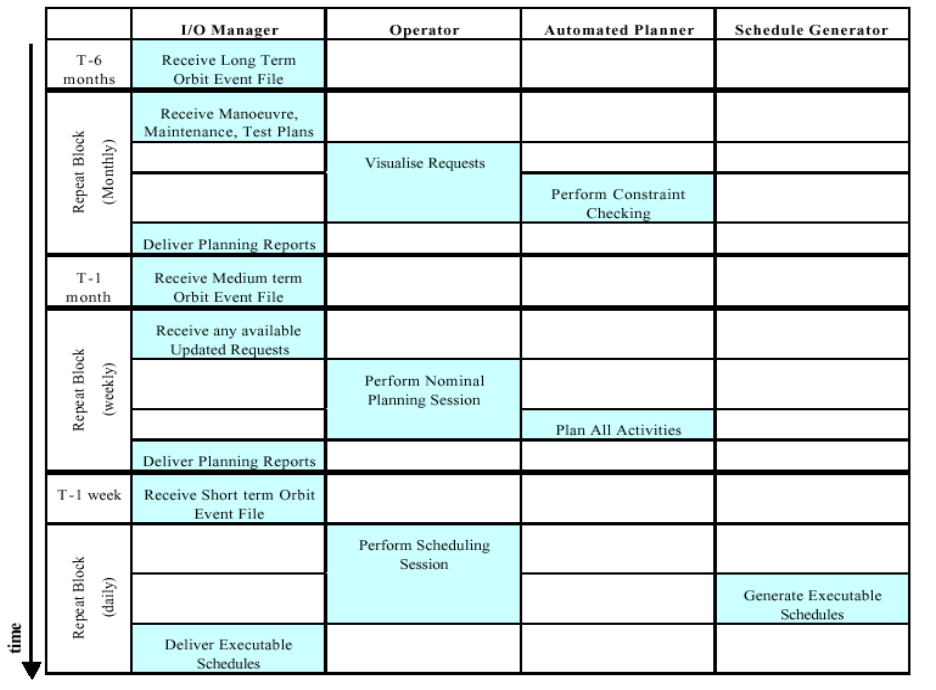
Figure 1: Galileo nominal planning process (source).
Why three tiers? Because you can’t plan 6 months ahead with minute-level precision. The computational cost is prohibitive, and environmental changes invalidate plans faster than operators can replan them.
What happens at scale
The critical threshold for manual planning appears around 10 satellites. Not because the satellites themselves become unmanageable, but because coordination overhead grows exponentially.
Consider what happens when a constellation crosses this threshold. Each satellite requires simultaneous management of TT&C operations, mission uplink operations, communication networks, and service provision. Planning activities include nominal pass operations with pre-pass, pass, and post-pass procedures, special operations windows, onboard spacecraft commanding, and ground station maintenance. Each activity carries complex interdependencies.
The 2004 study on the Galileo navigation constellation demonstrated this scaling challenge. When the system crossed 10 satellites in 2015, coordination required distribution across 5 to 10 physically separate facilities: mission planning, ground assets control, key management, mission control, and service provision. Each facility had to synchronize continuously to maintain 24/7 global coverage across three orbital planes. With 27 operational satellites plus 3 spares, the system required enterprise-grade planning infrastructure simply to avoid scheduling conflicts.
Emergency replanning added another layer. The system needed real-time replanning at the operations level using robust schedules with execution flexibility. When situations deteriorated beyond operator control, short-term replanning at mission level took over, requiring coordination across all facilities.
The lesson: if ESA needed this architecture for 30 satellites, commercial operators will hit the same walls sooner, not later.
The NewSpace difference
Traditional EO operators handled approximately 10 requests per week. Modern NewSpace companies face 100 or more requests per day. That’s not 10 times the volume. Combined with 10 times more satellites, it creates 100 times the planning complexity.
Lead time compression amplifies the pressure. Traditional satellite operators required 2 to 3 days’ notice for tasking requests. NewSpace customers now expect responses within 30 minutes to 3 hours. Emergency scenarios demand even faster turnaround: planning must complete within 3 hours for emergency tasking, with 10 to 15-minute replanning windows after activity failures.
Real-time replanning creates a cascade of decisions. When a satellite fails an observation or misses a downlink, operators must immediately evaluate: Should the system reassign to another satellite? Find a new window for the same satellite? What are the cascade impacts on downstream activities? Manual operators cannot evaluate these options fast enough while maintaining situation awareness across the entire constellation.
The operational environment itself has become dynamic. Weather inputs are now programmatic, with cloud coverage APIs feeding directly into planning systems. Satellites are increasingly software-driven and capable of multi-tasking. Proliferated architectures mix government and commercial assets. Customer service level agreements demand near-real-time response.
The convergence is unforgiving: more satellites, more requests, faster response requirements, and greater complexity. Manual planning isn’t just inefficient at this scale. It’s mathematically impossible.
Modern solutions gaining adoption
The evolution from manual to automated mission planning isn’t theoretical. It’s operational, with decades of proven results and cutting-edge approaches emerging from both government programs and commercial operators.
Today’s market leaders manage constellations with 100+ satellites through proprietary scheduling systems built over years and protected by patents. These incumbents developed planning infrastructure gradually while scaling their fleets. NewSpace startups now face a stark choice: spend years building equivalent systems or license software from the competitors they’re trying to disrupt.
Current technology builds on proven algorithms. The Consensus-Based Bundle Algorithm (CBBA) enables fully distributed multi-agent task allocation. Developed at MIT, it allows each satellite to independently build bundles of tasks and resolve conflicts through local communication, achieving 50% optimality guarantees while scaling efficiently without centralized coordination. Deep reinforcement learning advances complementary approaches for distributed decision-making.
Modern genetic algorithms have evolved beyond simple heuristics. Terma’s feasibility-first genetic algorithm demonstrates this next generation of constraint-aware optimization. Initial schedules are built sequentially, with each satellite receiving tasks through a resource dictionary that records feasible windows, insertion opportunities, and current coverage. The dictionary updates dynamically to target the most constrained opportunities while retaining stochastic variation for exploration.
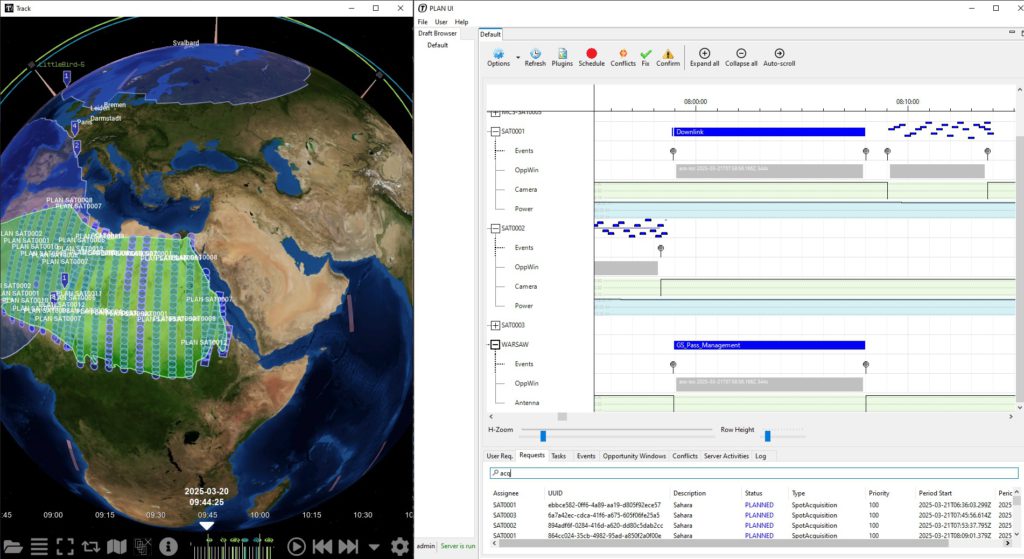
Figure 2: Terma’s PLAN system supporting complex, constellation-level mission planning scenarios (source: Terma).
During evolution, a task-sparsity guided mutation operator performs targeted large neighborhood search. Deletion seeds are heuristically weighted toward the least-dense or low-value regions of each satellite’s schedule, then rebuilt using resource-aware heuristics. This directs exploration toward under-utilized regions while maintaining feasibility through incremental time-window checks. By embedding constraint logic and domain heuristics directly within the evolutionary cycle, Terma’s system delivers a modern genetic framework engineered for constellation-level mission planning (Figure 2).
Modern planning software adapts to constellation specifics. Hardware investment scales with constellation size: 10 to 100 satellites need a single powerful workstation, while constellations beyond 100 satellites require server infrastructure with 10 to 20 parallel calculations.
Recommendations for organizations scaling up
The lessons from large-scale constellation operations translate directly into planning requirements based on your mission architecture.
Algorithmic choice matters. Feasibility-first approaches that apply delta-based screening and adaptive mutation maintain constraint satisfaction while exploring solution spaces efficiently. The right framework depends on your constellation’s complexity, not just satellite count.
Small Constellations (2 to 10 satellites)
You’re at the critical threshold where manual planning breaks. Sun-synchronous orbits with repeating ground tracks simplify geometry: satellites pass over the same ground stations at predictable times. Test planning software now with 20-satellite scenarios, even if you’ve only launched 2. Implement multi-tier planning horizons: long-term for maneuvers, mid-term for conflict-free plans, short-term for executable schedules. Lightweight tools run on a single workstation but implement them before you desperately need them.
Medium Constellations (10 to 50 satellites)
Constellation geometry becomes critical. Multiple orbital planes with non-repeating ground tracks, or mixing sun-synchronous with mid-inclination orbits, increases complexity exponentially. Satellites no longer follow predictable patterns. You need automated planning infrastructure before your next launch. Payload complexity matters: passive optical sensors are simpler to schedule than active SAR systems with strict thermal and power budgets. Multi-payload satellites require simultaneous resource optimization across competing demands.
Large Constellations (50+ satellites)
You’re managing distributed ground networks and 24/7 operations. Planning software needs server infrastructure capable of 10 to 20 parallel calculations. Mixed orbital regimes create coordination challenges manual methods cannot handle. Multi-payload satellites with conflicting resource requirements demand optimization across power, thermal, memory, and downlink capacity simultaneously. Emergency replanning becomes mandatory: generate new schedules within 10 to 15 minutes after failures.
These architectural choices compound quickly. A 30-satellite constellation in a single sun-synchronous plane faces different planning challenges than a 15-satellite constellation across three orbital planes with mixed inclinations. Understanding which complexity factors matter for your mission determines when manual planning becomes the bottleneck.
The breaking point is earlier than you think
Manual planning breaks at 10 satellites, not 100. Even 30 satellites, servicing critical sovereign infrastructure needs, required enterprise architecture across multiple facilities. NewSpace is imposing demands of 100 or more requests daily with 30-minute lead times, making manual coordination mathematically impossible.
The breaking point isn’t just satellite count. A 15-satellite constellation across multiple orbital planes hits limits faster than a 30-satellite sun-synchronous constellation. Constellation geometry, payload complexity, and operational tempo compound.
Today’s proliferated architectures require constellation-scale deployment to move the needle commercially. High-revisit monitoring requires dozens of coordinated assets. This makes planning and scheduling software foundational to the business model, not operational infrastructure you add later.
For Sarah and every NewSpace operations lead, the question isn’t “Should we automate?” It’s “Can you afford to be still resolving conflicts in spreadsheets when your CEO announces the next ten satellites launch in three months?” Planning software isn’t optional infrastructure for someday. It is the foundation that determines whether your constellation succeeds or becomes an expensive lesson in exponential complexity.
Terma’s solutions for NewSpace
Terma’s experts supplied key insights for this article based on their past, ongoing, and future work to support commercial, governmental, and scientific missions. Terma’s solutions are designed for use in extreme mission-critical environments and situations. For the space industry, Terma delivers mission-critical electronics, software, and services.
Terma’s MPS, also referred to as PLAN and part of the Terma Ground Segment Suite (TGSS), is a spacecraft mission planning system that minimizes manual intervention, reducing errors and boosting efficiency and integrates cutting-edge scheduling algorithms to optimize satellite constellation operations.
Here is a selection of tools & modules available within Terma’s software suite to support mission planning and operations.
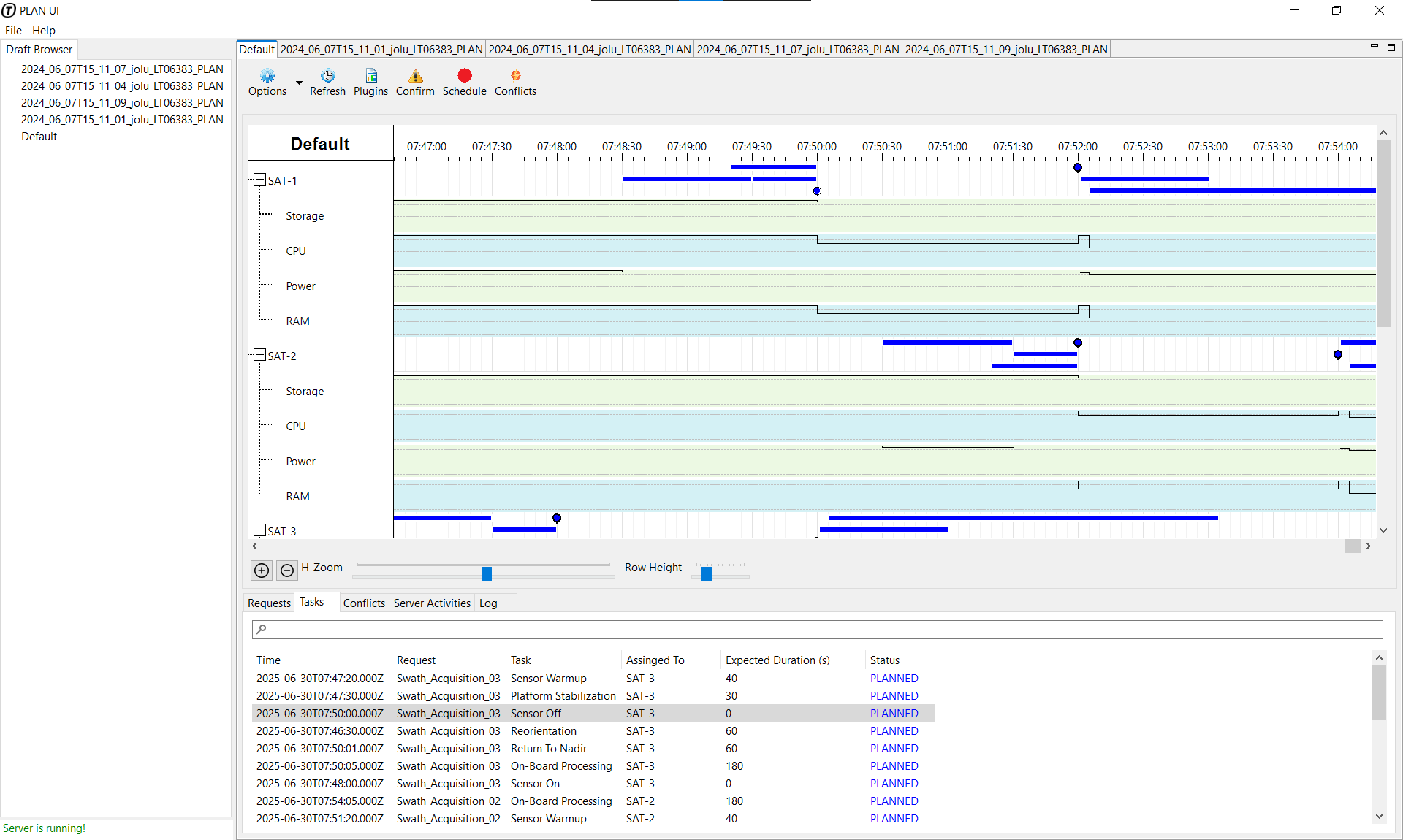
PLAN, integral to the Terma Ground Segment Suite, automates and optimizes mission schedules for satellite fleets, aligning tasks with key events to pinpoint ideal operational windows. With capabilities for manual adjustments and seamless integration with CCS5, its AutoPilot function executes scheduled tasks autonomously, ensuring timely and efficient mission control.
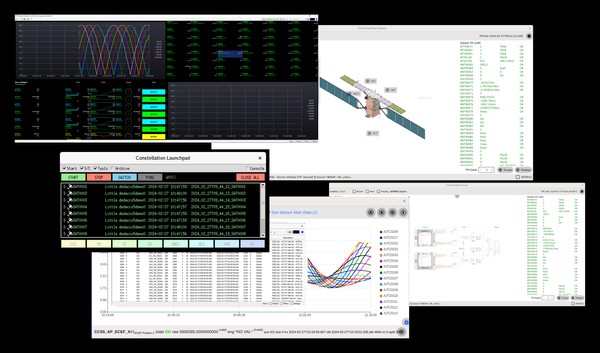
The Terma Spacecraft Control System – Operations and/or AIT (CCS5) is a multi-user operation and testing product designed for space applications. The CCS5 can be used for all phases of operations - from preparation and launch to routine operations. It can be also used as the central part of an EGSE for assembly and integration testing (AIT/AIV). The single-user version of CCS5 is called TSC and can be used for a variety of purposes including instrument and payload testing.
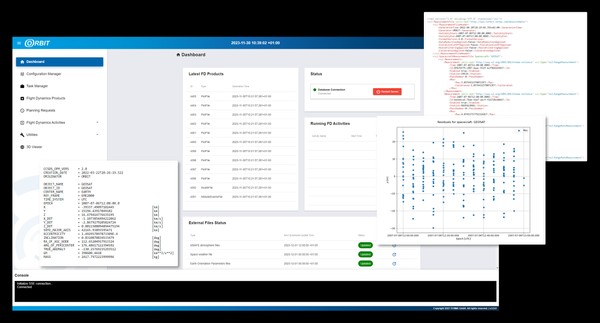
The Terma ORBIT product, leveraging the Terma Flight Dynamics library and an extension of Orekit, offers advanced support for Flight Dynamics across missions from LEO to GEO.
For more information, check out Terma’s capability hub on satsearch.
Additional resources
- Scalability and expandability of ground stations with SDR technology – with Terma (podcast)
- Overcoming Challenges in Space Processor Emulation – with Terma (podcast)
- The future of satellite constellations: why automation matters – with Terma