This episode of The Space Industry podcast by satsearch is a conversation with Dr. Tamas Rev, Materials and Mechanical Lead at Acktar about the world of coatings for space missions, canvassing state-of-the-art stray light mitigation and thermal management.
Acktar is a specialist provider of optical coatings and protective solutions, including space-rated ultra-black coatings and foils that improve the efficiency and performance of mission equipment.
In this episode, Tamas and satsearch COO Narayan Prasad Nagendra discuss:
- Deep space stray light mitigation: Acktar’s Fractal Black™ coating is critical for stray light mitigation in high-profile, deep space observatories, such as the James Webb Space Telescope and Europa Clipper, which ensures optimal performance by minimizing unwanted light for clear data acquisition.
- Extreme environment thermal and stray light management: The BepiColombo mission uses a complementary pair of coatings: Acktar White™ for thermal management and Magic Black™ for stray light control, demonstrating a tailored approach to handle the combined challenges of intense heat and light in harsh environments.
- Lunar thermal regulation: The Chandrayaan-2 mission utilized the Nano Black™ coating to provide essential temperature regulation on the lunar surface, addressing a key thermal management concern for the mission’s success.
- Small satellite optical contamination control: Spectral Black™ coatings are applied to smaller satellite platforms, like the CanX series and other LEO satellites, to reduce optical contamination and light pollution, which is increasingly important as the number of LEO satellites grows.
Find the episode now on your favorite podcast player! And please give us an honest rating and review to help us spread the word about all the important work going on in the space industry.
Related products
Products referenced in, or related to, the content in this podcast episode:

A polyimide film designed to deliver low reflectance and high emissivity across the spectrum from UV thru VIS to SWIR, for straylight suppression. The film is a few microns thick, with no particulation, and is vacuum and thermal—vacuum cycling qualified.

The Acktar White™ is designed for space applications. It is a space-qualified film that delivers a range of emissivity and solar absorptivity values for passive thermal management in space applications. These coatings are often used in multi-layer insulation blankets, providing a wide range of features and advantages. To facilitate air passage during launch, the film may be perforated. The perforation may be done before/after the coating process, upon request by the customer.
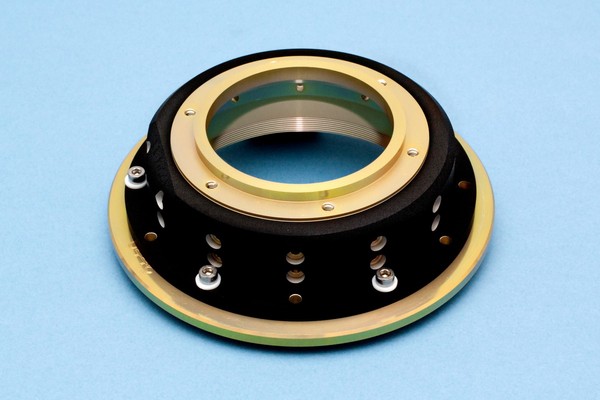
Acktar's Magic Black™ Coatings provide extremely low reflectance and high emissivity in EUV-VIS-NIR frequencies. They are widely deployed in high-resolution imaging instruments, such as terrestrial cameras and space telescopes.
Click here to view the full Acktar space capability portfolio on satsearch.
Transcript
Please note that this transcript is auto-generated and may contain errors and inconsistencies with the podcast audio and therefore we can accept no responsibility or liability relating to the content and accuracy of the text on this web page. The transcript should only be used to accompany the audio, and it is the audio of the podcast which should be referred to in order to confirm any of the information provided in the podcast.
(00:00) Narayan:
Hi and welcome to The Space Industry podcast by satsearch. My name is Narayan, COO at satsearch and I’ll be your host, as we journey through the space industry. The space sector is going through some seismic changes, promising to generate significant impact for life on Earth and enable humans to sustain life elsewhere in the cosmos.
At satsearch, we work with buyers and suppliers across the global marketplace, helping to accelerate missions through our online platform. Based on our day-to-day work supporting commercial activity, my aim here during this podcast is to shed light on the boots-on-the-ground developments across the globe that are helping foster and drive technical and commercial innovation.
So come join me as we delve into a fascinating, challenging, and ultimately inspiring sector.
(00:54) Narayan:
Hi, and welcome back to yet another episode of The Space Industry podcast. Today we’re going to be speaking with Dr. Tamas Rev from Acktar, a satsearch member company that works extensively on coatings. The conversation today will be centered around how coatings form the hidden surface behind several space missions, and we’re going to be taking examples of several types of space missions, such as interplanetary spacecraft, planetary rovers, and even LEO spacecraft, on how coatings have made some significant contributions in the success of these missions.
Here is a quick reintroduction of Tamas. Dr. Tamas Rev is a Research and Development Engineer with extensive experience in the field of composite materials and structures, who is the Materials and Mechanical Lead at Acktar. Acktar itself is a technology leader in development, industrialization, and production of light-absorbing black coatings based on vacuum deposition technologies.
(01:50) Narayan:
Hi Tamas, welcome back to The Space Industry podcast and it’s great to have you here again.
(01:54) Dr. Tamas Rev:
Thanks for having me here, Narayan. I’m excited to talk about space and new missions.
(01:59) Narayan:
Great. So let’s begin talking about where we left off in the last episode, which is coatings and stray light problems and the things that you guys really work on, which is fascinating for me. We’re going to be discussing in this podcast episode various applications of various coatings in various mission scenarios so that people can understand how coatings have made a difference in various missions, be it planetary, interplanetary, or even LEO, for example.
And to begin with, let’s start with some of the very high-profile missions that Acktar has been involved in, missions such as James Webb or Europa Clipper or MMX, and the specific problem being stray light mitigation in these missions. So, can you explain why it’s so critical to the performance of these deep space observatories and what exactly was the role that coatings from Acktar did in these?
(02:59) Dr. Tamas Rev:
Yeah, definitely. So just to recap for the listeners, in all of these missions that you just mentioned, we have used Acktar’s Fractal Black™, which is one of our most popular flagship coatings for space applications. And this is the one that we have most used in space missions, about 43, 45 missions to date. And Fractal Black™ is an ultra-black coating that basically absorbs over 99% of stray light, from UV to visible through infrared, while only being very thin. And what makes it really special is not just how dark it is, but also how durable. So it holds up in vacuum, radiation, extreme temperature swings for decades, and it has also extremely high emissivity.
(03:45) Dr. Tamas Rev:
So you would ask, okay, why was Fractal Black™ chosen for, let’s say, the James Webb Space Telescope? So multifunctionality and long-term durability was exactly the reasons. The James Webb Space Telescope is designed to explore the universe’s earliest galaxies, to study like star and planet formations and search for potentially habitable exoplanets, like planets that are outside of our Solar System. So it’s located in the Sun-Earth L2 Lagrange point, which is about 1.5 million kilometers from Earth. And this is where it can maintain a stable orbit with minimal fuel use.
So at this location, the telescope operates in an extremely cold condition, like around 40 Kelvin or let’s say minus 230 degrees Celsius. And these harsh thermal and vacuum environments mean that the coating on the James Webb instruments and baffles, they have to be highly stable, resistant to atomic oxygen and outgassing, and optimized to minimize stray light while maintaining this performance over decades in space.
(05:00) Dr. Tamas Rev:
I want to share a story about that. So the James Webb Telescope actually had a famously long wait before the launch, because the launch itself was delayed about 12 years. So one of the most critical instruments on board, the NearSpec spectrograph, which actually analyzes light from astronomical objects to determine their chemical composition, temperature, and motion, it had some parts coated with Acktar’s Fractal Black™ all the way back around 2008. So these pieces that we coated, they ended up sitting in storage for nearly 12 years, and with the witness pieces, obviously, that were qualified with it. And when we tested it closer to the launch date, the actual one, the results were incredible. So there was no loss of adhesion, the optical performance was basically unchanged. And by this time, when the launch was already scheduled, we already knew that the coating could survive years of waiting here on Earth, which gave a lot more confidence to engineers that it would stand up to brutal conditions of deep space.
(06:12) Dr. Tamas Rev:
Another example that we also carried out some experimental research with Fractal Black™ and on how the coating thickness is affected, affects the emissivity performance at cryogenic temperatures. So for this, I have personally went and traveled to the Czech Republic to the Cryogenic Institute in ISI Brno to do these measurements. And we had a set up based on a calorimetric device that had a radiator and an absorber. And it turns out that one of the black body absorbers was also coated with Fractal Black™ back in 2009. And since then, this device has been continuously measuring the emissivity of certain customers’ materials in cryogenic temperatures down to 5 Kelvin, which again is like minus 270 degrees Celsius. So it means that the Fractal Black™ coated black body radiator absorber has been extensively thermally cycled between room temperature and cryogenic temperatures, a vast number of times over the course of what, 15 years? And it is still in operation without any sign of degradation to its thermo-optical properties. So this also shows the long-term resilience of Fractal Black™.
(07:34) Dr. Tamas Rev:
If we look at another mission like NASA’s Europa Clipper, which was launched last October, Europa Clipper is on its way to Jupiter’s icy moon, Europa, which is one of the most promising places in our Solar System to search for signs of habitability. So apparently, under its frozen crust, there should be a big subsurface ocean, and the main goal of the mission is to find out whether this ocean can support life. Which would be incredible, by the way. But optically, Europa is a brutal environment. Jupiter is a massive, blinding light source right beside the target itself, while Europa’s ice, it reflects a huge amount of sunlight and infrared radiation. And this glare can easily swamp even the faintest thermal and spectral signals in the instruments that are built to detect.
(08:29) Dr. Tamas Rev:
So that’s exactly why NASA has chosen Fractal Black™ for this purpose. So the coating is used inside the E-THEMIS instrument, which is Europa Thermal Emission Imaging System, developed at Arizona State University. And E-THEMIS maps Europa’s surface in infrared and far-infrared wavelengths to detect any tiny temperature difference that are possible signs of thin ice or subsurface activity. So to make these measurements reliable, stray light suppression is critical. The internal baffles and some optical cavities within the E-THEMIS were coated with Fractal Black™, which trapped the unwanted reflections and basically shielded the detector from both Jupiter’s glare and Europa’s dazzling surface, right? So Fractal Black™ has an ultra-low reflectance, high emissivity, and durable. So that’s how it can help E-THEMIS capture the true thermal emission from Europa’s surface and make the difference between noise and discovery.
(09:37) Dr. Tamas Rev:
Just to mention another short example, JAXA’s Martian Moons eXploration or MMX mission, which is scheduled to launch in 2026, which is already next year. It’s supposed to study its moons, Phobos and Deimos, and even maybe return a sample from Phobos. And the optical challenge is very complex as well. Phobos is extremely dark and irregular, while Mars itself is a bright reflective source. And there’s also dust scattering in the environment. So Fractal Black™ was chosen to suppress ghosting and stray reflections inside the imaging systems. It would keep measurements clean even when Mars is bright albedo competes with Phobos’ dark surface. And because MMX is operating in such a mixed light environment, Fractal Black™ can ensure high contrast imaging and reliable data collection for both navigation and science.
(10:35) Dr. Tamas Rev:
So in each of these missions I just mentioned now, the same coating solves a very different stray light problem. On James Webb Telescope, it preserves faint infrared signals. On Europa Clipper, it blocks Jupiter’s glare and Europa’s icy reflections. And on the MMX, it suppresses ghosting from Mars’s brightness and Phobos’s dusty surface. It just shows how versatile the coating is across very different mission environments.
(11:03) Narayan:
Yeah, that’s really interesting examples. And from a standpoint of missions itself, obviously there could be several types of missions that need different types of coatings that are then addressing a different aspect in each one of these cases. So going into one of these kinds of examples, we could probably talk about a kind of an interplanetary flight where the challenges are both in terms of stray light as well as thermal conditions, right? So in if you take a mission such as BepiColombo, for example, you then have a challenge in managing both stray light and extreme thermal conditions in there. So if you take an example of this nature, which is let’s say a typical interplanetary flight where these two challenges come into place, how do, you know, coatings complement these kinds of missions in such a harsh environment?
(12:02) Dr. Tamas Rev:
So that’s a very great question. BepiColombo is really the textbook case where you need two very different coatings working together. On this mission, we’ve used Magic Black™, which is Acktar’s ultra-black coating. It’s tailored for the visible, near-infrared nanometer range used by star trackers and optical instruments. It has about 1.2% reflectance and basically eliminates stray reflections that could blind the detectors. It’s thin, highly emissive, and resistant to radiation and atomic oxygen. Which is why it’s basically default coating for star trackers on the European market.
(12:42) Dr. Tamas Rev:
On the other hand, there is Acktar White Standard™, which tackles the thermal side and the thermal challenge. So Acktar White Standard™ combines a very high solar reflectance with very high infrared emissivity. So basically it takes most of the sun’s radiation, reflecting it away, while still also radiating excess heat into deep space. And that makes it far more reliable than traditional paints because they usually often degrade or outgas in vacuum.
(13:13) Dr. Tamas Rev:
So if we take a look at BepiColombo and the mission context, BepiColombo is a mission between ESA and JAXA, which has two orbiters, if I’m correct: the Mercury Planetary Orbiter and the Mercury Magnetospheric Orbiter. And it has a very ambitious objective to map Mercury’s surface in multiple wavelengths to probe its exosphere and study its magnetic field. But Mercury is a really harsh environment that any spacecraft can ever face because at the perihelion, which is the point in orbit of a planet which is closest to the Sun, even so BepiColombo is just about 58 million kilometers from the Sun, and it’s bombarded with solar flux that is 10 times stronger than in Earth’s orbit. So the spacecraft can experience external heating so intense that without a specialized thermal control, it would really quickly exceed the design limits. And at the same time, Mercury’s highly reflective surface poses an optical challenge. The bright glare can scatter into the cameras as spectrometers and contaminate the measurements.
(14:31) Dr. Tamas Rev:
So also adding to that, this mission has to endure this for years. So in space—since convection and conduction is not available in space, the only way to regulate the temperature is through radiation. Which means that the coatings are not secondary, but they are fundamental to the survival of the mission. And this is exactly why Magic Black™ and Acktar White™ were paired for BepiColombo. Magic Black suppresses stray light inside the star trackers and spectrometers. It ensures that they can function even while pointing at near Mercury’s dazzling surface. And Acktar White™ protects the external surfaces by reflecting away the solar load or radiating away the excess heat and keeping sensitive electronics within safe operating conditions. So basically, just to be, let’s say, funny with the words: Magic Black™ keeps the vision clear, and Acktar White™ keeps the spacecraft alive. And without this combination, the mission would either risk overheating or producing compromised data.
(15:43) Narayan:
And let’s take another example maybe here and talk about maybe specifically a lunar mission. And in this case, a good example would be a mission like Chandrayaan-2 from India. Obviously, in this particular scenario, then you’re specifically probably addressing thermal management because it’s one of the key criteria, especially if you are going to land in the south side of the south pole of the lunar surface, for example. So how did the coatings from Acktar here contribute to temperature regulation on the lunar surface? And what are the lessons learned for you guys in its deployment?
(16:22) Dr. Tamas Rev:
So this is an interesting one because Chandrayaan-2, we’ve used Acktar Nano Black™, which is one of the lesser known selective coatings of Acktar. It is specially designed for high absorbance and low reflectance in the UV-visible range, but it also has low emissivity in the infrared spectrum. So what it means in practice [is] that it can efficiently absorb the sunlight but radiates heat away more slowly, giving it a relatively high alpha-to-epsilon ratio, which is ideal for stabilizing temperatures in extreme environments.
(17:01) Dr. Tamas Rev:
So just a couple of words about Nano Black™. It’s extremely thin. It’s in the range of about a micron, which is tolerable. Fully inorganic like all Acktar coatings, it has excellent adhesion to all kinds of substrates, extremely low outgassing, cleanable with traditional solvents, and qualified for thermal vacuum cycling, resistant to humidity and abrasion. And also thermally stable between minus 70 to 250 degrees Celsius. So it’s a robust space-qualified thermal coating.
(17:35) Dr. Tamas Rev:
In India’s Chandrayaan-2 mission, the mission combined an orbiter, lander, and a rover to study the moon’s surface and exosphere, the outermost region of the planet’s atmosphere. So it has faced the toughest environment because there is no atmosphere to buffer the temperatures. The lunar surface goes between plus 100 degrees Celsius during the day to below minus 50 Celsius during the night. And the instruments need to survive these extremes, while maintaining the precise performances. So traditional white paints or multi-layer insulation materials, they are not necessarily sufficient to provide the exact absorptivity-emissivity balance. And the orbiter’s infrared hyper-spectral spectrometer, in particularly, they required stable temperatures and stray light suppression during these long duration observations.
(18:34) Dr. Tamas Rev:
So Nano Black™ was selected because it provided precisely that alpha-epsilon balance. Absorbing solar energy efficiently while radiating it away at a controlled rate, it prevented freezing in lunar night and mitigated overheating in lunar day. So it’s thin, lightweight, reduces mass, which is critical for both landers and orbiters. The main lesson learned is that Nano Black™ can really serve as primary thermal regulator, not just as a supplementary layer. It demonstrated that a few microns of coating can protect the instruments that are exposed to these lunar extremes, that enables more compact spacecraft designs.
(19:19) Dr. Tamas Rev:
So Nano Black™ helped Chandrayaan-2 survive the brutal day-night thermal cycles of the Moon. And this experience has really shaped how Nano Black™ is now applied to other missions. Not only to nano-satellites, but let’s say ground-based astronomy instruments like on the Robert Stobie Spectrograph for the South African Large Telescope, for example.
(19:43) Narayan:
Great. And we’ve now gone through three specific examples as a quick review with one being the interplanetary flight, the space telescopes, and the lunar mission. And the other major aspect that is facing us today is really the crowding of the LEO, or Low Earth Orbit, and especially the question of whole pollution of—light pollution essentially with thousands of LEO satellites that are now orbiting the Earth, and Starlink and others contributing to all of this. So from the perspective of LEO and small satellite platforms, there are obviously possible coating solutions that can be used in this particular case as well. So how do, you know, coatings reduce either optical contamination or light pollution? And especially given that the scenario is that we will probably see a massive rise in the number of LEO satellites—and it’s continuing to rise now.
(20:46) Dr. Tamas Rev:
Yeah, you’re completely right. I think this is a problem that we should be discussing more and more, especially as we grow with these mega-constellations. So today there are over what, 8,000 active satellites? And within the decade we could see more than 50,000. Starlink, OneWeb, Kuiper, the countless CubeSats, NanoSats that launched by universities and startups. So astronomers are facing this growing challenge: the light pollution from satellites. Basically, when the sunlight hits a spacecraft, its surface is reflected back to Earth. So if these reflections are strong or worse, diffuse, which when light scatters in many different directions, then the satellites show up as bright like streaks across telescope images. This means lost exposure time, corrupted scientific data, and reduced sensitivity to the faint cosmic sources. It can really ruin basically multi-billion dollar observations in a split second, just to make it short.
(21:55) Dr. Tamas Rev:
But the biggest culprit isn’t just brightness, but it’s basically diffuse scattering. So light spreading in all directions contaminates the entire field of view, while a narrow specular reflection would be far easier to model and filter out. So this was recognized by the International Astronomical Union and observatories worldwide, and they raised the alarms. And satellite operators like SpaceX, they introduced DarkSat, which uses a less reflective coating, or VisorSat design, which has an on-station sunshade to combat this light pollution. They also published best practice guidelines calling for darker surfaces and reduced scatter and controlled glints. You can find it online.
(22:42) Dr. Tamas Rev:
And this is where Acktar Spectral Black™ comes into play. Unlike other ultra-black coatings, Spectral Black™ is a semi-diffusive absorber or reflector. It provides a very low reflectance across 400 to 1200 nanometers—the wavelength where satellites are most visible to the telescopes and the human eye. And the nano-structured surface reduces diffuse scatter, the, which is the most damaging form of light pollution, and while keeping away any residual reflections narrow and predictable. So it’s much far easier for astronomers to filter this out. It’s very thin, about 2-5 microns thick. It’s inorganic, ATOX resistant, vacuum stable, and lightweight, which is perfect for small satellites and CubeSats.
(23:35) Dr. Tamas Rev:
So Spectral Black™ has already flown on the Canadian CanX nano-satellite series from the University of Toronto. It helped optical baffles and external surfaces. It improved the satellite’s own imaging quality by suppressing internal reflections, but also lowering the external brightness in orbit. So for small satellites, every surface counts. A CubeSat might seem insignificant compared to a Starlink satellite, but when thousands are launched, their combined brightness can create a measurable effect on the dark skies. So coatings like Spectral Black can reduce the total brightness of the spacecraft surfaces, minimizing their contribution to the sky glow.
(24:19) Dr. Tamas Rev:
So the same principle is relevant for larger fleets. In Starlink’s later designs with darkened surfaces and visors, mirrored to the philosophy behind Spectral Black™: reduce brightness, control reflections, and cut diffuse scatter. So Earth Observation satellites such as ESA’s Sentinel series and commercial constellations like Planet Labs’, they can also benefit from these coatings that sharpen imagery, while minimizing the optical footprint. So basically, Spectral Black™ addresses both sides of the LEO challenge. Internally, it suppresses optical contamination in sensitive instruments. Externally, it reduces satellite brightness and scatter, helping to protect astronomy and comply with regulations and brightness mitigation. Spectral Black helps satellites become both better instruments and better neighbors.
(25:12) Narayan:
Great. So I think we’ve gone through quite a bit of thoughts on all the different kinds of missions that you have contributed to. And thank you again for being a part of this episode again. So finally, I would love to hear from you, from a generic standpoint, if people are approaching different missions and obviously they have challenges in optical and thermal requirements. How do you go about customizing what type of coating would be necessary for what kind of mission?
(25:44) Dr. Tamas Rev:
Yeah, that’s a really good question because the truth is no two missions are alike, as you said. The challenges on a telescope like James Webb, completely different from a spacecraft baking in Mercury’s sunlight or a small CubeSat in Low Earth Orbit. And that’s why exactly Acktar coatings are so tailorable. We don’t think of them as a one-product-fits-all. Instead, we start with the mission environment and ask, okay, what does the coating actually need to do? Does it suppress—does it have to suppress faint stray light in an infrared spectrometer, keep a spacecraft from overheating in the Sun, or even reduce how bright the satellite looks to astronomers?
(26:26) Dr. Tamas Rev:
So if we go through these examples. In James Webb Telescope, it was all about Fractal Black™ keeping instruments dark and stable at cryogenic temperatures. On Chandrayaan-2, it was Nano Black™ tuned to a high alpha-epsilon ratio to ride out the brutal day-night swings on the Moon. On BepiColombo, we paired Magic Black™ inside the optics with Acktar White™ outside to handle both Mercury’s glare and the extreme solar heating. And for LEO CubeSats or CanX, Spectral Black™ reduced the stray light inside but also cut down external reflection. So technically, what makes it possible is that our coatings are deposited in a vacuum process and structured on the nano level. That gives us the ability to tailor their microstructure, and by doing so we can dial in the surface properties we need, whether it’s absorptance, emissivity, reflectance, even surface resistivity. And this last one is especially important in GEO missions where you’d want an ESD-safe surface to avoid static build-up and discharges that could damage the electronics.
(27:40) Dr. Tamas Rev:
So really our approach is: understand the mission’s optical and thermal needs, then adjust the coating’s microstructure and thickness to hit the right balance. So that’s why the very same technology has already flown on more than 40 missions, each one different, but all benefiting from the fact that these coatings can be customized without sacrificing the durability and space qualification behind them.
(28:05) Narayan:
Great. So thank you again, Tamas, for all of these insights. As usual, we will link all of the coatings that you have mentioned in this particular podcast episode in the show notes for people to find more details about them or find data sheets or even contact Acktar through the information shared here. So thank you again for all the great information that you shared about all of these missions and we look forward to having you again in one of the future episodes. Thank you.
(28:34) Dr. Tamas Rev:
Thank you.
(28:36) Narayan:
Thanks for joining me today for another exciting story from the space industry. If you have any comments, feedback, or suggestions, please feel free to write to me at [email protected].
And if you’re looking to either speed up your space mission development or showcase your capabilities to a global audience, check out our marketplace at satsearch.com.
In the meantime, go daringly into the cosmos, till the next time we meet.
Further reading
- Stray light in space missions – with Acktar (podcast)
- Spotlight: minimizing stray light in space missions – with Acktar
- Acktar’s space celebration – a week to remember