This article, authored by Michael Seidl and Adrian Helwig at Texas Instruments, a paying participant in the satsearch Trusted Supplier program, provides insights into the benefits of standardized architectures for space missions, yielding faster development cycles, broader reuse of proven technologies, and more resilient supply chains.
The space industry is at a turning point. Once dominated by bespoke, high-budget government programs, it’s now transforming into a commercially competitive, innovation-driven ecosystem. With this shift comes a need for smarter design philosophies—ones that enable faster development cycles, broader reuse of proven technologies, and more resilient supply chains.
At the core of this transformation is the rise of standardized architectures—modular, interoperable system designs that bring order and scalability to an industry still grappling with complexity, high cost, and mission-critical reliability.
This article explores the value of standardized architectures in space missions, the role of suppliers like Texas Instruments (TI), and why electronic design engineers should consider this design strategy as a foundation for future-proof, flexible system development.
What Are Standardized Architectures in Space—and Why Do They Matter?
In space systems, standardized architectures refer to the adoption of modular building blocks that follow shared mechanical, electrical, and interface specifications. These can apply to both hardware and software. Whether it’s a power converter, a data bus, or a sensor interface, the idea is simple: if the subsystem conforms to the architecture, it can be integrated and reused across different missions with minimal modification.
Frameworks like SpaceVPX (see Figure 1), SOSA (Sensor Open System Architecture), and ADHA (Advanced Data Handling Architecture) from the European Space Agency (ESA), exemplify this approach. They define guidelines for interconnects, thermal properties, radiation tolerance, and form factors that enable plug-and-play compatibility among subsystems—even when those subsystems come from different suppliers or are designed for different mission profiles.
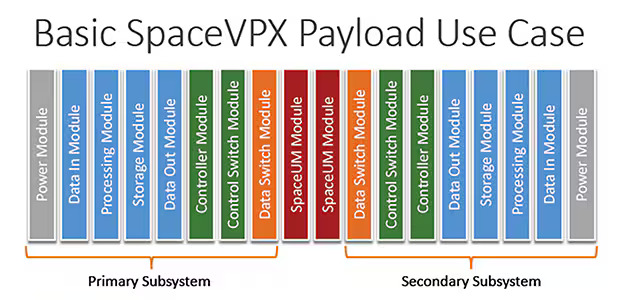
Figure 1: The goal of SpaceVPX is to achieve an acceptable level of fault tolerance by way of redundancy and switching (source: TE Connectivity).
But why is this important? Because space hardware is expensive to develop, difficult to test in real conditions, and incredibly slow to iterate. When system designers can plug in a radiation-hardened power module or a data acquisition card with confidence that it “just works,” they save countless engineering hours, reduce risk, and accelerate validation and integration phases. The result is lower mission costs, shorter schedules, and more design flexibility.
From a business standpoint, standardization allows R&D costs to be amortized across multiple missions and platforms. It enables volume manufacturing, which is especially beneficial for LEO constellations that may consist of tens, hundreds or even more satellites. It also fosters supplier ecosystems, encouraging competition and innovation while reducing single-vendor lock-in.
Moreover, it allows for system-level technology reuse, enabling previously flight-proven components to be quickly integrated into new missions, preserving reliability and minimizing the risk of unexpected failures.
Increasing Competition and the Need for Hardware Scalability
The entry of private players, agile startups, and NewSpace ventures has changed the space sector’s landscape. There’s more competition at every level of the value chain—from component manufacturers to system integrators to launch providers.
This increased competition puts new pressure on mission teams to move faster, reduce non-recurring engineering (NRE) costs, and support a wider range of applications with fewer resources.
For suppliers like TI, this means building flexible, scalable platforms that can adapt to a variety of space mission requirements. TI’s semiconductor solutions are designed to support everything from shorter duration LEO missions with moderate radiation needs to long-duration GEO, deep space, or even human spaceflight missions with the highest reliability requirements.
Be it power management, motor control or RF, by enabling designs that accommodate a wide range of voltages or currents, or support various motor and actuator types, or allow for a wide spectrum of frequency bands—from a single, reusable platform—TI empowers engineers to scale their designs without reinventing their architecture every time.
This scalability is essential not just for reducing cost, but for improving time-to-market—a critical factor in today’s competitive space industry. Further, all these sub-system level platforms come with strong technical support and reference designs including test data to enable fast decision making and prototyping.
Drawing Lessons from the Automotive Industry
Space engineers often draw comparisons between their field and the automotive industry—another domain where high reliability, modular design, and cost efficiency are paramount. There are important lessons here.
The automotive industry benefits from standardized architectures to reduce costs, manage complexity, and maintain supplier flexibility for many decades. This has led to the development of modular car platforms and architectures that support multiple models across brands. In space, the same thinking enables designers to use common satellite buses, data systems, or power subsystems across constellations and mission classes.
The need for integrated diagnostics and self-test capabilities commonly used in automotive can be directly applied to the space industry’s needs. In automotive, this helps identify system faults before a failure causes an accident. In space, these features enable remote fault detection to trigger the necessary isolation and recovery mechanisms —critical when there’s no technician available on orbit.
However, the differences are equally instructive. The operating environment in space is dramatically harsher: extreme thermal cycling, vacuum conditions, high levels of ionizing radiation, and violent mechanical loads during launch. Unlike automotive components, space-grade devices must survive without maintenance, often for decades.
Moreover, the product lifecycle in space is very different. A car model might be supported for 10 years before being retired. In space, missions may rely on the same component families for 20 to 30 years—long after those parts have left mainstream production. This requires suppliers to commit to very long-term availability and strict configuration control to ensure consistency across generations of flight hardware.
Texas Instruments is one of the few companies operating at the intersection of both industries. Their Q100-qualified products serve automotive applications, while their radiation hardened (-SP) and radiation tolerant (-SEP) offerings are tailored for orbital missions, with extensive screening and validation to match (see Figure 2).
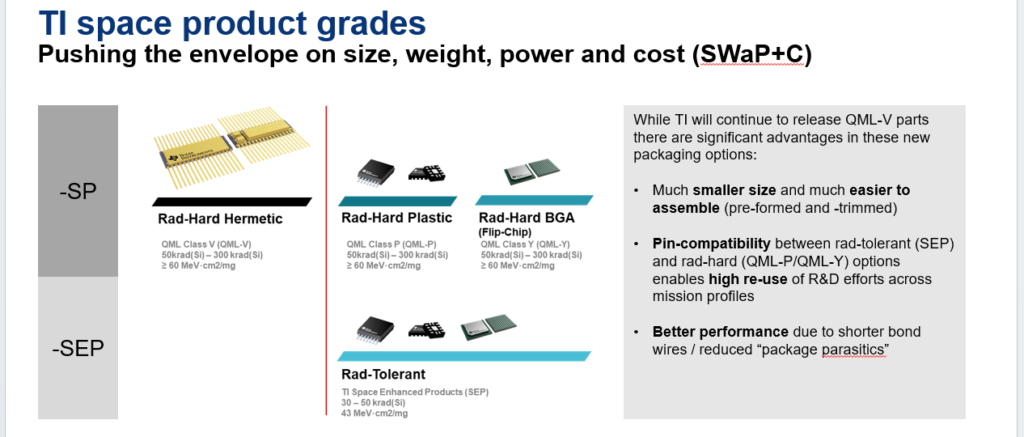
Figure 2: Radiation hardened (-SP) and radiation tolerant -SEP products offered by TI for space applications.
TI’s Architecture Strategy: Innovation, Modularity, Qualification, and Reuse
To meet the unique demands of the space market, TI has built one of the most comprehensive portfolios of space-grade semiconductors available today. Their product offerings span power management, RF and precision signal chain, sensing, logic, and control—supporting nearly every subsystem in a satellite or spacecraft.
What sets TI apart is their commitment to architectural consistency and qualification flexibility. Most of their key devices are available in both SEP and SP grades, offering different levels of radiation tolerance, screening, and cost to suit a wide range of mission types.
For example, the TPS7H4011/12/13 family of radiation-hardened switching regulators supports current levels from 3 A to 12 A and is available in both qualification levels—with identical pinouts. This means that a design team can develop a single hardware layout and adjust the component grade later based on power requirements, mission risk, cost constraints, or expected lifetime.
Similarly, reference designs like TIDA-010274 (see Figure 3), built around radiation-hardened data converters (e.g., DAC39RF10, ADC12DJ5200) and clocking ICs (e.g., LMK04832), demonstrate how a full RF signal chain can be standardized and reused across multiple missions.
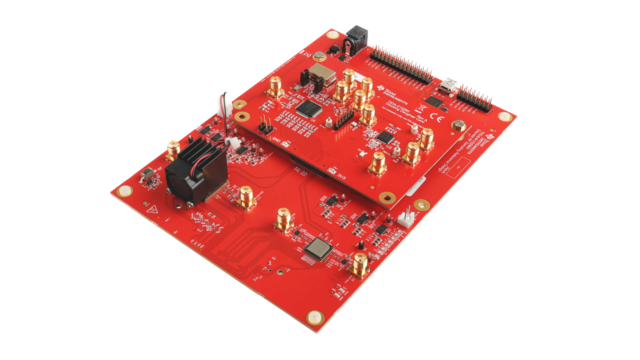
Figure 3: TIDA-010274 – space-grade discrete RF sampling transceiver reference design enables reuse across multiple mission profiles (source: ti.com).
TI offers extremely long-term supply of its space-grade components. Products like the UC1611-SP quad shottky diode array, released in 1993; UC1708-SP dual non-inverting power driver, released in 1997; or the UC1823A-SP PWM controller, released in 1995; give proof to commitment.
Such long-term supply based on a single base line of a single wafer-fab, a single assembly & test site and a single material set unlocks a major long-term benefit: flight heritage accumulation. Since the space environment cannot be fully replicated on Earth, every successful mission builds credibility for the hardware used. Reusing components with proven in-orbit performance significantly reduces mission risk—and opens the door to future production orders at scale, with lower engineering effort and more confident qualification.
Never-the-less, current design efforts must provide highly competitive performance results. TI’s space products offer access to the latest and greatest semiconductor technology as a foundation for best and fastest innovation. Highly innovative space products such as the fully differential amplifier TRF0208-SEP/SP, enabling near-DC to 11GHz 3dB BW, single-ended to differential conversion. It replaces a bulky RF balun plus a gain block with a single small amplifier device, providing very strong linearity over a very wide bandwidth at much reduced board space. The AFE7950-SP offers unmatched integration of 4-transmit and 6-receive RF-sampling data converters with frequency support through x-band enabling digital beamforming for space (see Figure 4).
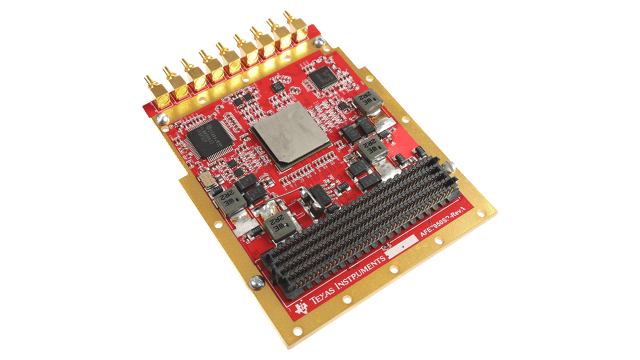
Figure 4: TIDA-010260 – 4T5R space-grade integrated transceiver reference design is in VITA-57 form factor (source: ti.com).
In power management, the TPS7H6101-SEP offers a GaN-based half-bridge power stage with rating of 200V and 10A. This enables power supply designs for the next level of power density and efficiency while also supporting motor control platforms scaling across many motor types and power levels.
TI is also opening a very new door to the space industry: leveraging functional safety and self-test capabilities developed for the automotive market also for space-grade products. The TMS570LC4357-SEP 300MHz, dual-core lock-step MCU is a very unique product offer for the space market (see Figure 5). It’s a grounds-up functional safety design originally targeting power steering and ABS systems with ISO26262 ASIL D level support. Now also qualified for the harsh space environment, it is helping space missions to be highly reliable at very reduced design overhead and cost.
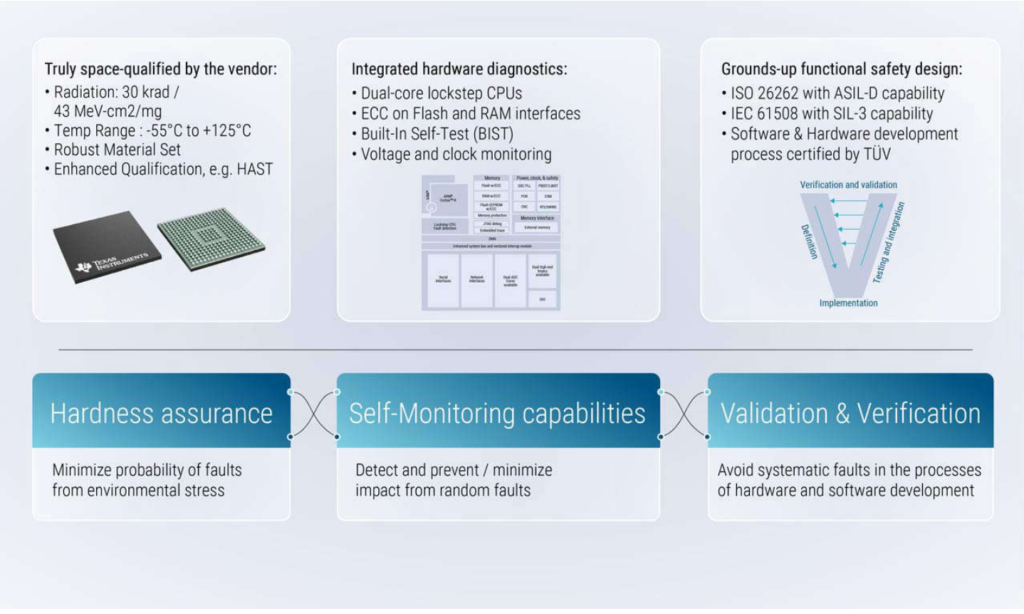
Figure 5: Functional Safety MCU TMS570LC4357-SEP – Applied Risk Mitigation to Accomplish
“Freedom From Unacceptable Risk” (source: ti.com).
Ease of Integration: Beyond the Datasheet
Raw performance is not the only deciding factor in mission success. In many cases, the ease of design, integration, and support becomes even more important—especially when schedules are tight and risk margins are small.
TI understands this and has structured its ecosystem to support mission engineers throughout the entire product lifecycle. From the earliest phases of design exploration, customers can browse and sample space-grade devices directly from ti.com. Comprehensive product folders contain radiation test data, qualification reports, and application notes, all freely accessible without requiring NDAs or private access.
Engineers can also access reference designs, evaluation boards, and engage with experts through TI’s e2e technical forums, where direct conversations with product teams help solve integration challenges.
Perhaps most importantly, TI backs this support infrastructure with dedicated field engineers and technical support specialists who understand the nuances of space system design. This personalized support makes a significant difference—especially in industries where testing, qualification, and late-stage troubleshooting can determine mission success or failure.
Final Thoughts: A Strategic Path to Resilient, Scalable Space Design
Standardized architectures are more than just a convenience—they are a strategic imperative for today’s space programs. They enable faster design cycles, reduced costs, and flexible supplier strategies. They foster innovation while preserving reliability. And when paired with a vendor that offers a wide range of space-grade products, qualification flexibility, and long-term support, they help mission teams build for both the present and the future.
Texas Instruments brings a rare combination of technology depth, industry breadth, and customer-centric support to the space domain. With a rapidly expanding portfolio of SEP and SP space-grade products, a commitment to standardized, scalable platforms, and an infrastructure built to support mission-critical systems, TI is helping engineering teams go from prototype to orbit—with confidence.
As the space sector continues to evolve, those who embrace standardization today will be best positioned to meet the demands of tomorrow.
Additional resources
- TI’s Space Design Resources hub
- TI’s Space Products Guide
- The benefits of standardized architectures for space missions – with Texas Instruments (podcast)