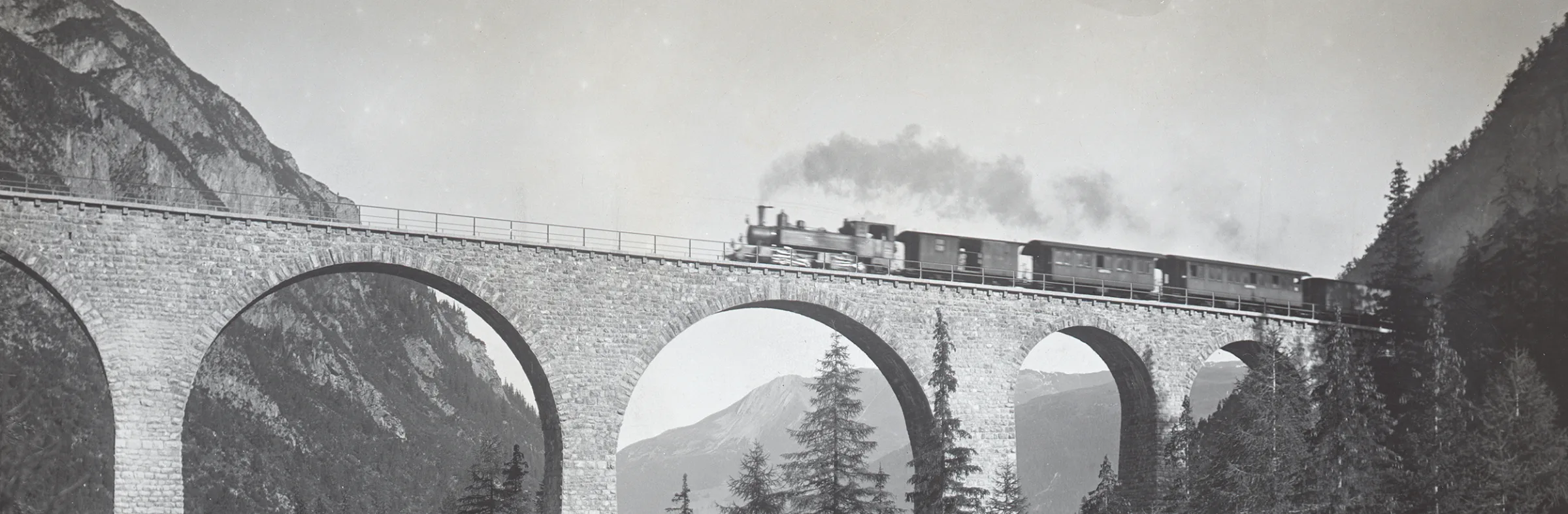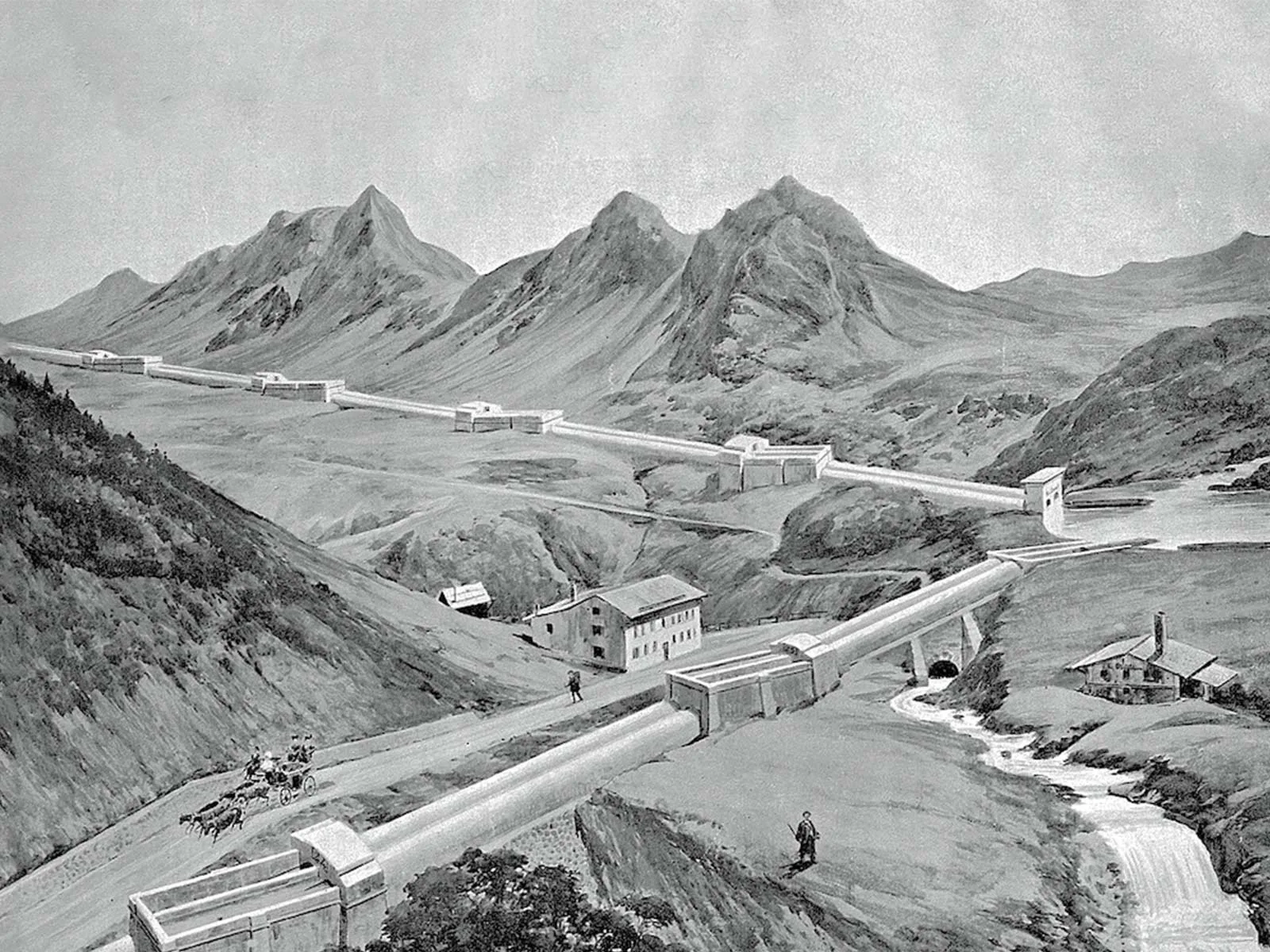
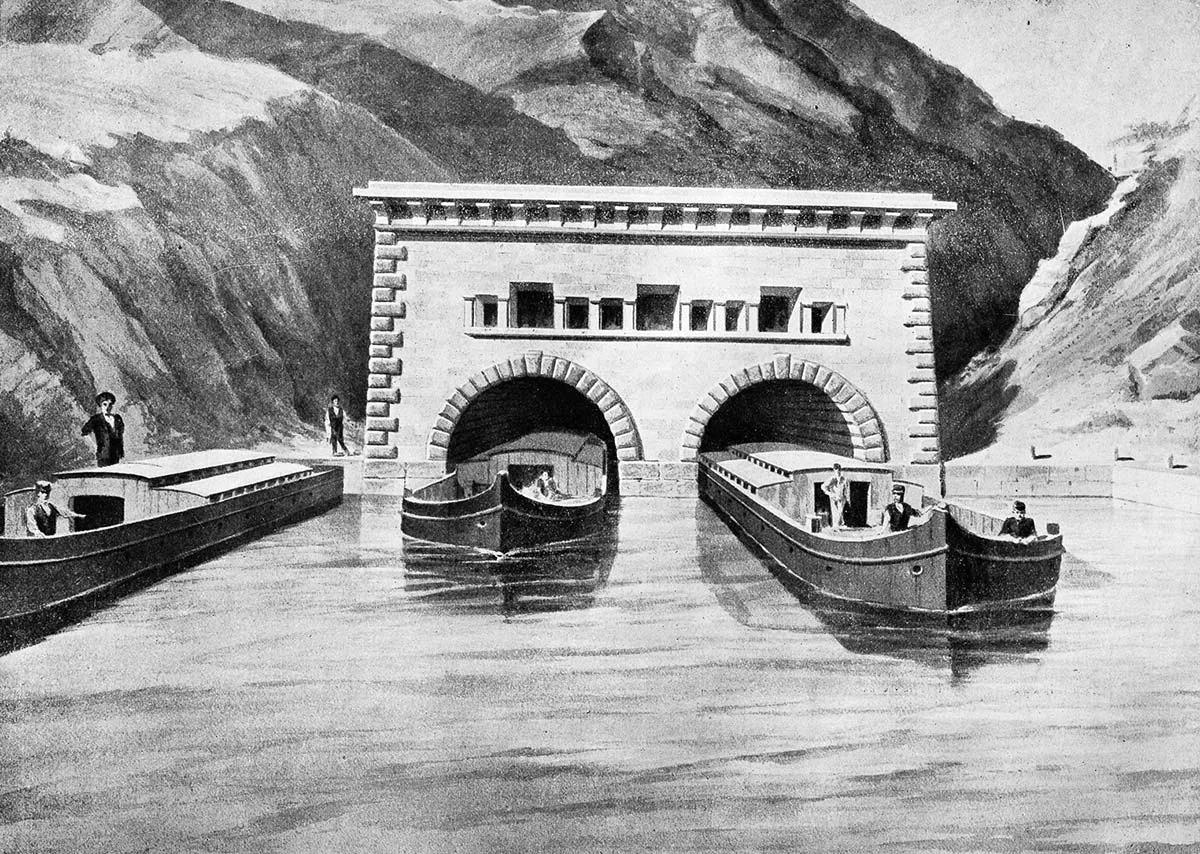
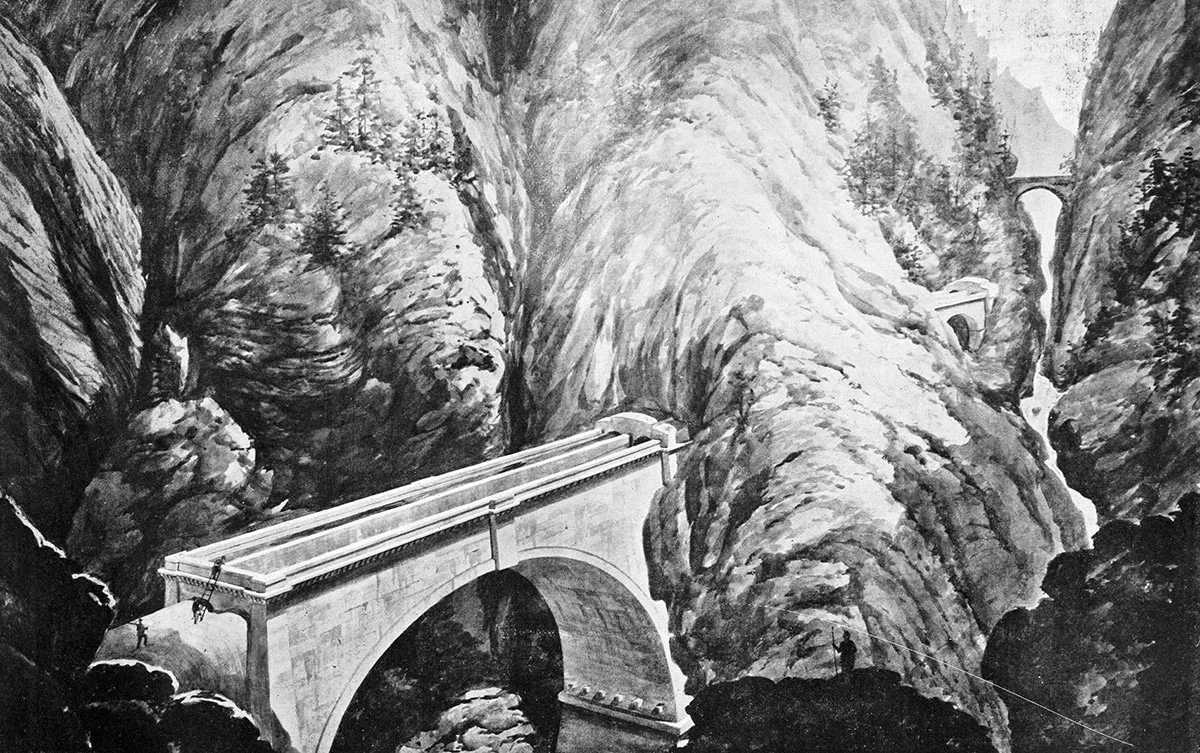
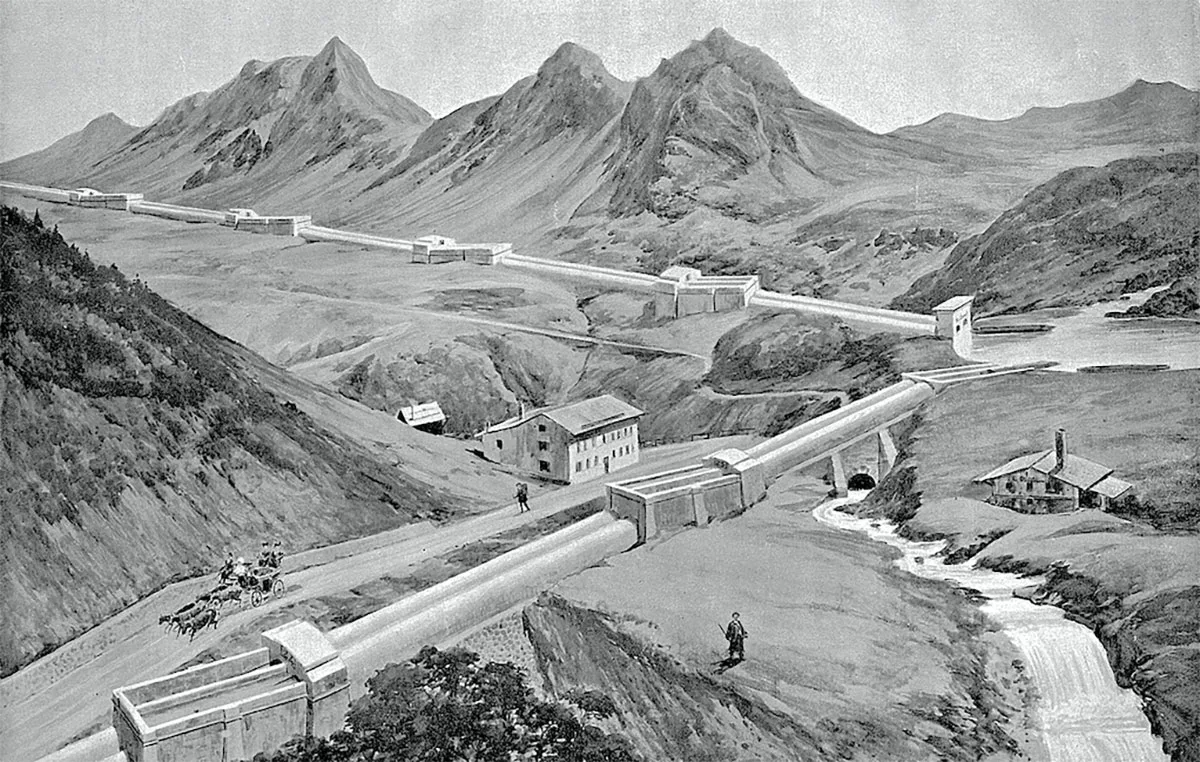
Pietro Caminada had a simple idea to turn the inconceivable into reality: huge cargo ships crossing the Alps without using self-propulsion. The stroke of genius by the engineer with Graubünden roots was a viable project – at least he thought so.

Helmut Stalder
Helmut Stalder is a historian, publicist and book author specialising in economic, transport and technical history.
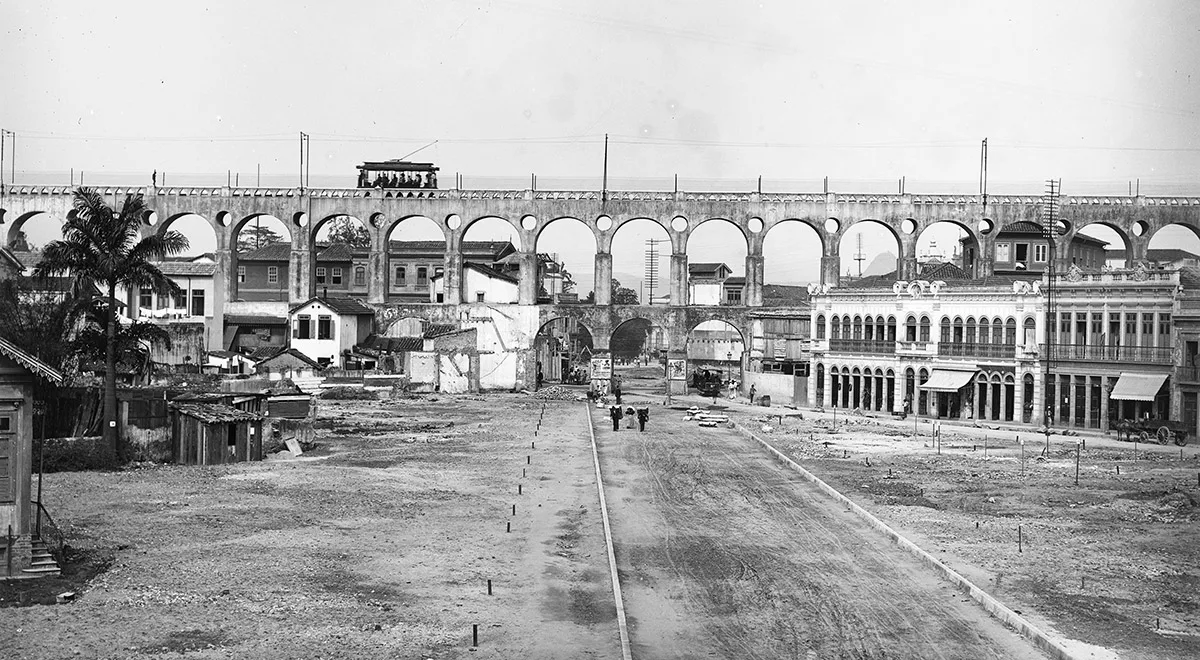
The pioneer of Brazil
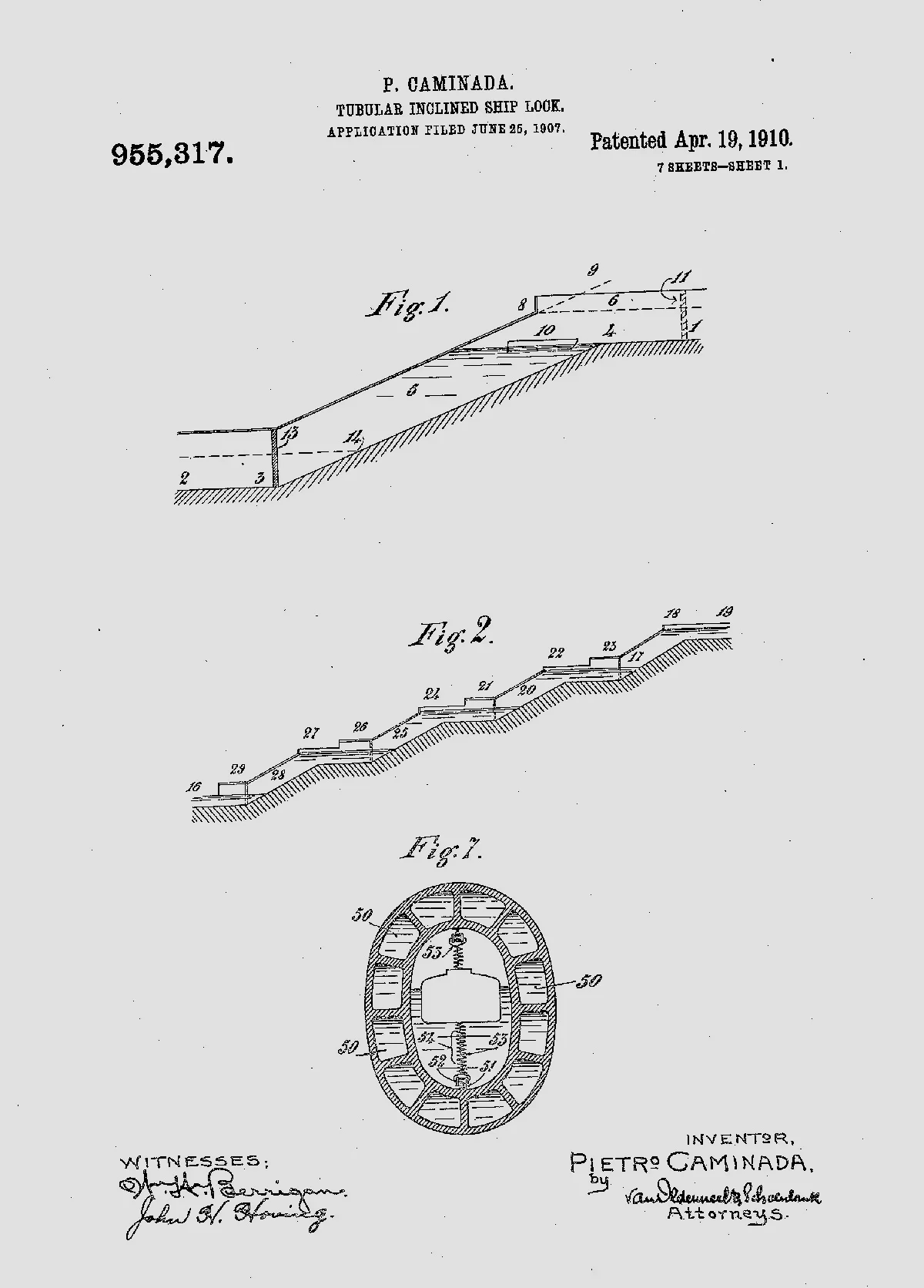
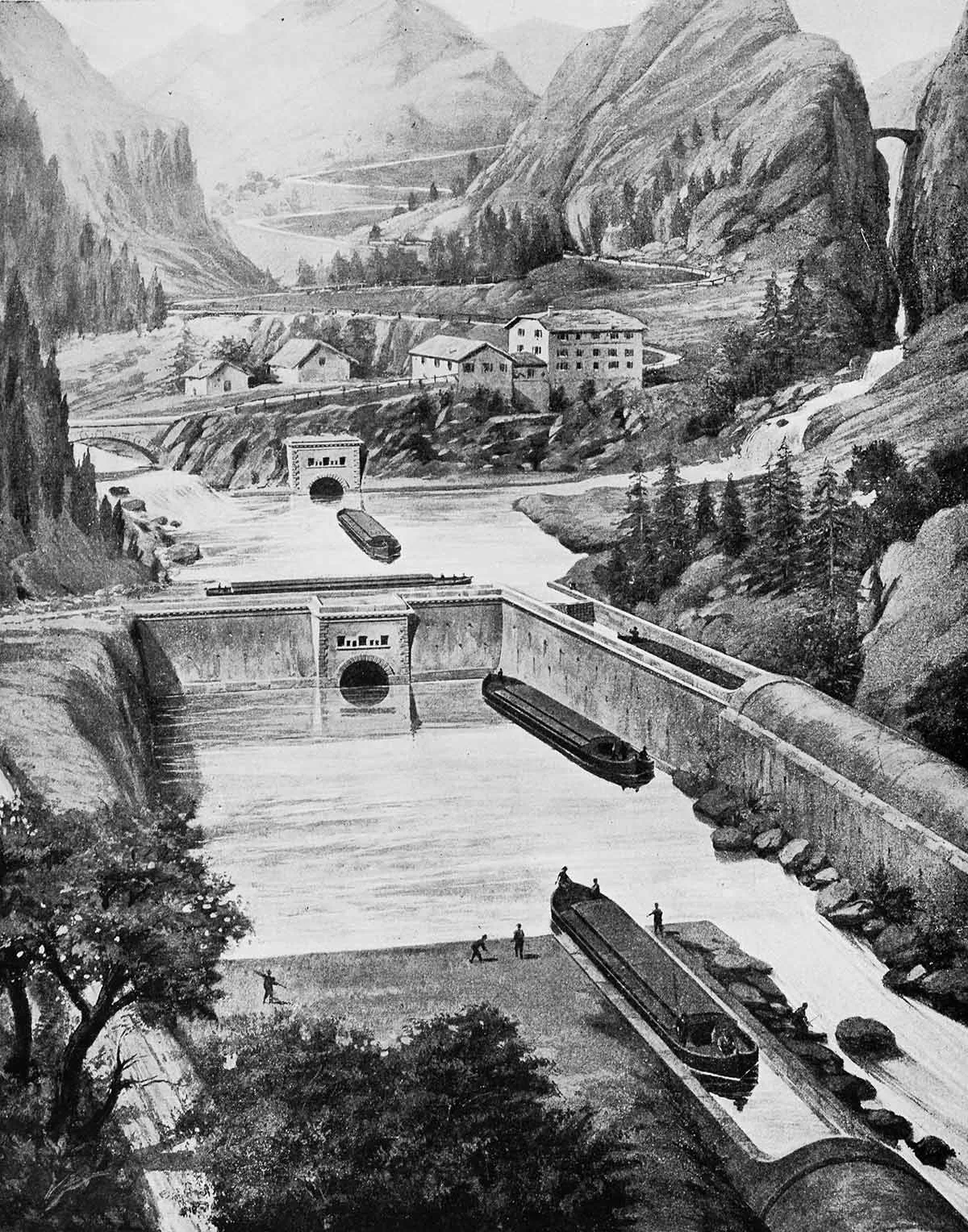
Communicating lock chambers
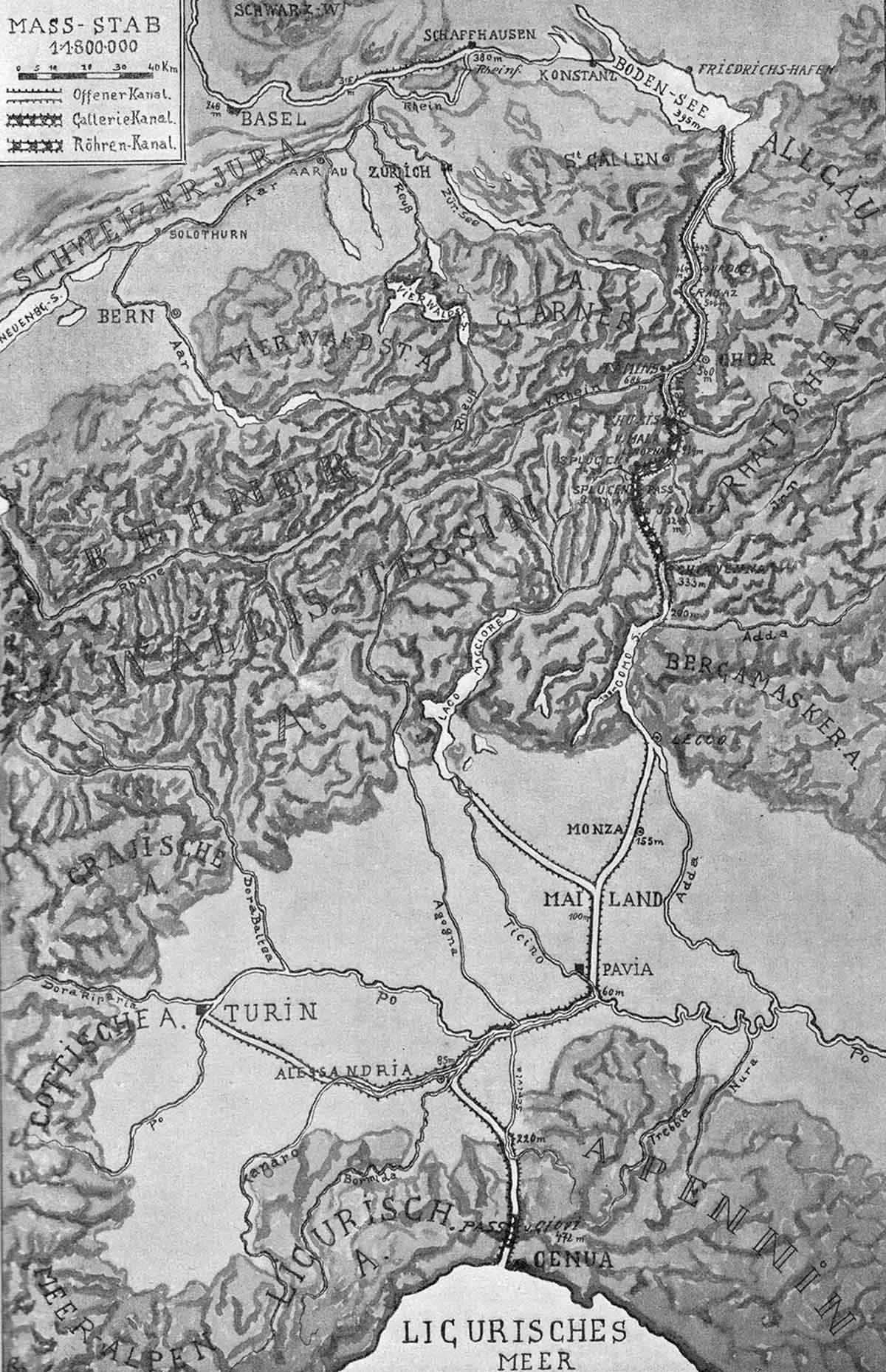
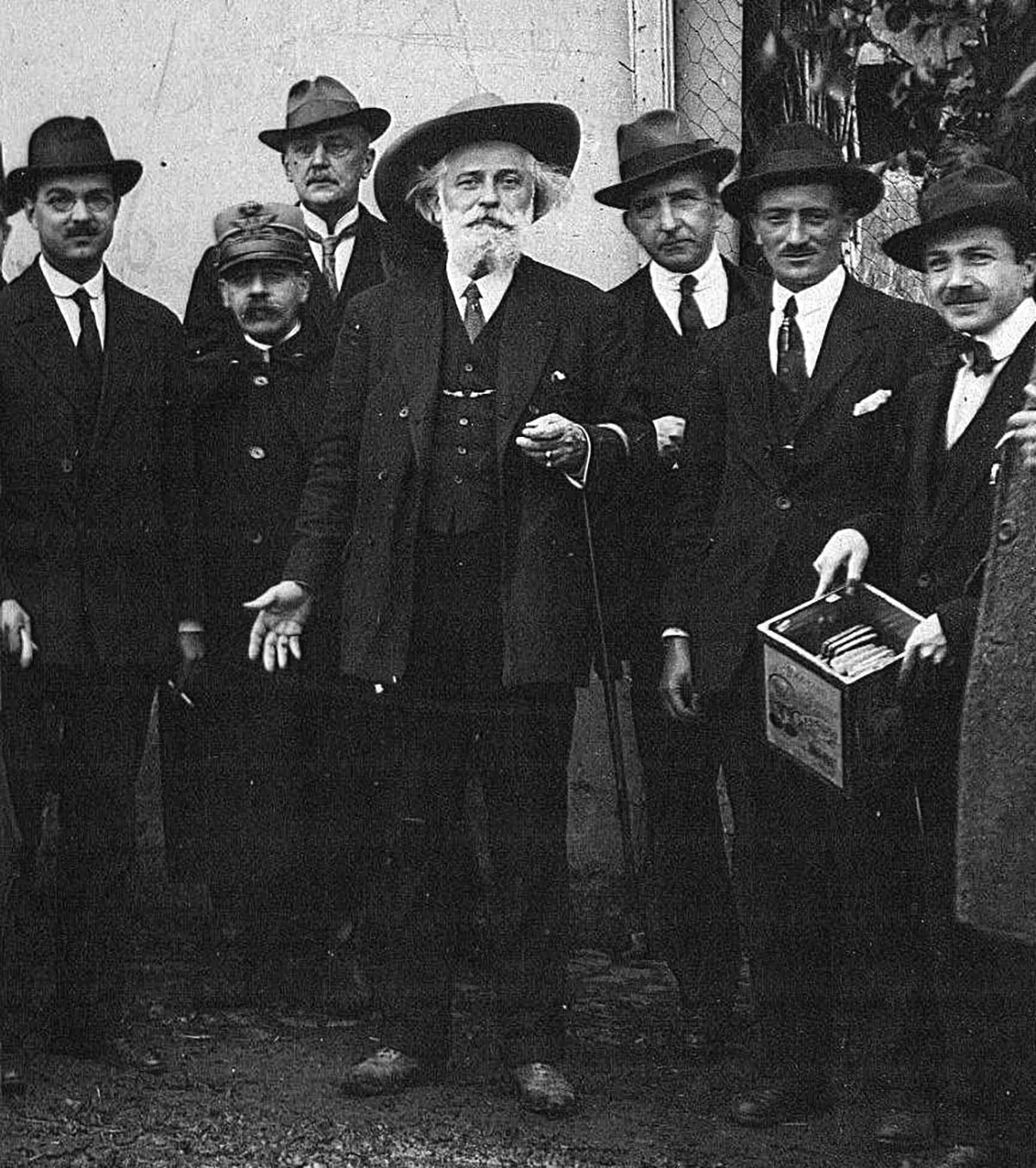
An audience with the king
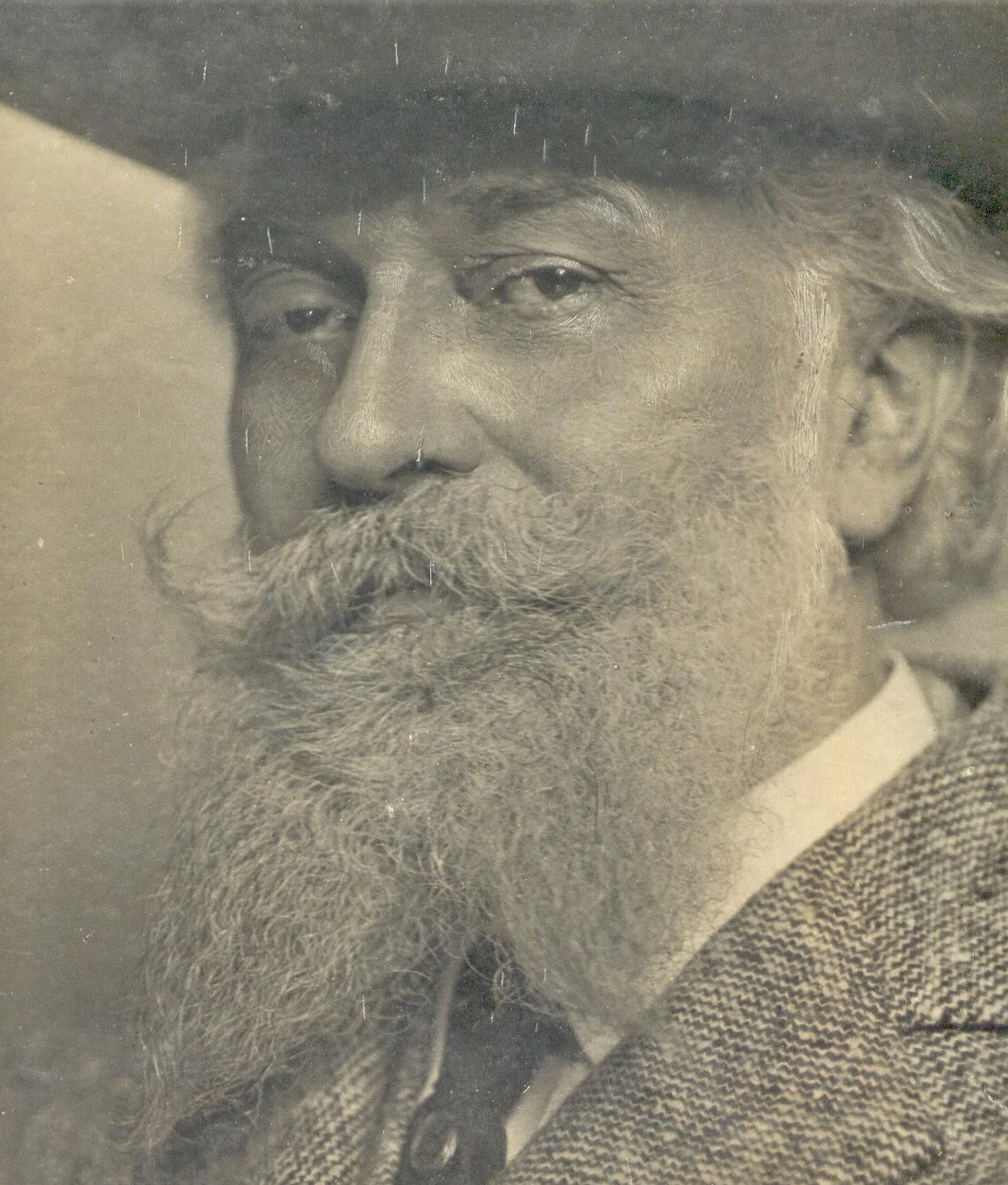
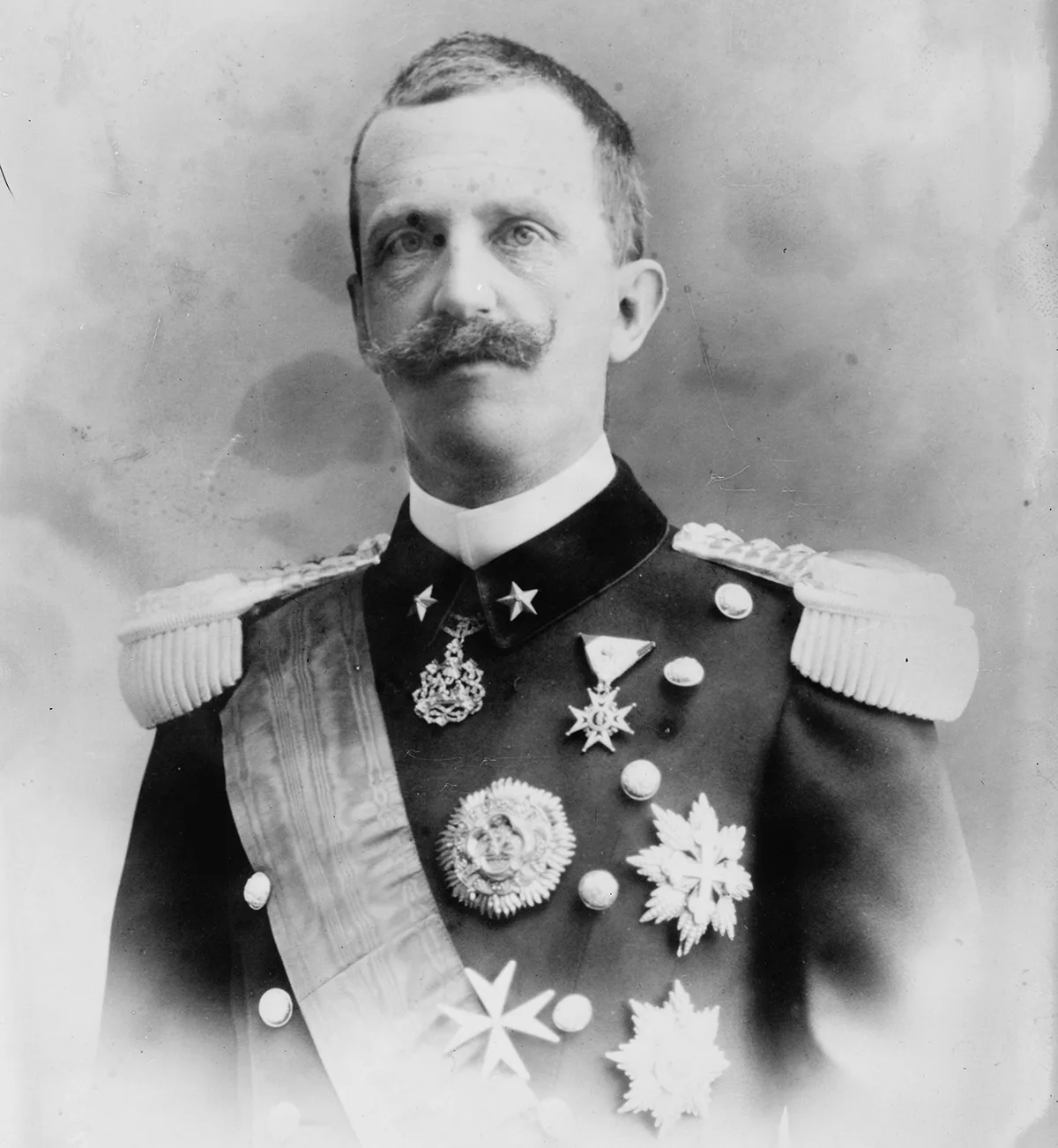
The report did not go unnoticed. Five days later King Vittorio Emanuele III invited Pietro Caminada for a private audience in the Quirinal Palace. The monarch had him explain the project and praised the inventor. “When I am long forgotten, people will still be talking about you,” he predicted.
Neue Zürcher Zeitung was also impressed: “Caminada has managed to devise a system that Senator Colombo (...) considers practical and feasible. It is, as Colombo observes, as wonderfully simple as all great ideas.” A few days later Berliner Illustrierte lavished praise on the inventor, describing Caminada as “one of the most outstanding hydraulics engineers of our time”. The New York Times called Caminada “a man of genius”, who had given his assurance that a difficult problem had been solved by applying one of the fundamental principles of hydraulics.
“A technical fantasy”
One of the few sceptics was ETH engineer Rudolf Gelpke. “The idea is remarkable and it’s great that its feasibility will be proven through experiments”, he wrote in the Schweizerische Bauzeitung. Nonetheless, he also said he thought Caminada was a dreamer. “And up go the much vaunted lock chambers, at least on paper for now, from San Giacomo valley up to Isola, 1,247m above sea level.” The project was, argued Gelpke, economically a non-starter in every way, referring to it as a “technical fantasy”.
The plan of transalpine shipping, however, turned out to be a pipe dream. Italy was mired in economic and social difficulties and opted for colonial expansion as a diversionary tactic. In 1911, Italian troops annexed two provinces in Libya. In 1915, the country joined in the First World War. Caminada turned his attention to urban development. Around 1916, he planned to upgrade the port at Genoa, and later he worked on expanding Civitavecchia port. He designed a new area for Milan to the south of Piazza del Duomo. In Rome, he conceived a “Città Giardino” in the Montesacro district around 1920.
His ‘Via d’Acqua transalpina’ has faded into the mists of time. Now only ‘Via Pietro Caminada’ remains to remind us of the engineer. It’s a narrow country road with cracked asphalt between Rome and the Tyrrhenian Sea. It almost forms a full circle and doesn’t really lead anywhere.
Further posts
The birth of aerial mountain rescue
19.11.2024 When a Dakota C-53 made an emergency landing on the Gauli Glacier at over 3,000 meters in November 1946, it was not only a feat of piloting skill. The rescue of all twelve survivors also marked the beginning of modern aerial mountain rescue.
Victims of Labour – a memorial that broke the mould
Barbara Basting 24.01.2023 Artists were among the many to draw inspiration from the opening of the Gotthard railway tunnel 140 years ago. Prominent Ticino sculptor Vincenzo Vela created a contemporaneous memorial to those lost during its construction, entitled Victims of Labour. This key work was not particularly well received at the time, however.
A one-track life
Karl Lüönd 29.05.2019 At the end of the 19th century, the world was gripped by ‘railway fever’. Swiss expertise was in high demand. Jakob Müller left Lucerne to move to present-day Turkey, where he eventually became the director of the Orient Express.